|
Congrats to the 87% who answered correctly. And the 13% who improved their writing skill.
Correct Answer (B):
Which of the following is redundant?
A. G6PD deficiency
|
|
|
|
|
THE BUSINESS CORNER
The Political Challenges of the Transition to the New Normal
(Access Archives for:
Part 1, Part 2, Part 3, Part 4, Part 5, Part 6, Part 7, Part 8, Part 9)
By Paul Hodges, International eChem

Politicians seem to be floundering as they seek to restore growth to the Western economy. Their prescriptions swing between austerity and economic stimulus as they argue over what has gone wrong.
But in chapter 10 of our e-book, Boom, Gloom & The New Normal: How Western Babyboomers are Changing Western Demand Patterns, Again, we argue that they are on the wrong track. The reason is that they are putting their trust in an outdated economic theory - the life-cycle hypothesis.
The theory holds that we are on the whole rational beings, meaning that most of us save enough money for our retirements. Policymakers therefore believe that if only they could find the right policy - spending boosts or tax cuts - then growth would magically return.
They don't seem to have realised that most people, like most governments, have been taken by surprise by the rapid increases in life expectancy in recent years. So even if people were rational, it would have been very hard for them to have saved enough money to provide for their extra decade or more of retirement.
This inevitably means that growth will be slower. The Boomers simply must spend less and save more to fund their retirement. But equally, there are opportunities to sustain growth by developing new products and services to meet the Boomers' needs as they enter the New Old 55+ generation.
We argue that policymakers need instead to focus on these issues. They should start to debate the best mix of policies to support the need to retool Western economies, to reflect these changing demand patterns.
In addition, we look at the financial sector.
Young engineers and scientists, who would be much better employed in industry, have recently preferred to work in the financial sector where salaries have been far higher. The size and rewards of the financial industry are way out of line with the needs of society, and are distorting Western economies. It needs to be reformed and we suggest how this might be done.
We also explore how China's highly ambitious 12th Five-Year-Plan is at risk of failure. A key element of the plan is moving-up the value chain to original-design manufacturing, and building global brands. But can the right levels of creativity and innovation develop without greater political freedom and more democracy?
Please go to www.icis.com/NewNormalEbook to download Chapter 10.
Chemicals and the Economy blogger. Watch Paul on ACS Webinars Chemistry and the Economy 2011 Year-End Review and 2012 Outlook.
Email us chemical business topics you would like us to cover in future issues.
Back to Top Page
|
|
Why Hire a Consultant?
By Michael Bigwood, Ph.D., Polymer Phases, Inc.
There are basically three reasons why people might retain consultants:
- Use their specific expertise,
- Acquire their knowledge or
- Leverage their experience and network.
Let's briefly discuss each one.
USE A CONSULTANT'S SPECIFIC EXPERTISE
This is the typical way of using consultants: external expertise is brought in to address a specific, one time need. This covers a very broad range of activities, such as implementing and validating an analytical method, complying with a regulation or standard, solving a manufacturing problem, improving a management process or obtaining critical review of a business plan. Consultants with a specific expertise are also often used as expert witnesses in legal cases.
For these kinds of projects, a consultant should be an expert, a person offering in-depth, up-to-date expertise in a well defined field.
ACQUIRE A CONSULTANT'S KNOWLEDGE
If a new skill is going to be needed in an organization on an ongoing basis, it can be acquired through training provided by consultants in that field. This can take the form of public courses offered by professional organizations, such as ACS, or through in-house training sessions. The latter offers the advantage of being customized to the client's specific needs and prevents the client's interest in a certain area from being brought to public attention.
Beyond relevant expertise on the topic being taught, a teaching consultant should obviously also offer good oral communication skills.
LEVERAGE A CONSULTANT'S EXPERIENCE
Unlike the use of consultants to address a specific issue, as discussed above, what I mean here is the use of consultants to produce unexpected outcomes. For example, external consultants can bring considerable value to brainstorming sessions aimed at finding new markets for existing competencies, identifying synergistic partners, defining new products, etc.
The skill to look for in a consultant for this kind of projects is breadth, rather than depth: a broad understanding of technologies, markets, and preferably both is what is needed.
In my opinion, creating unexpected outcomes is an area where consultants are underutilized.
A FINAL THOUGHT
Across all three circumstances discussed above, another reason to hire a consultant is to make sure a job gets done. Who doesn't have a strategic project that keeps getting pushed back by the day-to-day demands on one's time?
Let's look at just one example of this type of situation. It has been my experience, as a scientist and as a research manager, that scientists are a lot more motivated to move ahead with their research than to write-up their past work. This recording of past work is critical, however. It allows, for instance, an attorney to draft and file a patent application. This writing activity can effectively be outsourced to a consultant competent in the field at hand. Exploratory activities, such as market studies, external technology reviews and even laboratory work also fall in this "often pushed back" category.
Give the project to a consultant. It will get top priority!
 A polymer chemist, Dr. Bigwood worked 13 years in industrial research and research management for the largest producer of ion exchange resins before embarking on a career of technical consulting relating to the design and development of polymeric materials, expert witness work, and synthesis of custom polymers and polymeric materials. A polymer chemist, Dr. Bigwood worked 13 years in industrial research and research management for the largest producer of ion exchange resins before embarking on a career of technical consulting relating to the design and development of polymeric materials, expert witness work, and synthesis of custom polymers and polymeric materials.
This monthly tip is brought to you in collaboration with the Chemical Consultants Network. Have a comment? Join the Chemical Consultants Network LinkedIn group and start a discussion!
Back to Top Page
|
|
THE WRITING CLINIC - The Doctor is IN
More on "We" and "I"
By Kristin Sainani, PhD., Stanford University

(This month's QUIZ to test your writing knowledge).
Question:
Dear Kristin, In two recent papers, the reviewers have objected to my use of "we", saying that professional writing should not use personal terms. I disagree... when we do something, "we" do it, not some impersonal "it". Any comments?
Answer:
I encourage the use of "we" and "I" in scientific manuscripts. The notion that first-person pronouns should be avoided is outdated for several reasons:
- With the possible exception of the methods section, manuscripts should be written in the active voice. The active voice is livelier and easier to read; for example: "We found that" rather than "it was found that."
- It is a myth that avoiding first-person pronouns lends objectivity to the paper. You (or your team) ran the experiments and interpreted the data. To imply otherwise is simply misleading; the experiments and analysis did not materialize out of thin air, as the passive voice implies (e.g., "the data were interpreted to show").
- By agreeing to be an author on the paper, you are taking responsibility for its content. Thus, you should also claim responsibility for the assertions in the text by using "we" or "I."
If you're not convinced, consider the following examples:
- The style guidelines for many journals explicitly instruct authors to write in the active voice. For example, Science magazine advises: "Use active voice when suitable, particularly when necessary for correct syntax (e.g.,"To address this possibility, we constructed a λZap library ...)."
- Watson and Crick's celebrated 1953 paper in Nature begins with the word "we": "We wish to suggest a structure for the salt of deoxyribose nucleic acid

Kristin Sainani is a clinical assistant professor at Stanford, where she teaches statistics and manuscript writing. She is also a freelance health and science writer.
Have writing questions for Kristin? Email us your questions or tips you would like Kristin to cover in future issues.
Back to Top Page
|
|
FROM THE LAB CORNER
Recognizing the Value of Salesmanship
By Chemjobber

Most chemists have jobs they don't want to do. No chemist wants to clean their glassware, inventory their retained samples or wash out their NMR tubes. Time to counter-sign notebooks? It's time to run that tricky purification! Scrub out the hood? I've got papers to read!
But there's one job that most chemists just don't want -- and it's customer relations, also known as sales. If you're introverted (like me, and like many chemists), the last thing you want to do is actually interact with someone you don't know. I am uncomfortable writing an e-mail to a client, much less visiting a customer with an armful of free samples (or heaven forfend!) calling someone out of the blue and asking if they've heard of my company and whether they'd like to (gasp!) give us some money in exchange for services.
Thankfully, I am not in charge of my company's sales -- otherwise, we would soon find ourselves burning our lab notebooks for heat. My company is very fortunate to have silver-tongued people who have managed to convince our clients that we're capable people, who can deliver quality compounds on a tight schedule. (And we can!) But there's no one like a great sales manager who knows how to shape a narrative, how to sell our services or how to start a difficult conversation that needs to happen with a customer. I've found that having a sales director that you can trust (and can handle the occasional confession!) is an incredible asset for a company.
So here's to the sales staff everywhere, who make our businesses thrive and keep us out of the poorhouses. You have my eternal thanks. Now, um, about that last delivery we promised to make... could you make a call?
 Chemjobber is a working chemist in industry and a blogger on employment in chemistry. Chemjobber is a working chemist in industry and a blogger on employment in chemistry.
Have lab/career questions? Email us your questions that you would like The Distillate to cover in future issues. Back to Top Page |
ACS Webinets:
(Two Minutes to a Smarter You)Feeling short on time?? We hear you! ACS Webinets two minute-ish segments bring you valuable snippets from some of our most popular full length ACS Webinars. Learn in less time than it takes to finish your morning coffee. We promise, it will be worth your time! Enjoy. | | ACS Webinets: Tips on Scientific Writing |
Back to Top Page
|
Upcoming conferences that may be of interest to you:
Back to Top Page |
|

ACS Heroes of Chemistry Nominations
Each year, Heroes of Chemistry are nominated by their own companies to recognize their talent, creativity, and innovation. Previous Heroes of Chemistry have excelled in innovation at prominent international corporations and developed commercial products that demonstrate strong financial performance.
Hurry! Deadline for nomination package is April 20.
Back to Top Page
|
|
Chemists Celebrate Earth Day
April 22, 2012
"How can industry participate in Chemists Celebrate Earth Day? Chemists Celebrate Earth Day (CCED) is an annual event in which ACS local sections, Student Member Chapters, and divisions take part. This year's theme is "Rethinking Recycling-It's Easy to Be Green!"
Find out what your company can do to engage a general audience. Do you have more ideas about how industry can get involved in CCED? Send your thoughts to outreach@acs.org .
Back to Top Page
|
|
Wheelchair for Chemists?
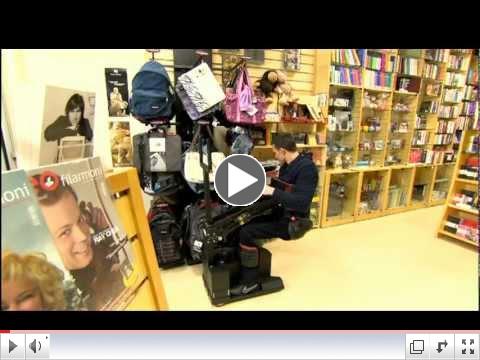 | | Robotic support brings freedom to paraplegics |
Can this wheelchair be adapted to disabled chemists to work in a lab? ChemBark explores this unique innovation.
Read More >>
Back to Top Page
|
 Win an ACS 'Proud to be a Chemist' lapel pin. Win an ACS 'Proud to be a Chemist' lapel pin.
"What we do, if we are successful, is to stir interest in the matter at hand, awaken enthusiasm for it, arouse a curiosity, kindle a feeling, fire up the imagination." by ???
Send us your correct answer to win the lapel pin. Three winners will be selected for this popular pin. This month's quote was submitted by Samuel Foster from Veolia ES Technical Solutions, L.L.C..
Email us (distillate@acs.org) your answer by April 13, 2012 to be entered into the drawing. Please use QUOTE for the subject line. The answer to the quote and the winners will be posted in next month's edition.
Congratulations to Marshall Karibian from Covidien (formerly Tyco Healthcare/Mallinckrodt), Ken Barker from Lenape Technical School, and Raymond Cvetovich from RJC Process Chemistry Consulting, LLC. Winners were randomly selected from all the correct entries received. (Quote: " Nothing in life is to be feared, it is only to be understood. Now is the time to understand more, so that we may fear less" Answer: Who is Marie Curie) Thank you to all who entered the contest.
Have a favorite quote? Please email us (distillate@acs.org) and if we use your submission, we will send you a prize.
Back to Top Page
|
|
You May be A Chemist If...
- You don't see the glass as half empty or half full. You see it as completely full half full with liquid, and the other half full with gas. (from Heather Fox)
- . . . If, when using 409 Spray, you wonder what element is missing from__ 4O9 ! (from David Mork)
- You may have been a chemist if you went on a "chemical-free" diet and starved to death. (from W.M. Watson)
Feel inspired? Send us your own favorite to be selected for next month!
Back to Top Page
|
Reach >100,000 scientific professionals. If you would like to submit an article, news item, or upcoming event for next month's newsletter, email us by 5:00 pm Eastern Time on the third Friday of the month to distillate@acs.org. Inclusion is subject to space and editorial discretion.
|
|
|
|
|