|
Congrats to the 75% who answered correctly. And the 25% who improved their writing skill.
Correct Answer (#3):
In a scientific manuscript, which of the following verb tenses is the most appropriate for describing the implications of data?
- The data suggested
- It is suggested by the data
- The data suggest
- The data had suggested
|
|
|
|
|
THE BUSINESS CORNER
Doing More with Less - the products of the future
(Access Archives for:
Part 1, Part 2, Part 3, Part 4, Part 5, Part 6, Part 7)
By Paul Hodges, International eChem

The opportunities ahead of us are enormous, as we transition to the New Normal. To access these opportunities, we propose a new philosophy for Research and Product Development. This starts with the megatrends, and the work done to produce the UN Millennium Development Goals in 2000. It is the focus for Chapter 8 of our free 'Boom, Gloom and the New Normal' ebook.
This argues that 4 megatrends will be central to the future of the chemical industry:
- Improving water availability
- Improving food production
- Increasing life expectancy
- Reducing carbon footprint
It suggests that the key need is to be practical. Companies should focus:
- In the fields of water/food, on reducing the amount of waste, and the output that is lost when product is moving to market
- In developing new products and services for the over 55s, on core needs such as food, water, health, shelter and mobility
- In turn, this will enable them to 'do more with less'. Carbon footprint will be reduced, and products will be more affordable
This philosophy is quite different from that seen during the 1982 - 2007 economic SuperCycle. Then, companies competed for the middle ground, as we saw in chapter 7. They added features, and pursued the concept of adding value in order to boost profits. Over time, they focused more and more on the wealthier parts of the global population, and became increasingly disinterested in those outside this privileged group.
Today, however, it is no longer viable to focus in this way. The Western BabyBoomers are joining the New Old generation of those aged 55+, and they face the prospect of much lower incomes as they transition from salaries to pensions. Similarly, incomes in emerging economies are dramatically lower than those in the West. It is wishful thinking to imagine that these regions can therefore somehow replace the demand for added value products that is disappearing in the West.
The global economy is moving into a difficult period, as it transitions to the New Normal. Debt levels are high, and incomes are under pressure, particularly for the large numbers of people moving into retirement. It will not be easy to implement these policies, and to sustain them. But if we fail, then the future will be very bleak indeed.
Please go to www.icis.com/NewNormalEbook to download Chapter 8.
Chemicals and the Economy blogger. Register & chat with Paul on ACS Webinars Dec. 15, 2011 on Chemistry and the Economy 2011 Year-End Review and 2012 Outlook.
Email us chemical business topics you would like us to cover in future issues.
Back to Top Page
|
|
CONSULTING TIP OF THE MONTH
Out-of-Pocket Expenses
By William Golton, Ph.D., Chemical Consultants Network
A typical consultant-client arrangement is to charge for time plus out-of-pocket expenses. This raises the question, what expenses are appropriate to charge, and what might be inappropriate. Below are the author's opinions, based on years of consulting experience.
APPROPRIATE
- Out of town travel expenses, including mileage (or rental car) and tolls for intercity driving, airline or train expenses, hotels, meals, taxis, etc.
- Travel time (typically charged at 50% of consulting rate). The rationale for this practice is that this is time when one could be earning a fee on other consulting.
- Books and other publications needed to carry out the assignment.
- Literature search charges from commercial services
- Significant mail and phone expense such as packages or international calls.
- Laboratory charges, if you paid for them
- Technical equipment or supplies needed for the assignment
- Late payment charges if agreed in writing prior to the start of work
INAPPROPRIATE:
- Administrative time, such as time to prepare an invoice.
- A markup on travel or other out-of-pocket expenses charged.
- "Nickel and dime" charges, such as mileage for driving to the post office or a dollar or two for letters or phone calls.
Why are these inappropriate? Simple: they may antagonize your client, and they won't increase your income significantly anyway. So why risk losing repeat business and damaging your reputation for just a little more money?
Having said this, one cannot over-emphasize the importance of a written consulting agreement, signed by both parties, that includes some of the items listed above. The agreement might also stipulate that expenses not specifically discussed are subject to prior approval by the client. The written agreement was mentioned in a previous article and will be discussed in more detail in next month's Tip.
 A frequent contributor to The Distillate, Dr. Golton has written and lectured extensively on the subject of consulting. He recently retired as Vice President of The CECON Group, Inc. Prior to becoming a consultant, he held various positions at DuPont. A frequent contributor to The Distillate, Dr. Golton has written and lectured extensively on the subject of consulting. He recently retired as Vice President of The CECON Group, Inc. Prior to becoming a consultant, he held various positions at DuPont.
This monthly tip is brought to you in collaboration with the Chemical Consultants Network. Have a comment? Join the Chemical Consultants Network LinkedIn group and start a discussion!
Back to Top Page
|
|
THE WRITING CLINIC - The Doctor is IN
Sentence-Level Writing Tips
By Kristin Sainani, PhD., Stanford University.
(This month's QUIZ to test your writing knowledge).
To create more readable and engaging sentences, follow these tips:
1. Be succinct.
Instead of: Injuries to the brain and spinal cord have long been known to be among the most devastating and expensive of all injuries to treat medically.
Try: Injuries to the brain and spinal cord are among the most devastating and expensive.
2. Use parallel sentence structure.
Instead of: The initial symptoms of Alzheimer's disease are difficulties in memory for recent events and learning new material
Try: The initial symptoms of Alzheimer's disease are difficulties in remembering recent events and learning new material.
3. Use the active voice.
Instead of: A recommendation was made by the DSMB committee that the study be halted.
Try: The DSMB committee recommended that the study be halted.
4. Don't bury the main verb.
Instead of: A careful monitoring of achievement levels before and after the introduction of computers in the teaching of our course revealed no changes in students' performances.
Try: We monitored student achievement levels before and after the introduction of computers in our course and found no detriments in performance.
5. Use colons, semicolons, dashes, and parentheses.
Instead of: Many types of cells and tissues develop a kind of directionality. Certain events happen toward one end of the cell or tissue or the other. It's a phenomenon called cell polarity.
Try: Many types of cells and tissues develop a kind of directionality called cell polarity: certain events happen toward one end of the cell or tissue.
 Kristin Sainani is a clinical assistant professor at Stanford, where she teaches statistics and manuscript writing. She is also a freelance health and science writer. Kristin Sainani is a clinical assistant professor at Stanford, where she teaches statistics and manuscript writing. She is also a freelance health and science writer.
Want more tips? Register for Kristin's upcoming ACS Webinars presentation Thursday February 2, 2012. Space is limited, act now!
Have writing questions for Kristin? Email us your questions or tips you would like Kristin to cover in future issues.
Back to Top Page
|
|
FROM THE LAB CORNER
Tips on Handling Job Loss
By Chemjobber

CRASH! The man driving a SUV into my family car had no idea he was sending me into a weeks-long process of research and decision making that ended in a new vehicle. The occupants of the car are all well, thank you -- a quick recalibration of perspective.
While selecting and purchasing it, I was struck by the importance of trust in the process. As you progress, you attempt to build trust in the brand, the model, the seller and the vehicle itself. If you're in the used car market (as I was), a history report from an independent party is a helpful guide. It tells you some of the vehicle's life; if a seller leaves out details, it might tell you something about the seller, too.
During all of this, I was also reminded of the hiring process. When a chemist is out on the job market, they're asking their potential employers to trust them. While a thick CV and a great personality are very helpful, a good reference is a great way to establish trust between potential employer and employee. Like a CARFAX report, that reference's knowledge of the employee can assure potential employers that hiring that chemist is a good move.
Trust is a two-way street, of course. The potential employer must not oversell the position they're offering, nor promise things that they cannot provide. Just as the employer interviews the potential employee, the wise chemist will obtain independent opinions on the employer's reputation.
"Trust, but verify" is an old Russian proverb -- in car buying and in the employment process, it is best to heed its advice.
Good luck and good hunting.
 Chemjobber is a working chemist in industry and a blogger on employment in chemistry. Chemjobber is a working chemist in industry and a blogger on employment in chemistry.
Have lab/career questions? Email us your questions that you would like The Distillate to cover in future issues.
Back to Top Page
|
ACS Webinars™ CLICK * WATCH * LEARN * DISCUSSLearn more and register at www.acswebinars.org ACS Webinars™ connects you with subject matter experts and global thought leaders in chemical sciences, management, and business on relevant professional issues. More information and registration... Have ideas? Email us your suggestions for future ACS Webinars ™ topics. Please include 'Webinar Topic Suggestion' in the subject line. Back to Top Page
|
Upcoming conferences that may be of interest to you:
Back to Top Page |
Featured Archived Content: "Welcoming 2012: The Chemistry of Fireworks" A short presentation followed by Q&A with speaker Dr. Chris Mocella, U.S. Customs and Border Protection Laboratories. "Welcoming 2012: The Chemistry of Fireworks" A short presentation followed by Q&A with speaker Dr. Chris Mocella, U.S. Customs and Border Protection Laboratories.
 | | Welcoming 2012: The Chemistry of Fireworks |
Back to Top Page
|
Can't attend the live ACS Webinars? To access recordings of past ACS Webinars, please visit our On-Demand content library or YouTube. Want your events included in The Distillate and/or ACS Webinars webpage? Please email us your event info with the subject title EVENTS. Back to Top Page
|
|

ACS Heroes of Chemistry Nominations
Each year, Heroes of Chemistry are nominated by their own companies to recognize their talent, creativity, and innovation. Previous Heroes of Chemistry have excelled in innovation at prominent international corporations and developed commercial products that demonstrate strong financial performance.
Nominations are now being accepted for Heroes of Chemistry for the vital role these industrial chemical scientists and their companies play in improving human welfare through successful commercial innovations and products. It presents an ideal opportunity to enhance the public image of the chemical and allied industries.
Please consider submitting a nomination package for an individual or a team.
Back to Top Page
|
|
Chemists Celebrate Earth Day
"How can industry participate in Chemists Celebrate Earth Day? Chemists Celebrate Earth Day (CCED) is an annual event in which ACS local sections, Student Member Chapters, and divisions take part. This year's theme is "Rethinking Recycling-It's Easy to Be Green!"
Find out what your company can do to engage a general audience. Do you have more ideas about how industry can get involved in CCED? Send your thoughts to outreach@acs.org .
Back to Top Page
|
|
Are You On The MAP?
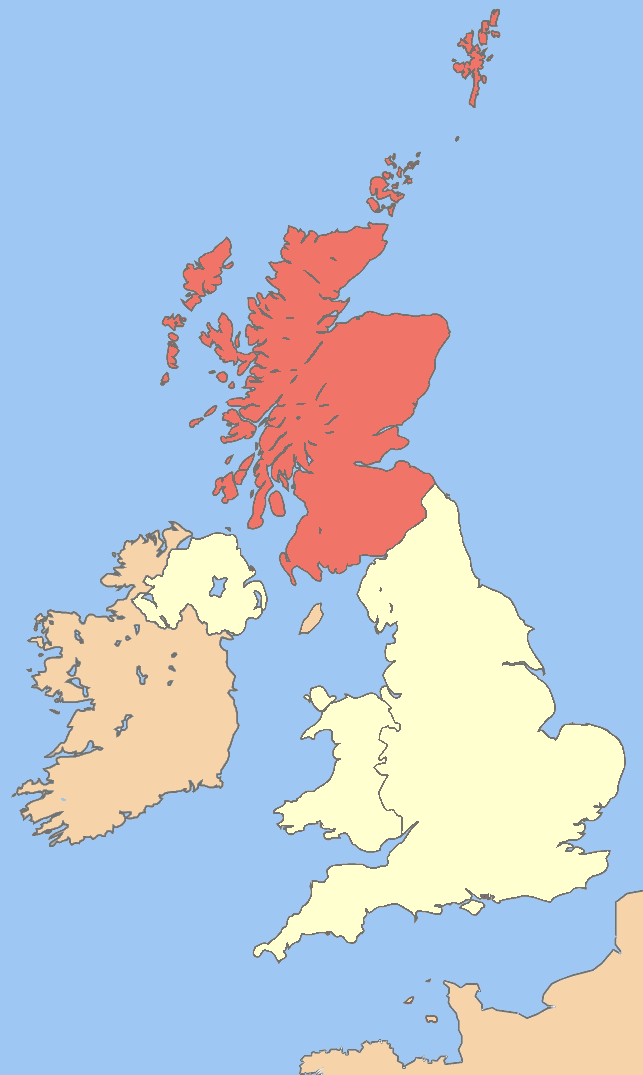
The Chemistry Map of Scotland, from University of St Andrews, is an online interactive tool for students to find famous chemists, important events and chemical discoveries. Feel inspired to nominate someone to be on the map or create your local map of famous chemists?
Go To Map>> Back to Top Page |
|
Let There Be Light... for Chemistry
Artemisinin, a drug against malaria, is too expensive for many malaria patients. However, chemists Seeberger and Lévesque have combined photochemistry and flow chemistry processes which may make the drug cheaper and easier to make.
Read More >> About Artemisinin>> Back to Top Page |
 Win an ACS 'Proud to be a Chemist' lapel pin. Win an ACS 'Proud to be a Chemist' lapel pin.
"Facts are the air of scientists. Without them you can never fly" by ???
Send us your correct answer to win the lapel pin. Three winners will be selected for this popular pin. This month's quote was submitted by Jhonatan Hernández-Valdés from Mexico.
Email us (distillate@acs.org) your answer by February 13, 2011 to be entered into the drawing. Please use QUOTE for the subject line. The answer to the quote and the winners will be posted in next month's edition.
Congratulations to Juergen Rasch-Menges of Mannheim, Germany, Alexandra Krawicz of Troy, NY and Mary Ann Dahlstrom of Houston, TX. Winners were randomly selected from all the correct entries received (Quote: The most exciting phrase to hear in science, the one that heralds new discoveries, is not 'Eureka!' (I found it!) but 'That's funny ...'" by ?? Answer: Who is Issac Asimov). Thank you to all who entered the contest.
Have a favorite quote? Please email us (distillate@acs.org) and if we use your submission, we will send you a prize.
Back to Top Page
|
Reach >100,000 scientific professionals. If you would like to submit an article, news item, or upcoming event for next month's newsletter, email us by 5:00 pm Eastern Time on the third Friday of the month to distillate@acs.org. Inclusion is subject to space and editorial discretion.
|
|
|
|
|