|
 Are you smarter than a 5th grader? Which is gramatically correct? Are you smarter than a 5th grader? Which is gramatically correct?
"The data shows a dose-response effect." or
"The data show a dose-response effect."?
Test you knowledge and take the poll above.
|
|
|
|
|
THE BUSINESS CORNER
Boom, Gloom and the New Normal - Part 4
(Access Archives for Part 1, Part 2, Part 3)
By Paul Hodges, International eChem

THE NEW NORMAL WORLD IN 2021
All of us would love to be able to see into the future. Chapter 4 of our new eBook, 'Boom, Gloom and the New Normal', does just this.
10 predictions about how the world will look in 2021:
- Young and old will be focused much more on 'needs' rather than 'wants'.
- A major shake-out will have occurred in Western consumer markets.
- Housing will no longer be seen as an investment.
- In emerging economies, companies will have recognised that the phrase 'middle-class' doesn't define people with Western income levels.
- Chemical markets will have become more regional.
- Western countries will have increased the retirement age beyond 65 to reduce unsustainable pension liabilities.
- Taxation will have been increased to tackle the public debt issue.
- Social unrest will have become a more regular part of the landscape.
- Consumers will look for value-for-money and sustainable solutions.
- Investors will be focused on 'return of capital' rather than 'return on capital'.
The New Normal offers the potential to restore a greater balance to society if companies refocus their creativity and resources on real needs.
There is also an urgent need for companies to focus on basic research to tackle these needs, rather than simply taking government grants to deploy old technologies.
The transition to the New Normal will be a difficult time. The world will be less comfortable and less assured for many millions of Westerners.
The wider population will find itself following the model of the ageing boomers, consuming less and saving more. Rather than expecting their assets to grow magically in value every year, they may find themselves struggling to pay-down debt left over from the credit binge.
More engineers and more scientists are going to be required to create the new products that will serve needs arising from the megatrends.
We will also need to find politicians with sufficient vision to sell the need for hardship and long-term struggle. This will be difficult, given that voters have become used to having all their wants met via quick 'fixes' of increased debt.
We could instead decide to ignore all of this potential unpleasantness.
But doing nothing is not a solution. It will mean we miss the opportunity to create a new wave of global growth from the megatrends. And we will instead end up with even more uncomfortable outcomes.
Go to www.icis.com/NewNormalEbook to download Chapter 4.
 Chemicals and the Economy blogger. Watch Paul's latest insight on ACS Webinars on 2011 Chemicals and the Economy Mid-Year Analysis and Projections. Chemicals and the Economy blogger. Watch Paul's latest insight on ACS Webinars on 2011 Chemicals and the Economy Mid-Year Analysis and Projections.
Email us chemical business topics you would like us to cover in future issues.
Back to Top Page
|
|
CONSULTING TIP OF THE MONTH
To Incorporate or Not to Incorporate, That is The Question
Michael J. DeLaurentis, Esq, U.S. International Tax Services, LLC
A threshold legal question the consultant must answer before commencing operations is whether to conduct business as a sole proprietor (with or without a fictitious name) or as a legal entity of one sort or another. For a solo consultant, the entity choices are corporation (C or S corporation) and limited liability company. For two or more consultants in business together, add limited and general partnerships. The critical considerations in selecting one of these entities are (a) limitation of liability (of the consultant personally and his/her business) and (b) tax implications.
Liability: A consultant who conducts business as a sole proprietor or in general partnership with other consultants generally has unlimited contractual and tort liability for personal or property damage of any description suffered by a client. With or without the additional protection of a limited liability entity, the consultant will want to have the full range of insurance protection - property and casualty, general liability, professional errors and omissions, and possibly others (unemployment compensation for employees, disability, medical, life, etc.). A corporation, limited liability company, or limited partnership adds another layer of liability protection beyond that provided by insurance: by law, the entity's and owner's liability is limited to the entity's net assets (plus any assets distributed while the entity was or was becoming insolvent). Forming such entities, however, is not costless: there are state filing fees, likely some legal and possibly accounting costs, additional ongoing record-keeping, and respect of the relevant legal formalities (e.g., not commingling personal and business assets). If contractual insurance coverage seems adequate - at least at the initial stages of business - the additional cost in dollars and learning time to form an entity may not warrant the additional theoretical layer of protection. As the business grows, this assessment may change.
Taxes: The other major factor to consider in determining whether to operate as a sole proprietor or general partners or as a limited liability entity ("LLE") is taxation, both income and employment. Only a C corporation is a taxable entity separate from its owner(s); all other LLEs are "pass-through" entities taxwise, mere conduits for the passing of tax consequences through to the owners. In certain circumstances, a C corporation that converts to S status can carry its separate taxability into the S regime for a period of years; but in all other cases, only the owners pay tax on entity income. But all businesses, with or without a LLE, may also be liable for self-employment tax of one or more owners and employment tax for employees. "Employment tax" refers to Social Security and Medicare withholding; employers of any legal form must also withhold income taxes on employee wages.
Conclusion: For many consultants, operating alone or with partners, the best legal form in which to operate is the limited liability company: it limits owner liability to the owner's unreturned investment in the entity, one level of taxation (by contrast with a C corporation), and maximum entity asset protection from creditors of owners (since they can generally not compel distributions or lay claim to anything other than actual distributions, if any, made by the entity). But before even this attractive compromise is selected, the consultant should be certain that any entity at all is really needed.
 Michael J. DeLaurentis is the principal of an international tax and business law practice at U.S. International Tax Services LLC. He has taught courses in tax at Villanova and Temple Universities and courses in philosophy at LaSalle University. He holds BAs from Amherst and Oxford, MAs from Oxford and Brown, and a JD from Yale. He is an adjunct professor of philosophy at Drexel University. Michael J. DeLaurentis is the principal of an international tax and business law practice at U.S. International Tax Services LLC. He has taught courses in tax at Villanova and Temple Universities and courses in philosophy at LaSalle University. He holds BAs from Amherst and Oxford, MAs from Oxford and Brown, and a JD from Yale. He is an adjunct professor of philosophy at Drexel University.
For comments or questions, go to the Chemical Consultants Network LinkedIn Site. Mr. DeLaurentis will speak on this topic at the October meeting of the Chemical Consultants Network.
This monthly tip is brought to you in collaboration with the Chemical Consultants Network. Next month's Consulting Tip will discuss limiting liability.
Back to Top Page
|
|
THE WRITING CLINIC - The Doctor is IN
Cut the Clutter - Part 1
By Kristin Sainani, PhD., Stanford University.
Many academics write needlessly long sentences. (Take this QUIZ to test your writing knowledge). Streamline your prose by eliminating:
- Dead-weight phrases: as it is well known, as it has been shown, it can be regarded that, it should be emphasized that
- Instead of: As it is well known, increased athletic activity has been associated with lower cardiovascular risk (1,2).
- Try: Increased athletic activity has been associated with lower cardiovascular risk (1,2).
- Empty words and phrases: basic tenets of, methodologic, important
- Long words or phrases that could be short: due to the fact that (because), are of the same opinion (agree), less frequently occurring (rare), based on the assumption of (if), a total of 500 (500)
- Instead of: The expected prevalence of mental retardation, based on the assumption that intelligence is normally distributed, is about 2.5%.
- Try: The expected prevalence of mental retardation, if intelligence is normally distributed, is 2.5%.
 Kristin Sainani is a clinical assistant professor at Stanford, where she teaches statistics and manuscript writing. She is also a freelance health and science writer. Kristin Sainani is a clinical assistant professor at Stanford, where she teaches statistics and manuscript writing. She is also a freelance health and science writer.
Want more tips? View Kristin's recorded presentation. Have writing questions for Kristin? Email us your questions or tips you would like Kristin to cover in future issues. Back to Top Page |
|
FROM THE LAB CORNER
That Painful Interview Question!
By Chemjobber
 The most painful question in interviewing may be that old HR favorite "What are your weaknesses?" A recent post on Lifehacker suggested answering with a skill that you're not good at, but is not relevant to the job. For example, "I'm not experienced at accounting, which is why I'm excited about this job in sales." While a bit of a dodge, I think this is a better choice than the old and tired "I work too hard" or a personal favorite of mine, "I'm too detail-oriented -- I can't see the forest for the trees." (Imagine the stumped look on the HR person that heard that one.) The most painful question in interviewing may be that old HR favorite "What are your weaknesses?" A recent post on Lifehacker suggested answering with a skill that you're not good at, but is not relevant to the job. For example, "I'm not experienced at accounting, which is why I'm excited about this job in sales." While a bit of a dodge, I think this is a better choice than the old and tired "I work too hard" or a personal favorite of mine, "I'm too detail-oriented -- I can't see the forest for the trees." (Imagine the stumped look on the HR person that heard that one.)
When I covered this question at Chemjobber, there were a variety of responses both irreverent ("Right now during this job interview I do not remember any weaknesses. It looks like I have only strengths.") and amusing ("Not being able to beat 'Ninja Gaiden 2'"). However, a useful response strategy is: answering the question honestly about a weakness, but talking about the ways that you've learned awareness of it and how to compensate positively. I suspect a sincere and thoughtful answer along those lines would be well-received, even by the most hardened human resources manager.
Good luck and good hunting.
 Chemjobber is a working chemist in industry; he writes a blog on employment in chemistry at chemjobber.blogspot.com. Chemjobber is a working chemist in industry; he writes a blog on employment in chemistry at chemjobber.blogspot.com.
Have lab/career questions? Email us your questions that you would like The Distillate to cover in future issues.
Back to Top Page
|
ACS Webinars™ CLICK * WATCH * LEARN * DISCUSSLearn more and register at www.acswebinars.org ACS Webinars™ connects you with subject matter experts and global thought leaders in chemical sciences, management, and business on relevant professional issues. More information and registration... Have ideas? Email us your suggestions for future ACS Webinars ™ topics. Please include 'Webinar Topic Suggestion' in the subject line. Back to Top Page
|
Upcoming conferences that may be of interest to you:
- Sept. 8, 2011 - CM&E Webcast event "Next in Cleantech: Zero-Waste Refining"
- Sept. 14, 2011 - New Business Paradigm for Pharmaceutical Companies, Societe de Chimie Industrielle, NY.
- Sept. 14, 2011 - Bookkeeping for Consultants, Chemical Consultants Network, Bala Cynwyd, PA.
- Oct. 6, 2011 - CM&E Webcast event "The Transformation of DuPont"
Back to Top Page |

Chemical Marketing & Economics Group of ACS-NY Webcast Thursday, September 18, 2011 "Next in Cleantech: Zero-Waste Renewable Chemicals" with speaker Kelly Ogilvie, President and CEO of Blue Marble Energy and Blue Marble Biomaterials. Register at: http://tinyurl.com/cme-sept11 Back to Top Page |
 Lens of Science and the Market: Lens of Science and the Market:
How to Position your GREEN and SUSTAINABLE MATERIALS.
67th SWRM. Austin, Texas. November 11, 2011. $150 per team. The ACS's Division of Business Development & Management, Division of Small Chemical Business, Women Chemists Committee and the National Collegiate Inventors and Innovators Alliance /VentureWell invite you to attend an all day workshop focused on translating your research into a commercial innovation at the 67th Southwest Regional Meeting this year in Austin, Texas. This is an excellent opportunity for existing teams of 2 to 5 innovators to relate their research on green and sustainable materials to market definitions, segmentation and technical solutions. Space is very limited, so please apply early! Register at: http://www.swrm2011.org/registration/ Back to Top Page |
Featured Archived Content:" Advances and Innovations in Wine Chemistry" with Dr. Susan Ebeler, UC Davis and Dr. Steve Carlo. From grape harvesting to fermentation, advanced chemical analysis is now used to discover what gives wine its taste, texture and aroma. Here's to better wine through chemistry! 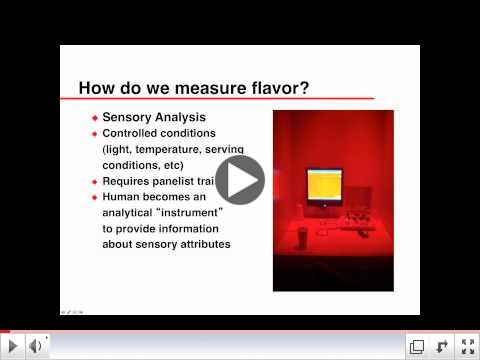 | | Advances and Innovations in Wine Chemistry |
Back to Top Page
|
Can't attend the live ACS Webinars? To access recordings of past ACS Webinars, please visit our on-demand content library or YouTube. Want your events included in The Distillate and/or ACS Webinars webpage? Please email us your event info with the subject title EVENTS. Back to Top Page
|
|
Angry Chemists
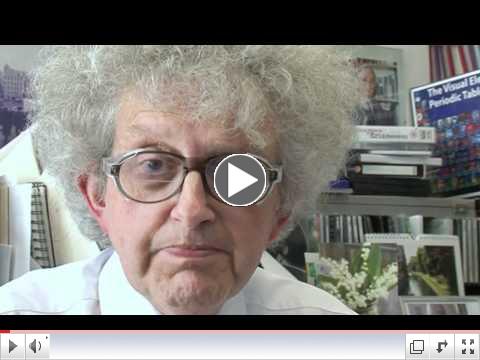
UK chemists have written to Prime Minister David Cameron about funding cuts in the field of organic chemistry research. Should US chemists follow-suit to Congress?
 | | Angry Chemists - Periodic Table of Videos |
Have chemistry vids we should feature? Write to us at distillate@acs.org.
Back to Top Page
|
 Do you know the origin of the word 'Chemistry'? Do you know the origin of the word 'Chemistry'? The origin of the word "chemistry" is rather complex, including a mix of arose from a tangle of ancient civilizations, from Egyptian to Greek to Arabic, an idea that evolved into the word "alchemia" Learn more>> Back to Top Page |
 Win an ACS 'International Year of Chemistry 2011' lapel pin. Win an ACS 'International Year of Chemistry 2011' lapel pin.
"I am often amazed at how much more capability and enthusiasm for science there is among elementary school youngsters than among college students" by ???
Send us your correct answer to win the lapel pin. Three winners will be selected for this popular pin. This month's quote was submitted by Lisa Alexander from Atlanta, GA.
Email us (distillate@acs.org) your answer by September 19, 2011 to be entered into the drawing. Please use QUOTE for the subject line. The answer to the quote and the winners will be posted in next month's edition.
Congratulations to Dana Roth of California, Eli Breuer of Israel, and Joanne Williams of Virginia. Winners were randomly selected from all the correct entries (Answer: Who is Albert Einstein) received. Thank you to all who entered the contest.
Have a favorite quote? Please email us (distillate@acs.org) and if we use your submission, we will send you a surprise prize.
Back to Top Page
|
Reach >100,000 scientific professionals. If you would like to submit an article, news, or upcoming events for next month's
newsletter, email us by 5:00 pm Eastern Time on the third Friday
of the month to imp@acs.org. Inclusion is subject to space and
editorial discretion.
|
|
|
|
|