|
The Inner Voice
A weekly newsletter from Debbie Jensen-Grubb, RYT500
October 21, 2013 - Issue 53
|
|
|
|
Quick Links
| |
This weeks reading can be seen here at The Daily OM
**********************************************
To access past issues click here:
***********************************************
|
|
|
|
|
I find it fascinating that I am writing  about the brain by using the brain to create this newsletter. Now that is a brainteaser! about the brain by using the brain to create this newsletter. Now that is a brainteaser!
The reasoning mind (left hemisphere) is what Western culture values over the other neural (brain) systems (right hemisphere, heart, gut). Our schools reinforce this judgement, as well as does our visually-based technological industry. As a result,
we are acculturated to respond as though our head-brain were in charge, even though we often respond to stimuli first from the gut or heart.
In actuality, there is no left-brain : right brain personalities. The University of Utah's study showed that people don't generally have a stronger left- or right-sided brain network. The brain works as a whole with each side doing its part. So you can't blame your personality on your brain any longer. ;-)
Watch this fascinating 19-minute explanation of how the brain works from Jill Bolte Taylor, as she describes how she watched herself having a stroke. It's a wow!
Consider this definition of the head-brain: the true function of the head-brain is to provide original responses to new unfamiliar stimuli and solutions to challenges that the lower intelligence centers are unable to address.
So, if we were to cultivate the use of our other brains to corroborate with the head-brain, it could relax and not work so hard. Doesn't that sound delightful? It is something that all of us have wished for at one time or another. So how do we begin to get the head-brain to let go and allow the others to do what they are capable of doing?
It comes down to our thoughts. What thoughts do we have, how can we change them, and what part does yoga play in all of this? Let's begin to investigate and see what has been discovered about the brain.
|
| Joke of the Week - hee hee | |
I think I have more people on the right side of my brain!
|
|
|
|
| Mantra |
A mantra is a sound or phrase that aids in the concentration of meditation. It is a Sanskrit term and literally means 'instrument of thought'. Here you will find a suggested mantra to use during the week (from Louise Hay's 'Heal Your Body'). Just repeat it whenever you need a lift.
I am the loving operator of my mind.
All of life is change and my mind is ever new.
|
|
Yoga for a Healthy Mind
|
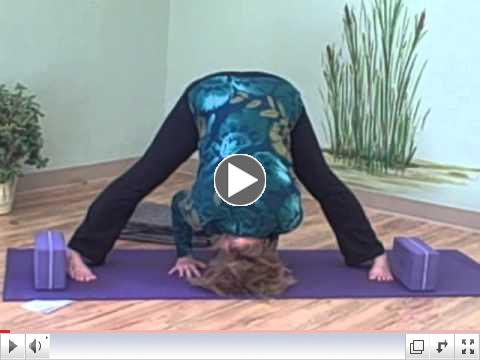 Many think that yoga is all about physical activity to strengthen the body, but yoga is ultimately about controlling the energy of the mind. In one of the great works about yoga, The Yoga Sutras, Patanjali describes how one can produce concentration through Yoga and how this focused thought can be used to gain powers towards enlightenment.
Asanas (or poses) are used to bring health to the body. The yogis developed them so that they would be able to sit for a long time to meditate with comfort. Pranayama (breath or energy) is the measuring, directing, and control of the breath. The next step is in learning the art of meditation to control the mind. In the Yoga Sutra, the practices of pranayama and asana are considered to be the highest form of purification and self discipline for the mind and the body, and acquiring these skills readies the body to explore the mind.
We use both of these techniques to bring stability and equilibrium to the mind. In the video above we do this by stretching the upper torso to relieve tension in the muscles that are holding the head up, placing gentle pressure on main acupressure points on the head to stimulate the mind, and using alternate nostril breathing to balance the left and right sides of the brain.
By doing just these few movements you will feel more calm, centered, and vital. When we feel well it is easier to think more positively. When we think positively, then we begin to change our lives for the better.
|
|
|
Nutrition Prescription - Blueberry
|
 Blueberries should be called 'brain berries' according to Dr. James Joseph because they are so beneficial for the brain. Studies show that even a modest amount of this fruit dramatically slows impairment in memory and motor coordination in aging. Blueberries should be called 'brain berries' according to Dr. James Joseph because they are so beneficial for the brain. Studies show that even a modest amount of this fruit dramatically slows impairment in memory and motor coordination in aging.
The blueberry is a fruit that is native to America, and it doesn't matter if you eat it fresh, frozen, canned, or as an extract you can still get its life-enhancing qualities. After testing 24 varieties of fresh fruit, 23 vegetables, 16 herbs and spices, 10 different nuts, and 4 dried fruits, the US Department of Agriculture determined that blueberries scored highest overall in total antioxidant capacity per serving. Most of the berry's power comes from Anthocyanin, the pigment responsible for the blue color of the berries.
For centuries, Native American cultures had consumed 'starberries' (blueberries) not only as food but also as medicine, drinking blueberry juice to relieve coughs, brewing a tea from blueberry leaves as a tonic, and eating fresh, dried berries to sharpen their vision.
According to the website Wild Blueberries there is an advantage to eating these little powerhouses from the wild. ' The phytochemicals found in the skin of fruits and 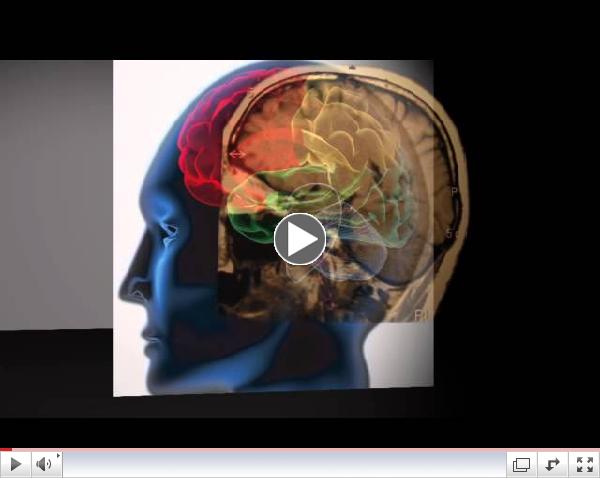 vegetables provide these plants with antioxidant protection against the stress caused by intense sunlight and rigorous growing conditions. The harsher the environment, the more potent the protection. When you eat these foods, you get the same antioxidant protection for yourself.' vegetables provide these plants with antioxidant protection against the stress caused by intense sunlight and rigorous growing conditions. The harsher the environment, the more potent the protection. When you eat these foods, you get the same antioxidant protection for yourself.'
The best thing about this perfectly power packed little superfood is how delicious it is! So much so that you don't mind taking your 'medicine' when it tastes this good! Here are some delicious and healthful recipes to make, so you can begin to get your brain the healthiest it can be! Enjoy!
|
|
Ponderings - Mind-Brain: The Third Brain
|
 | | How the Brain Works |
What are you thinking? Unless you actually stop and pay attention to your thoughts you don't notice them. One of the most amazing phenomena about our society is the lack of daily attention and respect we give to our mind. I mean truly, it is one of our most powerful tools and we aren't aware of how we use it most of the time.
Did you know that we think approximately 60,000 thoughts each day? And that the brain has billions of neurons and gliacells to think those thoughts? In fact, if you could harness the power used by your brain you could turn a 10-watt light bulb on with it! Neurons transmit and receive electrically charged nerve signals to and from the brain at speed of 268 mph! This is why our thoughts and body reflexes are lightening quick and so well coordinated.
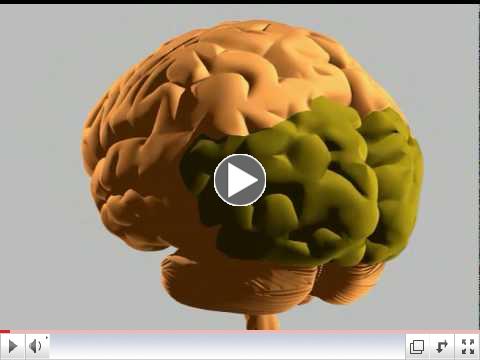 | | How the human brain works |
When the neurons communicate with each other they create a sort of neuronet and this produces a structure much like a hologram that is a thought. Scientists have conducted many studies all over the world to figure out how the brain works and with our progress in the technological field it is becoming easier to map the physical circuitry of the human mind.
In all of this neuroscience what caught my attention most was how they found that the brain has the power to change its own structure! It used to be thought that once a certain part of the brain was damaged or died that it could not be regenerated, but now it is widely accepted that this is not the case! The science of neuroplasticity has proven that the brain is endlessly dynamic and adaptable. People can train other areas of their brains through repetitive mental and physical activities to heal themselves. In the book 'The Brain That Changes Itself' Dr. Doidge chronicles amazing case histories of patients whose astonishing progress had previously been dismissed as hopeless.
What is surprising is that they found that we are born with almost as many neurons as we are ever going to have and that the brain stops growing at the age of 18! For instance, as we continuously think the same thoughts over and over again we create neural pathways. Since we have a limited number of neurons to work with, in order to create new pathways the brain must alter these same neurons into the new way of thinking, or new pathways. This explains how we can lose bad habits or memories (samskaras) and create new ones just by refocusing our thoughts, because we are revamping a neuron to reflect the new way of thinking.
The good news is we can become more optimistic by changing our thoughts into positive ones using this same process! It means that repetitive positive thought and positive activity can rewire your brain and strengthen brain areas that stimulate positive feelings! WooHoo! The thing is...we have to do the work everyday. Just like exercise, the work requires repetition and activity to reinforce new learning. We can't rely on others (therapists, coaches, teachers) to guide us on what to do, we actually have to do our own practice to begin the transformation - everyday.
How does Yoga fit into all of this? The goal of yoga is to come into such deep thought that you achieve a meditative trance-like state (Sanyam) to get the billions of neurons to focus on a single thought which aligns you with the matrix of Universal Knowledge (or God) that surrounds us (see last weeks article on the Heart).
Yoga is a science that teaches step-by-step how to rewire your brain. As you become more proficient at each step of the Eight Limbs of Yoga, it leads you to this state. Naturally a yogi has to practice years of tapasya (spiritual practice) before he or she can achieve this sort of concentration, which is why many of the great yogis lived in ashrams without having regular jobs or families, even living in caves so that they could focus just on meditation.
Since most of us are not going to do this, just practicing mindful living and positive thoughts can begin to change our lives for the better. To begin, get the body in a healthy state with asanas (poses), become more aware of the breath, and change the neural pathways in the brain with meditation, soon you will begin to take full advantage of each stage of yoga to live a healthier, more balanced, and joyful life.
Here's a suggestion from Dr. Barrie Davenport on how to start the change from negative thinking to a more positive one. When you find yourself in a cycle of negative thinking, remember the three R's - rename, re-frame, and redirect.
- Rename the issue by reminding yourself that worry isn't real. When the worry begins, mentally yell "Stop!" Rename it as a compulsive reaction, not reality.
- Reframe your thinking by focusing on positive or distracting thoughts, even if you still feel anxious. Force yourself to think different thoughts
- Redirect your actions. Go do something uplifting, fun or mentally engaging.
The key is following these steps repeatedly, every time you worry obsessively, to break the pattern and rewire your brain.
|
 |
|
We are just learning all the fascinating workings of the brain. Who knows if we will ever fully understand its mysteries? In some ways I hope we never do. Having mystical qualities is enchanting to believe in and allows the possibilities to be endless. Although, I must say, enhancing the quality of our lives is a great benefit in learning about the brain, and one I endeavor to continue to employ!
Writing this article has deepened my understanding of just how Yoga works to improve so many different aspects of our lives. I know that since practicing Yoga in my life it has become better than ever before, and this is what I wish to share and teach to enable everyone to enjoy its many benefits as well.
Thank you!
Hugs and Namaste,
Debbie
|
|
| Article Headline | |
Please join me in my next TWO workshops...
 Yoga Nidra Yoga Nidra
November 3, 2013
1:00 - 2:30 p.m. |
Yoga for the Upper Torso
 October 26, 2013 |
|
|
|


