When substituting yarn in a pattern, there are three main things to consider: the weight of the yarn, and the fiber content of the yarn, and the color of the yarn.
First, consider the weight of the yarn
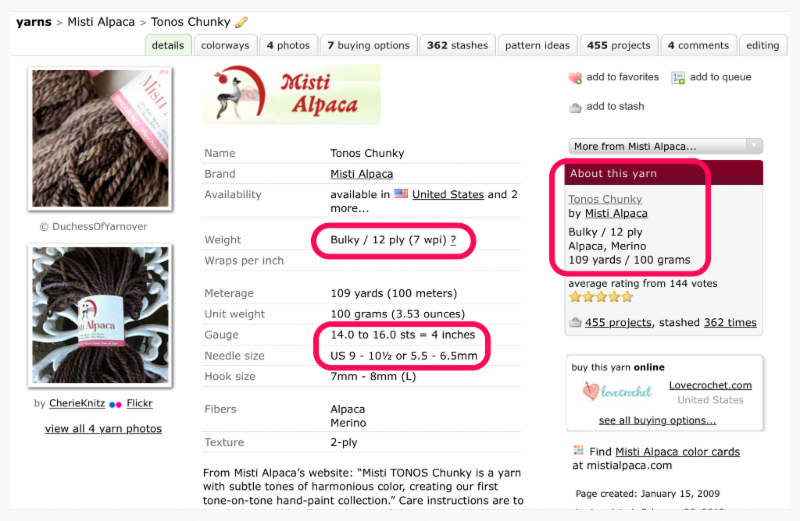
The yarn used in the pattern is
Misti Alpaca Tonos Chunky.
This yarn is considered "bulky" with a yarn gauge of 14-16 stitches = 4 inches on US 9-10 1/2 needles, and 1 skein has 109 yards.
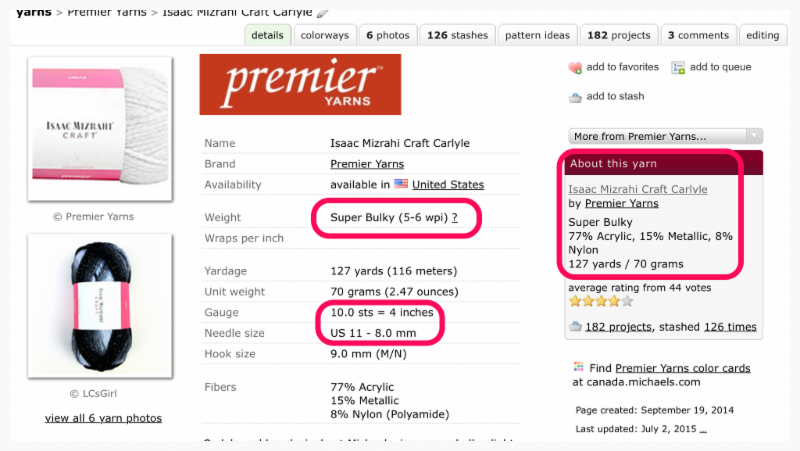
Using the information for the student's yarn,
Isaac Mizrahi Craft Carlyle, this yarn is considered "super bulky" and has a gauge of 10 stitches = 4 inches using US 11 needles, and 1 skein has 127 yards.
So, the student's yarn is a little bigger than what is used in the pattern. Her yarn has 10 stitches/4 inches which is fewer stitches (and therefore bigger stitches) than the pattern yarn of 14-16 stitches/4 inches.
Another way to look at this same information is to see that her yarn suggests using bigger needles (US 11) than the pattern yarn (US 9-10 1/2) suggests.
If the student used her yarn for this pattern, the headband would be bigger and thicker. If she's okay with that, then she would have to adjust the pattern to determine the correct number of stitches to cast on to fit her head (fewer stitches since the yarn is bigger). To calculate that number, she could refer back to my previous newsletter,
A Question About Gauge. In addition, since this pattern also contains a cable pattern repeat of 6 stitches, she would need to calculate the pattern repeat (see other newsletter,
How to Calculate Pattern Repeats for more information).
Secondly, keep in mind fiber content
The original yarn used in the headband pattern is an alpaca/merino blend. Alpaca is a very warm, soft, light fiber that is sheared from an alpaca, much like wool is shorn from a sheep. Merino is a breed of sheep that produces very soft and fine wool.
Animal fibers (wool, alpaca, goat, ox, rabbit) behave differently than vegetable fibers (cotton, milkweed, rayon from wood pulp, bamboo) or silk or synthetic fibers (acrylic). Wool and most animal fibers are springy, and after washing, will spring back to its original shape. Cotton, however, tends to stretch and sag. Animal fibers inherently trap heat in the fibers and repel water. Plant fibers will soak up water and are great for cooler climates. Acrylic is usually made to be springy, like an animal fiber, traps a lot of heat, and will make a yarn easy to care for (acrylic is machine washable). Therefore, it's usually best to stay with a similar fiber or blend of yarn to the original pattern yarn to get the best results.
Another consideration with fiber content is the twist of the yarn. If you have a yarn that is very fluffy, or loosely spun, the stitch pattern of your knitting may look "fuzzy." A tighter twist can provide more stitch definition.
Lastly, keep in mind the color of the yarn
You may wonder "why does this matter?" A colorful, variegated yarn provides a lot of visual interest (stripes, patterns, pops of color) that looks great in a simple stitch pattern. A more complicated pattern, like lace or cables, will get lost in all of the color changes. And if you are making a pattern with cables, like this headband, you want to stick with a solid, light-colored yarn to best show off all of your hard work!
Now you know how to substitute yarn in your next knitting project!