|
|
|
Special Recognition: Caribbean-American
Heritage Month
| |
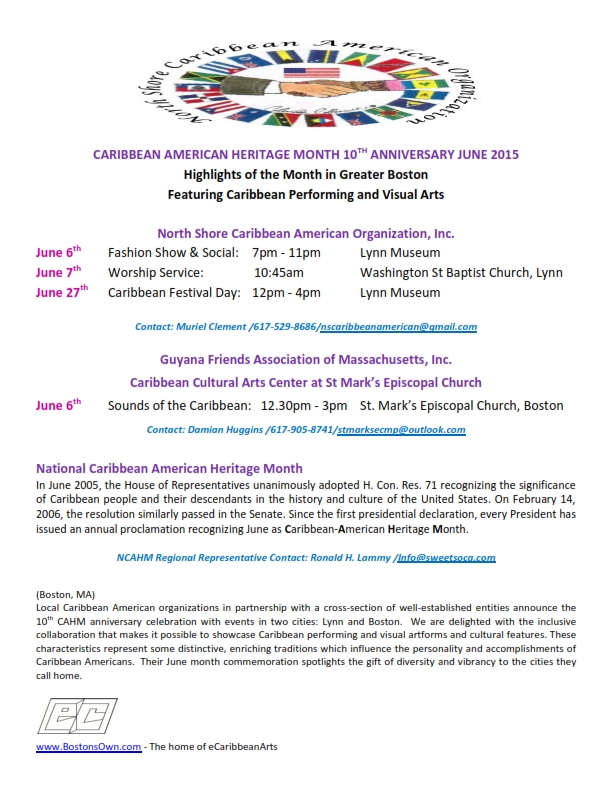
In June 2005 the House of Representatives unanimously passed a resolution designating
the month of June as National Caribbean American Heritage Month. The resolution was subsequently passed by the Senate on February 14, 2006, and the White House has annually proclaimed June as a time to celebrate Caribbean American Heritage.
The National Consortium joins in the celebration of the tenth anniversary of the passage of the resolution by the House of Representatives by commemorating some of the important contributions that Caribbean Americans have made to the United States' history and culture:
- Alexander Hamilton - Influential Founding Father, First Secretary of the Treasury, aide to George Washington, and writer of the Federalist Papers, Hamilton was born out of wedlock on the Caribbean island of Nevis. Hamilton later emigrated as a teenager from the Virgin Islands after the death of his mother there.
- Colin Powell - the first person of color to serve as Secretary of State, Powell also served as Chair of the Joint Chiefs of Staff and a four-star general. Powell's parents emigrated from Jamaica to Harlem, New York.
- W.E.B. Du Bois - American sociologist, civil rights activist, and co-founder of the NAACP in 1909, Du Bois was also the first black person to graduate from Harvard with a doctorate. Du Bois' father emigrated from Haiti.
- Sidney Poitier - The first black actor to win an academy award, Poitier is also a successful director, Bahamian ambassador to Japan, and winner of the US Presidential Medal of Freedom.
- Caribbean Americans also include current giants of American pop culture Nicki Minaj and Beyoncé Knowles. Nicki Minaj, a chart-topping rapper and singer, was born in Trinidad. Megastar singer-songwriter Beyoncé Knowles' father emigrated from the Bahamas.
It also must be recognized that the heritage of Caribbean Americans is as diverse and complex as the 7,000 islands located in the region.7 The US relationship with the Caribbean is therefore also quite varied but was crucial to the development of the US. The United States' relationship with the Caribbean became a high priority after the purchase of the Louisiana territory: since the Caribbean was the primary passageway to and from the American heartland's port of New Orleans it was crucial that the US had access to it. Thus, during the 19th century the US tried to gain control of various islands governing the passageway, which would have also allowed it to capitalize on the lucrative goods that the Caribbean produced.
After the Spanish-American war of 1898 the US had gained control over Cuba, Puerto Rico, the Bahamas, and other islands as colonies. This allowed the US to control the area surrounding its newly-built Panama Canal.8 Haiti, the first European colony in New World to gain independence, was occupied by the US from 1915 until 1934, allegedly to protect US citizens and interests located there.9 Since 1960 the US has maintained a trade embargo with the nation of Cuba,10which was modified last year. Caribbean Americans inherit a unique part of US history, and a rich diversity of origins.
Today, the Caribbean has become a unique place to examine how different people groups interact with the US and other world powers politically. Puerto Rico and the Bahamas are US Commonwealths, meaning they hold joint sovereignty with the US, while the US Virgin Islands maintain themselves as a US Territory. Other islands identify themselves as Associates or Departments of other nations. Still other islands exercise independent control of their lands.
This month, the National Consortium celebrates the contributions that Caribbean Americans have made to the development of the United States and remembers the diverse history of US-Caribbean relations. The National Consortium encourages all Americans to do the same.
|
|
| |
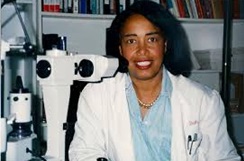
Patricia Bath
"The Right to Sight"
Patricia Bath is a celebrated, pioneering Ophthalmologist and is the first black woman to receive a patent for a medical purpose. She was born in Harlem; her father was a Trinidadian immigrant who was the first black motorman on the New York City subway. Patricia was encouraged in her studies and excelled, graduating after two years from high school. At 16, she was one of a few students to attend a cancer research workshop where she came to the attention of the department head of the National Science Foundation. He incorporated her research findings into a scientific paper he presented at a conference and she was awarded the Mademoiselle magazine's Merit Award in 1960.
Ms. Bath then received her BA in Chemistry at Hunter's College and a doctoral degree from Howard University College of Medicine. During an internship at Harlem Hospital Center, concurrently serving as a fellow at Columbia University, she was struck by the unequal care afforded to Blacks and the poor. She instituted the practice of community ophthalmology by persuading her Columbia professors to offer free eye surgery. This vision of everyone having the 'Right to Sight' expanded to community screenings for vision, cataracts, and glaucoma screening. It also inspired her, in later years, in finding the American Institute for the Prevention of Blindness to provide services to those who could not otherwise afford them.
This passionate commitment to bring sight to all led to her research and development of the Cataract Laserphaco Probe that revolutionized the process of removing cataracts, making it less painful, safer, faster and more accurate. Ms. Bath has been able, with this device, to hold the distinction of restoring sight to people who have been unable to see for decades. She holds two other patents related to this invention and one for a method she devised using ultrasound technology to treat cataracts.
Ms. Bath is a pioneer in many areas; she was the first woman on staff at the Jules Stein Eye Institute; the first to head a post-graduate program in ophthalmology at NYU where she was also the first Black resident; the first woman head of residency at Charles S. Drew Medical Center and; the first Black woman on staff as a Surgeon at the UCLA Medical Center. She has lectured internationally and authored 100+ papers, and continues to call for vision care outreach and attention to vision issues.
|
|
|
|
|
Hidden
Treasures
|
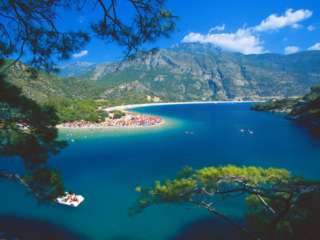
The most famous place in Portland and one of the legendary beauty spots in the world. A natural favorite for swimmers as the mix of fresh and salt water offers an unusual bathing experience.
They say the lagoon is bottomless and that a sort of dragon resides there. But in reality Blue Lagoon is and enchanting spot with deep blue water fed by a fresh water mineral spring.
Made famous by a certain Brooke Shields movie and the site of a well-publicised Jacques Cousteau dive, the 52m-deep (170.6ft) 'Blue Hole' (as locals call it) opens to the sea through a narrow funnel, but is fed by freshwater springs that come in at about 40m (131ft) deep.
Truly on of the most beautiful and enchanting sites in all of Jamaica!
|
|
History Bits
| |
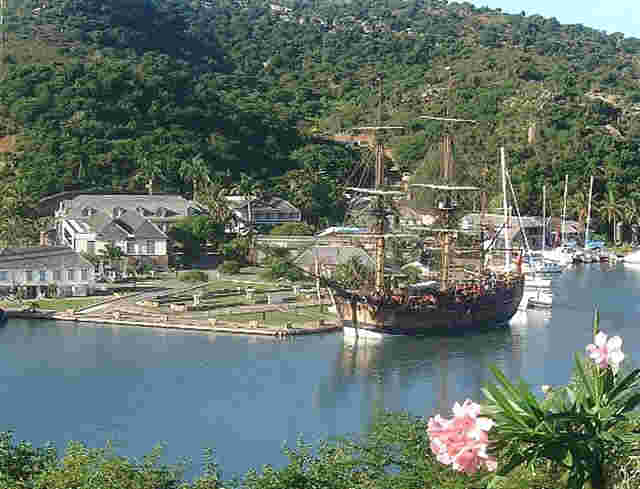
His Majesty's Antigua Naval Yard at English Harbour dates from 1725. Its function was to maintain the Royal Naval warships that captured valuable sugar islands of the Eastern Caribbean thus cutting off enemy trade and increasing Britain's own wealth.
By 1889, the Yard had completely wound down, and released by the Admiralty to the Colonial Government in 1906.
From the beginning of restoration in 1951, the yard became known as Nelson's Dockyard in honour of Admiral Horatio Nelson who had served as a Captain from 1784-87.
|
|
| |
Save the dates:
June 21-27th
|
|
|
|
|
|
|