| Black History Walks,Talks & Films |
Black History is longer than a month..
Poison in the Caribbean
September 2012 | |
 | | Poison in the Caribbean Pt 1. Pesticide banned in Europe is nevertheless used in the West Indies, leading to huge increase in cancer, deaths and birth defects. The poison has even been found in breast milk. |
|
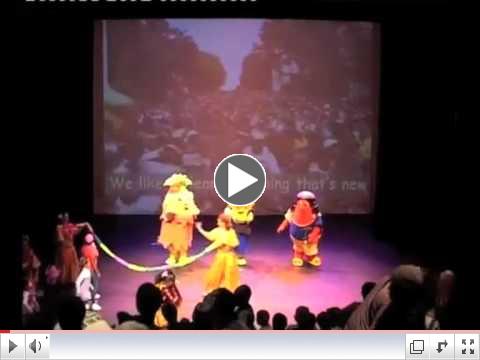 | | The Tropical Island Show @ Cottons Islington 12.15pm and 3.15pm on Sat 25 and Sun 26 August |
The innovative Tropical Island children's theatre show gets another airing this Bank Holiday weekend ! The idea for Tropical Island came about when the highly respected TV producer Terry Jervis saw some children using fruit as toys. The youngsters customised the fruit, giving them human features and characteristics and were happy in playing with them for hours. Pioneering Jervis and his team took the idea further in their invention, adding characteristics and a storyline and ensuring it would be fun and entertaining. The life size puppets were made by Jim Hensons Muppet factory. From early learners to adults, you are invited to share the music, culture and magic of Tropical Island. With catchy songs, limbo competitions and humour...the show will have you dancing on stage ! The live action show also has several episodes that were filmed in St Lucia that will be for sale on DVD. 12.50 kids and 15 pounds adults. Early bird and family discounts available. Bookings 0844477100 www.ticketweb.co.uk/tropicalisland |
|
 Free Events on History every Wednesday in August Free Events on History every Wednesday in August
London Metropolitan University is hosting a series of events on history in association with www.blackhistorywalks.co.uk in honour of Mosiah (Marcus Garvey) month, African Remembrance Day and Pan-African Women's Day. ( Womens Day was founded as a celebration of the first Pan-African Women's Conference in Tanzania in 1962. Previously censored, excluded from the mainstream and forced underground, these documentaries and presentations highlight the political, economic, cultural and social condition of people of African descent. Free entry to all films/presentations, just send an email to m.asantewa@londonmet.ac.uk or michelleyaa@yahoo.com
The Walter Rodney Story Wednesday 22nd August 2012: 6.30-8.45pm Room T11-03
The Malcolm X of the 70's and author of how Europe Underdeveloped Africa. A straightforward, chronological approach to Rodney's life in Guyana, Jamaica, Tanzania and England, footage of various physical locations interspersed with interviews of persons who knew and worked with him, as well as his daughter Asha. Michael O. West said that Rodney was under surveillance almost all his adult life and there are also interviews with researchers Horace Campbell and Robert Hill, among others. Rodney was killed on June 13, 1980, when a bomb disguised as a walkie talkie, given to him by Sergeant Gregory Smith of the Guyana Defence Force, exploded.
Black Women and the Apartheid Uprisings Wed 29th August 2012: 6.30-8.45pm Room T11-03
The recent anniversary of the Soweto Uprisings (June 16 1976) passed unnoticed in most white media. Black Women played a crucial part in South Africas liberation from Apartheid but like many women freedom fighters in Africa, their role has been under-reported and under-valued.This presentation, hosted by Dr June Bam-Huchison, will explain the role of African and so-called 'coloured' women in the struggle since the 1950's to 1976. In particular we will cover..
- Methods of resistance: Not just the gun
- Beauty as a form of oppression: The role of the dentist
- Methods of oppression: birth control and experimentation
- Male female relationships: How does a couple involved in resistance work survive ?
- Life in prison for men, and what it means for women
- The role of female sex workers in the struggle
- Love and Liberation music
All events take place at London Metropolitan University (Tower Building) 166-220 Holloway Road, London, N7 8DB Tube: Holloway Road .Queries to Michelle Asantewa m.asantewa@londonmet.ac.uk or michelleyaa@yahoo.com NB: Important to register for the screenings www.blackhistorywalks.co.uk |
|
 | |
The Bank of England's African history..find out more on a Black History Walk. |
|
|


|
- Next Walks
- St Pauls Walk Sat 8th September 2pm
- Elephant & Castle Walk Sat 8th September 11am
- Secrets of Soho Walk Sun 9th September 3pm
- Trafalgar Square Sun 9th September 12pm
- Notting Hill Sunday 16th September 12pm
Black History Walks listed Top Ten best guided walks in London by The Guardian...click here find out more about the walks above here |   |
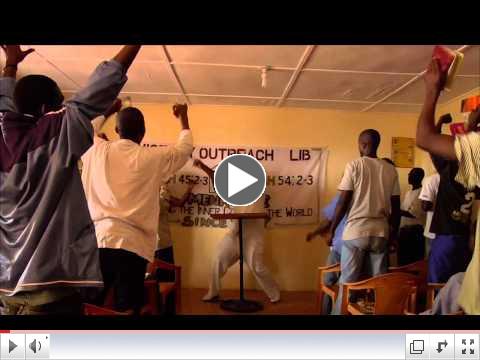 | |
"The Redemption of General Butt Naked" Official Trailer |
I Will Tell Film Festival
Sponsored by Black History Walks
They brought you the special preview screenings of THE HELP and FAST GIRLS. Now join the I Will Tell International Film Festival for their 7thfilm festival at the Coronet cinema from 30 August to 9 September, celebrating the theme Live Your Dream. Tickets start from just £5 !
Opening Gala Screening of THE REDEMPTION OF GENERAL BUTT NAKED with a post-screening discussion with Rev. David Shosanya, 40 films over 11 days and nights, Director Q&As, Post-screening discussions, Seminars and Workshops on the theme Live Your Dream!
For those who have enjoyed BHW's screening of rare and unusual films which show African/Caribbean people in an accurate and positive light, this film festival is a must attend event. Funded by Garveyite principles and guided by faith, there are 40 films to choose from at a central London venue. There are too many to list here but check the trailers below..
To view the whole festival calendar or to book tickets visit http://www.iwilltell.com/festival11/festival.html |
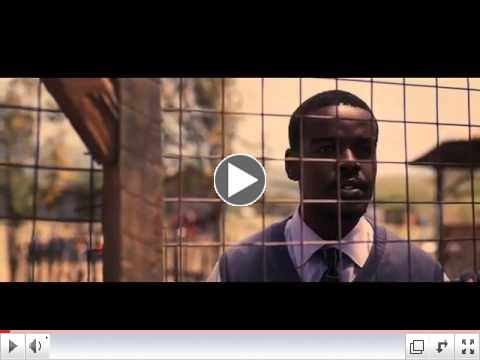 | | The First Grader : An essential film for anyone interested in education, role models and the history of Kenya. An I Will Tell Festival Film supported by Black History Walks |
|
![Red Tails Trailer 2 Official 2012 [HD] - Terrence Howard, Cuba Gooding Jr.](https://thumbnail.constantcontact.com/remoting/v1/vthumb/YOUTUBE/2e0fb7020e23433883d3a0ae98538407) | |
Red Tails Trailer. Many of you missed seeing it on the big screen the first time round and were vexed. This is your chance to watch the heroic true story of the all black fighter squadron of World War.This is the film that Hollywood did not want made or distributed. An I Will Tell Festival Film supported by Black History Walks. |
|
|

Black History Walks supports Anime Caraibe !!!
Those that have attended African Superheroes Day and/or African Animations forum will be aware that that mainstream cartoons/animations have either no black characters or just racist stereotypes. We are therefore proud to team up with Anime Caraibe part of, I Will Tell Film Festival, and present 15 cartoons produced by African/Caribbean artists. Be prepared to see some of the most beautiful, inpsiring and funny cartoons you have ever seen. Experience what it's like to be included and see your history and culture on the big screen. Make sure any children you know (and those adults used to Cartoon Network or Tom Jerry) attend and see if you can spot the difference in portrayal http://www.iwilltell.com/festival11/festival.html |
|
Competition Corner Win two tickets to one of the I Will Tell events. Who was the black female leader who headed the Scrap Sus campaign in the 1980's ? Send answers to info@blackhistorywalks.co.uk
|
 | | African Superheroes and Black Kung Fu masters featured at the conference. |
National Association of Black Saturday Schools Conference with educational events for adults and children !!
20 to 25 August 2012 Happening Now !
Black History Walks is sponsoring a week long seminar of workshops for adults and kids during the summer holiday. Parents are sometimes at a loss as to what to do with their children at this time and are often looking for help
National Association of Black Saturday Schools Conference with 67 educational events for adults and children !!
with education in general. You can attend a workshop on school exclusion while your child is downstairs watching positive images and learning black history. A sample of the workshop titles ..
- How the Equality Act 2010 affects your child (Society of Black Lawyers)
- Hair styles without a comb
- Introduction to Chess with Richard weeks Chess Academy
- Free Schools and the black child,
- Autism and the black child click here to see full list of 67 workshops
|
|
 Saturday, Sunday, Monday 1st, 2nd,3rd September Saturday, Sunday, Monday 1st, 2nd,3rd September
Caribbean Cinema at BFI a three day, 10 film festival !!!
Part of African Odyyseys at the BFI
BFI Southbank
Belvedere Road, SE1
Tube: Waterloo (5 mins walk)
Entry £5.00 www.bfi.org.uk
Calypso Dreams Saturday 1 September 2 -5pm
Calypso Dreams chronicles the art and artists of calypso and celebrates the 50th anniversary of independence for Trinidad & Tobago. Like reggae, salsa, zouk and steelband, calypso is the music of the Caribbean. In T&T, calypsonians are the voice of the people, following in the griot tradition of West Africa and giving voice to the dispossessed. The struggles during slavery, colonialism and beyond are given extra power by the biting observational satire of calypso. Featuring Harry Belafonte and such stars as The Mighty Sparrow, Singing Sandra and Black Stalin, the film features narration from Chalkdust. It will be presented by Michael La Rose, author and cultural activist
Better Mus Come. Saturday 1 September 6pm
Gang war erupts on the streets of Kingston in the 1970s, stirred up by an unholy alliance between politicians and ghetto dons, in this explosive new debut feature that rips the lid off a culture of violence that continues to this day. With a sizzling original score and an all-Jamaican lead cast, and produced by The Full Monty co-producer Paul Bucknor, it received awards and critical acclaim and played six weeks of sell-out shows on its release in Jamaicam
Jamaica We Love You. Sunday 2 September 4pm
As Jamaica celebrates 50 years of Independence, we reflect on the concept of an emancipated and independent Caribbean cinema. This eight-part mosaic of short films from New Caribbean Cinema features work - drama, animation and visual poetry - by eight different directors, set in the single location of Jamaica. We hope that the films - Coast by Nile Salter, Missed by Michelle Serieux, Sunday by Kyle Chin, My Vote by Joel Burke, Parish Bull by Ras Tingle, Land of My Birth by Desmond Young, No Time by Marlon James and The Two of You by Storm Saulter - will be presented by producer Michelle Serieux, who will discuss the ambitions and achievements of New Caribbean Cinema
Reggae (Horace Ove ). Monday 3 September 2pm
The first feature-length film financed by Black people in Britain (funded by record producer Junior Lincoln), successful in cinemas and shown by the BBC. Focusing on a reggae festival held at Wembley Stadium in 1970 - featuring the Pyramids, the Pioneers, Black Faith, Millie, the Maytals and Desmond Dekker - and incorporating interviews with DJ Mike Raven and producer Graham Goodall reviewing the history and development of reggae, it includes concert footage and news reportage.
Plus West Indies Calling (UK 1944, dir Paul Rotha, 12min) and West Indians (UK 1963, dir Jack Gold, 14min).
This event is free to over-60s; otherwise tickets available at normal matinee price of five pounds |
|
 Black and World History Course Black and World History Course
Did you know that, if you are Black, you...
- ONLY make up 2.9% of the national population in Britain and yet...
- 6.5 times more likely to be stopped and searched. (Home Office 2005)
- 8 times more likely to be diagnosed with schizophrenia compared to the White population. ('Mind' report) and
- 75% of all black men between the ages of 18 and 35 are now on the police's DNA database. (Human Genetics Commission).
You are the solution to resolving these issues
18 week Beginners Black and World History Course This is an introduction to World History from a Black perspective: Africa, Asia, Europe, the Americas, the Ancient Egyptians, Nubians, Greeks and Romans. We will explore the global Black experience and relate this to the here and now. The course builds a sustainable foundation. Investigate the civilisations of Europe, the Dark Ages, politics of economics, the politics of race and nationalism, culture and identity, religion and spirituality. Participants will learn about themselves, as they explore through seminars, discussions, themes and issues and then relate this to themselves and the present. STARTING Sun 26 Aug 2012 -11.00am-1.00pm
Thurs 30 Aug 2012 - 7.00-9.00pm17 week Intermediate Black and World History CourseThis is a course for those who wish to take their understanding and knowledge of black history and its interconnectedness to the world a stage further. This course is only for those who have successfully completed a black history course and who feel confident enough, to now begin to relate their knowledge of facts and figures to a theoretical hypothesis and move towards positive action. This is a totally interactive course and only those who are willing and confident enough to explore these issues with passion and candour need apply. STARTING SUNDAY 26 AUGUST 2012- 1.30-3.30pm18 week Advanced Black and World History CourseThis is a course for those who are already extremely knowledgeable about themselves and see clear links between their own lives and history. Participants have already challenged conventional views of history and understand the different perspectives and concepts. This is for those who have either been studying or teaching black history, for at least three - five years. This course is not about facts and figures, but about putting history into action. It is also about sharing information with others and finding new ways to reach out and make positive change. STARTING SUNDAY 26 AUGUST 2012- 5.30-7.30pm
Minimum Donation: £75.00, 77.50 (adv.) Conc. @ 65.00, £67.50 (unemployed/students)Venue: Walthamstow, London E17ADVANCE BOOKING ONLY for further information, please call:
020 8808 7547 / 07956 337 391 or email:thinktank_27@yahoo.com Website: www.onyeka.co.uk tage
|
Conspiracy Theories that turned out to be true 6/25. Poison in the Caribbean
This 25 part series highlights theories that were prevalent in the black community but dismissed as fantastic nonsense and paranoia by the white community . For previous newsletters on..
Apartheid South Africas' biological warfare on blacks programme click here Racist birth control on black women in Israel click here.
This months article exposes a European based plot to use poisonous substances previously banned in the USA, on the ecosystem of a tiny Caribbean island which has led to death, disease and birth defects.
I was out with my mother near a banana plantation, when I was sprayed with a generous amount of pesticide from a crop duster aircraft. It burned as it got into my eyes and it affected me for days. I cried at the time but little did I know that this incident could potentially have worse consequences than me having to rub my eyes. My name is Nathalie Montlouis and I will tell you how my island, my family and my people have been legally poisoned for over two decades.
In order for me to do so, I need to start in the year 1950 when a pesticide reputed infallible against roaches, leaf eating insects and larvae was patented by a company called Allied Chemical. This pesticide, branded Kepone, was manufactured in a small town called Hopewell in the State of Virginia in the USA. Although manufactured there, it is interesting to note that the product was mainly commercialised in Africa and South America (Foster 2005). It was quickly proven that the destructive powers of this product were not merely limited to pests. In fact, the employees working at the Hopewell factory suffered from neurological problems (they could not stop shaking) and a decrease of sperm count and mobility (Lah 2011). The environment was not spared, as from 1966 to 1975; the wastes from this factory were dumped in the James River, contaminating the fragile ecosystem of the region. In 1975, after an intense legal and political battle, human and environmental rights were placed over economic considerations, the factory was closed and the substance was banned in the USA.
This story could have been one of those typical scandals where corporations led by greed are denounced and punished- Allied Chemical was fined $13.2 million (Wilson 2011) - but clearly, in this instance, the power of greed was underestimated. Indeed, not only had the product not been universally discontinued, but it was brought and used in my community.
To put things into context, one has to know that Martinique, a French department, is not an independent country. Major legal or health decisions are made in France. The Martiniquan economy is mainly based on the exportation of bananas, which is controlled by the békés. Béké is a Creole name given to the descendants of the former slave owners of Martinique. They constitute a minority of the population, yet they control the majority of the economy (if you want more information about the Martiniquan béké, watch the documentary "The last Masters of Martinique " by Romain Bolinzer 2009). Martinique is a 436 square miles island, of which 84% of the arable land is covered by banana fields where the pesticide has been used (Almandin, Shabbi 2008). Consequently this is a small island, with large banana fields covered with a toxic substance. With the water runoff, the whole island has been contaminated (Multigner 2010).
Kepone has been used in Martinique since 1972. After the health and ecological scandal of Hopewell, the formula was bought and rebranded Curlone in 1981 by a béké, Laurent de Laguarigue (Patriarca 2009). This dangerous substance kept on being widely used on Martiniquan banana plantations. It is only in 1993 that it was formally banned, which was 18 long years after the Hopewell scandal. Indeed, despite the disastrous effects of the substance already observed in Virginia since the 1970's, it is only in 1990 that the French ministry of agriculture declared there was enough evidence to pronounce the product dangerous and ban it from France. However, the big banana producers complained about the lack of alternative pesticides. The ban on Curlone was a direct economic loss to them. This may have been one of the reasons why Mr. Guy Lordinot, a Martiniquan MP, petitioned for a special permission to use the pesticide in Martinique for a longer period of time. Two derogations, in accord with the French administration, were granted by the French ministers of Agriculture: Mr. Louis Mermaz (1992) and Jean-Pierre Soisson (1993) under the presidency of Francois Mitterrand. (Almandin, Shabbi 2008).
During these legal/economical transactions, the Martiniquan population was not told what was going on. It is only in 2007, that the scandal and its extent was unveiled. In that year, Martiniquan journalist Louis Boutrin and writer activist Raphael Confiant published a "controversial" book titled: Chronicle of a poisoning foretold[1]. In this book, they exposed the relation between the French administration and the békés, which allegedly were responsible for chlordecone pollution in Martinique and Guadeloupe. Paralleling these allegations, the oncologist Dr. Dominique Belpomme published, within the same year, an alarming report on pesticide pollution in Martinique linking chlordecone (major component of the pesticide Curlone formerly known as Kepone...) to an increase of prostate and breast cancer, infertility, and foetal malformations (Belpomme 2007). In spite of the massive scientific backlash that Belpomme received from his peers, his conclusions have been confirmed by the INSERM (National Institute for Health and Medical Research) and the CHU of Point a Pitre (University Hospital of Point a Pitre) in a research called Karuprostate. It was confirmed that men exposed to the substance had 80% more chances to develop cancer of the prostate (Multigner 2010). It is interesting to note that the INSERM has decided to conduct the study in Guadeloupe, which has been less exposed than Martinique. On the Graph Bellow it is clear that chlordecone was mainly used in Basse-Terre (left side of Guadeloupe) and not Grande Terre (Right side). Guadeloupe being two distinct islands, the level of contamination may less concentrated than the Martiniquan one.
The year 2007 as I remember it was the year of revelations. Everyone was appalled, shocked scandalised. It was everywhere, the word in the streets at that time was: if you have to eat "local" roots vegetables like yams and dasheen, make sure it is imported. Indeed, the French minister of health at the time, Ms. Roselyne Bachelot advised the French islanders not to consume products from their garden or spring water more than twice a week whilst waiting for new "scientific research of high quality". In 2008, the government launched an action plan against the effects of Chlordecone in Martinique and Guadeloupe (2008-2010). The governmental actions aimed to somehow install a plan to monitor the soil and foodstuff. At the end of August 2009, l'Institut de Veille Sanitaire (equivalent to the British Ministry of Health) published a report which concluded that: "there is no cancer epidemic linked to organochlorine pesticides (such as chlordecone)", but the study "does not allow one to conclude that there are no links between the exposure [to these pesticides] and other cancerous localisation."[2][3] (Almandin, Shabbi 2008).
It is interesting to note that the same government that did not have enough evidence to prohibit chlordecone based pesticides in the 1980's, now still does not have enough evidence to link the increase of cancers as well as the decrease of fertility:
In spite of this paucity of information, it is also interesting to note that no independent research have been commissioned to scientifically assess the health impact on the population and develop an effective campaign of decontamination.
As a woman who grew up in rural Martinique and therefore who is likely to develop cancer at an early age, I am appalled by such obvious manoeuvres privileging profit over life. What have our politicians done ? What have we, as a people done? I cannot eat roots vegetables from my own garden, I am eating local fishes at my own risks, I do not know what is going on and the authorities do not seem concerned. As the media hype decreased the population went slowly back to its parties and festivals seemingly deaf and blind to the health and environmental issues threatening the island. Worse, in 2011, in what I would call a masochist fit of amnesia, Mr Serge Letchimy (MP) has asked for derogation from the French ministry of Agriculture to continue aerial crop dusting in Martinique. Shall we see it as a conspiracy theory? This is arguable, but one thing is certain: one should never under estimate the power of greed.
Work cited:
Almandin, D. Shabbi, C. (2008) Le problème de la Chlordecone en Martinique. Retrieved on 20/06/2012
http://www.montraykreyol.org/IMG/pdf/Problematique_de_la_chlordecone_a_la_Martinique.pdf
Belpomme, D. (2007).Rapport d'expertise et d'audit externe concernant la pollution par les pesticides en Martinique. Conséquences agrobiologiques, alimentaires et sanitaires
et proposition d'un plan de sauvegarde en cinq points.retrieved on : 20/06/2012 http://www.observatoire-pesticides.gouv.fr/upload/bibliotheque/868752586725186063029104619469/rapport-Belpomme-Antilles.pdf
Holst, A. M., Encyclopedia Virginia staff. (2011, April 7). Kepone (Chlordecone). Retrieved: 20/06/2012, from Encyclopedia Virginia: http://www.EncyclopediaVirginia.org/Kepone.
Lah (2011) Effects of Pesticides on Human Health. http://toxipedia.org/display/toxipedia/Effects+of+Pesticides+on+Human+Health retrieved on 16/06/2012
Patriarca, A. (2009).Les Victimes Oubliées du chlordecone. Retrieved on 20/06/2012.
http://www.sante-et-travail.fr/antilles--les-victimes-oubliees-du-chlordecone_fr_art_869_44204.html
Wilson, S. (2011) Kepone Legacy. Retrieved on 20/06/2012.
http://www.hopewellnews.com/news/exec/view.pl?archive=2&num=3468#.T-3OtZH4LjM
Graphs:
INRAhttp://www.debatpublic-portguadeloupe.org/docs/etudes-mo/inra/risques-de-contamination-par-la-chlordecone-des-baies-du-gra.pdf
INSEhttp://www.insee.fr/fr/themes/document.asp?reg_id=23&ref_id=13806&page=ae_bilan/AES70/AES70ma_G18.htm
[1]Original title : Chronique d'un empoisonnement annoncé (éd. L'Harmattan)
[2]Karukera was the Carib name of Guadeloupe. Karuprostate is therefore a study conducted on men from Guadeloupe.
[3]Original text : l'absence d'épidémie de cancers en rapport avec les pesticides organochlorés (dont le chlordécone)", mais l'étude "ne permet en aucun cas de conclure à l'absence de lien entre l'exposition [à ces pesticides] et d'autres localisations cancéreuses". |
|
Coming Soon..!!
- The Black Female Body in White Male Literature 26 September
- Dr Lez Henry Book Launch and Workshop 27 September
- Andrew Muhammad presents the Michael Jackson story on Friday 21st and Sept 28 7pm

|
|




