
GeoSpeak
The Nevada Geographic Information Society Newsletter
Volume V, Issue i April 2012 |
|
|
|
|
|
Welcome everyone,
Spring has arrived and with it an abundance of beautiful weather; providing us with many opportunities to participate in outdoor activities or just lounge around in the sun. Take the time to de-stress and recharge after a hard week at the office, you deserve it!
As you relax, catch up on GIS news in the "Silver State." This issue has a variety of articles and information we hope will educate, inform, and even humor you. Plan to share your GIS related experiences and ideas! The information you contribute is a valuable resource to the geospatial profession.
The GeoSpeak Team
|
|
Contributed by: Debora Taylor, GeoSpeak Editor
 On April 2, 2012, Matt Krok, NGIS President, received an On April 2, 2012, Matt Krok, NGIS President, received an
exciting email from the Federal Geographic Data Committee (FGDC) informing him that the NGIS was chosen to receive an almost $40,000 grant! This is the first grant the NGIS has received and everyone involved is elated with the opportunity it presents to advance Nevada's GIS efforts.
At this time, the grant will be used to fund efforts to develop business plans for state level data sharing of LiDAR and parcel data. The business plans will indicate how data is created, maintained, and available at present; current and foreseeable stakeholders, and interested parties in the data; how best to match creators-providers, and consumers so that rights are protected; costs are shared in an appropriate and fair manner; and redundancy of data collection and maintenance is minimized.
Completing the grant and the submittal process was a team endeavor on a statewide level. Those involved in the process included, Craig Palmer, UNLV; Haroon Stephen, UNLV; Jennifer Mauldin, NBMG; Holly Smith, Nevada State Lands; Luke Opperman, Nevada Division of Water Resources; Jeff Hardcastle, State Demographer (UNR); Alisanne Maffei, Division of Administration; Carol Ostergren, USGS; and Matthew Krok, Moni Fox, Eric Ingbar (NGIS). Many thanks to everyone for their hard work and successful efforts!
 Additional work on the grant is expected to begin next month during the NGIS Conference. Plans include the formation of a steering committee and a possible workshop that will outline the business plan process. Want to learn more? Check out the web for additional information. Additional work on the grant is expected to begin next month during the NGIS Conference. Plans include the formation of a steering committee and a possible workshop that will outline the business plan process. Want to learn more? Check out the web for additional information.
This is a tremendous opportunity for the NGIS as they help define future GIS initiatives in Nevada. With grant monies and the collaborative effort of GIS professionals, a solid, viable plan can be expected in the future.
Thank you to Gary Johnson for providing article information.
|
NGIF Awards Scholarships!
Contributed by: Tommie Weckesser, NGIF President
The Nevada Geographic Information Foundation (NGIF) is pleased to announce the first recipients of the organization's scholarship award. The NGIF scholarship fund was established to financially help students pursue studies that  advance understanding and awareness of Geographic Information Systems technology. advance understanding and awareness of Geographic Information Systems technology.
Michelle Hochrein, student at University of Nevada, Reno, has won the $500.00 scholarship award. Her project was "Climatic range changes of Abies magnifica, Abies concolor, and potential co-occurrence under abrupt climate change regimes." (Ms. Hochrein is depicted to the right receiving her scholarship check from Pat Guiberson, NGIF Board Member.)
 Michael Allgaier, student at Western Nevada College, has won the $250.00 scholarship award. Michael's project was focused on analyzing tabular data and representing it spatially to add value toward efforts to increase Nevada's international trade. His project showed how businesses in Nevada experiencing weak demand domestically might be able to increase sales through exporting. (Mr. Allgaier is depicted to the left receiving his scholarship from Gary Johnson, NGIF Treasurer.) Michael Allgaier, student at Western Nevada College, has won the $250.00 scholarship award. Michael's project was focused on analyzing tabular data and representing it spatially to add value toward efforts to increase Nevada's international trade. His project showed how businesses in Nevada experiencing weak demand domestically might be able to increase sales through exporting. (Mr. Allgaier is depicted to the left receiving his scholarship from Gary Johnson, NGIF Treasurer.)
The NGIF will be offering many more scholarships in the future, so be sure to check the website often. The NGIF pledges to continuously strive to improve and refine the scholarship process to make it applicable to all.
Again, congratulations Michelle and Michael!
|
2012 NGIS Conference Next Month
Contributed by: Matt Krok, NGIS President
Join us on May 16, 2012 for the 22nd Annual NGIS Conference in Las Vegas, Nevada.  The Keynote Speaker will be Ross Miller, Nevada Secretary of State and the Keynote Address will be given by Jake Joyce of Applied Analysis. This year's theme is "Sharing the Power of GIS." The Keynote Speaker will be Ross Miller, Nevada Secretary of State and the Keynote Address will be given by Jake Joyce of Applied Analysis. This year's theme is "Sharing the Power of GIS."
Registration will include Presentations, Round Table Discussions, Technical Workshops, Vendors Exhibits, Poster Session, Social Events, a Business Luncheon, and much more!
Although the presentation deadline has passed, you still have an opportunity to share your work with conference attendees. Posters will be accepted up until the first day of the conference!
Additionally, there are many other activities this year, including tours of Nellis AFB, Hoover Dam and more. Be sure to visit NGIS on the web for the most up-to-date information! |
NGIF to Host First Annual Golf Tournament
 The NGIF is proud to host their first annual golf tournament on Friday, May 18, 2012 at the Wildhorse Golf Club in beautiful Henderson, Nevada. The NGIF is proud to host their first annual golf tournament on Friday, May 18, 2012 at the Wildhorse Golf Club in beautiful Henderson, Nevada.
Tee off time is 2:30 pm, shotgun format. Participants will enjoy a complete program of special events including 18 holes of golf (cart included), dinner, door prizes, and an exciting BBQ awards banquet. All for just $100 per player.
For additional information and/or registration, visit NGIF on the web. Pre-registration is encouraged and may be completed by calling Mr. Matthew Krok at (702) 267.4385. The registration deadline is May 4th. |
Digital Historical Topographic Maps
Contributed by: Carol L. Ostergren, USGS
Digital historical topographic maps are now available for Nevada! The US Geological  Survey (USGS) has recently posted its historical topographic map collection for the state of Nevada online for download by the public. The map collection includes over 3,634 historic maps across the state with some maps dating back over 100 years! All published map scales are available, including: 7.5-minute (1:24,000), 15-minute (~1:63,000), 30-minute (1:100,000), and 1x2 degree (1:250,000). All have been scanned at a higher density than previous DRG editions. Survey (USGS) has recently posted its historical topographic map collection for the state of Nevada online for download by the public. The map collection includes over 3,634 historic maps across the state with some maps dating back over 100 years! All published map scales are available, including: 7.5-minute (1:24,000), 15-minute (~1:63,000), 30-minute (1:100,000), and 1x2 degree (1:250,000). All have been scanned at a higher density than previous DRG editions.
You are invited to access the collection and download any of the maps. To obtain the maps, visit the USGS Store. Then click on the "Map Locator & Downloader" in the center of the page. From there you can locate your favorite maps in Nevada by searching by map or place name or by pan/zoom on the viewer. Maps are available as GeoPDF(r) files (viewable in Adobe Reader).
Additional information on the maps and the program that produced them is also available. For example:
1. Information about the USGS historical topographic map collection and the historical
quadrangle scanning project can be found in multiple locations:
2. We have a 19 minute video from the September 2011 International Map Trade
Association Conference on distribution of USGS historical topo maps.
3. See a press release on the historical topographic map collection. The article
pre-dates the Arizona map release, but provides additional data on the project.
 Note that while browsing the USGS Store and the National Map web pages, you may come across new maps for Nevada called US Topo. These are new topographic maps now in production for Nevada (shown as red hachuring). They may also be downloaded through the USGS Store and are available as GeoPDF(r) files. Additional announcements on US Topo for Nevada can be expected in the near future. US Topo will be produced over US Forest Service (USFS) areas. ('Beta' versions of the topo, shown as yellow hachuring, will be taken off-line due to very minimal content specifications). Note that while browsing the USGS Store and the National Map web pages, you may come across new maps for Nevada called US Topo. These are new topographic maps now in production for Nevada (shown as red hachuring). They may also be downloaded through the USGS Store and are available as GeoPDF(r) files. Additional announcements on US Topo for Nevada can be expected in the near future. US Topo will be produced over US Forest Service (USFS) areas. ('Beta' versions of the topo, shown as yellow hachuring, will be taken off-line due to very minimal content specifications).
US Topo is the next generation of digital topographic maps from USGS. Arranged in the traditional 7.5-minute quadrangle format, digital US Topo maps are designed to look and feel like the traditional paper topographic maps for which the USGS is so well known. At the same time, US Topo maps provide modern technical advantages that support wider and faster public distribution and enable basic, on-screen geographic analysis for all users.
US Topo maps are available FREE on the Web. Each map quadrangle is available as a GeoPDF(r) file created from key layers of geographic data - orthoimagery, roads, geographic names, contours, and hydrographic features - found in the National Map, which is a nationwide collection of integrated data from local, State, Federal, and other sources.
Like the historical topographic map collection, we have a lot of information on US Topo and related products.
1. US Topo information is online in multiple locations:
http://nationalmap.gov/ustopo/ and http://pubs.usgs.gov/fs/2009/3108/.
2. Additional fact sheets about National Map products and services are available.
3. News items and tweets on the USGS National Geospatial Program may be
accessed in these locations:
http://nationalmap.gov/tnm_news.html and http://twitter.com/#!/USGSTNM.
4. USGS values your comments and suggestions about new US Topo and historical
topographic maps. Please submit comments online.
If you have any questions on the historical topographic map collection or the US Topo feel free to contact me directly, costergren@usgs.gov. |
Contributed by: Debora Taylor, GeoSpeak Editor
In December 2011, Scott Woodbury, GIS Manager at the City of Henderson celebrated his retirement with coworkers and friends. Scott was employed by the City for over 22 years, beginning as a demographer/planner. His use of GIS for demographic analysis was the impetus for the City's GIS program.
 Scott began his career after receiving a BA in City Planning from the University of Utah and his Masters in Environmental Planning from Arizona State University. Fresh out of college, he was employed as a programmer/analyst for the State of Arizona and received his first taste of GIS--digitizing state lands. Scott began his career after receiving a BA in City Planning from the University of Utah and his Masters in Environmental Planning from Arizona State University. Fresh out of college, he was employed as a programmer/analyst for the State of Arizona and received his first taste of GIS--digitizing state lands.
His early interest in mapping led him to explore courses in computer aided drafting and cartography, as there were no specific GIS degrees or GIS positions when he began his education and career. Now, there are many choices when it comes to GIS education and employment.
During Scott's career he experienced many changes. Imagery was unheard of before 1995 and now it is expected and commonplace. Sharing data is prevalent, whereas the gatekeeper approach was the norm years ago. "GIS has enabled our lives to be simpler," Scott states. "GIS was a tool in the beginning of my career, but this tool grew and became a profession."
Scott embraced changes in the field and continued to learn and apply advances in software. He relished the exciting changes and progression over the years. All of this was met with enthusiasm by Scott and this energy was behind his career enjoyment. This was apparent when Scott indicated, "You should love your career. Everyone should have a career they love & I love GIS!"
December 20, 2011, may have been Scott's last day of employment at the City of Henderson, but it marks the beginning of a new adventure for him. In the future, he plans to continue to use GIS software and complete work for non-profits. He also has an interest in teaching in Clark County.
The GIS community extends our many thanks to Scott for his expertise, guidance, and mentoring throughout the years and wishes him the best in all his future endeavors!
|
GeoSpeak Staff Stepping Down
After years of volunteer service to the NGIS, GeoSpeak Editor Debora Taylor and Assistant Editor Tim Spear are stepping down in order to pursue new challenges. This issue is their last joint effort.
 In 2008, Debora created GeoSpeak and began as editor, with Tim coming on board in 2009 as assistant editor. During the following years, their collaborative effort, and contributions from the Nevada GIS community grew the NGIS newsletter into the high quality publication it is today. In 2008, Debora created GeoSpeak and began as editor, with Tim coming on board in 2009 as assistant editor. During the following years, their collaborative effort, and contributions from the Nevada GIS community grew the NGIS newsletter into the high quality publication it is today.
Tim and Debora agree that GeoSpeak has been a wonderful experience. They have enjoyed their brainstorming sessions and the development of each issue with the NGIS membership in mind. "I know I'll miss the challenge. I encourage anyone who loves to research and write to join the GeoSpeak team." Tim said.
Many thanks to everyone for their support over the years. It has been such a pleasure working with everyone in the NGIS organization and learning more about the positive impacts that GIS is making in our part of the world. Nevada has an abundance of creative and interesting GIS professionals and your contributions have been appreciated.
As for the future of GeoSpeak, it is hoped that many talented individuals will build on the established foundation with new ideas and take the NGIS newsletter to the next level!
|
Geocaching = "Geofun"
Contributed by: Debora Taylor, NGIS Editor With all the fantastic weather we are now experiencing, many of us are enjoying pursuits in the great outdoors. For all you "geoenthusiasts," if you haven't already, you may want to investigate geocaching.
 | |
Watch the video to learn more about geocaching. |
What is it? Geocaching is a real-world treasure hunting game! Participants play hide-n-seek with containers in all shapes and sizes, called geocaches. Using your trusty GPS device, you locate the geocaches and share experiences on-line. Where is it? Geocaches are located around the globe. It is interesting to note that the most caches per mile in the world are located in our very own "Silver State." Yes, geocaching sites in Rachel, Nevada (Population: Humans=98, Aliens=??) along the Extraterrestrial Highway are plentiful and visited by up to 500 persons a day. It seems there are many of us with an interest in E.T. or little green men, and Area 51 does seem to add to the mystique of geocaching in this area. Who does it? & Why? Geocaching is enjoyed by people all over the Earth, over 5 million worldwide. They may be young or old, big or small, but they have one thing in common--they are adventurous! They enjoy the GPS aspect and the thrill of the treasure hunt. When can it be done? & How? Whenever you like. There are no hours of operation or closed on Mondays rules. You  will need to complete Geocaching 101 and other particulars you'll learn about in 101. This is all available on-line and is a necessary step before you begin your adventure. Otherwise, you won't know how to geocache. will need to complete Geocaching 101 and other particulars you'll learn about in 101. This is all available on-line and is a necessary step before you begin your adventure. Otherwise, you won't know how to geocache. Interested? Who wouldn't be, since we all love a treasure hunt! BUT, before you run out and buy a GPS and a new 4-wheel drive to access those really remote geocaches, do your research. Then, when you're ready for your first hunt, remember to follow the safety guidelines outlined in Geocaching 101. After that, it is up to you. There's a great big world out there filled with 1,731,615 active geocaches! Good Luck & Happy Hunting! |
Professional Development: Customer Service
Contributed by: Debora Taylor, GeoSpeak Editor
Quality Customer Service is vital to the success of a business.  It is an essential skill that all employees must have and must continue to develop. Everyone has received poor or even no customer service. The experience leaves customers feeling a variety of negative emotions; and depending upon the level of dissatisfaction may lead them to no longer patronize a business. The caliber of customer service will affect revenue and reputation. It is an essential skill that all employees must have and must continue to develop. Everyone has received poor or even no customer service. The experience leaves customers feeling a variety of negative emotions; and depending upon the level of dissatisfaction may lead them to no longer patronize a business. The caliber of customer service will affect revenue and reputation.
Customer service is a skill that requires a conscious effort and ongoing development. Improving customer service will involve developing and/or fine-tuning the following skills:
1. Communication skills. Generally considered the MOST important customer service skill. When communicating with a customer, one must ensure that the message is being received and understood. To do this all types of communication are used, including verbal and non-verbal. Non-verbal communication includes body language, facial expressions, posture, and gestures.
2. Listening skills. Technically part of communication skills, since one must listen in order to communicate the correct message. The skill of listening is the ability to hear what is being said and understand it, which will enable the appropriate response to be given. A person with good listening skills will always maintain eye contact, concentrate on what is being said, not interrupt when somebody else is speaking, show understanding (e.g. by nodding), and asking questions when appropriate.
3. Problem solving skills. Problem solving entails a number of steps. The first step is defining the problem, i.e. understanding the problem. The second step is coming up with alternative solutions to the problem. The third step is selecting the best alternative solution. The final step is to implement the solution.
4. Knowledge. Excellent knowledge of the business product or service is essential. This knowledge will enable staff to answer customer questions and to provide the applicable information.
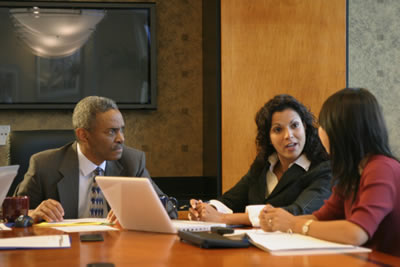 Regardless of one's role in the company or the type of business, everyone has customers. Coworkers are customers and service to them is just as important as service to the public. Keeping customers satisfied needs to be the goal of everyone in an organization. Understanding that providing quality customer service is an ongoing process is also important. For additional ideas to improve customer service skills, a variety of materials may be found on the internet and in your local library. Regardless of one's role in the company or the type of business, everyone has customers. Coworkers are customers and service to them is just as important as service to the public. Keeping customers satisfied needs to be the goal of everyone in an organization. Understanding that providing quality customer service is an ongoing process is also important. For additional ideas to improve customer service skills, a variety of materials may be found on the internet and in your local library.
Source: customerservicetrainingcenter.com |
|
Got humor?

Contributed by: Tim Spear, GeoSpeak Assistant Editor
For this issue, our GIS Humor relates to the ever-entertaining, possibly thought-provoking topic of aliens. This tongue-in-cheek look at alien and GIS history is sure to give you a good laugh or a major eye-rolling at its absurdity. . . Many thanks to Tim and his ever creative literary genius. . .
The GIS Conspiracy - An Alien Connection
While investigating numerous geographic conspiracies and recent Bigfoot sightings in Iceland, information was provided to GeoSpeak suggesting the origin of GIS technology can be linked to "reverse programming" of extra-terrestrial terrain analysis software. Although the group responsible for this research wishes to remain anonymous, pending the full scientific disclosure scheduled in a December 2012 Foxx television documentary, entitled Library of Congress Controlled by the Illuminati; they request to be referred to by the Latin word "Mendax." Mendax suggests that GIS technology was recovered in the UFO crash at Roswell, New Mexico.
The Roswell incident dominated the daily news on July 8, 1947 when Roswell Army Air Field Public Information Officer Walter Haut issued a press release stating that personnel from the 509th Bomb Group had recovered a crashed "flying disc" from a ranch near Roswell. The next day, the Air Force changed the story to indicate the wreckage was that of a weather balloon. Although this alleged incident was mostly forgotten until 1978, new evidence has surfaced in the form of the infamous General Ramey memo. General Ramey was photographed during a press conference holding a top secret memo. In 2010, Mendax developed a new generation of sophisticated scanning and text recognition software. The most accurate decoding of the 1947 Ramey memo is presented below in line-by-line detail.
17:13 CST
Urgent
HQAAF
Washington
8 Jul 1947
Vandenberg
From: HQ 8th AAF
Sub: Roswell
Fort Worth Army Air Field acknowledges that a "disc" was recovered west of the cordon
Airfoil shaped craft and victims of wreck will be delivered to Chief Medical Officer - 8th Army via B29 special transport plane
Numerous circular discs (approximately 4.75 inches in diameter) labeled
"[unknown symbols]-GIS-[unknown symbols]" and rectangular devices housing circular discs will be delivered to Headquarters Army Air Force Intelligence via special courier
Wreckage includes numerous maps or charts of unknown composition, which shall be assigned to Materiel Command and aeronautical labs at Roswell
 A Mendax representative indicated that an internal government source will verify that the recovered circular discs were actually today's equivalent of CDs or DVDs, and that information contained on these discs was "reverse-programmed" and identified as complex pattern and Boolean type analysis software. "This is certainly the smoking gun that Roswell researchers have been looking for," stated the Mendax spokesperson. "We finally have proof that this document indicates the UFO crash at Roswell was real. This is important because none of the other Roswell evidence can be linked to the site at that time, and in the possession of a high-ranking military officer." A Mendax representative indicated that an internal government source will verify that the recovered circular discs were actually today's equivalent of CDs or DVDs, and that information contained on these discs was "reverse-programmed" and identified as complex pattern and Boolean type analysis software. "This is certainly the smoking gun that Roswell researchers have been looking for," stated the Mendax spokesperson. "We finally have proof that this document indicates the UFO crash at Roswell was real. This is important because none of the other Roswell evidence can be linked to the site at that time, and in the possession of a high-ranking military officer."
Although Mendax would not provide more information at this time, they intend to supply proof of the following:
- first color plotters and other GIS technologies were designed/tested at Area 51
- dynamic segmentation was successfully tested in 1967
- unemployed GIS professionals have been offered numerous black budget GIS positions by the U.S. Government
- Roger Tomlinson is actually an alien liaison living on our planet since 1933
- recovered GIS documents revealed that ancient earth civilizations used today's equivalent of ArcGIS Tracking Analyst to build pyramids and other large structures
Mendax has promised full disclosure of their research on December 21, 2012. GeoSpeak has attempted to verify allegations with today's leading scientific minds; unfortunately calls and emails to Stephen Hawking, Julian Barbour, and Eugene Astarita were not returned at the time of this publication. |
Global Green
 In today's society, many organizations have sprouted up (no pun intended) to aid in the fight for the environment. While we regularly hear of many new groups, some have been working to improve our environment for decades. One long-standing group, the Arbor Day Foundation has been in existence since 1972 and today has nearly one million members from around the world. The foundation was actually established to celebrate the 100th anniversary of Arbor Day, which was held in Nebraska in 1872. Arbor Day 2012 is April 27th. The Arbor Day Foundation's mission is to "inspire people to plant, nurture, and celebrate trees." They collaborate with multiple agencies and are involved in many vital efforts, such as rain forest rescue, reforestation of national and state forests, and Arbor Day celebrations, to name a few. It is one of the world's largest nonprofit conservation organizations dedicated to planting trees. The foundation plants and distributes more than 10 million trees each year and has helped the Forest Service plant more than 20 million trees in forest areas since 1990.
 The Arbor Day Foundation is making a difference throughout the world and continues to grow and develop programs to distribute trees, provide education, and aid in reforestation. Interested in becoming a part of these worthwhile efforts? Opportunities are available to volunteer and to become an Arbor Day Foundation member, both will aid in endeavors to become wise stewards of the environment! The Arbor Day Foundation is making a difference throughout the world and continues to grow and develop programs to distribute trees, provide education, and aid in reforestation. Interested in becoming a part of these worthwhile efforts? Opportunities are available to volunteer and to become an Arbor Day Foundation member, both will aid in endeavors to become wise stewards of the environment!
Have a "green" tip or story you would like to share? Send it to ngis_geospeak@live.com and it may be included in a future issue. Source: arborday.org |
|
E-Bulletin Board
CONGRATULATIONS TO:
One of Nevada's newest GISP's, Mr. John Ritsko!
HAVE YOU RECEIVED A PROFESSIONAL CERTIFICATION LATELY? If so let us know, we'd like to share your good news with the NGIS membership! Email us your name, certification/licensure received (e.g. GISP, P.E.), date received, etc. We'll include the information in a future issue of GeoSpeak.
PLEASE UPDATE YOUR NGIS MEMBERSHIP. Now is the time to verify your membership data to ensure you continue to receive all the interesting NGIS correspondence! Please follow these simple steps provided by Gary Johnson, NGIS Treasurer: - Go to www.ngis.org
- Go to the Membership tab
- Enter your email address (if you have changed email addresses, enter the old one AND if this is a new email, make sure you go into your old email address and UNSUBSCRIBE so NGIS does not send information to an invalid address.)
- An email will then be sent to you with instructions on how-to-update your membership
- Follow the links to your profile and make your edits
SUBMIT CALENDAR ITEMS NOW! The NGIS now has an Event Calendar on the web. Email your event information to calendar@ngis.org. GEOSPEAK ON THE WEB. Remember to check GeoSpeak on the web. Issues are posted on the NGIS web site. NEWSLETTER DISCLAIMER: The information, views, and opinions expressed in this publication do not necessarily state or reflect the views of the Nevada Geographic Information Society (NGIS). The NGIS and GeoSpeak do not express or imply any warranty or assume any legal liability or responsibility for the accuracy, completeness, or usefulness of any information in this newsletter and will not be liable for any errors, omissions, or delays of this information. Email your GIS related articles, technical tips, upcoming events, and other pertinent information for inclusion in GeoSpeak.
Thank you for your support!
|
|
NGIS Officers & Board Members
Officers:
President, Matt Krok, GISP (City of Hendersonon)
Past President, Eric Ingbar, GISP (Gnomon, Inc.)
Vice President, Moni Fox, GISP (Washoe County)
Treasurer, Gary Johnson, GISP (University of Nevada, Reno)
Secretary, Karin Hagan (Kleinfelder)
Board Officers:
Steve Mesa (National Geospatial Intelligence Agency)
Tom Wussow (Monson Engineering, Inc.)
Mark O'Brien, GISP (Bureau of Land Management)
Adam Johnson (Gnomon, Inc.)
Eric Schmidt, GISP (Douglas Co., NV)
Don Harper (US Fish & Wildlife)
GeoSpeak Team Members
Editor, Debora Taylor (City of Henderson)
Assistant Editor, Tim Spear, GISP
|
|
|
|
|



