|
Newsletter- January 8, 2013
|
|
|

Greetings!
Happy New Year!... we made it through the holidays and that's reason enough to celebrate from my perspective. Only about twelve more weeks before the fishing season starts in these parts. If you are a trout fisherman in Rhode Island, the second Saturday in April is opening day. Personally I cannot tolerate the crowds of opening weekend in Rhode Island and I typically make the ninety-minute drive to Nickerson State Park in Brewster, Massachusetts in late March in search of early spring trout, casting size 18 midge patterns in the quiet coves and protected shorelines of Cliff Pond. Massachusetts has an open season for trout fishing so if there's no ice on their ponds it's a great way to get an early start.
As for the saltwater environment, we will begin catching small stripers in early April. The timing can change by a week or so depending upon the severity of the winter. Our warm winter last year gave way to wonderful cinder worm hatches and great striper fishing by mid-April. That was good and bad, the worm hatch fishing season started two weeks early, but also ended two weeks early. That threw a wrench into the works for scheduled worm hatch charters!
This issue contains information regarding:
- Professional guide relationship with Far Bank Enterprises
- Collaborative fishing services with River and Riptide Anglers
- The Casting Corner- tips on fly casting techiques
- Winter/Spring fly tying workshops
- Editorial- Fly Fishing Purist
- Orvis podcast on the Effects of Moon and Barometric Pressure
- Featured Fly Pattern
Again, feel free to drop me a line with any recommendations for topics you would like to see covered in future issues.
Thanks, and Strip Strike that Fish!
Capt. Jim Barr
 | | Mako 2201 Inshore Bay |
|
|
|
Pro Guide Sponsors
|
 | | Pro Staff- Foxboro, MA |
 | | Saltwater Pro Team |
 |
|
|
Far Bank Enterprises- Skinny Water Charters Joins Far Bank
| |

Beginning this year Skinny Water Charters has joined the Far Bank Enterprises Pro Program. Far Bank Enterprises is an integrated manufacturer and distributor of fly fishing products which include fly fishing rods, fly reels, fly lines, leaders, tippets and performance outdoor apparel. Far Bank's subsidiaries operate under the brand names of Sage, Redington and RIO.
Sage Manufacturing is recognized as the world's leading producer of high-end performance fly rods, reels, blanks and accessories built for the specialty fly fishing market. Since its founding in 1980, Sage's manufacturing, distribution and administrative offices have been located on Bainbridge Island, Washington.
Redington is a leading supplier of value-driven, performance fishing tackle and apparel. Located on Bainbridge Island since 2003, the company sells its products to a wide array of specialty fishing and outdoor retailers. It's products range from fly rods, reels, lines and vests to waders, outerwear, sportswear and accessories.
RIO is a leading manufacturer and distributor of fly lines, leaders, tippet materials and related products for the fly fishing industry that is located in Idaho Falls, Idaho.
Through my association with Far Bank I now provide my clients with the opportunity to fish with a selection of the latest offerings of world-class fly rods, reels and lines that span the high to mid-range price points of the Far Bank brands. This association allows me to work hand-in-glove with the folks at River and Riptide Anglers in Coventry, RI- Rhode Island's premier fly and light tackle retailer. River and Riptide is the only retailer in Rhode Island that stocks Sage, Redington and Rio Products brands. This arrangement will provide my clients the opportunity to actively field test this equipment while on their charter, followed by a referral to River and Riptide Anglers where they can purchase these products at competitive prices and also establish a relationship for future equipment and service needs.
|
|
Collaborative Fly Fishing Services
|
Skinny Water Charters has teamed with River and Riptide Anglers beginning in 2013. Each company will maintain it's ownership independence but will collaborate on angling related opportunities through this joint association.
River and Riptide Anglers owned and operated by Capt. David Porreca is based in Coventry, RI and is regarded as Rhode Island's Premier Fly and Light Tackle fishing retailer. David operates a Northcoast 23 center console and his charter services specialize in fly and light tackle angling in both near and offshore waters to include Block Island, Fishers Island and Montauk, for Stripers, Bluefish, False Albacore, Bonito, Bluefin Tuna and Shark. He also guides clients in a variety of cold freshwater venues in Rhode Island and Connecticut. Skinny Water Charters specializes in fishing near shore waters, bays, estuaries, salt ponds, the Newport, Jamestown and Fishers Island, NY rocky shorelines, Newport's Brenton Reef, the Sakonnet River and Sakonnet Point boulder fields, Potter and Green Hill ponds, and the skinny water flats such as those in the Westport and Slocum Rivers (Massachusetts), Little Narragansett Bay and Mystic,CT. Additionally I run evening and night charters in Newport Harbor, Prudence Island and Quonnochontaug Pond. I also run freshwater largemouth bass, northern pike and smallmouth bass charters in Worden's, Watchaug and Stafford Ponds. My primary saltwater vessel is the 2201 Mako Inshore Bay Boat equipped with a 200 Mercury Optimax, a remote controlled Minn Kota bow mounted trolling motor and the remote controlled Minn Kota Talon shallow water anchoring system. I use a Lund 16 equipped with a 25 Yamaha 4-stroke and 55 lb Minn Kota Riptide trolling motor for horsepower restricted waters. I also use Heritage sit-on-top kayaks for extremely shallow and protected waters. Collaborative Activities: - Fly Tying: Initially this association will involve my participation with River and Riptide Anglers in their 2013 fly tying education program. My focus for the winter/spring classes will be instructing students in tying saltwater fly patterns that are used in the northeast. For my February and March classes I will be tying Cinder Worm and Sand Eel patterns. The Cinder Worm patterns will be used during the 5-6 week Cinder Worm emergence (May-early June) in several of Rhode Island's salt ponds and estuaries. "Effective" Cinder Worm patterns are by in large, unavailable commercially. By attending this session students will learn to tie a handful of patterns that have worked well for me over the last fifteen years. The Sand Eel class will cover a variety of sizes and profiles of the sand eels we commonly see in our local waters. For both classes I will talk about how to rig for presenting these patterns (for both fly and spinning techniques), and will also cover where and when to fish these patterns. Students should bring a note pad and map or nautical chart.
- Guiding: Additionally, as the need arises, we will refer guided charter trips to one another when our respective schedules are booked or when we get charter requests to fish in waters either one of us don't normally service. As an example, I prefer to fish waters that typically require shallow draft vessels and waters that are geographically distant from the areas David prefers. On the flip side, when David has completed his May worm hatch charters in Ninigret Pond (where we both fish), he prefers to fish the bigger waters of the Watch Hill Reefs, the south side and west end of Fishers Island, Block Island and Montauk Point. Apart from the Watch Hill Reefs (where I also fish), these other spots are best fished in a larger and deeper draft boat and David's Northcoast 23 is a better platform.
|
| The Casting Corner- Why do we False Cast?- plus 4 Basics | |

You are false casting whenever you cast the fly line back and forth in the air without letting it fall to the water. False casting is THE motion that most people associate with fly fishing... the rod and the line going back and forth and in some cases... ad infinitum, and in other cases... ad nauseum. Apart from too many false casts due to not knowing the proper fly casting technique, there are many GOOD reasons for false casting. Here are a bunch: - Drying a fly
- Judging distance, direction and accuracy
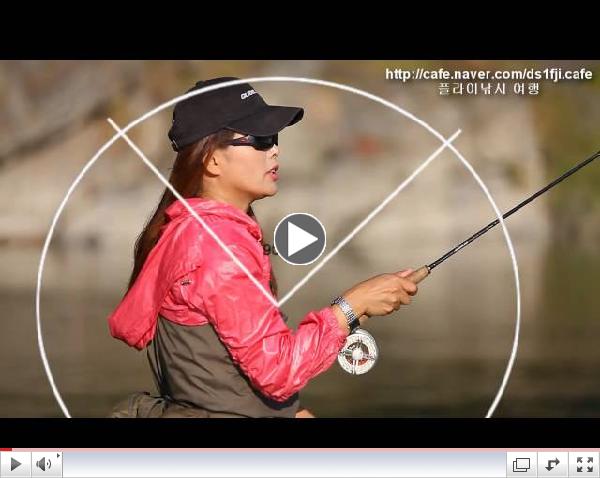 | | Jeong Park fly casting |
- Extending the fly line
- Changing direction
- Changing trajectory and plane
-
Checking out a new rod
-
Demonstrating different types of loops
-
Tightening loops
-
Setting up for an aerial mend
-
Waiting for a diminishing breeze or a turning fish
-
Developing the perfect loop and timing ("feel") for the final presentation cast when going for distance
-
Progressive increase in line speed when distance casting
-
Maintaining airborne loops while awaiting the perfect wave for a surf presentation
-
Maintaining airborne loops while awaiting a pause between wind gusts
-
For trying out a new fly rod prototype...and coming up with a rating
-
When trying out a new fly line
-
Making several trial false casts to hover the fly over a target before allowing it to drop
-
For "flicking off" a leaf or piece of weed
-
False casting with poor timing to demonstrate "cracking the whip" to students
-
For testing the turnover capability of a leader. (False casting the leader with no line out of the rod tip.)
-
Demonstrating to students how false casting can spook fish (purposely making several false casts over a school of bait fish in shallow water)
-
Flushing unwanted fish while awaiting an opportunity to present to a different species
-
Teaching to cast smoothly by false casting while LISTENING
4 Key Fly Casting Fundamentals: As an FFF Certified Casting Instructor I have the opportunity to instruct students who have never fly casted. Before we actually get into any lessons, I ask the student to go through the motions of fly casting as they know it (the back and forth as I refer to it). Almost without exception what I see is the "buggy whip" motion of the rod moving through a 140 degree arc with no hesitation on either the forward or back cast (to allow the line to unroll). This is accompanied by lots of "wristing" or wrist flexion, typically as much as 90 degrees. It's a horrible mess, but it can be fixed very quickly with some illustration and a variety of instruction techniques...and of course, practice. 1. For the rod casting arc- I ask the student to start with short casts to keep the rod arc in a narrow "V" (review Jeong Park's You Tube video to understand what I mean by the "V"). I don't use the worn-out and often incorrect "10-2 pm clock face" illustration. To illustrate the concept of rod loading, I have them false cast initially with only 10 feet of line outside the tip top, then gradually increase the amount of line up to the "magic" 30 foot length. With 30 feet of fly line outside the tip top (not including leader and tippet) most fly rods will load (bend) properly due to the weight of the line and it's resistance to movement. As we increase the amount of fly line outside the tip we have to increase our line speed and we have to open up the "V" of the casting arc in order to keep the line aerialized. Generally the wider the casting arc, the more open the loop is unless it's accompanied by higher line speed, together with slow starts and accelerating strokes that finish with a crisp stop of the rod. The narrower the casting arc combined with slow starts and acceleration to crisp stops, the narrower the resulting fly line loop will be on both the forward and back casts. A narrow loop is what we are attempting to accomplish in most of our fly casting. It will enable us to be more accurate with our presentation and because a narrow loop is more aerodynamic, it will be less affected by wind. (However for certain fishing situations and types of fly lines and fly patterns, we do oftentimes adjust our casting stroke to effect a wide or open loop, but that's for another discussion.) 2. For the wrist- We want to minimize wrist flexion and extension. (Flexion decreases the angle between the bones of the limb at a joint, while extension increases it.) The more the wrist flexes and extends, the wider the casting arc becomes (even if we're doing everything right in 1.- above). A technique I use to help the student physically limit the flexion of the wrist is to have them insert the butt of the fly rod reel seat inside the end of their long shirt or jacket sleeve. As the caster raises their rod arm on the way to the backcast stroke, the butt end of the rod binds inside the cuff of the shirt or jacket and prevents the wrist from flexing too far. Conversely, to establish muscle memory in the arm and wrist, for the forward cast, I ask the student to hold the rod grip 180 degrees from the normal position so that the fly reel is positioned between the wrist and the the butt extension of the fly rod. This technique helps curb over-extension of the wrist. Too much wrist flexion and extension during the casting stroke opens the rod's casting arc- and thus opens the fly line loop. These techniques are simple but they work and both can be easily practiced at home. 3. Slow Starts and Fast/Crisp Stops- If our forward and back casting strokes start slowly and end fast (abruptly), our fly line loops will be narrow (that's a good thing). To illustrate this I use the analogy of throwing a potato off a fork. I actually bring both items to the lesson to illustrate the dynamics. When simulating the casting stroke with a potato speared onto a fork, if the starts and stops of the casting stroke are slow to start and slow to end and not abrupt at either end of the casting stroke- the potato may fly off the fork, but it won't travel very far (low energy). However, if the casting motion with the fork starts slowly, then accelerates to an abrupt stop- in a narrow "V" casting arc, the potato will be projected with considerable force and distance and at a higher trajectory. Another technique I use to illustrate this same point is to use a 3" wide paint brush. I dip the brush in water and then simulate the casting stroke using a slow start and stop. A slow casting stroke throughout, plus a slow stop and an open (or wide "V") casting arc results in very little water being propelled from the brush and what falls off, is minimal. I then re-dip the brush in the water and change the stroke to a slow start, then accelerating to an abrupt stop in a tight "V" casting arc. This simulated casting stroke shoots water off the brush for a considerable distance and at a higher plane. Again, this sounds elementary, but both techniques are effective in illustrating the importance of a slow start to the casting stroke and an acceleration to an abrupt stop. In actual fly casting, as the length of line increases as a function of needing to cast a longer distance, the casting arc needs to open (a wider "V") in order to keep the line from falling to the lawn (during practice) or to the water while fishing. The casting stroke may need to widen but the start and stop principle stays the same. Review Jeong Park's casting to better understand these fundamentals. She is utilizing a "double haul" casting technique to help her increase line speed. (The double haul is an advanced casting technique that comes later in the learning process.) This technique and an adjustment in the timing of the forward and back cast strokes allow more line to be aerialized. Watch the video carefully to understand the importance of allowing the fly line to nearly straighten before beginning the forward and back casting strokes. While the loop is unrolling, the caster has the option of keeping the casting arm exactly where it ended the stroke or following through. Follow-through helps to smooth the shock of the abrupt stop or "power snap" (Joan Wulff's term) and gives the caster a feeling of staying connected to the fly line's weight as it unrolls. 4. Rod Loading- The fly rod is a spring, similar to leaf springs in your car's suspension or a hunting bow. In the case of the fly rod, it's the bending of the rod under the weight and tension (or resistance) from the inertia of fly line (the line's resistance to move) that stores energy in the rod (makes it bend). It is that same stored energy that when released by the momentary straightening of the rod (unloading) through the casting arc that causes the line to be propelled on both the forward and back casts. In fly casting, the weightless fly pattern is delivered to the target (the fish) by the fly line that is propelled by the release of energy from the unloading or straightening of the fly rod. In conventional casting it is the weight of the lure that pulls the line off the reel on it's path towards the target. In fly casting we are casting the line and the fly simply goes along for the ride. In order for the rod to load (bend) properly there must be a certain amount of fly line outside the tip of the rod to provide the appropriate amount of weight that is transformed into "tension" or resistance (thus energy) during the casting stroke. In most cases the rod will load beautifully with roughly 30 feet of line outside the tip top. (This changes with several key variables such as line speed, fly rod and line "weight", wind, etc). I routinely mark my fly lines with a black Sharpie marker at about the 30 ft. mark to help me identify that sweet spot. Too often I see anglers "buggy whipping" their false casts with only 5-20 feet of line outside the tip top. It's no wonder they false cast 7-10 times before they finally make the actual cast... and in most cases the line falls in a heap not far from the casters feet. - In order to make a good cast they need to get more line out beyond the rod tip (the magic 30') to allow the rod to load properly
- They need to create a more effective power stroke. Slow starts with acceleration to an abrupt stop in a controlled "V" in the false and presentation casting process
- They need to allow the fly line to unroll almost completely before starting their forward or back false casting and final presentation strokes. This means they must wait or pause for that to occur. You need to carefully watch the line on the backcast as well as the forward cast to better understand the required timing
TIP: To make it even easier to locate the fly line's sweet spot I wrap a 1/4 -1/2 inch section of rod wrapping thread on my fly line at that same 30 ft Sharpie ink mark. I cover the wraps with Pliobond to keep them from unraveling. When fishing at night when you cannot visualize your ink mark, you will feel the thread bump slip through your line hand on it's way to the tip top signaling that you have the optimal amount of line aerialized. * With several fly casting lessons (about 6 hours total) from a Certified Casting Instructor, most beginners will be able to cast with an acceptable degree of accuracy to a distance of forty feet, the distance that probably 80% of the fish they will ever catch, will be caught within. |
|
Orvis Podcast- Capt. Jim Barr & Orvis' Tom Rosenbauer
|
 | | Capt. Jim Barr |
The Orvis Fly Fishing Guide Podcast- April 13, 2012
"Produced by The Orvis Company and hosted by Tom Rosenbauer, author of The Orvis Fly Fishing Guide, this podcast will provide you with tips on how to get the most of your time on the water." Podcast link below:
The Effects of the Moon and Barometric Pressure on Fishing Friday, April 13, 2012 9:20AM
"In this week's podcast I interview Captain Jim Barr from Rhode Island and we talk about the effects of barometric pressure changes and moon phases on fly fishing, both in Jim's arena of striped bass fishing and also on various freshwater species. If you're looking for easy answers you'll be disappointed, but I think you'll enjoy hearing us talk about the empirical observations we've made over the years. In the Fly Box section this week we discuss methods of weighting flies with non-toxic materials, why you catch bigger fish on worms than you do on flies, and an explanation of the term "turning over" a fly and what you can do to make sure your fly turns over." Tom Rosenbauer
|
Upcoming Events- Fly Tying Workshops/ Bass Pro
| |
River and Riptide Anglers Fly Tying Instruction
For 2013, River and Riptide Anglers will hold their fly tying sessions on Saturdays from 12:00 to 3:00pm. Students are asked to bring their tying tools, however if you do not have your own call Dave Porreca at River and Riptide Anglers a day or two before the workshop and he'll do the best he can to provide you with what you need. All materials will be provided. For additional information about my tying workshops feel free to contact me at info@SkinnyWaterChartersRI.com
* Prices are per student
January 26- Winter Steelhead patterns with Capt. Bob Hines- $20
February 2- Cinder Worm patterns- Capt. Jim Barr- $20- locations & techniques- bring your charts
February 9- Saltwater Bucktail streamers with Capt. Bob Hines- $20
February 23- Wet Flies & Fuzzy nymphs with Steve Culton-$20
March 2- Saltwater synthetics with Capt. Bob Hines-$20
March 6 (Wednesday)- Trout Opening Day Favorites with Capt. Bob Hines $20
March 16- Saltwater Shrimp & Crabs for shallow water stripers- Alan Caolo $20
March 23- Sand Eels- Capt. Jim Barr- $20- locations & techniques- bring your charts
Bass Pro Shops- Foxboro, MA
- I will be conducting fly tying demonstrations at Bass Pro Shops in Foxboro, MA during February and March and will post on my website, on the Fly Fishing in Rhode Island Facebook page, and in this newsletter- the dates, times and fly patterns that I expect to tie.
- Additionally I will be doing a variety of fishing related PowerPoint presentations at Bass Pro Shops in Foxboro, MA during their February and March events. These dates, times and topics will also be posted accordingly.
|
Fly Fishing Purist?- Why Miss Out?
|
 | | Madeleine in Potter Pond, South Kingstown |
As a near and inshore saltwater fly fishing guide I cannot tell you how many times I have watched fish fairly close to shore working over bait (cinder worms) while wading fly casting anglers stand waist deep with their hands in their jacket pockets dismayed that the action is just beyond the best cast they ever made. It's one thing to be a purist and insist it's all about catching your fish on a fly rod, it's another thing to be, well, foolish. I understand there's this silly pride thing going on but it absolutely amazes me that many of these same anglers year after year will stand in what looks like disgruntled disbelief, that they cannot make a cast to where the action is. I see this mostly on Ninigret Pond during our worm hatches. Most of these anglers apparently would rather not catch a great fish than to stoop to the level of using a spinning rod. Absurd!
By simply packing a spinning rod in their wader belt and using a casting bubble and a worm fly, this backup rig would allow them to get to the fish that just aren't going to get any closer to shore (that day)...and they could easily cast to the action and be into some fun... but no, they stand on or near shore, and finally shrug their shoulders, give up and leave... it's lunacy! I like to catch fish on a fly rod where possible but to go fishless because of some fouled reasoning that precludes "resorting" to using a spinning rod in order to make a longer cast required to get the fly or imitation into the feeding zone! This affliction must be contagious because each year I see this same "club" of anglers increasing in numbers.
Hey, I guess I shouldn't get exercised, to each his own. Madeleine and I, my friends and charter guests are more than happy to catch what could be the "purists" fish!
|
Featured Fly Pattern- Henry Cowen's Burrowing Sand Eel
|
Henry Cowen's Burrowing Sand Eel
Some of the best places to fly fish in the saltwater can be spots that are just down the street and around the corner from where I live in Newport, RI. One spot is a beach that is close to the statue of a famous Revolutionary War general, a spot that on a June night, you can fish alongside the Night Herons in the dim light of the harbor, and if you don't mind the revelry, you can listen to live music coming from Thames Street while casting to feeding stripers in very shallow water. A couple of other spots a bit further away, are two salt ponds each with large flats areas on the inside corners adjacent their breachways. All three of these locations have significant sand eel activity, and as darkness falls, become active shallow water striper haunts. What is revolutionary about the Burrowing Sand Eel pattern is the use of a dumbbell weight that positions the fly on the sandy bottom at a 45-degree angle. "This is the moment when they are most vulnerable, and stripers love to take advantage of it by either sucking the sand eels out as they begin to burrow, or by shoveling them out with their snout just as a redfish uproots crabs." Henry Cowen
The Burrowing Sand Eel is a ticket to some great catching in these shallow water environments.
Recipe Hook: Size 1 Gamakatsu SC15 Thread: Clear monofilament .006 (fine) Wing: Olive Polar Fibre Belly: White Polar Fibre Flash: Silver prismatic Head: White E-Z-Body braid, size small Eyes: Size 1.5 silver-and-black prismatic stick-on Weight: Size 6/32 black-nickel dumbbells Epoxy: Devcon 5-minute Note: If you wish to cover the exposed hook shank, use a layer of white flat waxed thread between the hook eye and the lead dumbbell |
|
I hope this newsletter contained information of interest to you and again, I welcome input for future topics you may be interested in knowing more about. The next issue will contain an article on the most commonly used knots in fly fishing. I will also include more fly casting tips in addition to saltwater fishing tips.
If you received a rod, reel or waders for holiday gifts, get them out and give them a thorough review to make sure there are no defects. If there are issues, return those products immediately for replacement, and don't forget to complete the process of warranty registration.
My best,
Capt. Jim Barr
|
|
|
|
|
|
|



