|
HAPPY SEPTEMBER
School is Back in Session! 
|
|
DID YOU KNOW?
The average American child has six to 10 colds a year. In fact, children's colds cause more doctor visits and missed school days than any other illness. And every parent knows how easily colds passed to other family members once one child gets sick.
What can a parent do? Stopping cold germs where they breed is your best defense.
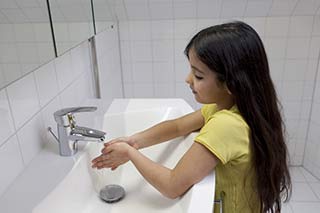 Know How and When to Wash Hands Know How and When to Wash Hands
One of the most common ways children get colds is by rubbing their nose or eyes after cold virus germs have gotten on their hands. And children have a tendency to not wash their hands often enough or well enough at school.
Make sure your child knows to use soap and warm water. Your child should scrub all over -- including the back of their hands, between fingers, and around nails -- for about 20 seconds, about the time it takes to sing the Happy Birthday song twice. Then rinse well in warm water, dry with a paper towel, and use the towel to turn off the water.
In an ideal world, children would wash their hands many times a day in school. In the real world, the most important times to wash are after using the bathroom and before eating, drinking, or touching their mouth, eyes, or nose. Ask your child's teacher to include hand-washing time before lunch or snacks and teach your child not to touch his nose, eyes, or mouth when his hands are dirty.
Build Immunity 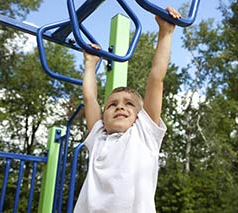 Help protect your child from inside as well as out. Make sure that your child gets enough sleep and exercise, avoids stress, and has a well-balanced diet. Pack a healthy lunch and snacks. Encourage her to drink water at school to help keep your child's immune system strong. Help protect your child from inside as well as out. Make sure that your child gets enough sleep and exercise, avoids stress, and has a well-balanced diet. Pack a healthy lunch and snacks. Encourage her to drink water at school to help keep your child's immune system strong. For more ways to help protect your child from germs and illness at school visit WebMD.com. |
 |
|
|
|
Back to School
HEALTH TIPS:
|
Make sure your child
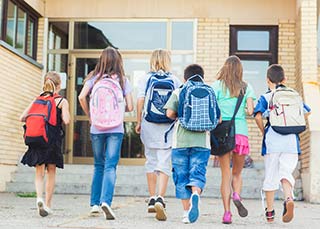
is wearing his or her backpack correctly.
Backpacks full of books and school supplies can put strain on your child's neck, shoulders and back. In addition to getting a backpack strong enough to carry a heavy load, discuss the topic with teachers to see if there are ways to lighten the burden.
The American Academy of Pediatrics recommends that kids always use both shoulder straps when wearing a backpack. "Slinging a backpack over one shoulder can strain muscles," the group states on its website. Also, check with your school to see if they allow rolling backpacks, which may be a good option for students who have a lot to carry.
Create an environment in the home that is conducive to doing homework.
"Children need a consistent work space in their bedroom or another part of the home that is quiet, without distractions, and promotes study," advises the American Academy of Pediatrics.
It's a good idea to schedule a regular time for homework so the child gets into the routine. Make sure that homework time is free from distractions like TV or other electronic devices.
If your child is struggling with a particular subject or can't focus, discuss this with a teacher or school counselor to determine the best solution.
For more back to school health tips for kids and parents, visit CBSNews.com.
|
|
|
|
Healthy Students are Better Learners
 Health-related factors such as hunger, physical and emotional abuse, and chronic illness can lead to poor school performance. Health-risk behaviors such as early sexual initiation, violence, and physical inactivity are consistently linked to poor grades and test scores and lower educational attainment. Health-related factors such as hunger, physical and emotional abuse, and chronic illness can lead to poor school performance. Health-risk behaviors such as early sexual initiation, violence, and physical inactivity are consistently linked to poor grades and test scores and lower educational attainment.
In turn, academic success is an excellent indicator for the overall well-being of youth and a primary predictor and determinant of adult health outcomes.Leading national education organizations recognize the close relationship between health and education, as well as the need to foster health and well-being within the educational environment for all students.
Schools are the Right Place for a Healthy Start
Scientific reviews have documented that school health programs can have positive effects on educational outcomes, as well as health-risk behaviors and health outcomes. Similarly, programs that are primarily designed to improve academic performance are increasingly recognized as important public health interventions.
Schools play a critical role in promoting the health and safety of young people and helping them establish lifelong healthy behaviors. Research also has shown that school health programs can reduce the prevalence of health risk behaviors among young people and have a positive effect on academic performance.
For more information about health and academics, visit CDC.gov.
|
"If you are having any concerns about your child's health, you should consult your family physician. At CRMG we want your family to stay healthy through the school year and beyond," said Dr. Lauren Roman, Family Medicine Practitioner at Catskill Regional Medical Group.
|
|
|
Has your child had his or her annual physical?
Annual checkups should be done by a physician at the start of each new school year to ensure that your child's medical records and vaccinations are up to date.
Visit our website for more information on Catskill Regional Medical Group's
|
|
|
|