Newsletter Policy About Services and ProductsWe do not accept paid advertisements. Our focus is not on commercial products but practical resources. If you have news that may be of interest to our audience, please send it to INTERSECT.
|
|
|
Translation and Revolution
|
In this age of globalization, no one questions the importance of translation. But we sometimes forget its impact.
A call for papers for a Cairo conference next March highlights the way  translation affects resistance movements. The basic concept is simple: how information about resistance movements gets translated has a real impact on how these movements spread. translation affects resistance movements. The basic concept is simple: how information about resistance movements gets translated has a real impact on how these movements spread.
The title of the conference is Translation and the Many Languages of Resistance. It is rare indeed to read such an illuminating call for papers: even this call for contributions is an eye-opener.
To read it, click here.
|
Picture-Interpreting? How Patients Communicate Their Needs
|

First, let's be clear: there is no substitute for a qualified medical interpreter. But recent apps can help patients who don't speak a hospital's language get basic help.
Let's say you want to get to the toilet. Or you're in pain. Or hungry. Using touch-screen software called Starling in eight languages, for example, you can find the image, perhaps a face in pain marked with the word "pain" in your own language-and send that message to a nurse.
Conversely, some apps like Canopy let doctors communicate to you in your language, in simple sentences. The doctor might use Canopy to say, "I'm going to listen to your heart and lungs" in one of 11 languages, then press a button to call an interpreter because the patient has a question.
The risk is always that health care staff may rely on apps when they need an interpreter. We need research to assess what is happening on the ground. Are such apps medically safe? Or do they lead to unnecessary risk?
To read more, click here.
|
|
|
Address:
Cross-Cultural Communications
10015 Old Columbia Road
Suite B-215
Columbia, MD 21046
Phone: 410.312.5599
Email: Click here |
|
|
 |
 Police Investigative Interviews and Interpreting
Sedat Mulayim, Miranda Lai, Caroline Norma
Routledge, September 2014
Pre-order now! Law enforcement interviews differ from country to country, and so do the laws that affect legal interpreters. But coming soon is a valuable resource for both interpreters and law enforcement staff who are hungry for information: Police interviews can be daunting, if not intimidating, for most members of the public not so much because of the uniforms, concrete buildings and fluorescent lighting as the strict formal procedures and highly unusual discourse. The interaction process is further complicated when the suspect or witness does not speak the language the interview is conducted in. This is where professional interpreters may be required. Court interpreting is a well researched and published area compared with police interpreting. This book was written to fill the gap. It examines in detail the dynamics of how interpreters work in police interviews, especially within the current major investigative interviewing paradigms. This book can be a valuable resource for professional interpreters and law enforcement officers who work with interpreters in investigative interviews. To order the book, click here. |
 IMIA International Congress: Call for Papers IMIA International Congress: Call for Papers2015 Theme: United We Are Stronger! April 24-25, 2015 Washington, DC The International Medical Interpreters Association (IMIA) is hosting a conference in 2015 to showcase the latest developments in the field, to investigate its opportunities and challenges, and to advance the quality in services provided to language minority patients worldwide. IMIA encourages innovative ideas for presentations and activities that support the thematic questions of the conference. Submission deadline: August 15, 2014 For more information or to submit a proposal, click here. Survey for Spanish Interpreters An MA student from the Universidad de Alcalį is looking for EN<>SP interpreters to complete a two-question survey on sight translations skills. Click here to access the survey. |
Which Language Class Is Growing Fastest?
|

Hint: not Spanish.
Yes, Spanish is still the most widely taught language in the U.S., but another language that didn't even make the charts 20 years ago is a hit. In fact, more students now study it than Chinese and Russian put together!
What language do we mean? ASL: American Sign Language. In 2009, ASL was the fourth most popular language class after Spanish, French and German.
That said, other languages now take the lead. In recent years, Korean, Arabic and Chinese are growing faster than ASL. But it's still an impressive story for ASL and its interpreters.
To read more, click here.
|

The Deadline Is Coming, the Deadline Is Coming!
Don't miss your last chance to attend the most exciting Training of Trainers in the field of interpreting. We're almost full!
Yes, Monday, July 14 is the registration deadline for The Community Interpreter® Training of Trainers. Spend six days with a dynamic group of highly qualified trainers from across the country and abroad--and you'll meet our amazing Cuban co-trainer from Spain. Denis Socarrįs-Estrada and I will greet you with enthusiasm and walk you through how to present the only national program in the U.S. for community interpreting.
If you're looking for a 40-hour certificate program that lets you teach medical interpreters--or educational interpreters--or social service interpreters--or any combination of these, this is your program. Running since 2004, it's now in its 5th edition with the next edition coming out later this year. No program like it exists: we have the highest reputation for quality of any community interpreter training program in the country.
Join our team of 100 licensed trainers in 26 U.S. states and 5 other countries--with another country and more states coming soon!
For more information, click here.
To register, click here.
P.S. Don't miss the opportunity of Denis and his consummate expertise--and fun. You will jump, you will question, you will laugh until you cry, but you will NEVER fall asleep with Denis! Click here for his bio.
New InterterpreTIPs video!
Check out the latest InterpreTIPS! It's Katharine's turn, and she tackles a tricky question: what to do when a patient or client uses a nonstandard term. Do you use the same language as the patient--or the standard term?
Watch her answer and see if you agree!
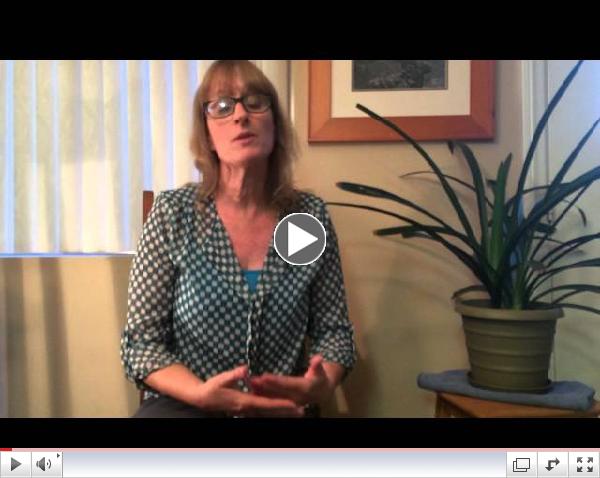 | | InterpreTIP #12 How to handle nonstandard language? |
|
CULTURE AND LANGUAGE PRESS
|
For a look inside all our publications visit our sister website: thecommunityinterpreter.com and go to Books and Products.
|
|
Sincerely,
Marjory A. Bancroft
Marjory A. Bancroft, Director
Cross-Cultural Communications, LLC
10015 Old Columbia Road, Suite B-215
Columbia, MD 21046
Phone: 410.312.5599, Fax: 410.750.0332
| |
|
|
|
|
Copyright © 2014. All Rights Reserved.
|
|
|
|



