|
|
|
LBJ's Defenders Cheapen his Accomplishments
| 
By George E. Curry
NNPA Columnist
Lyndon B. Johnson has done more to help African Americans and poor people than any modern president. But his defenders are cheapening his legacy by inflating his accomplishments, which is an insult to the people - Black and White - who lost their lives fighting for civil rights.
The first and most obnoxious example of a LBJ supporter becoming unhinged is Joseph A. Califano, Jr., President Johnson's domestic policy adviser from 1965 to 1969.
In a column for the Washington Post, he wrote: "In fact, Selma was LBJ's idea, he considered the Voting Rights Act his greatest legislative achievement, he viewed King as an essential partner in getting it enacted - and he didn't use the FBI to disparage him."
The idea of a Selma-to-Montgomery March actually originated in Marion, Ala., about 30 miles northwest of Selma, with the death of Jimmie Lee Jackson. Marchers were protesting the arrest of James Orange, a key Southern Christian Leadership Conference (SCLC) field organizer. In fact, they were marching from Zion Chapel Methodist Church a short distance to the jail when Jackson was killed by an Alabama State Trooper James Bonard Fowler. At the time, he was trying to defend his 82-year old grandfather, a scene vividly captured in the movie, "Selma." The account is also recounted in Selma 1965: The March That Changed the South by Charles E. Fager.
Instead of a traditional funeral, the idea was proposed to march to Montgomery and present Jackson's body to Alabama Gov. George C. Wallace at the state capitol. Wiser minds prevailed and the idea was refined to hold a traditional funeral for Jimmie Lee Jackson and march 54 miles from Selma to Montgomery to demand full voting rights for Blacks.
It was the death of 26-year-old Jimmie Lee Jackson that inspired the Selma to Montgomery March, not an "idea" floating around in LBJ's head. Neither Califano nor anyone else is entitled to use the blood of the Civil Rights Movement to create a myth that is contrary to history and common sense.
The most recent attempt to super-size LBJ's legacy is the assertion that it was the former president's idea to include Latinos in the Civil Rights Movement.
An Associated Press story noted, "While this week's commemorations of the 50th anniversary of 'Bloody Sunday' may invoke memories of historic events in which the 'real hero,' as Johnson said, was 'the American Negro,' little is said about Johnson's call in that speech to include Mexican-Americans in the struggle for equality."
The story added, "Appalled by the brutality in Selma, Johnson viewed it as an opportunity to 'liberate himself' by linking the voting rights struggle with the struggles, 37 years earlier, of his poorest [Latino] students in Cotulla..."
Dr. King worked hard to build coalitions with other groups, including Latinos. In fact, many were in attendance in great numbers at the 1963 March on Washington.
Former New York City Councilman Gerena Valentín said, "Martin Luther King Jr. invited me to Atlanta, Ga., to discuss the march that was being organized, and I went there with a strong team. He personally invited me to organize the Latinos in New York, New Jersey, Pennsylvania, Connecticut and Massachusetts, and so I did."
King's famous "I Have a Dream" speech - made two years before the Selma to Montgomery March - was a broad appeal for justice for "all of God's children."
So it's preposterous to suggest that it was President Johnson's idea to include "Mexican-Americans in the struggle for equality."
The reality is that Johnson was anything but a civil rights advocate in Congress.
PoliticFact.com, the fact-checking site, noted that Robert Caro, LBJ's biographer, said: "for eleven years he had voted against every civil rights bill - against not only legislation aimed at ending the poll tax and segregation in the armed services but even against legislation aimed at ending lynching: a one hundred percent record.
"Running for the Senate in 1948, he had assailed President Harry Truman's entire civil rights program ('an effort to set up a police state')...Until 1957, in the Senate, as in the House, his record - by that time a twenty-year record - against civil rights had been consistent."
Luci Baines Johnson accepted an award from march organizers Sunday morning in Selma on behalf of her father, saying, "It means the world to me to know that a half-century later you remember how deeply Daddy cared about social justice and how hard he worked to make it happen."
It was only after the assassination of President John F. Kennedy and Johnson's elevation from vice president that he overcame his past, signing into law the Civil Rights Act of 1964, the Voting Rights Act of 1965 and the Fair Housing Act of 1968.
Those three laws forever changed the United States for the better. LBJ's legacy is firmly established. He doesn't need his supporters to lie about his record in order to enlarge his reputation.
George E. Curry, former editor-in-chief of Emerge magazine, is editor-in-chief of the National Newspaper Publishers Association News Service (NNPA) and BlackPressUSA.com. He is a keynote speaker, moderator, and media coach. Curry can be reached through his Web site, www.georgecurry.com. You can also follow him at www.twitter.com/currygeorge and George E. Curry Fan Page on Facebook. See previous columns at http://www.georgecurry.com/columns.
|
|
In Selma, Ala., Obama Proved that he is 'Black Enough'
| |
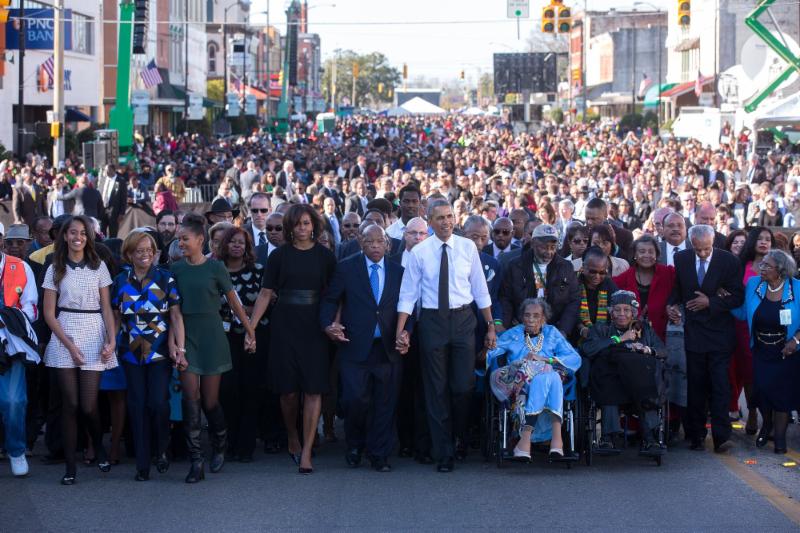
(Official White House Photo by Peter Souza)
By George E. Curry
NNPA Editor-in-Chief
NEW ANALYSIS
SELMA, Ala. (NNPA) - Throughout his campaign for the presidency, Barack Obama was dogged by one question: Is he Black enough? The question was repeated so often that after showing up late for an appearance at the 2008 annual convention of the National Association of Black Journalists in Las Vegas, Obama said, "I want to apologize for being late, but you guys keep asking whether I am Black enough."
After a 33-minute speech Saturday in Selma, Ala. commemorating the Selma to Montgomery March and passage of the 1965 Voting Rights Act, nobody was asking: Is Barack Obama Black enough?
President Obama rarely discussed the issue of race in his first six years in office except in reaction to a major racial catastrophe such as the shooting deaths of Trayvon Martin in Florida and Michael Brown in Ferguson, Mo. or the arrest of Harvard University Professor Henry Louis Gates, Jr. for breaking into his own home.
On Saturday, however, President Obama seemed comfortable discussing race in public, showing he has a deep appreciation for the accomplishments of the Civil Rights Movement and quoting or referencing the Bible, Black spirituals, James Baldwin, Sojourner Truth, Fannie Lou Hamer, Langston Hughes, the Tuskegee Airmen, Jackie Robinson and even his favorite hip-hop artist Jay-Z.
READ MORE
|
| |
Selma, 50 years after march, remains a city divided
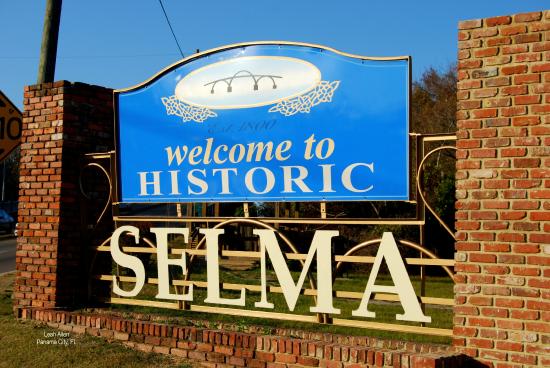
By Matthew Teague
(c) Los Angeles Times
In preparation for the weekend's goings-on, Selma city workers put up barricades downtown, outside Carter Drug.
In the 1960s, the drugstore served as a catalyst for the civil rights movement because its soda counter would not serve black customers. As the workers set up metal railings for crowd control, a white-haired former city councilman, Glenn Sexton, stepped from the drugstore and surveyed the scene from the sidewalk.
The outside world - presidents, civil rights legends, celebrities and tens of thousands of visitors - would arrive shortly to remember the civil rights marchers who were tear-gassed and beaten 50 years ago this weekend, by club-wielding officers on the Edmund Pettus Bridge, just to Sexton's right.
In 2000, during his time on the City Council, Sexton and two other council members used city funds to help pay for a statue of Nathan Bedford Forrest, a Confederate general and the first grand wizard of the Ku Klux Klan.
"It's going to be nothing but a nigger street party," Sexton said, using an epithet still heard on the streets here.
|
Millennials Are More Racist Than They Think
By Sean McElwee
(c) Politico
News about race in America these days is almost universally negative. Longstanding wealth, income and employment gaps between whites and people of color are increasing, and tensions between police and minority communities around the country are on the rise. But many claim there's a glimmer of hope: The next generation of Americans, they say, is "post-racial"-more tolerant, and therefore more capable of easing these race-based inequities.
Unfortunately, closer examination of the data suggests that millennials aren't racially tolerant, they're racially apathetic: They simply ignore structural racism rather than try to fix it.
READ MORE
|
|
Fraternity in racist video has roots in antebellum South
| 
,
By Allen G. Breed
(c) Associated Press
Sigma Alpha Epsilon was born a few years before the Civil War in the antebellum South, the creation of a small group that set out to forge bonds among young men that would "hold them together for all time."
The fraternity founded at the University of Alabama held its Southern heritage close. "We came up from Dixie land," says a ditty from an old SAE songbook.
READ MORE
|
|
Guests wear ponchos, sombreros and construction gear at "border patrol" fraternity party
|  Photo: Daily Texan By Julia Brouilette The Daily Texan AUSTIN, Texas -- Texas Fiji hosted a party guests said had a "border patrol" theme Saturday night, where attendees wore construction gear, ponchos and sombreros. Other guests wore army camouflage outfits. According to Fiji fraternity president Andrew Campbell, the party was this year's annual Fiji Marshals event, a "western-themed party which focuses on the traditional old west." Multiple attendees said the party's theme was communicated as "border patrol." READ MORE |
|
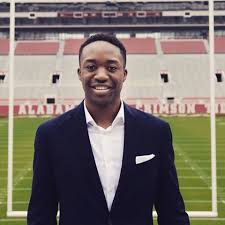
University of Alabama elects first black SGA president in four decades
(Courtesy of FaceBook)
By Melissa Brown
(c) Al.com
The University of Alabama Tuesday elected their first black Student Government Association president in almost four decades.
Elliot Spillers, a junior from Pelham, is also considered to be the first non-Machine candidate to win the election since John Merrill (now Alabama's Secretary of State) won in 1986.
READ MORE
|
Republicans are beginning to act as though Barack Obama isn't even the president
| |
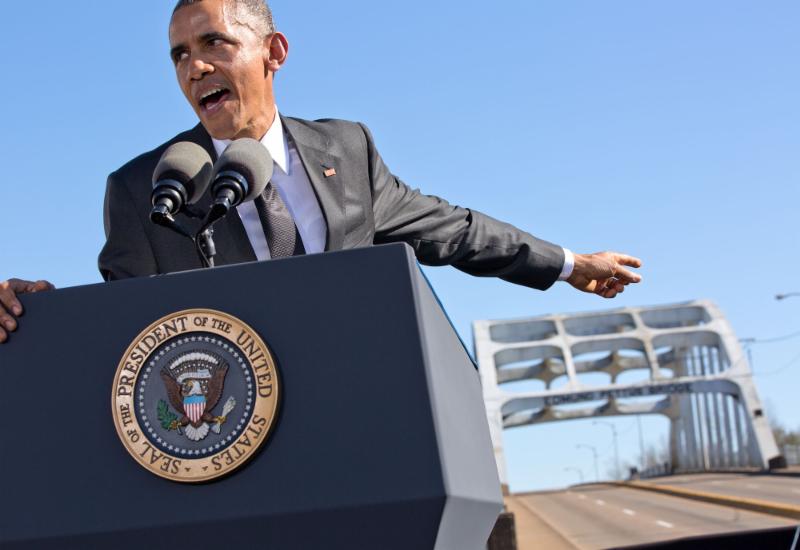
Official White House Photo
By Paul Waldman
(c) Washington Post
It's safe to say that no president in modern times has had his legitimacy questioned by the opposition party as much as Barack Obama. But as his term in office enters its final phase, Republicans are embarking on an entirely new enterprise: They have decided that as long as he holds the office of the presidency, it's no longer necessary to respect the office itself.
READ MORE
|
|
Blacks Still Underrepresented at All Levels of Politics
| 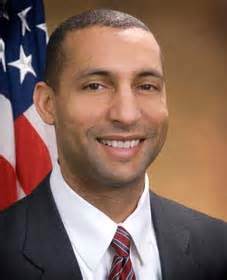 Joint Center President Spencer Overton
By George E. Curry NNPA Editor-in-Chief WASHINGTON (NNPA) - Although Blacks have made tremendous improvement in holding elected office since passage of the 1965 Voting Rights Act, they remain underrepresented at the federal, state and local levels, according to a report scheduled to be released Tuesday by the Joint Center for Political and Economic Studies. "Based on the most recent data, African Americans are 12.5% of the citizen voting age population, but they make up a smaller share of the U.S. House (10%), state legislatures (8.5%), city councils (5.7%), and the U.S. Senate (2%)," the report said. READ MORE |
|
Historically black schools say Obama's policies have fallen short
|  Many HBCUs are struggling, including Knoxville College (above)
By Daniel Douglas-Gabriel
(c) Washington Post The country's first African American president is finding himself increasingly at odds with a cornerstone of the African American community: historically black colleges and universities. Leaders at these schools and some black lawmakers say the Obama administration has been pushing policies for years that hurt students at a time when historically black colleges are already cash-strapped and seeing a drop in enrollment. READ MORE |
|
Rev. Willie T. Barrow, activist and civil rights icon, dies at 90
| 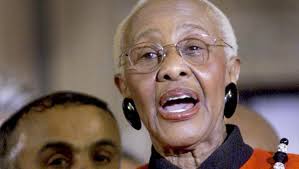
By Lolly Bowcan (c) Chicago Tribune The Rev. Willie T. Barrow, the longtime civil rights leader known as "The Little Warrior" who marched with the Rev. Martin Luther King Jr. at Selma and helped found the organization that became the Rainbow/PUSH Coalition, died early Thursday following a long illness. Barrow, who was 90, died about 2:30 a.m., according to John Mitchell, chief of staff at Rainbow/PUSH. He did not have a cause of death, but Barrow had been in declining health for some time and had been hospitalized at the end of February for a blood clot. READ MORE |
|
Read the NNPA's 5-Part series on Rape in the Black Community
|  |
|
Want more information like this?
| 
|
|
|
|
|
| Speaking Engagements |  | |
March 7, 2015
Freedom Flame Award
(Recipient)
Selma, Ala.
March 8, 2015
Martin & Coretta King
Unity Breakfast
Selma, Ala.
March 25-27, 2015
Black Press Week
Washington, D.C.
April 8-11, 2015
National Action Network
New York, N.Y.
April 25, 2015
Civil Rights: Passing the Baton
Cleveland, Ohio
May 2, 2015
Hungry Club Forum
Savannah, Ga.
June 17-20, 2015
National Newspaper Publishers Association 75th Anniversary
Detroit, Mich.
June 26-27, 2015
Druid High Class of '65
50th Year Reunion
Tuscaloosa, Ala.
July 18-21, 2015
National Speakers Assn.
Washington, D.C.
July 25-27, 2015
National Dental Assn.
Chicago, Ill.
July 28-Aug. 1, 2015
National Urban League
Fort Lauderdale, Fla.
|
| Book George Curry for a Speech
Let Curry Spice Up Your Next Event |
| "Keeping it Real
with Al Sharpton "
| 
. Listen to George Curry on Al Sharpton's "Keeping it Real" radio show every Friday, 3-4 p.m., EST
|
|
Books by George E. Curry
| |

The Best of Emerge Magazine Edited by George E. Curry "This whopper of an anthology perfectly captures black life and culture...This retrospective volume is journalism at its best: probing, controversial and serious...Although Emerge was devoted unequivocally to African-Americans, Curry's vision and editorship of this book will instruct, provoke and sometimes entertain or inspire any reader." - Publishers Weekly Order Book |
|
The Affirmative Action Debate Edited by George E. Curry "... Collects the leading voices on all sides of this crucial dialogue...the one book you need to understand and discuss the nation's sharpest political divide." Order Book
|
| | |
Jake Gaither: America's Most Famous Black Coach
By George E. Curry
"Curry has some telling points to make on the unlooked for effects of court-ordered desegregation."
- The New York Times
"... an excellent example of sports writing."
- Library Journal
Order Book
|
| Featured Article |  | |
|
| Featured Article |  | |
|
|
|