The original motto of PRX in 1988 was "New Approaches to Understanding World Grain Markets and US Agribusiness." But my colleague John Stewart had already begun along this route by himself in the 1970s with his discovery of the close correlation of US corn "feed and residual use" and US corn yield deviation from trend. Together we applied this discovery to state-by-state net corn exports, and adjusted animal feeding rates to reconcile net exports from the cornbelt states with net imports of users in the northeast, southeast, and west--using actual movement data. The PRX "state corn supply-demand system" has become more "commercially accurate" than any alternative. The system allowed us to go into realistic detail at the county level and below, using a satellite-based GIS we developed with NASA, and which we applied to grain elevator and corn dry mill origination volumes. Next came the ten-year forward extrapolation of all our regional details above, called the "PRX Blue Sky Model," incorporating the impact of all the new corn ethanol demand, and connected to China and our big export competitors in South America and the Black Sea. We called this new approach "blue sky" because we knew that academic economists would otherwise strenuously object. How can a mere 18 megabyte Excel file compare with the power of university-built programs millions of times larger? But we nonetheless believe the PRX Blue Sky is indeed a more powerful commercial forecasting tool, and this essay tells why. Hint #1: We accept the commercial need to go ahead and guess at the impossible variables--like oil price, exchange rates, and government policies. Hint #2: Have you noticed that the institutional models, despite their size and acclaim, don't seem to have much of a batting average? Could there actually be something wrong with their swings? See the track record of the USDOE below. Seminar registration still available until tomorrow March 15th: Register here. 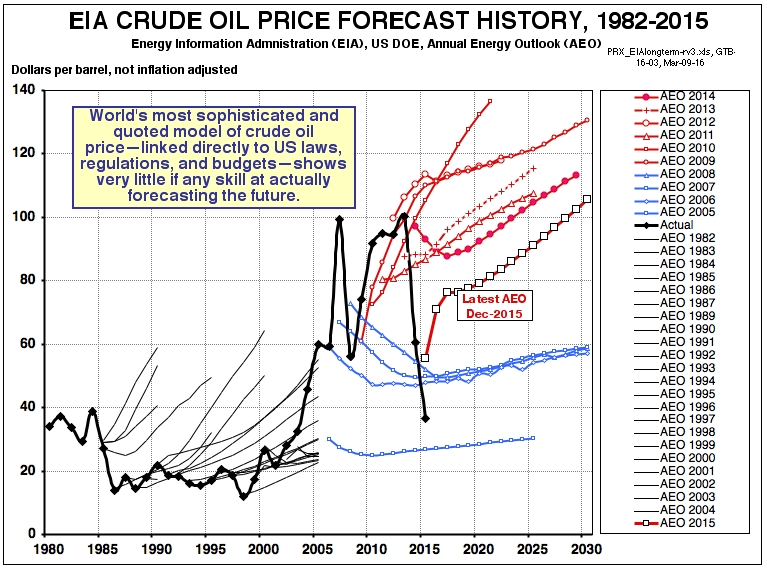
Bill
--
Bill Hudson
The ProExporter Network
|