|
|
PRESIDENT'S REPORT
|
|
From Susan Landes
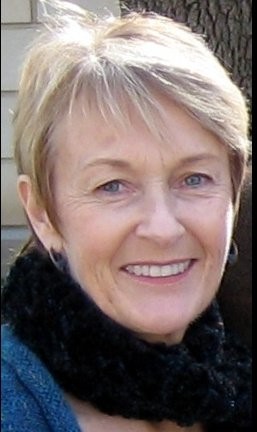
Robin Fine 1947-2015
Hello Connumity,
Last month my good friend, mentor and former member of our group Robin Fine, PhD passed away from a rare lung disease. I first met Robin around 1990 when I took a class on Control Mastery Theory with her and Jessica Broitman at UC Berkeley Extension. I had been introduced the previous year to the theory by Richard Levine, MD while working at Thunder Road Adolescent Treatment Center. When I began my private practice, I sought out Robin for consultation and began attending a small consulting group with her and Cathy Valdez. We trained together for the next 5 years. Robin was an amazing teacher, and mentor. Over the years we became close friends and took many trips together, mostly to Hawaii. She was particularly skilled in working with couples and with teaching and supervising. Robin was on the faculty at the Wright Institute and in 2000 joined the staff of the Women's Therapy Center where she taught and trained clinicians for 15 years. Robin was a fun loving friend, a compassionate healer and will be remembered for her quick wit, and amazing sense of humor. I am so grateful for the years we had together. Aloha my friend.
For those who would like to make a donation in Robin's honor, the family has chosen Educate The Children International http://www.etc-nepal.org
News from the Board:
The board has unanimously voted to invest some money in two areas of our organization. We have hired a woman to update our website. As many of you know we have been wanting to up date the website for many years. (Thank you to those who responded to our survey about our website!) This project has been spearheaded by Peter Schumacher. Thank you Peter for finding our new web designer. Our new Board member Jamine Ergas, will be assisting Peter in this project. Jamine has also taken over the position of Chair of the Education Committee. She and I, along with George Silberschatz and others, have been meeting in a sub-committee to revamp the Annual International Conference that we present each March. Next year the workshop will have a new format. The new format allows people to sign up for a full week or to just come for select days. Stay tuned for more information about this new exciting learning experience.
Additionally, the board has hired a grant writer to help us prepare to apply for grant money. Receiving grant money will broaden our funding streams. Speaking of fundraising, the SFPRG Honorary dinner will be September 19th, 6:00pm at Piatti's Italian Restaurant in Mill Valley. Please join us in honoring our past President Steven Foreman. Steven has made a tremendous contribution to the organization. Let's show him some love!
Lastly, our annual Board sponsored membership party, the Summer Samba, is August 16th 2:00pm to 5:00 at Jessica Broitman's house in Berkeley. Once again this year we will have great food, music, dancing and general schmoozing. I'm really looking forward to seeing you all there.
Enjoy your summer,
Susan Landes
|
|
Membership Drive/Directory
|
|
|
We have extended the deadline for our Membership Drive! It is not to late to make it in to the new printed Membership Directory. Please support this organization by renewing your membership. If you are not a member, now is the time to become one!
Please use the form that you have received in the mail. If you cannot find it, please contact the office and ask for a copy.
Although our Member Directory has been online for several years, some of our members prefer to use a hard-copy paper Directory. We will be mailing out a new Member Directory that lists our dues paying members sometime this fall.
Thank you to those who have renewed their membership!
|
|
Education Committee Report
|
|
Jamine Ergas
Hello SFPRG community!
I'm excited to write to you as your newly elected Education Committee Chair. My involvement with SFPRG began when I became an intern at the clinic in 2008. After completing my internship in 2010, Ginger Rhodes took me under her wing as her Psychological Assistant in private practice in Noe Valley in San Francisco (thank you Ginger!). I'm happy to report that I am now fully licensed and looking forward to building my private practice here in San Francisco.
A few years ago, our now SFPRG Board President Susan Landes, approached me about joining her on the Education Committee. I was happy to connect again with the organization and to become a more active member of the SFPRG community. It's been a rewarding experience to serve on the committee and I look forward to my role as chair.
Currently, the Education Committee is working on the upcoming Fall workshop, Using Patient Feedback to Improve Psychotherapy Effectiveness, which will be held on Saturday, November 7th at the Jewish Community Center in San Francisco from 9-4:15pm (6 CEs available). This workshop is co-sponsored by the North American Chapter of the Society for Psychotherapy Research, and features:
- George Silberschatz, PhD, Clinical Professor, Department of Psychiatry, University of California San Francisco
- Leonard M. Horowitz, PhD, Professor of Psychology, Emeritus, Stanford University
- Janie Hong, PhD, Partner, Cognitive Behavior Therapy and Science Center, Assistant Clinical Professor, University of California Berkeley
- Nicholas Ladany, PhD, Dean, School of Leadership and Education Sciences, University of San Diego
- Victoria Lemle Beckner, PhD, SF Group for Evidence-Based Psychotherapy, UCSF Department of Psychiatry
- John Snyder, PsyD, Research Director, SFPRG Clinic and Training Center
- Discussant: John Curtis, PhD, Clinical Professor, Department of Psychiatry, University of California San Francisco
We anticipate this workshop will generate a lot of interest and be well attended. Space is limited, so register today at sfprg.org. The cost for SFPRG and SPR members is $60, non-members $80, & students/interns can attend for $20!
We are also already in the planning stages for the 29th Annual International Conference on Control Mastery Theory to be held next year from Monday, February 29th - Saturday, March 5th. Based on feedback we've received from teachers and attendees of the conference, the Education Committee has decided to make some significant changes to the conference next year. These changes include the structure of the conference, the number of classes offered, the addition of more advanced classes for clinicians already familiar with control mastery theory, and the requirement that teachers assign readings to attendees prior to the commencement of classes.
Changes for March Workshop at-a-glance:
- Conference will be held from Monday to Saturday
- Monday begins with Intro to Control Mastery course
- Tuesday/Wednesday - Case Conferences for new/returning participants (morning) + Core Courses offered (afternoon)
- Thursday/Friday - Case Conferences for new/returning participants (morning) + Advanced/Special Courses offered (afternoon)
- Saturday - 2 Special Topics Courses offered (morning + afternoon)
- Only one class will be offered in any one time slot (no more choosing between two classes given during the same hour)
- Fees - Still being determined, but in general, attendees will be able to pay for the whole week, or portions thereof (i.e., Monday only, Saturday only, Core classes only (Tues/Weds), Advanced classes only (Thurs/Fri)
If you would like to share your thoughts and/or ideas for the March workshop, you may do so by contacting me at jergas@gmail.com.
I'd like to thank Jack Maslow, our outgoing Education Committee Chair, for his contribution to the committee and his continued support the SFPRG Education Committee!
Never miss an update on the March conference or other classes and workshops - Please visit SFPRG's Facebook page and like us!
|
|
Research News
|
|
|
Last month, SFPRG Research Director John Snyder presented the latest results from an on-going study being conducted at our training clinic. John presented these results at the Society for Psychotherapy Research Annual Conference in Philadelphia. The study examined the correlation between the Patient's Experience of Attunement and Responsiveness (PEAR) Scale and several measures of treatment outcome. A journal article detailing this project is expected to by published in the journal, Psychotherapy Research, this fall. John is continuing to work on this project and is overseeing the completion of three intern dissertations that will use training clinic data. John is also working on a project for the clinic that will allow for the electronic collection of data. This project is expected to be completed by the end of 2015.
John Snyder will be one of the presenters at the November 7th conference Using Patient Feedback to Improve Psychotherapy Effectiveness
|
|
Intern Farewell
|
|
Camerin Ross
Wow! It's hard to believe my four years at the clinic are coming to an end... I'm excited to move into studying for the licensing exams and private practice in Sausalito, and it feels bittersweet as well.
As I've described to potential interns looking for placements, my experience at the SFPRG clinic has supported the skills I need for going into private practice. I appreciate the numerous hours of training and supervision, and the mentorship from the SFPRG board, all donated by skilled clinicians to help us learn and thrive as budding clinicians. I look forward to giving back in a similar way and staying connected to SFPRG.
Please keep me in mind for Marin based referrals or those willing to brave the bridge. My office is just off the freeway at the Sausalito exit-10-15 minutes from SFPRG. I like working with adults with general mood, anxiety, depression and life transitions and have specialty training in eating disorders and body image work. Group work is another aspect of my work that I find fulfilling and I will be offering Am I Hungry?® Mindful Eating and Mindful Eating for Binge Eating groups in the near future. (AmIHungry.com) I appreciate collaborating with referring clinicians. If you have a client for whom an Am I Hungry? Group might be helpful, please call and let's talk.
My contact information is:
Camerin Ross, PhD #PSB37928
cjross@hushmail.com
(415) 729-9477
|
|
Summer Samba!
|
|
|
The SFPRG Board of Directors invite you to a gathering for a chance to meet new folks and renew old acquaintances... all of the SFPRG community (including spouses) is welcome to come!
This is our annual gathering to eat and drink, enjoy music and good company at Jessica Broitman's home in Berkeley.
Sunday, August 16, 2pm - 5pm. Please RSVP if you have not already. Email or call the office for the address.
|
|
Hal Sampson's Presentation to Associazone Fiorentina Degli Psicoanalisti Neo-Freudiani
|
|
Harold Sampson, Ph.D.
This is the sixth installment of the lecture given by Hal Sampson in April 1997 in Italy. See the previous newsletters for the beginning. Our newsletter Archive is accessible from our website homepage, on the right hand menu below the newsletter sign-up.
Relation to Other Theories
I should like to briefly place our work in historical context. Weiss' theory, although psychoanalytic, differs radically in its fundamental ideas from Freud's early writings. It builds, however, on certain ideas Freud developed in his later work, as well as on concepts developed by the ego psychologists. It is also a relational theory in that it assumes psychological problems stem for pathogenic beliefs acquired in interpersonal experiences in childhood, and that therapy is a process in which patients change these beliefs through experiences with the therapists as well as through knowledge acquired in therapy. It is, in addition, a cognitive psychoanalytic theory because of its emphasis on the role of beliefs in guiding behavior. It assumes that beliefs about oneself and one's interpersonal world shape a person's innate strivings, are closely linked to affects, and organize perceptions, behavior, and personality. Pathogenic beliefs underlie pathology, and these beliefs are changed in successful therapy.
Contrast to Freud's Early Theory
Weiss' hypotheses about how therapy works differ substantially from those in Freud's early theory. We believe that a patient's strongest motivation in treatment is to overcome his problems rather than to maintain them. Problems are held in place by unconscious beliefs that warn the person that it would be dangerous to overcome them, rather than by infantile wishes and defenses against them. Patient's defenses are not regulated automatically by the pleasure principle; rather, patients are able to lift their defenses when they believe it is safe to do so.
Ego Psychology
The theory builds, however, on certain concepts in Freud's later writings as well as in the writings of ego psychologists such as Hartmann, Kris, Loewenstein, and Rapaport. These concepts include: 1) Persons have some unconscious control over what they allow themselves to think, feel, and do, and this control is regulated by unconscious appraisals of danger and safety' 2) Defenses and symptoms are based in part on efforts to adapt to once's perceived reality; they are attempts to remove oneself from a situation of perceived danger; 3) People repeat traumatic experiences, both in ordinary life and in treatment; in an effort to master these experiences; 4) An unconscious sense of guilt is a powerful and demonic force in psychopathology and in resistance to cure.
Sullivan, Fairbairn, and Winnicott
Weiss' theory also shares some basic concepts with Sullivan's interpersonal theory, with such object relations theorists as Fairbairn and Winnicott, and contemporary relational model theorists such as Kohut, Lichtenberg, and Stolorow, Atwood, and Brandschaft. These concepts include: 1) Psychological problems arise in efforts to adapt to one's interpersonal work in childhood, and are based on efforts to maintain ties to the parents; 2) Therapy works by providing the patient with needed, corrective experiences with the analyst as well as by providing the patient with needed, corrective experiences with the analyst as well as by providing the patient with knowledge of his history and psychology.
Some Differences
Weiss' theory also differs in important ways from most other past and contemporary psychoanalytic theories. I shall mention briefly 3 important differences:
1) It differs in its basic assumptions about motivation. It assumes that a person's strongest motivation, from infancy onward, is to understand one's relational world and to adapt to it. In doing so, a person constructs, be inferences from experiences, beliefs about oneself and one's world. A person also tests these beliefs. These ideas about motivation are compatible with findings by Daniel Stern and other in infant development research that infants are innately interested in their social environment, are motivated to understand it, and are theory builders who form concepts and hypotheses about their interpersonal world, and who test these hypotheses.
2) Weiss' theory differs also in its distinctive view of the patient's activity in therapy. The primary motivation of patients is to get well. Patients are active throughout therapy in seeking to obtain experiences and knowledge that will help change their pathogenic beliefs and solve their problems. Patients work to do so, and this work is guided by unconscious higher mental functions, including plans and decisions. The patient continuously assesses the analyst's attitudes and intentions, and carries out unconscious tests of pathogenic beliefs in relation to the analyst. The patient sets the agenda. She decides, unconsciously, what problems to tackle first, and which to defer until later. She unconsciously monitors the analyst's attitudes and reactions toward her. She unconsciously figures out how she may be able to work with her analyst to get help with her problems. She unconsciously coaches the analyst with the aim of guiding him so that he may provide the specific experiences, or display the specific capacities, or convey the specific knowledge she needs to disconfirm her pathogenic beliefs and make progress.
3) This theory is also distinctive in its emphasis on the nature and extent of unconscious guilt, and the ways in which unconscious guilt creates and maintains pathology, and interferes with therapeutic progress.
People often suffer from unconscious guilt about separating psychically from parental figures, about functioning independently and about being strong. We refer to this as "separation guilt". They suffer from separation guilt because of an unconscious belief that they will hurt their parents if they are separate, independent, and strong. In order to avoid this guilt, they may remain childish, weak, dependent, and vulnerable.
People also often suffer from unconscious guilt about being better off than their parents or siblings -- e.g. happier, or more successful, or more responsible, or better behaved, or a better husband or wife than their parents or siblings. We refer to this as "survivor guilt". People suffering from survivor guilt unconsciously believe that it would be disloyal to their parents or siblings, or cruel to them, or a betrayal of them, to lead a better life than their parents or siblings led. In order to avoid this guilt, they may torment themselves as they believe their parents were tormented or create unhappy or failed relationships and marriages such as they believe their parents had.
Because of these concepts about the powerful influence of unconscious guilt in psychopathology, we frequently understand a patient's suffering, or incapacity, or dependency, or feelings of inadequacy or of vulnerability, as products of unconscious guilt rather than expressions of immaturity, or deficits, or as wishes to perpetuate childhood relationships.
To be continued in next month's newsletter.
|
|
Save the Dates!
|
|
|
Please put these dates in your calendar!
The Summer Samba at the Broitman-Basri home on Sunday, August 16th. This is our annual get-together to socialize with food and drink, and enjoy the the East Bay sunshine.
Our Annual Honorary Dinner will be on September 19th where we will be honoring our recent Past President, Steven Foreman. Steve has been a stalwart member, teacher, supervisor and board member for many years.
On November 7th George Silberschatz will be teaching a day-long conference "Using patient feedback to improve psychotherapy effectiveness"
|
|
Bring a CMT conference to your area
|
|
|
If you live outside of the Bay Area, SFPRG needs your help!
We want to present conferences on CMT outside of the Bay Area. Do you have connections with an organization that could either sponsor us or allow us use of a mailing list? We are APA approved so we can give CE hours anywhere in the U.S. If you know of an organization that would sponsor us, we can provide a lecturer; if you can get us a mailing list and leads on venues, we can do the rest.
Please contact Rob in our office (rob@sfprg.org) if you can help!
|
|
Do You Use Amazon.com?
|
|
Support SFPRG!
Amazon.com has a program called AmazonSmile which will give a small donation from your purchase to the nonprofit of your choice. Thank you to those who are participating. We have already received small checks from Amazon! Please bookmark AmazonSmile and designate the San Francisco Psychotherapy Research Group as your charity of choice! Link to AmazonSmile here
|
|
|
