|
|
PRESIDENT'S REPORT
|
|
From Susan Landes
Hello Community,
As most of you know by now, sadly we lost our co-founder Hal Sampson on Thursday April 23rd. Jessica Broitman and I heard the news Friday morning as we were driving over to Mill Valley for the Ladies Luncheon. During our drive, we began to process this loss and then announced it to the women who attended the Luncheon. The family held a funeral service on Wednesday April 29th that was well attended by SFPRG members. We at SFPRG are planning a memorial for Hal. The date and time will be announced in the coming weeks.
The Ladies Luncheon was a great success. I was very touched by the turnout of thirty-three amazing women. After a half hour of schmoozing, the participants introduced themselves and talked about their practices. Then we began the three-course lunch as Ginger Rhodes gave an interesting and timely talk on self-care. One of the attendees offered to create an email list so the women could continue to connect and share resources and referrals. Many of the group suggested we plan another luncheon. This was such a good reminder of the importance of relationship building and maintenance in our field. So stay tuned for an upcoming date for our next Luncheon.
Other events that are in the planning stages include the Summer Samba at Jessica's house on Sunday, August 16th. Our Annual Honorary Dinner will be on September 19th where we will be honoring our recent Past President, Steven Foreman. On November 7th George Silberschatz will be hosting a daylong conference in conjunction with the Society for Psychotherapy Research. Check out our website for more information sfprg.org.
Take care,
Susan Landes
|
|
Hal Sampson 1925 - 2015
|
|
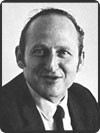
On April 23rd we lost our beloved teacher, mentor and friend Hal Sampson. He was 89. As you all know, Hal helped Joe Weiss develop and research Control Mastery theory. He showed us through his "treatment by attitude" how the theory could be translated into action. I first met Hal in 1980 when he responded with such kindness to my first and only fan letter asking how I could learn more about this amazing theory.Join us he said, as he always did.
Hal served in the U.S. Army in the 334th Infantry Regiment, on the European front, during World War II. He attended college on the G.I. Bill and graduated from U.C.L.A. Phi Beta Kappa, in 1948. Hal continued his studies at U.C. Berkeley, where he received his Ph.D. in Psychology in 1953. While studying in Berkeley, Hal met the love of his life, Frances, who was also in the Ph.D. program. Hal and Frances married in 1954, soon after Frances received her Ph.D. in Psychology. Hal and Frances had two sons and the family lived in El Cerrito, California for many years.
Hal held numerous academic positions, including Chair of the Department of Research at Mt. Zion Hospital's Department of Psychiatry, Faculty Member at the San Francisco Psychoanalytic Institute, and Lecturer and Visiting Professor at U.C. Berkeley. In 1964, Schizophrenic Women: Studies in Marital Crisis, his book written with Sheldon Messinger and Robert Towne was published. Hal published more than twenty articles in professional journals. He was an Interdisciplinary member and Faculty at SFCP, President and Co-Founder of the San Francisco Psychotherapy Research Group, Emeritus Clinical Professor in Psychiatry at the University of California San Francisco School of Medicine, and Lecturer and Visiting Professor at the University of California, Berkeley; Lecturer/Faculty, Community Center for Training in Community Psychiatry, Smith College and San Francisco State University.
The major intellectual focus of Hal's professional life centered on his over forty year friendship and collaboration with Dr. Joseph Weiss on the development of Control Mastery Theory. In 1972, they founded the Therapy Research Group, which we know call the San Francisco Psychotherapy Research Group. The Research Group produced leaders in teaching generations of new psychotherapy students and disseminated the theory locally, nationally and internationally. In 1986, The Psychoanalytic Process: Theory, Clinical Observations and Empirical Research, the book they wrote in conjunction with the Mt. Zion Psychotherapy Research Group, was published. Hal was active in teaching these ideas to a large number of students and in presenting the theory to numerous Psychoanalytic Institutes across the United States and Europe.
Together Hal and Joe developed this spectacular and influential theory of psychopathology, psychotherapy, and a sophisticated empirical method to test it and continued their research, writing and classes for decades. In additional to his influential writing and long list of publications, Hal was best know for his warmth, wit, and generosity of spirit as a teacher and mentor for a generation of therapists around the world. Hundreds of psychotherapists look upon their years in his case conferences as the most valuable experience in their careers. Hal and Frances retired at age 80. He is survived by his beloved wife, Dr. Frances Sampson, a brother Edward Sampson, his sons Mickey and Dr. Lawrence Sampson and their families.
A service was held on April 29th at Sunset View Mortuary in El Cerrito, CA. The room was filled way past capacity with well wishers, family and beloved colleagues, patients and friends. In lieu of flowers, the family requested donations to the ACLU of Northern California, Development Department, 39 Drumm St., San Francisco, CA 94111.
We welcome you to share your favorite memories or thoughts about Hal with us all.
Jessica Broitman, President emeritus, for the Board
|
|
My Friend Hal
|
|
Helene Goldberg
I was influenced by Hal before I ever met him. I had read the book he wrote with Joe Weiss in '86 and I was so excited by both the theory and the empirical process to evaluate it, that I immediately applied to The Wright Institute to get a Ph.D in Psychology. Hal and Joe spoke at my school in 1988. I went up afterward and asked Hal if I could attend his case conference at the Psychoanalytic Institute. I was thrilled when he was welcoming. The one thing he told me was that I should talk a lot in the class. (a unique request in my psychology training). This class was to become the core of my education as a therapist. It was such an exciting time. The class was filled with seasoned therapists as well as beginners all theorizing about the case. The amazing part about the class is that Hal made it safe to think. He always reacted with interest and respect for the therapist and the patient. He was interested and kept up with other theories in psychology. He would remind us that "we are not a cult" there are other valuable ideas out there. Though one of my favorite quotes from him was about intersubjective or postmodernist theory; he said, "This is an amazing theory, it's so complete you don't even need the patient."
Like most people in the class I loved Hal and wanted to model myself after him as a therapist and teacher. It was a wonderful time. I formed lifelong friendships from that class. We started having annual parties at my house "For the Hal of It". We'd sit on my deck and Hal would make martinis. It went on for years, and for those of us lucky enough to be part of it, it was the center of our professional life and we hoped it would last forever.
It didn't.
First Joe died and then Hal retired in 2005. I was fortunate that Hal and Fran and I became close friends. We got together frequently. He would teach in my class whenever he wanted to. He was glad to leave the political bickering of the SFPRG board behind and was happy in retirement. As time went on though he began to lose his memory and focus. More and more of the old Hal fell away. Early on, he forgot all about being a psychologist; then he forgot more. What was never lost was his sweetness and love. He radiated love even when he could hardly talk. He was always sure of his love for Fran and knew he was the luckiest guy in the world to have her love. She was by his side when he died. They had been deeply in love for 62 years.
We all feel the loss, Fran especially. But I feel like I have lost my good father. The one I can mourn. I'm just grateful I had his love in my life.
|
|
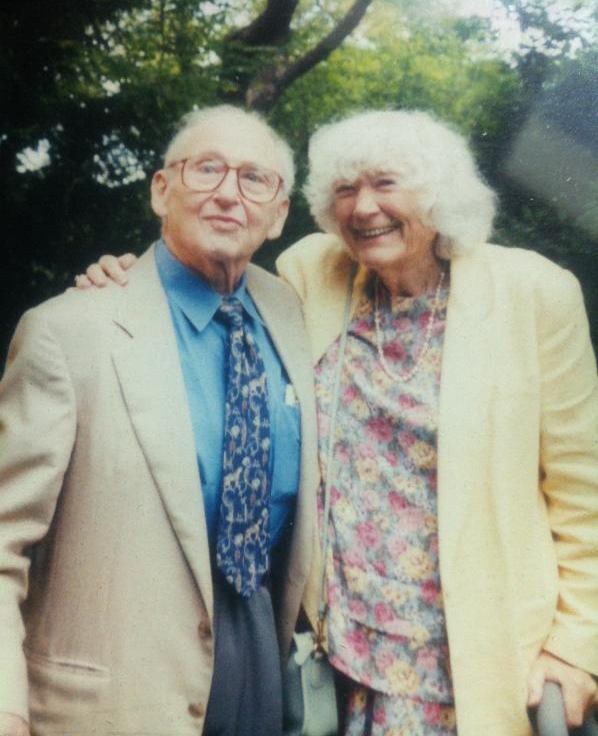
Hal and Fran
|
|
photo courtesy of their family
On the SFPRG website you can find tributes written by members upon Hal's retirement in 2005. Click here.
|
|
Hal Sampson
|
|
Enrigue Casero
I will forever be thankful for his generosity in teaching & his basic sense of humanity. Hal & Joe gave us in vivo a wonderful model of how to be a colleague. My condolences especially to the 1st generation of the Wednesday group, but to all who were able to learn from him.
Sincerely,
Enrique Casero (Miami, Florida)
|
|
Hal
|
|
Bruce Kugler
To SFPRG and all those who appreciated and loved Hal Sampson,
Of all the people over the years while I lived in the Bay Area, or even in my life, I have never forgotten the brief, but wonderful times I spoke with Hal.
As we all grow older, it seems our appreciation for some people
strengthens, even if we no longer have any contact. I think for many on of us,
but particularly for those who have felt the lash of others' indifference,
overly competitiveness, fears, disrespect, and bullshit, Hal could quench a thirst
and parched throat like water from a mountain stream.
Good natured, at times twinkle eyed, laughing, and not being afraid
to laugh!, allowing himself to be moved and influenced, but holding steady
ground as needed, a sensitive regard and genuine interest in others, all come
to mind when thinking of Hal.
He didn't make you feel like you needed to back up, and was welcoming
and kind. He was able to make people feel appreciated, even when nothing was
seemingly done to deserve it. Hal was therapeutic without even "working," just by being Hal. He was a natural man, a natural man.
Some people care about the gap between their intentions and actual behaviors-
attitudes. Narrowing that gap has something to do with integrity. Hal had narrowed
that gap down a bit, and what an incredible model for students and other fine teachers.
It's cliche, but I have to say, I wish there were many more people like Hal Sampson on this nutty planet. A natural man, Hal was a natural man.
Bruce Kugler, Ph.D.
|
|
Clinic Report
|
|
Jessica Broitman
Greeting from the clinic!
There is so much happening at the clinic right now-
We have just held our teacher/supervisors appreciation luncheon. We had a great turnout and were able to tell many of you how much your participation means to us. The food, prepared primarily (with love) by the interns was fantastic and Beth's lovely home provided the perfect setting for our celebration. We had planned to hold a class prior to the lunch so that our supervisors and teachers could learn more about the research protocol utilized at the clinic but Hal's memorial necessitated our postponing it.
There is a beautiful synchronicity of theses events happening on the same day, as it was Hal's strong wish that the clinic would thrive and grow. I know he was very pleased with our program and often mentioned that it would help ensure that the theory would live beyond he and Joe. Thanks to all of your help we are succeeding. We started 15 years ago with 2 interns and will have our largest cohort even with 17 interns this fall!
Please join me in thanking:
Jack Maslow, Peter Schumacher, Steve Foreman, Zoe Sipes, John Gibbins, Bill Dickman, Jack Davis, Camerin Ross, Jay Seiff- Heron , Gena Castro, Barbara Sapienza, Reeta Hernes, Molly Sullivan, Karly Kaplan, Bill Meehan, Jane Weisbin, Susan Badger, Susan Landes, Heather Clague, Terry Meyers, Michael Lowenstein, Rick Pomfret, Joe Cristofolo, David Auld, John Snyder, Norman Sohn, Jamie Edmund, and Claire Arbour
for teaching and supervising our interns!
With such a large group coming in the fall we have had to rethink our transitions plans. You might remember that we joyfully hired Ginger Rhodes to become our next clinic director. After a year on the job, Ginger has helped us realize that there were some needed adjustments to our staffing plans. Most internship programs have significantly larger staff running their comparable programs. We have been functioning with only two very part time staff and a lot of donated help from all of you. We have had one half of an FTE. Ginger has asked me to consider staying on in a part time capacity to help deal with the even larger cohort. She knows how much I love and care about this program so it was an easy yes. So while Ginger will take over the daily running of the clinic as planned in September, I will be the external liaison to outside agencies and collaborating institutes. I will also continue to help with supervision and teaching as needed. This will still allow me to cut back and travel more as planned but still remain an active participant in the clinic.
You might remember that this year begins Carol's transition as well.
We are pleased to announce that we are seeking applicants for the position of Training Director of the Training Center and Clinic at SFPRG. We anticipate Carol will work closely as the Co-Training Director, with our new hire this year, to help them learn the ropes. I'm guessing that Carol's love for the clinic will result in her too retaining some ongoing staff work in the coming years teaching and supervising as well! So we are growing bigger and appropriately enlarging our staff to ethically meet the needs of our interns. We still won't have even one FTE but feel that with all of your help, and volunteer hours, our interns will be well taken care of. Please see the job description below and consider joining our staff!
Training Director of the Training Center and Clinic at
SFPRG
Job Description Highlights:
The Training Director is responsible for helping to run the clinic and oversee any clinical issues that emerge. Duties include: updating the training manual, creating didactic training schedule for the interns; evaluation of those seminars; teaching and ensuring that the interns fulfill their duties. This position includes supervising between 3-5 students and being on call for the clinic at least one week a month. In conjunction with the clinic staff, the training director helps to interview all intern candidates for the program. She/he reports to the clinical director and works with the director to create the best program possible. Compensation for this 10 hour a week position is a half time office onsite in The Presidio.
Qualifications:
- Licensed/license ready California psychologist.
- Recognized expertise and experience in Control Mastery Theory.
- Leadership and supervision experience consistent with the position.
- Specialized training/experience in child/adolescent treatment.
Application Deadline:
June 15, 2015
Application Materials:
Please submit your Curriculum Vitae along with two references to the TD Search Committee: email to sfprg@sfprg.org or mail to TD Search, 9 Funston Avenue, San Francisco, CA 94129. For additional details, compensation information, and more detailed job description please contact Ginger Rhodes.
Ginger Rhodes, PhD, Chair, TD Search Committee
|
|
Education Committee Report
|
|
|
The Education Committee is making changes to our Annual International Conference on Control Mastery Theory. Stay tuned for information on next year's conference!
|
|
Sublet Available
|
|
|
SHARE/SUBLET Available August 1st. Lovely, light, 3rd floor office in 4 story renovated Victorian office building with 17 other therapists. M/W/F/S $855 includes utilities. Thurs eve prob. available. kitchen. 1700 Pierce, corner of Sutter st. lower pacific heights/fillmore. JAMIE EDMUND 510-547-8450. jamiehedmund@netscape.net
|
|
Hal Sampson's Presentation to Associazone Fiorentina Degli Psicoanalisti Neo-Freudiani
|
|
Harold Sampson, Ph.D.
This is the third installment of the lecture given by Hal Sampson in April 1997 in Italy. See the previous newsletters for the beginning. Our newsletter Archive is accessible from our website homepage, on the right hand menu below the newsletter sign-up.
Basic Concepts
I shall now present in a more systematic fashion the basic concepts of Weiss' theory of how the unconscious mind functions, of psychopathology, and of therapy.
Unconscious Mental Functioning
The first concept I shall discuss is that of unconscious mental functioning. In contrast to Freud's early theory, Weiss assumes that a person may carry out unconsciously many of the same kinds of functions that he carries out consciously. He may think unconsciously, make inferences, test reality, and make and carry out decisions and plans. The patient in analysis, as we shall discuss later, uses all of these mental functions in working unconsciously to try to solve his problems.
A person may also exert unconscious control of his repressions. He maintains his repression of a mental content if he unconsciously assumes it would endanger him if he experienced it. He lifts his repression of the content when he decides he may safely experience it.
This important concept, which has roots in Freud's ego psychology, is illustrated by the phenomenon of "crying at the happy ending" (Weiss 1953, 1986, 1993). A person may suppress or repress her sadness when she feels endangered by it; and she may allow herself to experience sadness when there is a "happy ending" that makes it safe to do so. We have already seen an example of this phenomenon in the case of Ms. White, whose clinical vignette I presented earlier. (See previous newsletter - Ed.)
She did not experience sadness when she talked of interrupting her analysis; but when the analyst provided a happy ending by recommending that she continue, his acceptance of her made it safe for her to experience her sadness at her mother's uninvolvement, and she became teafull.
I will present another example of "crying at the happy ending." It is a poignant story told to Dr. Weiss and me by a female colleague, Dr. B. Many years earlier, Dr. B's first child, a son, died in an accident when he was two years old. After the initial trauma had passed, Dr. B repressed most of her memories of her son because it was so painful to think of him. Fore example, she recounted how one day she was looking through a photo album with her mother and when she saw a photo of herself with a baby on her lap, she felt puzzled. "Whose baby is that?", she asked. Her mother told her it was a picture of the dead son. Dr. B quickly put this experience out of mind. Many years later, after a divorce and remarriage, she gave birth to a new child, also a son. When the newborn son was placed in her arms, she felt very happy, and then for the first time in years, vividly remembered her first son, and also for the first time in many years, wept with grief at her loss.
Dr. B repressed her memories of the first son because she felt inconsolable about his death. The birth of her new son was a joyful event which made her feel safe enough to re-experience her memories and the grief associated with them.
This concept has important implications for any theory of therapy. It means that when a patient feels safe enough to do so, she will lift her defenses and face her unconscious feelings and conflicts. Most therapeutic processes follow this principle: patients maintain their symptoms because they unconsciously believe it would be dangerous to relinquish them. When they feel safe enough to do so, the relinquish them.
To be continued in next month's newsletter.
|
|
Save the Dates!
|
|
|
Please put these dates in your calendar!
The Summer Samba at the Broitman-Basri home on Sunday, August 16th. This is our annual get-together to socialize with food and drink, and enjoy the the East Bay sunshine.
Our Annual Honorary Dinner will be on September 19th where we will be honoring our recent Past President, Steven Foreman. Steve has been a stalwart member, teacher, supervisor and board member for many years.
On November 7th George Silberschatz will be teaching a day-long conference "Using patient feedback to improve psychotherapy effectiveness"
|
|
Bring a CMT conference to your area
|
|
|
If you live outside of the Bay Area, SFPRG needs your help!
We want to present conferences on CMT outside of the Bay Area. Do you have connections with an organization that could either sponsor us or allow us use of a mailing list? We are APA approved so we can give CE hours anywhere in the U.S. If you know of an organization that would sponsor us, we can provide a lecturer; if you can get us a mailing list and leads on venues, we can do the rest.
Please contact Rob in our office (rob@sfprg.org) if you can help!
|
|
Do You Use Amazon.com?
|
|
Support SFPRG!
Amazon.com has a program called AmazonSmile which will give a small donation from your purchase to the nonprofit of your choice. Thank you to those who are participating. We have already received small checks from Amazon! Please bookmark AmazonSmile and designate the San Francisco Psychotherapy Research Group as your charity of choice! Link to AmazonSmile here
|
|
|
