|
|
|
Special Edition Newsletter
Handwriting Tips and Techniques |
|
|
Greetings!
Today, January 23, is National Handwriting Day and the birthday of John Hancock. This day was selected as National Handwriting Day to honor John Hancock and his famous signature on the Declaration of Independence. To celebrate, Brightsong has created this newsletter filled with tips, techniques and articles to help your child with their handwriting skills. If you feel your child may need some extra help with their handwriting, Brightsong is hosting Making My Mark: A Handwriting Workshop on April 27.
To celebrate National Handwriting Day - send a note to a loved one, write a letter to a friend or send a special handwritten card to the grandparents. They will love it and your child will be able to practice their handwriting skills!
The Brightsong Team |
|
Handwriting: Irrelevant or Indispensable?
by: Rebecca Thomas, MOT
Occupational Therapist
 When was the last time you wrote a letter to someone? Addressed an invitation? Even addressed a bill? In today's digital age, handwriting is a thing of the past, like a giant cell phone with a 6 inch antenna, right? When you can print anything from address labels to autobiographies on your computer with ease, why would we want to waste valuable instruction time in our already taxed schools on this antiquated skill? (continue reading . . . ) |
Positioning for Handwriting 
How you sit does influence your handwriting. Poor positioning will make handwriting harder for some children. Here are a few tips and tricks:
- Place feet on the ground with ankles, kneese and hips at a 90 degree angle. If your child's feet do not touch the floor, provide a foot rest or use telephone books to create some support for their feet.
- Make sure your child's desk or table is no higher than their elbow when sitting.
- Tilt the paper. Turn it to the left for right-handed students and to the right for left-handed ones.
- Change the writing surface. Some children do better writing on an angled writing surface such as a slant board or a 3 ring binder.
Ensuring proper positioning will help your child in the long run. Small changes can have a big impact. If your child is still having difficulty, you might want to consult with an occupational therapist.
|
|
Making Handwriting Fun: Tips and Tricks
For most children, practicing handwriting is a chore that they may not want to do. Here are a few tips and tricks to make it a fun experience for your child.
Change the Surface
Shaving cream
Salt
Sand
Paint
Bag full of hair gel
In the bathtub
Change the Position of the Writing Surface
On table top
On an easel or wall
On the floor or sidewalk
Lying on the floor and under the table
Tape paper on the underside of the table
Inside a big box
Have a Reason to Practice Writing
Help write the grocery list
Make a list of chores for them and their siblings
A "Thank You" card
An "I Love You" card for grandma and grandpa
An invitation to a friend for a play date
Draw a picture and write a sentence to describe what's happening
Write instructions for a treasure hunt for the rest of the family
|
Pre-Handwriting Skills for Younger Children
by: Rebecca Thomas, MOT
Occupational Therapist
While handwriting is an important skill for children to learn, they aren't developmentally equipped to write letters with diagonals until age 5 and can develop poor habits if asked to try before they're ready. However, there are a few tips to encourage PRE-Handwriting skills to children under age 5:
- Around age 3, children should be using fingertips on a pencil or crayon to color rather than a fist. However, they may not move to just 3 fingers until age 5. Encourage your child to use their fingers by using small, broken pieces of crayon to color or bulb crayons, like Alex brand finger crayons.
- Begin reinforcing good habits as soon as they express interest in writing letters. Letters are formed most efficiently from top to bottom.
- Don't substitute video learning games for fine motor activities like drawing and coloring - they do not build the foundational muscle control needed for writing. And remember - no more than 2 hours of screen time a day (video, computer, TV, iPad, etc).
- Good activities for foundational skills include mazes, dot-to-dot puzzles, tracing with color change markers and lacing.
- You can put maze books or dot-to-dot books in a sheet protector and use dry erase markers over and over.
- Work on recognizing letters and spelling your child's name with magnets rather than trying to write.
|
Fun Fine Motor and Pre-Handwriting Resources: 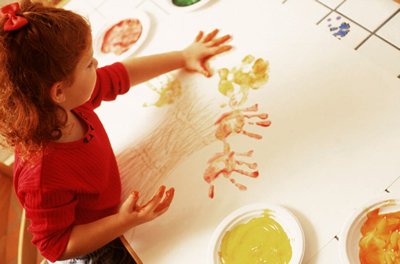
Crayola Switchers
|
Save the Date: Saturday, April 27 from 10 am to Noon
Learning how to write is an important skill everyone must learn, but it can be a challenge for some children. Making My Mark! is a hands-on workshop for parents of children with and without special needs. Parents will learn strategies and techniques to encourage their child's writing skills, including activities for prewriting skills, printing and cursive.
More information will be coming soon!
|
|
|
|
|
Disclosure of Material Connection: The above links are for informational purposes only. Brightsong, LLC does not receive a commission on any of the products reviewed or listed. The Brightsong team only recommends products or services we personally use and believe will add value to the families we work with. We are disclosing this in accordance with the Federal Trade Commission's 16 CFR, Part 255: "Guides Concerning the Use of Endorsements and Testimonials in Advertising." |
| |
|
|