|

Trainings/Conferences
On-line Resouces
An independent forum with news, programs, research, events, legislation, theory, and opinion on education, health, welfare, and justice for California's 10 million children
Focused on promoting the social emotional development and school readiness of young children birth to age 5
Research and message development on child and family mental health Promoting the health and development of infants and toddlers Building awareness and understanding of sensory processing disorders through education and collaboration Helping parents, teachers and health professionals to proactively manage the challenging behaviors of the 21st century child |
|
Meeting Information
There is no December meeting. Happy holidays!
Next Meeting: Tuesday, January 8, 2013, 8:30 to 10:30 A.M. Blood Source Community Room 555 Rio Lindo Avenue, Chico Presentation: Transitional Aged Youth (TAY) Karen Vasquez, Supervisor, Chico TAY
Please Note: Parking in Blood Source lot is for clients only. Please park in lot directly across Rio Lindo or use street side parking. Thank you. |
|
|
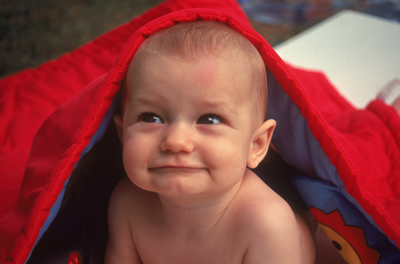 Baby See, Baby Do? Baby See, Baby Do?
ScienceDaily (Dec. 7, 2011)
Babies love to imitate. Ask any parent and they'll report how infants mimic sounds, facial expressions and actions they observe. Now new research from Concordia University, published in the journal Infant Behavior and Development, has found that infants can even differentiate between credible and non-credible sources. Simply put, most babies won't follow along if they have been previously tricked by an adult.
"Like older children, infants keep track of an individual's history of being accurate or inaccurate and use this information to guide their subsequent learning," says senior researcher Diane Poulin-Dubois, a professor in the Concordia Department of Psychology and member of the Centre for Research in Human Development. "Specifically, infants choose not to learn from someone who they perceive as unreliable."
A group of 60 infants, aged 13 to 16 months, were tested as part of this study. Babies were divided in two groups; with reliable or unreliable testers. In a first task, experimenters looked inside a container, while expressing excitement, and infants were invited to discover whether the box actually contained a toy or was empty. This task was designed to show the experimenter's credibility or lack thereof.
In a second imitation task, the same experimenter used her forehead instead of her hands to turn on a push-on light. The experimenter then observed whether infants would follow suit. The outcome? Only 34 per cent of infants whose testers were unreliable followed this odd task. By contrast, 61 per cent of infants in the reliable group imitated the irrational behavior.
"This shows infants will imitate behaviour from a reliable adult," says second author Ivy Brooker, a PhD student in the Concordia Department of Psychology and member of the Centre for Research in Human Development. "In contrast, the same behaviour performed by an unreliable adult is interpreted as irrational or inefficient, therefore not worth imitating."
These results add to a growing body of research from the same laboratory that suggests that even infants are adept at detecting who's reliable and who is not.
|
|
 Happy Youngsters More Likely to Grow Into Wealthy Adults Happy Youngsters More Likely to Grow Into Wealthy Adults
ScienceDaily (Nov. 19, 2012)
The first in-depth investigation of whether youthful happiness leads to greater wealth in later life reveals that, even allowing for other influences, happy adolescents are likely to earn more money as adults.
Dr. Jan-Emmanuel De Neve (UCL Political Science) and Professor Andrew Oswald (University of Warwick) analysed data from 15,000 adolescents and young adults in the USA, finding that those who report higher 'positive affect', which is a technical measure of happiness, or higher 'life satisfaction' grow up to earn significantly higher levels of income later in life.
Their study found that happy individuals' greater wealth is due, in part, to the fact that happy people are more likely to get a degree, find work, and get promoted quicker than their gloomier counterparts.
And greater happiness has a big financial impact: the study shows, for example, that a one-point increase in life satisfaction (on a scale of 5) at the age of 22 is associated with almost $2,000 higher earnings per annum at the age of 29. This is on top of other influences on incomes.
The researchers paid careful attention to instances of siblings in the data, demonstrating that even in children growing up in the same family, happier youngsters tend to go on to earn higher levels of income. Their results are robust to the inclusion of other important factors such as education, physical health, genetic variation, IQ, self-esteem, and current happiness.
The researchers also studied how happiness may influence income. Mediation tests reveal a direct effect as well as indirect effects that carry the influence from happiness to income. Significant mediating pathways include obtaining a degree and a job, higher degrees of optimism and extraversion, and less neuroticism.
Dr De Neve said: "These findings have important implications for academics, policy makers, and the general public.
"For academics they reveal the strong possibility for reverse causality between income and happiness -- a relationship that most have assumed unidirectional and causal. For policy makers, they highlight the importance of promoting general well-being (GWB), not just because happiness is what the general population aspires to (instead of GDP) but also for its economic impact.
"Perhaps most importantly, for the general public -- and parents in particular -- these findings show that the emotional well-being of children and adolescents is key to their future success, yet another reason to ensure we create emotionally healthy home environments."
|
|
 Psychotherapy for Oppositional-Defiant Kids with Low Frustration Tolerance-and How to Help Their Parents, Too Psychotherapy for Oppositional-Defiant Kids with Low Frustration Tolerance-and How to Help Their Parents, Too
by David Rice
Dr. Rice offers a new perspective on oppositional-defiant children based on temperament, and suggests effective therapeutic interventions for both parent and child.
|
|
 Celebrate the Child - Candlelight Procession Celebrate the Child - Candlelight Procession
Friday December 7, 2012, beginning At 5:30 pm
at the Children's Park, Chico (corner of W. 1st Street & Esplanade.
Music by Inspire School of Arts & Sciences Choir
For information contact Margie, 519-4248.
|
|

Workshops, Conferences and Other Resources
Eight Steps to Managing a Child's Difficult Behavior. This webinar will discuss an eight-step problem-solving approach to managing behavioral problems in children with FASD, anchored in an interactive behavior management system. The system has the potential for making guided interventions and behavioral management strategies available to programs serving children with FASD and families who are raising a child with FAS/ARND but who do not have ongoing access to care or trained professionals. December 17, 2012, 11:00 A.M. - 12:00 noon. Register here.
First 5 Butte County is bringing Laura van Dernoot Lipsky to Chico on February 25, 2013 to speak about vicarious trauma. More information here.
Supporting Infants, Toddlers and Families Impacted by Caregiver Mental Health Problems, Substance Abuse, and Trauma - A Community Action Guide. Using a case study approach, this new guide published by SAMHSA (Substance Abuse and Mental Health Services Administration) presents resources that service providers, advocates, and practitioners can use to better understand and engage the community in responding to children whose caregivers are negatively impacted by mental illness, substance abuse, or trauma. (October 2012).
|
|
|


 Gloria Balch, Deputy Director