|
Day in the Life of...

Carolyn Opkis,
Home Care Administrative Aide
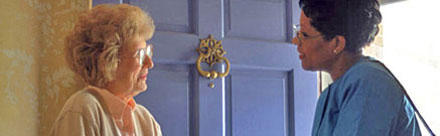
Carolyn Opkis, Home Care Administrative Aide, always knew she was a people person and wanted to work with people. She never knew her career would end up helping keep people in their homes maintaining their independence.
Her career journey started at North Iowa Area Community College where she obtained an Associate of Arts Degree in Science Business. After graduation, Opkis started as assistant manager/supervisor at Hardees. "In this position, I oversaw the crew, maintained inventory and completed deposits," Opkis stated. "I also worked the front and the back end of the restaurant including making food." Several years later, she took a new career opening with the Girl Scouts of North Iowa as a registrar. As a registrar, she was responsible for processing girl and adult registrations as well as camp and program registrations for 3,000 girls and 500 adults in a 10 county area. "This position was a lot of fun especially during camp season," she notes. "I got to meet a lot of fun and interesting people."
In 2001, Opkis joined the Cerro Gordo County Department of Public Health as the Home Care Administrative Aide and she has been in this role ever since. Her responsibilities include developing schedules for 10 home care aides and checking in with clients to inform them of their weekly home care schedules. She also maintains client logs, reviews each home care aide's client charts for Medicare, Medicaid and other grants. Lastly, Opkis works with the public health nurses to review client needs when creating the home care aide schedules.
"The one thing I love about this job is the fact that it is always changing," she noted. "Our clients' needs and schedules change frequently if not daily; I also have to take in account new clients joining our services." However, sometimes this does represent a challenge, especially if a client isn't home during their scheduled visit. "I have to be on my toes, always thinking one step ahead to adjust our home
care aide schedules and making sure our clients are seen," Opkis said. She believes one of the best benefits about working for the Health Department is the family oriented atmosphere. "We have a very good support system here," she said. "If a staff memberneeds something, we rally to support them and help out anyway possible." Opkis views the proactive actions of the Health Department as another added benefit. "We are constantly looking toward the future to keep the residents of Cerro Gordo County healthy and safe," she stated. Yet, she believes that this is also a challenge. "We never know if a disaster like the floods of 2008 could happen again or sometimes it is hard to predict which direction the Health Department should take." However, she knows the Health Department will constantly strive to grow and adapt to meeting the health needs of our residents.
Carolyn Opkis continues to play a valuable role in keeping residents healthy, happy and in their homes!
|
|
Department Quick Links...
Scan this QR code with your smartphone for a direct link to our website. |
 |
|
Health Department Launches FREE Cerro Gordo Smart Dining App
The Cerro Gordo County Department of Public Health has launched its first smart phone and tablet app free to the public. The new app will allow users to search county restaurants based on a healthy dining score, obtained using the Nutrition Environment Measures Survey for Restaurants (NEMS-R), produced by Pennsylvania University with support from the Robert Wood Johnson Foundation. The app also lists healthy and nutritious menu options for each restaurant.
Each restaurant is scored based upon the following strategies:
Availability of "healthy" entrées, beverages, appetizers
- Availability of nutrition information on-site and online
- Promotional methods of food and beverage purchases
- Price equality between "healthy" entrées and other entrées
Each restaurant's score ranges between -27 and 63. Higher scores indicate that restaurants implement a high number of healthy dining strategies mentioned above. (For a complete report of the healthy dining strategies and assessment tool, visit http://www.med.upenn.edu/nems
As a result of this project, many local restaurants have been making simple changes to improve their NEMS-R Score. "With so many families dining out on a regular basis, we are excited to offer them an easy way to select dining choices based upon nutrition with the touch of a button," states Kelli Huinker, Health Promotion Service Manager, Cerro Gordo County Department of Public Health. "With this assessment program, we have had multiple restaurants reach out to us in hopes to improve their dining environment and we are happy to recommend simple yet effective strategies to these restaurants. Our hope is that a healthier option, whether it is by price, nutrition, or marketing changes, will be available in any restaurant you choose to dine in Cerro Gordo County."
The app was made possible through funding from the Centers for Disease Control and Prevention Community Transformation grant and was created by WebWise Websites, Inc. of Mason City.
Residents can download the app at Google Play or I-tunes (Cerro Gordo Smart Dining).
For more information regarding the Cerro Gordo Smart Dining App, please contact Kelli Huinker, Health Promotion Manager at 641-421-9312.
|
|
|
|
|
It's July!
That means for most of us grilling with family and friends. Before you light up your grills, here are a couple of tips to ensure food safety:
- Cook food thoroughly- Meat and poultry cooked on the grill often brown quickly on the outside. Use a stem thermometer to make sure food has reached a safe internal temperature.
- Chicken breasts should reach 165 degrees F.
- Hamburgers made of any ground meat or poultry should reach 160 degrees F.
- Steaks can be cooked to 145 degrees F.
- All cuts of pork should reach 145 degrees F.
- NEVER put your cooked meat on the same platter that held raw juices.
Looking for a new career opportunity? We are hiring a home care aide and a finance billing administrator. Visit our website www.cghealth.com and look under "Career Opportunities" for more information.
In this month's edition of the Public Health Communicator, we include articles about preventing strokes and heart disease. We highlight tips and guidelines to follow if you are traveling with diabetes. The Health Department now has a smart dining app to help with healthy eating while you are dining out. Read below to find out more. As always we include the "Day in the Life of" column and the Wellness Corner!
Like us on Facebook or follow us on Twitter to stay up-to-date on all the current information surrounding the Health Department. Make sure to check out the left side of our newsletter, which features our Quick Response (QR) Code. Scan it with your smartphone to get directly to our website.
For more information about our services, visit our website at www.cghealth.com.
Best wishes,
Nola Aigner
Public Information Officer
Cerro Gordo County Department of Public Health
|
|
Traveling with Diabetes

Traveling is hard for anyone. There is just so much to remember. Did I pack my toothbrush? Did I lock all the doors in my house? Traveling with diabetes can be even harder. Things others take for granted on vacation such as meals away from home, physical activity and time changes can all affect someone with diabetes. Before you start your trip, follow the tips below to make your summer trip stress free and unforgettable!
Pack your Medicine
- Make sure to pack twice the amount of diabetes supplies you expect to need, in case of travel delays.
- Keep snacks, glucose gel or tablets with you.
- Carry all your important medical information with you such as your health insurance card, emergency phone numbers, doctor's name and phone number and medical identification that states you have diabetes.
- Keep in mind time zones when you take your medicine.
- Find out where to get medical care if needed when you are away from home.
- Take prescription copies with you.
On the Road
- Move around every two hours to reduce your chance of blood clots.
- Pack bottled water instead of soda or juice.
- Include dried fruit, nuts and seeds in your snack bag. Since these foods can be high in calories, measure them out in small portions in advance.
Leaving on a Jet Plane
- Place all diabetes supplies in carry-on luggage. Keep medications and snacks at your seat for easy access. Don't store them in overhead bins or checked luggage.
- If a meal will be served during your flight, call ahead for a diabetic, low fat or low cholesterol meal. Wait until your food is about to be served before you take your insulin.
- Pack a healthy meal if your flight does not provide a meal.
- Make sure to bring snacks in case of flight delays.
- When drawing up your dose of insulin, don't inject air into the bottle (the air on the airplane will probably be pressurized).
- Move around every two hours to reduce your chance of blood clots.
Stay Healthy and Active
-
Changes in what you eat, activity levels and time zones can affect your blood glucose. Check levels often. Talk with your doctor before increasing physical activity, such as going on a trip that will involve more walking.
- Stick with your exercise routine. Make sure to get at least 150 minutes of physical activity each week.
- Wash your hands often and thoroughly with soap and water to prevent diseases and illnesses.
- Protect your feet. Be especially careful of hot pavement by pools and hot sand on beaches. Never go barefoot.
- Make sure your immunizations are current.
For more information about traveling with diabetes, visit www.cdc.gov
*Information provided by the Centers for Disease Control and Prevention
|
|
|
Prevent Heart Disease!
Everyone needs physical activity to stay active and healthy. According to the 2008 Physical Activity Guidelines for Americans, you need to do two kinds of physical activity, aerobic and muscle-strengthening to stay healthy and prevent heart disease. To keep your heart healthy, adults need the following:
- Two hours and 30 minutes (150 minutes) of moderate intensity aerobic activity every week and muscle-strengthening activities on two or more days a week that work all major muscle groups such as legs, hips, back and arms, etc. OR
- Seventy-five minutes of vigorous-intensity aerobic activity every week and muscle strengthening activities on two or more days a week that work all the major muscle groups OR
- An equivalent mix of moderate and vigorous-intensity aerobic activity and muscle-strengthening activities on two or more days a week that work all major muscle groups.
150 minutes a week may sound like a lot, but you can break the time into 15 minutes chunks. That's only working out 10 sessions a week! Go for a quick 15 minute brisk walk or do 15 minutes of push-ups, squats and other muscle strengthening activities.
*Information provided by the Centers for Disease Control and Prevention and the Division for Heart Disease and Stroke Prevention - WISEWOMAN Program
|
|
Use FAST for Stroke Prevention
We celebrate National Stroke Awareness Month in May, but a stroke can happen anytime. In Iowa, strokes are the fourth leading cause of deaths and a leading cause of long-term disability in the United States. Strokes can happen to anyone of any age; however, your general risk does increase with age. It's vital to know the warning signs for yourself and your loved ones.
USE FAST to remember the signs of a stroke:
- Face: Ask the person to smile. Does one side of their face droop?
- Arms: Have the person hold their arms out. Does one arm droop lower?
- Speech: Ask the person to repeat a simple phrase. Is their speech slurred or strange?
Time: If you observe ANY of these signs, call 911 immediately!
*Information provided by the Centers for Disease Control and Prevention and the Division for Heart Disease and Stroke Prevention - WISEWOMAN Program
|
|
Wellness Corner
Cut Back on Caffeine!  It's 11 PM and you have already had a full day of work, the kids' after-school activities, meal preparation, and laundry. You're tired and know you could use some sleep. But you still have a list of chores to do. So you reach for your iPod - and some caffeine. Sound too familiar? It's 11 PM and you have already had a full day of work, the kids' after-school activities, meal preparation, and laundry. You're tired and know you could use some sleep. But you still have a list of chores to do. So you reach for your iPod - and some caffeine. Sound too familiar? What Is Caffeine? Caffeine is a drug that is naturally produced in the leaves and seeds of many plants. It's also produced artificially and added to certain foods. Caffeine is defined as a drug because it stimulates the central nervous system, causing increased alertness. Caffeine gives most people a temporary energy boost and elevates mood. Caffeine is in tea, coffee, chocolate, many soft drinks, pain relievers and other over-the-counter medications. In its natural form, caffeine tastes very bitter. But most caffeinated drinks have gone through enough processing to camouflage the bitter taste. Teens usually get most of their caffeine from soft drinks and energy drinks. Adults tend to get their intake from soda, coffees, and energy drinks. (In addition to caffeine, these also can have added sugar and artificial flavors.) Caffeine is not stored in the body, but you may feel its effects for up to 6 hours. Caffeine sensitivity (the amount of caffeine that will produce an effect in someone) varies from person to person. On average, the smaller the person, the less caffeine needed to produce side effects. Caffeine sensitivity is most affected by the amount of caffeine a person has daily. People who regularly take in a lot of caffeine soon develop less sensitivity to it. This means they may need more caffeine to achieve the same effects. Caffeine's Negative Effects: Caffeine is a diuretic, meaning it causes a person to urinate (pee) more. It's not clear whether this causes dehydration or not. To be safe, it's probably a good idea to stay away from too much caffeine in hot weather, during long workouts, or in other situations where you might sweat a lot. Caffeine may also cause the body to lose calcium, and that can lead to bone loss over time. Drinking caffeine-containing soft drinks and coffee instead of milk can have an even greater impact on bone density and the risk of developing osteoporosis. Caffeine can aggravate certain heart problems. It may also interact with some medications or supplements. If you are stressed or anxious, caffeine can make these feelings worse. Although caffeine is sometimes used to treat migraine headaches, it can make headaches worse for some people.
|
Help us promote Public Health services. Forward this electronic newsletter to your friends, family, co-workers and associates. Thank you for choosing the Cerro Gordo County Department of Public Health! Our Mission Statement: The Cerro Gordo County Department of Public Health works to optimize the health of all people in Cerro Gordo County. Our Vision Statement:
We will be the leader in making Cerro Gordo County the healthiest
county in Iowa.
Our Value Statement:
We believe in human dignity, respect for individual choices, promotion for wellness and personal safety, protection of the environment, prevention of disease and access to quality health services.

|
|
|
|
|