|
Day in the Life of...

Rose Ziegler,
Home Care Aide
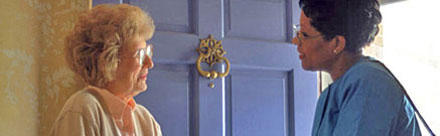
Rose Ziegler, home care aide always knew she was meant to work with people. Her journey working with individuals started at the University of Northern Iowa, where she received a bachelor's degree in education. After graduation, Ziegler substitute taught while working at a fast food chain in Marshalltown. Ziegler then journeyed to Cedar Rapids to pursue a career in the food industry. She attended Kirkwood Community College for their Culinary Food Program. While at Kirkwood, she also worked at a nursing home with individuals with severe mental illnesses. "My brother is mentally challenged, so working with individuals who had special needs such as mental illnesses came easy for me," Ziegler said. "I love being able to help individuals with adapting and becoming members in their community." Ziegler dabbled in the food establishment business for a while before moving to Iowa City. Her professional journey took her on several more moves where she worked in home care and also in-home daycare. Finally in 1995, she landed in Mason City and started working for the Cerro Gordo County Department of Public Health as a home care aide.
As a home care aide, Ziegler is responsible for helping clients with personal cares such as baths and showers, hair and oral care, food preparation, budgeting, light housekeeping, grocery shopping and laundry. Ziegler is also a mentor to new Home Care Aides at the Health Department. "I like being able to help new coworkers learn the ins and outs of the position," she says. Lastly, Ziegler is a support care worker for the Family Connections Program. She provides parents with children from newborn to five years of age parenting skills.
Ziegler believes the greatest benefit working as a home care aide is being able to help residents of the county stay in their homes as long as possible. "We live in a world where home care service is a growing need," Ziegler noted. "I also enjoy communicating and socializing with our clients. Sometimes we are the only individuals to interact with them." Yet, the only difficulty about her job as a home care aide is the weather. "Traveling in the winter with all the snow makes it hard to see and provide care for our clients," she said. She also feels that home care will always be a main priority of the Health Department especially as our county and Iowa as a whole ages.
Over the past 18 years, she has enjoyed working with staff at the Health Department. "We have a great team that cares for clients and residents of the county," Ziegler stated. "The home care aides and public health nurses have a positive working relationship, which helps us enhance the care we deliver to our residents." Ziegler also enjoys taking part in the social activities the Health Department provides staff such as the fundraisers to support families in need during the holiday season.
The Health Department is thankful that Rose Ziegler has utilized her love and talents for helping individuals in Cerro Gordo County!
|
|
Department Quick Links...
Scan this QR code with your smartphone for a direct link to our website. |
 |
Health Department Asks Community for Assistance with Wellness Survey
(Mason City) - The Cerro Gordo County Department of Public Health is asking county residents for help in assessing the health of Cerro Gordo County.
The Health Department is releasing the wellness survey to assess the physical activity, nutritional, and health behaviors of county residents. The new survey is a follow-up to a similar survey conducted in 2010 and will help the Health Department, along with other organizations, analyze the county's trends in health promotion and wellness.
"As stated in our organization's vision, the Health Department strives to make Cerro Gordo County the healthiest county in Iowa, and by learning specifically what our population needs and wants, we can focus on ensuring the appropriate health and wellness services and systems are in place," says Kelli Huinker, Health Promotion Service Manager, Cerro Gordo County Department of Public Health. "The survey will pair nicely with Mason City's local Blue Zones Project initiatives, but will also allow other local communities to provide their input so wellness and health programming can expand beyond the Mason City borders and throughout all of Cerro Gordo County."
To access the survey, visit the Cerro Gordo County Department of Public Health's website or complete a paper survey found at all the local community libraries.
For more information about the wellness survey, please visit www.cghealth.com or call (641) 421-9312.
|
|
May is Hepatitis Awareness Month
It is estimated that up to 5.3 million people (about 2 percent of the U.S. population) are living with chronic hepatitis B or hepatitis C. These diseases are more common in the United States than HIV/AIDS but because they often do not cause symptoms, most people are not aware they are infected.
The word "hepatitis" means inflammation of the liver. The liver is the largest organ in the body. It is about the size of a football and is located in the upper right area of the abdomen, under the rib cage. The liver is important because it filters everything that enters the blood stream whether from eating, drinking, smoking, or even absorbed through the skin. You cannot live without a liver. Unfortunately, many people who have hepatitis B or C do not develop symptoms until their liver is severely damaged. Chronic hepatitis B and C can be attributed to thousands of cases of liver cancer, liver disease (such as cirrhosis of the liver), and death each year. It also is the leading cause for liver transplants.
Hepatitis B is passed through contact with infected blood or sexual contact. Hepatitis C is predominately passed through contact with infected blood. Contact with blood can be from sharing needles, syringes, or other drug-injection equipment; direct contact with blood or open sores of an infected person; accidental sticks from needles or other sharp instruments; or from sharing personal items which may contain very small amounts of blood such as razors and tooth brushes. An infected mother can also spread the virus to her baby during birth.
Individuals who are most at risk for being infected with hepatitis B or C are those who have multiple sex partners, use injection drugs, are hemodialysis patients, are men who have sex with men, are exposed to blood on the job or live with someone who is infected.
Prevention of hepatitis B and C includes avoiding use of intravenous street drugs, not sharing needles, syringes, or any other injection drug equipment, limiting sex partners and using latex condoms and avoiding contact with blood.
There are vaccines available to offer protection from hepatitis A and B. There are no vaccines to prevent hepatitis C. Children who are attending school in Iowa are required to have the hepatitis B vaccine; which is a series of 3 injections. Many infants receive the first dose of hepatitis B vaccine at birth. Hepatitis A vaccine (a series of two injections) is recommended at the age of 12 months but is not a required vaccine. Hepatitis A and B vaccines are also available for adults.
Vaccine and testing services for hepatitis are available at the Cerro Gordo County Department of Public Health. If you have questions regarding these services, please call 641-421-9320.
|
|
|
|
Hooray!
It's May! May is National Bike Month. Take advantage of the beautiful weather we are having this week and either bike to work or bike for the fun of it! Cerro Gordo County is home to the River City Greenbelt and Trail System. The bike trail is 17.5 miles and consists of three trails: the Trolley Trail, which connects Mason City and Clear Lake (and runs parallel to an electric trolley line); the River City Trail, which links the parks and cultural attractions of Mason City; and the Winnebago Trail, which follows the Winnebago River and leads to the Lime Creek Nature Center. For more information about the River City Greenbelt and Trail system, visit http://www.inhf.org/trails/river-city-greenbelt.cfm.
This week, May 12-18 is Women's Health Week. Empower the women around you to make their health a priority and encourage them to take the following steps to improve their physical and mental health and lower their risks of diseases:
- Visit a health care professional to receive regular checkups and preventive screenings.
- Get active.
- Eat healthy.
- Pay attention to mental health, including getting enough sleep and managing stress.
- Avoid unhealthy behaviors such as smoking, not wearing a seatbelt or bike helmet and texting while driving.
The Cerro Gordo County Women's Health Fund will be hosting the second annual Lace Up, Leash Up, Line Up 5K/10K walk/run for running/walking enthusiasts and dog lovers on Saturday, June 8, 2013. To register, visit our website www.cghealth.com or sign up online at http://www.active.com/10k-race/clear-lake-ia/lace-up-leash-up-line-up-2013. In this month's Public Health Communicator, we feature tips for safe gardening and planting flowers. May is also Hepatitis Awareness Month. Betty Krones, Disease Prevention Specialist shares information regarding the types of hepatitis, symptoms, and treatment. The Health Department needs your help making our county healthier. Information is found below on how to find the survey to voice your opinion on wellness issues facing residents. As always we include the "Day in the Life of" column and the Wellness Corner. Enjoy! Like us on Facebook or follow us on Twitter to stay up-to-date on all the current information surrounding the Health Department. Make sure to check out the left side of our newsletter, which features our Quick Response (QR) Code. Scan it with your smartphone to get directly to our website. For more information about our services, visit our website at www.cghealth.com. Best wishes,
Nola Aigner
Public Information Officer
Cerro Gordo County Department of Public Health
|
|
Safety First for your Green Thumb
Green leaves and earth worms are our first hints that spring and summer are just around the corner. One of our favorite spring activities is gardening. Whether you are planting vegetables or flowers or if you're a first time or a seasoned gardener, here are several tips to protect your health and safety.
Protect yourself by dressing appropriately. If you are using heavy machinery such as a lawn mower, edger or pruning saw, make sure to wear safety goggles, closed toe shoes and long pants to keep your body protected. Wear gloves to lower your risk for skin irritations, cuts and certain contaminants. When gardening, you run the risk for coming in contact with ticks or mosquitoes. Make sure to use mosquito repellent with DEET, long sleeved shirts, even high rubber boots because ticks are normally found on the ground. It is also important to wear a sunscreen with SPF (sun protection factor) of 15 or higher, wear long sleeves, hats or sun shades to lower your risk of sunburn or skin cancer.
Don't overdo it especially in the heat. Being in the sun and heat for only short periods of time can increase your body's core temperature and can cause heat related illnesses. If you spend most of your day in hot weather, make sure to increase your fluid level. Do not drink beverages that contain alcohol, caffeine or excessive sugar, they will actually cause you to lose more liquids and possibly become dehydrated. Always make sure to take frequent breaks. You are the best judge of your body, so if you experience breathlessness or sore muscles, stop and rest in a shaded area. This will give your body a chance to lower its core temperature and to recover. Pay attention to signs and symptoms of heat related illnesses such as extremely high body temperature, headache, rapid pulse, dizziness, nausea, confusion or unconsciousness.
Medications or physical impairments. Before spending extended periods of time in the garden, make sure to talk to your health care provider if you have any health concerns. Make sure to read your current medications and if they could make you drowsy or impair your judgment or reaction time. Do not operate machinery, climb ladders, or do activities that may increase your risk for injury. Stay in tune with your body. If you feel tired, have pain or increased heart rate, take a break or stop. The garden will be there tomorrow.
Enjoy the sun and benefits of gardening. Gardening is a great form of fitness. Individuals who participate in gardening activities are less likely to have high blood pressure, type 2 diabetes, osteoporosis, heart disease, stroke, depression, colon cancer and premature death. You can burn up to 150 calories by gardening (standing) for 30-45 minutes. To stay active, you should work in the garden for at least 2 ½ hours a week. If you have been inactive, especially, in the winter months start out with a few minutes of gardening or physical activity. Then gradually work your way up. Change different gardening activities to broaden the range of benefits it provides.
Review your vaccinations. Make sure you have received a tetanus vaccine within the last 10 years. Tetanus lives in the soil and enters the body through breaks in the skin. Gardeners are specifically prone to tetanus infections when working with gardening tools, digging in the dirt and handling plants with sharp points.
*Information provided from the Centers for Disease Control and Prevention (CDC)
|
|
|
Check out Howie Staywell's latest YouTube Video...
 | |
Mission: Safe Drinking Water -- How do we know if there is arsenic in our well water?
|
|
|
Wellness Corner
Vegetarian Tips and Tricks

It may be true vegetarians miss out on lots of foods. No grilled burgers or franks at picnics. No holiday turkey or fries cooked in animal fat. Strict vegetarians may even forego honey made by bees. But vegetarians also tend to miss out on major health problems that plague many Americans. They generally live longer than the rest of us, and they're more likely to bypass heart-related and other ailments.
The fact is, eating a more plant-based diet can boost your health, whether you're a vegetarian or not. Vegetarian meals focus on fruits and vegetables, dried beans, whole grains, seeds and nuts. By some estimates, about 2% of the U.S. adult population follows this type of diet.
The Delicious Benefits of a Vegetarian Diet
Compared to other eating patterns, vegetarian diets tend to have:
- fewer calories
- lower levels of saturated fat and cholesterol
- more fiber, potassium and vitamin C than other eating patterns.
Vegetarians tend to weigh less than meat eaters, and to have lower cancer rates. A vegetarian diet is associated with a lower risk of death from certain heart diseases, and those who follow a vegetarian diet tend to have lower LDL "bad" cholesterol levels. A lower risk of diabetes, high blood pressure and metabolic syndrome (a condition that raises your risk for heart disease and stroke) are also common among vegetarian-based dieters.
Tips for a Vegetarian Diet
- Meet protein needs by eating a variety of nuts, eggs or dairy foods.
- Snack on unsalted nuts and use them in salads or main dishes.
- Vitamin B12 is naturally found only in animal products.
- Choose fortified foods such as cereals or soy products, or take a vitamin B12 supplement if you don't eat animal products.
- Get calcium from dairy products and calcium fortified soy milk, breakfast cereals or orange juice. Beans and peas have many nutrients and are recommended for everyone, vegetarians and non-vegetarians alike.
- Try using a variety of spices and herbs to make things interesting.
- Don't overcook your vegetables, or they might lose some of their valuable nutrients.
|
Help us promote Public Health services. Forward this electronic newsletter to your friends, family, co-workers and associates. Thank you for choosing the Cerro Gordo County Department of Public Health! Our Mission Statement: The Cerro Gordo County Department of Public Health works to optimize the health of all people in Cerro Gordo County. Our Vision Statement:
We will be the leader in making Cerro Gordo County the healthiest
county in Iowa.
Our Value Statement:
We believe in human dignity, respect for individual choices, promotion for wellness and personal safety, protection of the environment, prevention of disease and access to quality health services.

|
|
|
|
|