|
Day in the Life of...

Penny McCaslin,
Health Promotion
Associate
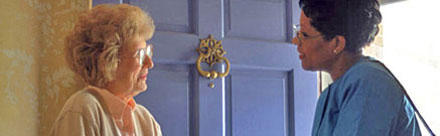
Fourteen years ago, Penny McCaslin, Health Promotion Associate started her journey at the Cerro Gordo County Department of Public Health.
McCaslin received her Administrative Assistant degree from Hamilton College. After graduation, she started at the Cerro Gordo County Court House as a Clerk for the County Assessor. "I would assist residents in the county with assessments and how to understand their property values" she said. In 1999, McCaslin accepted a job with the Health Department.
"Throughout my 14 years at the Health Department, I've fulfilled many roles and responsibilities," McCaslin stated. "My first job at the Health Department was a combined position with the Home Care Aides and the Health Planner service," she stated. In the mornings, McCaslin was responsible for developing the schedules for each home care aide. She would also inform clients of the weekly schedules. In the afternoon, she would provide support for the Health Planning Service Section. "I would assist the Health Planner by providing data entry and a variety of administrative tasks that supported grant development," she noted. Eventually, McCaslin worked for the Health Planning service section full time. "I developed a tracking tool to monitor our 17 county lead program and a few databases over the years," McCaslin stated. Other responsibilities included researching information for potential grants, providing support for Empowerment, DECAT, childhood asthma, tobacco, and the early days of bioterrorism programming here at Public Health. "One of the neatest things I did in this role was to help develop a web based immunization registry that our Disease Prevention and Investigation Service still uses today," McCaslin said. McCaslin also worked with the Making Tracks, Junior Tracks, Wellness Tracks programs and the Harkin Wellness Grant, Port Wellness all of which provided education regarding healthy eating and exercise.
Eventually, McCaslin migrated to the Health Promotion and Education Service Section where she served as the Administrative Aide. In this position, she was responsible for providing assistance for the tobacco program and case management, data collection and internal reporting for the Iowa Breast and Cervical Cancer Early Detection Program. McCaslin worked integrally with IT to develop the database for this program. In 2012, she became the Health Promotion Associate for the Health Promotion Service Section. In this position, McCaslin serves as the tobacco program coordinator. She partners with different agencies to provide tobacco education and cessation to residents of Cerro Gordo County. McCaslin works with landlords in the county to encourage multi-unit housing to become smoke free. She also is in charge of the Cerro Gordo County STEP (Students for Tobacco Education and Prevention); students of the county work together to inform friends, family and community members the dangers of tobacco. "Through my role at the Health Department, I am able to promote tobacco education and cessation programming and tools to county residents," she stated. She notes that sometimes working with the tobacco program and public health in general is challenging, especially with funding. Yet, she believes the best part of the Health Department is the staff. "I am lucky to work for a department that has such proactive leadership and the large variety of programs," she said. "This helps me to stay motivated, challenged and in tune with public health issues."
Penny McCaslin has served the Health Department in many different capacities throughout her years with the department. We thank her and can't wait to see how else the Health Department benefits from her skills and expertise in the future!
|
|
Department Quick Links...
Scan this QR code with your smartphone for a direct link to our website. |
 |
National Infant Immunization Week
April 20-27 celebrates National Infant Immunization Week. If you are a parent of an infant or a child, please take the time to review their immunization records to make sure their immunizations are current. This includes vaccinations and boosters. Our immunization clinic is open Monday - Friday from 10:00 AM - noon and 12:30 - 4:00 PM.
Free vaccine is available through the Vaccine for Children (VFC) Program for children through the age of 18 that meet any of the following criteria:
- Child has no health insurance coverage.
- Child is American Indian or Alaskan Native.
- Child is enrolled in Medicaid.
- Child is under-insured. This means the child's health insurance does not cover the cost of immunizations.
Here is a listing of all vaccines children ages 0 - 6 years old should receive:
- Hepatitis B
- Rotavirus (RV)
- Diphtheria, Tetanus, Pertussis (DtaP)
- Haemophilus influenza type b (Hib)
- Pneumococcal
- Polio (IPV)
- Influenza
- Measles, Mumps and Rubella (MMR)
- Varicella (chickenpox)
- Hepatitis A
- Meningococcal
For more information about the recommended immunization schedule, please visit our website at www.cghealth.com.
|
|
|
|
Happy April!
Where is our beautiful April weather? Hopefully, the April showers will bring May flowers. The Walking School Bus has officially started. As more students and volunteers are walking to school, please pay close attention to pedestrians on their morning and afternoon commutes. Motorists need to obey all traffic rules and yield to pedestrians to ensure the safety of students, adults and fellow drivers.
Sophia Walsh, Environmental Health Specialist at the Health Department was awarded with Best Cartographic Design at Iowa Geographic Information System conference for a map she submitted. This map featured winter activities such as ice skating, snow shoeing and sledding that can be done in Cerro Gordo County. Well done, Sophia!
The Cerro Gordo County Women's Health Fund will be hosting the second annual Lace Up, Leash Up, Line Up 5K/10K walk/run for running/walking enthusiasts and dog lovers on Saturday, June 8, 2013. To register, visit our website www.cghealth.com or sign up online at http://www.active.com/10k-race/clear-lake-ia/lace-up-leash-up-line-up-2013.
In this month's Public Health Communicator, we celebrate April for many reasons. April 20-27 is National Infant Immunization Month. We include an article highlighting the recommended vaccines for children between 0 and 6 years of age. April is also Sexually Transmitted Disease (STD) Awareness Month. Betty Krones, Disease Prevention Specialist highlights information we all need to know regarding STDs. As we already know from last week, spring can bring all types of severe weather. Jodi Willemsen, Public Health Preparedness Service Manager provides tips about preparing for spring weather. Last but least, we include the Day in the Life of column and the Wellness Corner. Enjoy!
Like us on Facebook or follow us on Twitter to stay up-to-date on all the current information surrounding the Health Department. Make sure to check out the left side of our newsletter, which features our Quick Response (QR) Code. Scan it with your smartphone to get directly to our website.
For more information about our services, visit our website at www.cghealth.com.
Best wishes,
Nola Aigner
Public Information Officer
Cerro Gordo County Department of Public Health
|
|
Sexually Transmitted Disease-Are You Really at Risk?
Betty Krones, Disease Prevention Specialist
April is STD (Sexually Transmitted Disease) Awareness Month and I find many people asking, "Am I really at risk for an STD? I would know if I had one, right?" As a nurse, I find that many people underestimate their risk for infection. Sexually transmitted infections are not something people want to think about, let alone discuss with their friends so it is very easy to assume they are not a reality...they only happen to "other people." Also, most people infected with STDs do not have symptoms and are unaware they are infected.
The Centers for Disease Control and Prevention (CDC) estimates there are more than 19.7 million people with new STDs in the United States every year. More than half of all people will have an STD at some point in their life. Your lifestyle plays a big role in preventing STDs.
Avoid sex at an early age. Every year, one in 4 teens contracts an STD. Young people (ages 15-24) have the highest rates of STDs. Even though they represent only ¼ of the sexually experienced population, they account for 50% of new infections. Also, because the cervix is not fully developed, it is easier for young women to get infected with an STD.
Limit your partners because your risk of contracting an STD increases with each partner you have. Studies show that women with five or more sexual partners were eight times more likely to report having an STD than those with only one partner.
Use condoms every time, for every kind of sex. Although avoiding sexual contact all together is the only way to totally avoid STDs, condoms can reduce the risk for those who are sexually active. Condoms used correctly and consistently are thought to reduce the incidence of HIV transmission by 80%.
Get tested. This can be done by your family doctor, your local family planning clinic or health department. Getting tested for you and your partner before you even begin having sex can help reduce future transmission. However, keep in mind that some STDs can take up to 6 months before they can be detected with a test. (This is called a "window period"). Some STDs, such as genital herpes and HPV (Human Papilloma Virus) can take even longer to show up.
Be smart about your sexuality. Know your limits and be comfortable saying no to sex. Talk to your partner before you become intimate. Has your partner ever been tested for STDs?
Don't confuse birth control with STD protection. Condoms are the only form of birth control that may prevent STDs. However, condoms do not offer 100% protection from STDs or pregnancy.
Be responsible for your own protection. It doesn't matter if you are male or female. If you think you are going to have sex with someone, have condoms available.
Don't drink or use drugs before you have sex. It is more difficult to make responsible decisions when you are under the influence of drugs and alcohol.
For more information about STDs or STD testing, please visit www.cghealth.com or call 641 421-9320.
|
|
|
WHO DEPENDS ON YOU??
Severe Spring Weather
 Spring is here...although mother-nature has us guessing otherwise lately! While spring may bring back the robins, tree buds, and tulips, it can also bring severe weather. If a disaster or medical emergency were to strike you or a member of your family, would you be prepared to handle it? Would you know what to do to protect yourself and others from harm? You and those you care about could be anywhere, at home, at work or school. How will you find each other? Will you know they are safe? If utilities become unavailable, what will you do? Spring is here...although mother-nature has us guessing otherwise lately! While spring may bring back the robins, tree buds, and tulips, it can also bring severe weather. If a disaster or medical emergency were to strike you or a member of your family, would you be prepared to handle it? Would you know what to do to protect yourself and others from harm? You and those you care about could be anywhere, at home, at work or school. How will you find each other? Will you know they are safe? If utilities become unavailable, what will you do?
Please take a little time to think about who might depend on you to help them through these types of situations. Maybe family, neighbors, co-workers, pets? What are you willing to do to help protect them during these types of situations?
Here are some suggestions to get you well on your way to being ready for these types of situations:
- Prepare and practice an emergency plan with your family.
- Prepare a disaster kit to sustain each individual in your household for a minimum of 3 days.
- Take precautions when traveling. Listen to weather forecasts prior to and during travel.
- Learn about emergency preparedness and response plans for your schools and places of employment. Know the location of these plans.
- Know how to contact public health, medical, and law enforcement authorities.
- Be aware of available medical and mental health information and resources and how to access them immediately and in various ways.
- Be prepared emotionally; understand stress and how to deal with it.
- Be prepared physically, maintain a healthy lifestyle (eat a well-balanced diet, be physically active, get adequate sleep, avoid tobacco, alcohol and other drugs).
- Learn immediate actions to protect the health and safety of yourself, your family and your neighbors.
- Take measures to protect your home and personal belongings; be sure to have working fire extinguishers, smoke detectors and carbon monoxide detectors.
- Learn first aid and basic life support procedures.
- Learn about your community's emergency warning system.
- Learn about local disaster relief services that can provide assistance.
- Contact local agencies about volunteer opportunities.
We hope none of us ever have to face a disaster or other emergency situation. But when an event does occur, knowing what to do within the first few minutes or hours can save lives. In a disaster, each of us can make a difference, as individuals, families and communities!
|
|
Wellness Corner
Wellness Corner: Forget Dieting. Start Living Well.

Dieting is a short-term fix: Almost everyone who goes on a weight loss diet regains any weight they lost (if not more) within two years. For long-term and sustainable results, focus instead on healthy living and preventing weight gain.
- Aim to stay active, fit and healthy to help your weight stay where it should be. Don't focus on diets to try and lose weight. Focus on living a healthy lifestyle instead. Here are some simple lifestyle changes that are sustainable for a lifetime:
- Keep simple, healthy snacks close by (e.g. fresh fruit, nuts and low-fat yogurt) - have one in the afternoon so you don't arrive home starved and eat the first thing you find.
- Reduce portion sizes - most food servings are bigger than they need to be.
- If you eat out, take control - check what the food contains; ask for less sauce, cream, cheese, etc.; and remember you don't have to eat everything on your plate.
- Eat slowly, and stop when you start to feel satisfied, not full.
- Don't eat on the run or in front of your TV or computer screen; if you're distracted, you won't notice when you've had enough.
- Don't mistake thirst for hunger - have a glass of water first; if you're still hungry, eat.
- Any physical activity during the day is worthwhile - it keeps your metabolism going.
|
Help us promote Public Health services. Forward this electronic newsletter to your friends, family, co-workers and associates. Thank you for choosing the Cerro Gordo County Department of Public Health! Our Mission Statement: The Cerro Gordo County Department of Public Health works to optimize the health of all people in Cerro Gordo County. Our Vision Statement:
We will be the leader in making Cerro Gordo County the healthiest
county in Iowa.
Our Value Statement:
We believe in human dignity, respect for individual choices, promotion for wellness and personal safety, protection of the environment, prevention of disease and access to quality health services.

|
|
|
|
|