|
Day in the Life of...

Rhonda Sult,
Home Care Aide
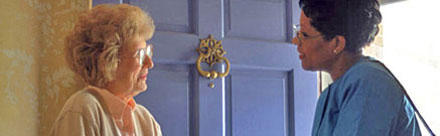
At a young age, Rhonda Sult, Home Care Aide knew she wanted to provide care for others.
Throughout high school, Sult worked at Chatauqua care facility in Charles City, Iowa. After graduation, the founder of the Chatauqua care facility, gave Sult a wonderful opportunity. "Dr. Ayers told me if I went to school for my Licensed Practical Nursing (LPN) degree and worked for five years after, he would pay for my schooling," said Sult. She received her LPN degree from the Mayo School of Health Science. After graduation, Sult worked for the Chatauqua care facility for five years as a shift nurse. In 1984, she took a break from the nursing field to start a family and provide in-home daycare.
In 1993, Sult decided to re-enter the health care field as a home care aide for the Cerro Gordo County Department of Public Health. "I had several friends who provided home services to individuals," she noted. "I thought it was such a rewarding job to be able to keep people in their homes longer and maintain their independence." As a home care aide, Sult is responsible for helping clients with food preparation, personal cares such as baths and homemaker services including light housekeeping and laundry. Sult is also a support care worker for the Family Connections program. "I provide services to families with children from newborn to 5 years old." Sult stated. "I help parents learn parenting skills such as potty training, how to deal with nightmares, etc. I also help answer questions they would have raising a baby or a young child."
Sult believes the greatest benefit in her position is helping to keep family members in their homes. "When I worked in the nursing home, it was difficult to watch family members put their loved ones in the nursing home," she said. "Now, I am able to help county residents keep their independence by staying in their homes." One of her biggest challenges is the weather. "We live in Iowa and in the winter, sometimes it's difficult to reach our clients, especially in rural parts of the county." Sult enjoys the working at the Health Department. "I like being able to work with the public health nurses to discuss the best options for our clients." She notes. "We work as a team and have their best interest at heart." Sult also trusts that home care services will always be a vital service to the Health Department. "Our county has an aging population," Sult said. "We as the Health Department will strive to give the elderly their freedom and keep them in their homes."
The Health Department is glad Rhonda Sult decided to return to the health care field. Her services greatly benefit residents of Cerro Gordo County!
|
|
Department Quick Links...
Scan this QR code with your smartphone for a direct link to our website. |
 |
Through with CHEW!
Every February, one week is designated to draw to smokeless tobacco. Smokeless tobacco is just as addicting as smoking cigarettes because it contains nicotine. In fact, over 7.6 million Americans 12 years and older have used smokeless tobacco products at least once.
Smokeless tobacco is tobacco that is not burned like cigarettes. It is known as chewing tobacco or snuff. The nicotine found in these products is absorbed through skin, lining of the nose, mouth and tissues lining the lungs. It then enters the bloodstream which stimulates the central nervous system, which increases blood pressure, respiration and heart rate.
Chewing tobacco comes in either loose tobacco leaves or plugs. The piece or tobacco is placed between the cheek and lower lip. It is chewed or held in place in the check. Snuff is finely cut or a powdered tobacco. It can be sold in many flavors. Snuff can be purchased loose, in strips or lozenges that dissolve or in small pouches the resemble tea bags. Smokeless tobacco users use snuff like they use chewing tobacco. A pinch or a pouch is placed between the cheek and gums in either the upper or lower lip. Others may inhale the dry snuff into the nose.
Even though smokeless tobacco is not smoked, it is still as harmful as smoking. There are at least 28 chemicals found in smokeless tobacco, which can be linked to cancer. Smokeless tobacco can cause oral, esophageal and pancreatic cancer. It can also cause heart disease, gum disease, or oral lesions such as leukoplakia, which are precancerous white patches in the mouth.
An individual using a smokeless tobacco product can be addicted to the product within two weeks of using it. The Cerro Gordo County Department of Public Health has resources to help individuals quit using smokeless tobacco products. For more information about smokeless tobacco products and cessation programs, call (641) 421-9329 or visit www.cghealth.com.
|
|
|
|
It's February!
Luckily, this year, the groundhog did not see his shadow, so spring will come early and we can resume our outdoor activities. Speaking of outdoor activities, the Walking School Bus Program will be starting again this March. If you would like to volunteer or sign up your children, please visit our website at www.cghealth.com or call Kelli Huinker, Health Promotion Service Manager at 641 421-9312.
This month's Public Health Communicator features an article on American Heart Month that discusses my personal encounter with heart disease and gives tips to further understand it. February 17-23, 2013, is recognized as Through with Chew Week. Our newsletter features a story that provides information about smokeless tobacco. Finally, we include a link to our latest YouTube video, which highlights our strategic plan updates. As always, we include " the day in the life of" column and the Wellness Corner. Enjoy!
Like us on Facebook or follow us on Twitter to stay up-to-date on all the current information surrounding the Health Department. Make sure to check out the left side of our newsletter, which features our Quick Response (QR) Code. Scan it with your smartphone to get directly to our website.
For more information about our services, visit our website at www.cghealth.com.
Best wishes,
Nola Aigner
Public Information Officer
Cerro Gordo County Department of Public Health |
|
Be good to your heart!

At age 21, you don't think about having bad cholesterol or even heart disease. I remember sitting at my doctor's office finding out that indeed, my cholesterol was higher than normal, which is a risk factor for heart disease. I wondered how that could be as I worked out daily and I ate healthily. Yet, I was unaware of the large role your family's health can contribute to your personal health. My dad had triple bypass surgery at the age of 50 and my grandma had several heart surgeries, all due to heart disease.
Heart disease is the number one killer of women in the United States. Women are under the assumption that their greatest health risk is cancer related. According to the American Heart Association, heart disease kills approximately one woman every minute. Heart disease kills one out of three women each year compared to breast cancer, which kills one in 31 women. We are often misinformed about the signs and symptoms because men and women experience heart attacks differently. Well, women, it's time to get informed!
Heart disease affects your cardiovascular system. The American Heart Association notes many problems arise from this, the most common one being related to atherosclerosis. Atherosclerosis happens when plaque, which includes cholesterol builds up in the walls of the arteries. This buildup makes it difficult for the blood to flow through the arteries. If a clot forms, it can stop the blood from flowing and can lead to a heart attack or stroke. Heart disease can also cause congestive heart failure, abnormal heart rhythm and valve problems.
Most often, we overlook a heart attack because we don't think it could happen to us or are unaware of the signs. Know the signs of a heart attack. Women experience symptoms of a heart attack differently than men do. Symptoms of a heart attack include:
- Pain or discomfort in one or both arms, back, neck, jaw or stomach
- Shortness of breath, with or without chest pain
- Pressure, squeezing, fullness or pain in the center of your chest that lasts more than a few minutes, goes away and then comes back
- Cold sweat, nausea or lightheadedness
If you are experiencing any of these symptoms, seek emergency help and call 911. It is better to be safe than sorry.
Heart disease is scary, but by developing healthy behaviors, you can lower your chances. Stay active. Eat healthy. Don't smoke. Limit your alcohol intake. Regularly check your blood pressure and cholesterol. Know your family's health history.
This February, we celebrate American Heart Month, but remember to be good to your heart every day. Talk with your physician to make sure you are taking the right precautions to lower your risk of heart disease. The Cerro Gordo County Department of Public Health can provide you with options and ideas to stay active and eat healthy. Visit www.cghealth.com or call 641-421-9312 to learn more.
Now at the age of 27, I sometimes struggle to stay active and eat foods that are good for my heart, but by making these healthy lifestyle choices, I will lower my chances of heart disease.
|
|
|
Strategic plan 2012-2014:
What we accomplished in one year
 | | Strategic plan 2012-2014: What we accomplished in one year. |
|
|
Wellness Corner
Heart Healthy Grocery Tips!
Vegetables and Fruits
- Be sure to buy and eat plenty of fresh or frozen fruits and vegetables. Fruits and vegetables that are deeply colored throughout - such as spinach, carrots, peaches and berries - tend to be higher in vitamins and minerals than others, such as potatoes and corn.
- Fruits and vegetables that are good sources of fiber include beans, peas, oranges, bananas, strawberries and apples.
- Use raw vegetables for snacks.
Milk, Cheese, Butter and Eggs
- Select fat-free (skim) or low-fat (1%) milk.
- Choose fat-free, low-fat or reduced-fat cheeses.
- Use egg whites or egg substitutes instead of egg yolks. (Substitute two egg whites for each egg yolk in recipes that call for eggs.)
- Don't buy a lot of butter, cream and ice cream. Save those for special occasions and, even then, limit how much you eat. These foods have more saturated fat than whole milk.
Meat, Poultry and Fish
- Buy and prepare fish. You should try to eat one serving of grilled or baked fish at least twice a week. (A serving is roughly the size of a checkbook.) Good examples of fish to buy include salmon, trout and herring.
- Choose cuts of red meat and pork labeled "loin" and "round"; they usually have the least fat.
- When buying or eating poultry, choose the leaner light meat (breasts) rather than the fattier dark meat (legs and thighs). Try the skinless version or remove the skin yourself.
- Select more meat substitutes such as dried beans, peas, lentils or tofu (soybean curd) and use them as entrees or in salads and soups.
Bread and Baked Goods
- Choose whole-grain, high-fiber breads. Choose breads and other foods that list whole grains as the first item in the ingredient list.
- Limit bakery products, including doughnuts, pies, cakes and cookies.
- Instead of buying a raisin bran muffin, buy a loaf of raisin bread and enjoy a slice for breakfast or lunch.
Oils and Shortenings
- Use fats and oils in limited amounts.
- When you must use oils for cooking, baking or in dressings or spreads, choose the ones lowest in saturated fats, trans fats and cholesterol - including canola oil, corn oil, olive oil, safflower oil, sesame oil, soybean oil and sunflower oil.
- Choose reduced fat or low fat, or fat free salad dressings.
|
Help us promote Public Health services. Forward this electronic newsletter to your friends, family, co-workers and associates. Thank you for choosing the Cerro Gordo County Department of Public Health! Our Mission Statement: The Cerro Gordo County Department of Public Health works to optimize the health of all people in Cerro Gordo County. Our Vision Statement:
We will be the leader in making Cerro Gordo County the healthiest
county in Iowa.
Our Value Statement:
We believe in human dignity, respect for individual choices, promotion for wellness and personal safety, protection of the environment, prevention of disease and access to quality health services.

|
|
|
|
|