|
Day in the Life of...

Penny Bakehouse,
Family and Community Health Assistant Manager
In a couple of months, Penny Bakehouse, Family and Community Health Assistant Service Manager, will retire after 22 years at the Cerro Gordo County Department of Public Health. It's only fitting that we include her in our "Day in the Life of" column before she leaves us.
Bakehouse started her professional journey at St. Mary's School of Nursing in Rochester. She graduated with a Diploma Nursing Degree, a three year Registered Nurse program. After graduation, Bakehouse returned to Mason City in 1967 and started at St. Joseph Mercy Hospital as a charge nurse on the pediatric floor. "As charge nurse, I was in charge of nurses, nursing aides and their assigned duties," Bakehouse stated. "I provided patients with IV's. Back then, we had to count the drops, they were not regulated by machines." Bakehouse also noted that the pediatric floor was always filled because there were not as many immunizations to protect against diseases like pertussis (whooping cough), mumps and measles. Bakehouse stayed at the hospital until 1974.
From 1974 to 1990, Bakehouse worked on and off part time to stay at home with her children. While working part time, Bakehouse was employed at North Iowa Medical Center, which is now Mercy West Campus. "At the hospital, we took care of patients in a pod system approach," Bakehouse said. "There would be four individual rooms shaped in a pod, so I could chart and watch over my patients at the same time."
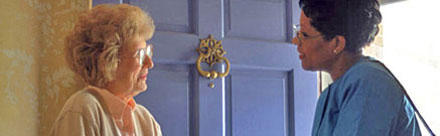
In 1990, Bakehouse was ready to go back to work fulltime and landed a job at the Cerro Gordo County Department of Public Health as a public health nurse. Throughout her 22 years at the Health Department, Bakehouse has taken on many different roles and responsibilities. She served as the Homecare Aide Manager, where she was in charge of the homecare aides and their clients. Bakehouse has also served as facilitator for case management elderly wavier. This role included setting up services for clients such as home and vehicle modifications, meal assistance programs and other referrals and resources clients would need. Currently, Bakehouse serves as Assistant Manager for the Community and Family Health service section. In this job role, she is responsible for assisting the Community and Family Health Manager and the public health nurses. Bakehouse also ensures that each Home Care Aide can perform certain tasks required of them. She assesses them on their competency of performing personal care tasks. Lastly, she is the Assistant Coordinator for Family Connections. In this position, she coordinates services to provide parents additional parenting help. Family Connections contracts with the Health Department to have our Public Health Nurses and Home Cares Aides provide services to parents and their children up to age five. Bakehouse assists in the process by making the initial visit with the family to assess their needs and determine which support worker would fit best for their needs. She creates a needs plan and reviews the clients progress every six months. She also helps to find resources to meet clients' needs.
Bakehouse's vast roles and experiences at the Health Department has provided her with many benefits. "I've worked in so many areas, that there is never a dull moment in what I do," she stated. "I like coming to work and never doing the same thing. It's a great variety." She also believes that working at the Health Department has provided her with knowledge about immunizations and food safety practices that she can relay to her clients. The greatest thing she will take with her when she leaves is the relationship she has built with her clients. "Providing care to my clients to keep them in their home longer is enough reward for me," Bakehouse stated.
Reflecting on her time at the Health Department, Bakehouse believes the Health Department will continue to grow and expand. "When I started, the Health Department consisted of only three service sections and now we have eight," she notes. "I also charted on paper and now all my clients' charts are done electronically, yet every change this organization has seen, has been for the better." Bakehouse has mixed emotions about retiring from the Health Department. "I am excited to spend time with my family and grandchildren," she said. "I am sad to leave my family at the Health Department but am honored to work at a place that provided me with so many amazing opportunities."
We are so thankful for Penny Bakehouse and all the lives she has touched throughout her 22 years of service at the Health Department. She will be greatly missed! |
|
Department Quick Links...
Scan this QR code with your smartphone for a direct link to our website. |
 |
|
Health Department Announces Tdap Clinics in Schools
The Cerro Gordo County Department of Public Health, Iowa Department of Public Health and schools within the county are working together to provide free Tdap (Tetanus, Diphtheria, Pertussis) vaccine available this fall to protect students from pertussis.
Cerro Gordo County continues to have sporadic cases of pertussis (whooping cough) reported within its communities. The illness is highly contagious and can cause severe and prolonged coughing spells. The best way to prevent pertussis is to get vaccinated. People 10 years of age and older should receive a dose of Tdap if they have not already received one.
The Iowa Department of Public Health is in the process of making changes to the Iowa Administrative Code to require a Tdap vaccination for adolescents enrolled in a secondary school. It is anticipated that the requirement will be in effect at the beginning of the 2013-2014 school year. The new code is intended to require adolescents entering seventh grade to have one dose of Tdap vaccine.
In an effort to protect students from pertussis and in preparation for the possible upcoming school requirement, the Cerro Gordo County Public Health will provide the Tdap vaccine free of charge for students in grades 5-12 at their school this fall. A letter and consent form was sent home with students or directly e-mailed to parents over the past two weeks. Parents wanting to have their child vaccinated with the Tdap vaccine should complete the consent form and send it back to their child's school by October 19, 2012.
"We highly encourage all students in grades 5-12 that have not received a dose of Tdap vaccine take part in the program," explains Karen Crimmings, Disease Prevention and Investigation Service Manager, Cerro Gordo County Department of Public Health. "It provides a convenient and cost saving opportunity for students to be vaccinated against pertussis."
For more information about immunizations, please visit our website at www.cghealth.com or call (641) 421-9321.
|
|
|
|
Happy October!
With the quick change of weather, fall seems to be here and winter is closely approaching. The Walking School Bus Program will be wrapping up October 26. Parents and guardians of walkers, please make sure your children are dressed warmly until then. Some of the mornings have been quite chilly!
The Health Department will be holding a Saturday morning flu clinic on October 20 from 9:00 AM to Noon. The clinic will be located at our office in Mohawk Square. Individuals can also receive immunizations at that time. We accept most major health insurances. With insurance, no money is collected at the time of the vaccination; services are billed directly to insurance. Any remaining balance is billed to the client after insurance has paid for its portion of the service.
In this month's edition of the Public Health Communicator, we highlight National Bullying Prevention Month by including a story regarding bullying and its dangers. October is also Breast Cancer Awareness Month. Teresa Symens, grant coordinator for the Care for Yourself program and North Iowa Komen Project provides information about breast cancer and our services. We also present information regarding Tdap immunization clinics for schools in our county. As always, we include our Wellness Corner and "Day in the Life of" column.
Like us on Facebook or follow us on Twitter to stay up-to-date on all the current information surrounding the Health Department. Make sure to check out the left side of our newsletter, which features our Quick Response (QR) Code. Scan it with your smartphone to get directly to our website.
Best wishes,
Nola Aigner
Public Information Officer
Cerro Gordo County Department of Public Health
|
|
Stop the Bullying!

October is National Bullying Prevention Month and chances are we've all been bullied once in our lifetime. It may have been as a young child or recently at your place of employment. Bullying happens no matter who you are; it does not discriminate against gender, age, religious affiliation or race. Normally, when we think of bullying, we think of a child getting beaten up on the playground or getting made fun for wearing the 'wrong' clothes. Yet, in today's society bullying is difficult to define. According to Pacer's National Bullying Prevention Center website, today's bullying can happen "quietly and covertly, through gossip or on the Internet." Stopbullying.gov defines bullying as "unwanted, aggressive behavior among school age children that involves a real or perceived power imbalance." The website also notes that bullying can be defined by actions such as gossiping, attacking someone either physically or verbally or even threatening someone. Bullying is also defined as an intentional behavior; the act is done with deliberation. Bullying can either occur from circumstantial or chronic situation. An example of a circumstantial would be a student entering a new school or an adult starting at a new job. Individuals who suffer from chronic bullying have been bullying for a long period of time.
Bullying can occur in three different types: verbal, social and physical. Verbal bullying happens when an individual is teased or inappropriate sexual comments are made to them, just to name a few. Social bullying can occur anywhere from gossiping about someone to embarrassing an individual in public. We see social bullying a lot in kids, when children leave someone out on purpose or tell their friends not to be friends with another person. Finally, physical bullying results in breaking someone's tangible items or harming an individual by either hitting, punching, kicking, spitting, tripping or pushing.
Bullying can have detrimental effects. In fact, youth that are bullied have a higher suicide risk. A study by Yale University found that victims of bullying are between two and nine times more likely to consider suicide than non-victims. Bully-related suicide can be connected to any type of bullying, including physical, emotional or cyber-bullying.
We have to remember children and adolescents are not the only ones who experience bullying. We, as adults experience it too. Adults can be bullied in a number of ways including:
- Repeated use of insults
- Gossiping or spreading rumors
- Verbal conduct that a reasonable person would find threatening or humiliating
- Work related situations such as undermining an employee's work performance, taking credit for an individual's work or persistent non-productive criticism
Bullying takes an incredible toll on adults as well. We can suffer from stress, depression, loss of sleep, headaches, high blood pressure, digestive problems and feelings of shame, guilt and embarrassment. In the workplace, when individuals suffer from both physical and emotional trauma, it can lead to lower productivity, morale issues and even turnover (job loss).
Yet, bullying can be prevented. We are lucky to live in a state that has anti-bullying laws and policies. Iowa anti-bullying laws cover harassment, bullying and cyber bullying. To learn more about Iowa's laws and policies against bullying, visit www.stopbullying.gov under the "policies and laws" tab.
We all know someone who has been bullied; it may be your child, sibling, family member, friend, coworker or even you. Remember that this October and wear orange in support of National Bullying Prevention Month. We need to stand united; we all have a voice against bullying.
*Above is a photo of Health Department staff wore orange in support of National Bullying Prevention Month on Wednesday, October 10, 2012.
|
|
"Pinktober" in North Iowa
By Teresa Symens
This is Breast Cancer Awareness Month or "Pinktober." The color pink is everywhere and reminds us of the importance of breast cancer screening and of the reality that breast cancer exists in our communities. It is wonderful that most of us can identify with the pink ribbon and what it means. With early detection, a woman in the United States has a 90% chance of surviving at least five years after treatment. We have come a long way with screening and awareness but we still have some room for improvement.
Breast cancer continues to be the most common cancer in American women other than skin cancer. It is still the big "C" word, cancer, and it is still happening every day. It is often related to a couple of other C words that need to be addressed in order to improve screening and detection rates. Those two words are confusion and cost. Over the last few years, various advisory groups have come out with conflicting guidance on mammograms for women over 40. This has caused confusion for women in their 40's about the need for a mammogram. The American Cancer Society (ACS) still recommends that women age 40 and older have a mammogram every year. The ACS states that recent evidence has confirmed that mammograms offer substantial benefit for women in their 40's. A mammogram can find breast cancer before it can be felt. If breast cancer is found early there are more treatment options and a better chance for survival. The first baseline mammogram at age 40 is a great place to start. After that, a woman should talk with her health care provider about how often to repeat the mammogram. That said, we cannot ignore that in our current economy not everyone has access to affordable health care. The cost for health screenings without health insurance can be daunting. It is no surprise that women without health insurance skip the screenings to avoid the cost.
Probably nothing I have said so far is news to anyone. There are some great things that are going on locally that you may not be aware of. These are C words that give us hope right here in North Iowa. These words are Commitment, Compassion, Competence and Community.
Commitment: There is a group of health care professionals in our community who meet quarterly to discuss breast cancer. This group consists of surgeons, oncologists, physicians, radiologists, pathologists, radiology staff, social workers, therapists and nurses. The group members come from the hospital, clinics, public health, radiology services and pathology services. Their goal is to provide high quality screening and diagnostics and have the best outcomes for women with breast cancer in our area. The variety of professions represented around the table help identify and meet the needs for breast health screening, diagnostics and treatment in our area.
Compassion: Many professionals work together to provide breast health screening and treatment services for women. The staff at Mercy Forest Park Imaging and Mercy Center for Breast Health are beside the women with breast cancer and their families from the diagnosis at the beginning, during treatments and through follow-up care. They provide education, empathy and connections to needed resources and guidance.
Competence: We have a cancer center in our community with a staff of skilled, knowledgeable, caring professionals to treat breast cancer. The team provides quality cancer care and treatment while helping the woman with breast cancer and her family get through treatment and beyond.
Community: We are fortunate in our community to have professional services, health care partnerships and programs available to assist women with mammograms. County health departments provide the Care for Yourself program. This program provides mammograms, clinical breast exams and pap smears to women without health insurance or without coverage for health screenings. The programs provide a much needed service, though they are limited. Most county health departments can provide services to a fraction of the women in need. Other funds have been established in our community to help fill in the gaps. The Cerro Gordo County Women's Health Fund has been started to provide additional assistance to women in need of mammograms. Mercy has also raised funds to provide resources for women in need. The funds raised by both of these groups stay locally to assist women in our community. We also have an American Cancer Society office in Mason City. The staff organizes the Relay for Life and the Making Strides events to raise funds for breast cancer research and education. In the larger sense of community, Susan G Komen for the Cure provides funds for research, education and screening. Locally, we benefit from funding from the Iowa Affiliate of Susan G Komen for the Cure. A number of mammograms in the Care for Yourself Iowa program are funded annually through Komen grants. The Cerro Gordo County Department of Public Health also received funding this year to assist uninsured women in the North Iowa area to receive mammograms.
Fund raising events for research, education, screening and treatment are happening in our communities. I encourage you to join in the fun or make a donation to the worthy causes. It is awesome to see members of our community come out in support of women in need, women with breast cancer and the survivors of breast cancer. I have no doubt that most of us know someone who has been affected by this disease. For your support, I thank you.
If you are or you know a woman who does not get screenings because she does not have health insurance or are interested in making a donation to the Cerro Gordo County Women's Health Fund or the Mercy Breast Health fund, I would like to hear from you. Please call my office at (641) 421-9315 for program information or visit our website at www.cghealth.com. |
|
Wellness Corner
Navigating Restaurant Menus

According to a 2010 USDA report, eating just one meal at a restaurant adds an average of 134 calories to your daily energy intake, so a once-a-week dining out habit translates to roughly 2 pounds gained per year. Now consider that most Americans eat away from home an average of 5.8 times per week and you can conclude that many of us likely pack on more than 2 pounds per year. Consider these practical strategies to successfully navigate restaurant menus and align culinary customs with your weight management goals.
STEP 1 - Plan before Eating
Many restaurants have websites that you can visit to learn more about their menu ahead of time. Visit a few sites to help you identify more healthful meal choices. Nutrition information is often included online if it is not located on the actual menus on site. Check out the yumPOWER app - a listing of "healthy-dining" approved items for participating restaurants.
STEP 2 - Make the Most of the Menu
Learn the menu language...Terms such as bisque, smothered, aioli, carbonara and en croute all signal a serious caloric punch. Choose options with broiled, steamed and grilled descriptors.
STEP 3 - Order Astutely
Suggest substitutions. A few years ago, requesting a salad in place of French Fries was considered out of the ordinary. Now days, substitutions are the NORM and usually no longer require an extra charge.
STEP 4 - Manage the Meal
Today, a single entrée usually contains enough calories and nutrients to feed 2 to 3 people. Consider sharing an entrée with a friend or boxing up half your meal in a to-go box before eating to prevent overeating. Or create your own entrée by pairing a smaller appetizer with a side salad.
|
Help us promote Public Health services. Forward this electronic newsletter to your friends, family, co-workers and associates. Thank you for choosing the Cerro Gordo County Department of Public Health! Our Mission Statement: The Cerro Gordo County Department of Public Health works to optimize the health of all people in Cerro Gordo County. Our Vision Statement:
We will be the leader in making Cerro Gordo County the healthiest
county in Iowa.
Our Value Statement:
We believe in human dignity, respect for individual choices, promotion for wellness and personal safety, protection of the environment, prevention of disease and access to quality health services.

|
|
|
|
|