|
|
|
|
Compassionate Care
A Newsletter for Clients and Animal Lovers
|
|
|
|
|
 |
|
|
|
|
|
|
|
|
|
|
|
|
|
|
SVM, Veterinary Diagnostic Lab Find Dog Flu in Cats
|
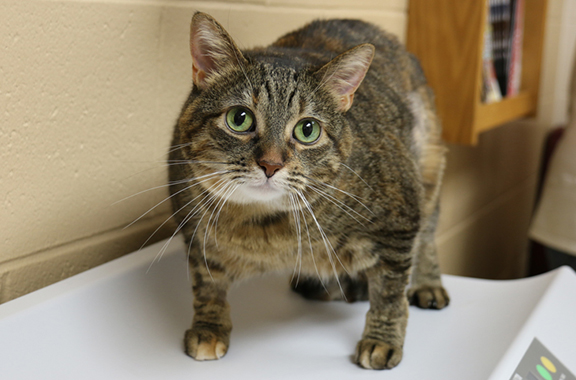
It may be called canine influenza, but Sandra Newbury, clinical assistant professor and director of the Shelter Medicine Program at the University of Wisconsin School of Veterinary Medicine, has confirmed that the virus that sickened a large number of dogs in the Midwest last year has infected a group of cats in the region. Learn more.
|
 |  | |
Pet Tip: Kennel Cough
The weather is warmer, your summer vacation is just around the corner. And that might mean making plans to board your dog. Keep this in mind: dogs that spend time in boarding facilities and other places where they come in close contact with their fellow canines (doggy day care or grooming facilities) are most at risk for kennel cough. Kennel cough is an upper respiratory infection caused by at least 10 different forms of virus and bacteria.
If your dog is experiencing a cough that is increasing in severity or is accompanied by lethargy or loss of appetite, contact your veterinarian. They can help you determine whether medications might be helpful and whether diagnostics such as x-rays or viral testing might be needed. UW Veterinary Care is available to help at 800-386-8684.
|
Laryngeal Paralysis Studies
UW Veterinary Care is seeking dogs for two clinical studies investigating laryngeal paralysis, a condition in which the larynx (voice box) does not open and close properly, causing eating and breathing problems.
The first study, aimed at developing a genetic test for the condition, is in need of purebred Labrador Retrievers 11+ years old with no history of laryngeal paralysis. Participating dogs receive a free wellness exam. The second study needs dogs diagnosed with idiopathic laryngeal paralysis to examine the impact that surgical treatment has on activity levels. Participants receive a $250 discount on hospitalization fees. More.
|
|
|
Featured Service: Small Animal Soft Tissue Surgery
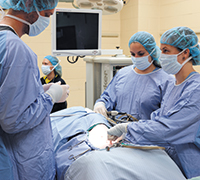 Our small animal soft tissue surgery specialists focus on cardiovascular, endocrine, gastrointestinal, oncologic, reconstructive, respiratory, and urogenital procedures. We offer common procedures, from laparoscopic ovariectomies to wound reconstruction to urinary bladder stone and lung tumor removal. We also perform advanced procedures, such as minimally invasive surgery, microvascular surgery, minimally invasive stent placement, and feline kidney transplantation. Our state-of-the-art facilities enable our surgeons to diagnose and treat numerous diseases in dogs, cats, and other small companion animals while working closely with in-house specialists in anesthesiology, critical care, radiology, oncology, and internal medicine to provide the most comprehensive care possible. Learn more. |
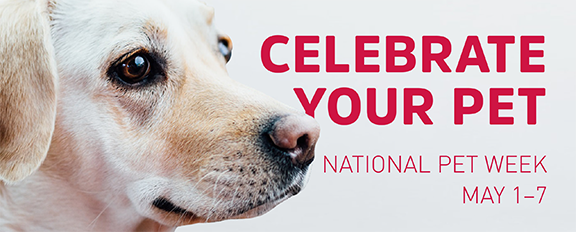
Companion, family member, friend, protector, comforter, playmate, confidante. Our pets play so many roles in our lives, and UW Veterinary Care is dedicated to preserving theirs. You can honor your pet and help thousands of others with a gift to the UW School of Veterinary Medicine during National Pet Week. Your donation, large or small, will help us continue providing the best facilities, expertise, and equipment possible for the animals that give us so much. Make a gift online.
|
|
|
|
|
|
|
|
|
|
|
|
|
|
|
|
|
|
|
|
|
|