February 2016
Compassionate Care
A Newsletter for Clients and Animal Lovers
February Focuses on Pet Dental Health
February is National Pet Dental Health Month, which stresses the importance of regular oral examinations, teeth cleanings, and daily tooth brushing for pets. Did you know that 80% of dogs and cats over the age of 3 have periodontal disease? And that stinky breath -- it could be a sign gum disease, but it could also point to more serious issues with your pet's internal organs. Daily brushing is key to prevention.

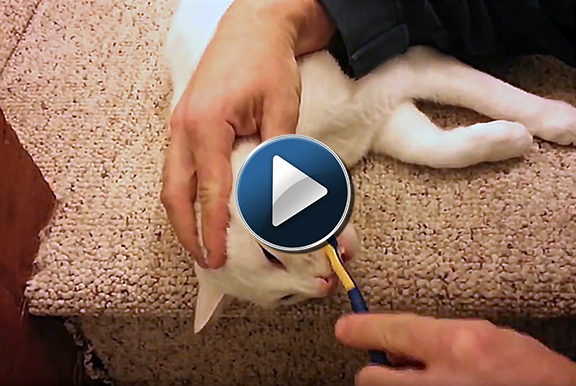
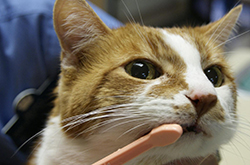
For cat owners, however, the idea of brushing feline teeth...well, ever...much less on a daily basis may seem preposterous. But it might be easier then you think. And this video, produced by Aaron Zimmerman and Theresa Drake -- graduates of the UW School of Veterinary Medicine's Class of 2014 -- is visual (and entertaining) proof!

Pet Tip: Brushing Cat/Dog Teeth
 
Tooth brushing for dogs and cats should take place daily to reduce build up of periodontal disease-causing bacteria. Introducing tooth brushing should always occur following a professional dental cleaning under general anesthesia to ensure that no sensitive areas of the pet's mouth remains.

Also, keep in mind that animals show subtle signs of oral pain. Different chewing patterns, eating more slowly, and asymmetric tartar build up are all signs that one side of your pet's mouth may be uncomfortable. 
Healthy Dogs Needed for Trials
 
Our clinical studies are aimed at developing more effective diagnostic and treatment options. Healthy animals are a critical part of these studies because they provide valuable comparison data. There are a variety of incentives for healthy dogs to participate, such as free examinations. UW Veterinary Care currently has four clinical trials seeking healthy dogs:
Featured Service: Dentistry and Oral Surgery
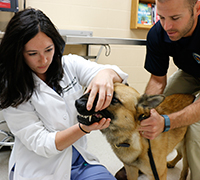
 
Our highly trained dentistry and oral surgery team includes two board-certified veterinarians (there are only four total in Wisconsin), two residents, and two certified veterinary technicians, one of whom is a certified specialist in dentistry.

Whether your pet needs routine or emergency dental care, you can look to our team for top-notch treatment using the latest tools and technologies in veterinary medical dentistry. They are prepared and equipped to address everything from common problems like broken teeth, root canals, and periodontal disease to conditions involving major oral surgery. Our recently remodeled facilities feature the latest in veterinary medical anesthesia and monitoring equipment. Learn more.
Stay Connected
800.386.8684