The Center on Trauma and Children (CTAC) is dedicated to the enhancement of the health and well-being of children and their families through research, service and dissemination of information about child abuse and trauma. Visit our website: www.uky.edu/CTAC
|
|
|
Research to Practice- Special Edition
This edition of Evidence in Action is an annual feature in which CTAC scientist-practitioners share clinical implications of a specific research study to illustrate how the findings can be used in trauma practice. For this issue, CTAC Faculty Associate Debra Katz, M.D. discusses a synopsis of current research on cortisol regulation in maltreated children as presented in a recent edition of the Journal of the Academy of Child and Adolescent Psychiatry. As always, translational tips are offered to the reader to highlight potential clinical implications of the findings. For further information please see the source article:
Doom, J., Cicchetti, D., & Rogosch, F.A. (2014). Longitudinal patterns of cortisol regulation differ in maltreated and non-maltreated children. Journal of the American Academy of Child and Adolescent Psychiatry, 11: 1206-1215.
Maltreatment, Stress and Cortisol
Childhood experiences of abuse and neglect cause a variety of neurobiological changes which may impact on long-term physical and psychological health. The hypothalamic-pituatary axis (HPA) in the brain both modulates and is impacted by stress, which results in the production of cortisol, a hormone which has wide ranging effects on multiple bodily systems (e.g., immunologic, metabolic). Cortisol production normally follows a circadian rhythm with levels that are highest in the morning and decline over the course of the day. Acute stress increases the production of cortisol, but chronic or prolonged stress may result in suppression or dysregulation of cortisol secretion which may persist into adulthood.
Studies of cortisol regulation in maltreated children have revealed conflicting findings. Some of the challenges in these studies include the difficulty in obtaining longitudinal data in children and in delineating the characteristics of the maltreated group. There is significant within- and between-person variability in the diurnal rhythm and reactivity of cortisol secretion by the HPA axis. This current study investigates (1) whether increased cortisol variability within- and between-persons is responsible for these inconsistent patterns in the literature, and (2) whether measuring cortisol over a longer period of time will clarify the impact of maltreatment on the HPA axis. This knowledge may be helpful in thinking about whether measurement of cortisol could serve as a useful index of stress in maltreated children. 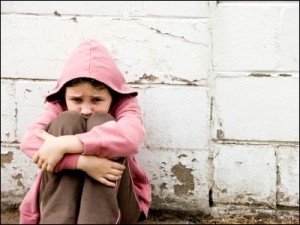
The Study
This study followed an ethnically diverse group of 341 children, aged 5-13, living with their biological families who attended an after-school peer enrichment program for 20 weeks per year. The group was approximately equally divided between maltreated and nonmaltreated children. The maltreated group was defined by social service records documenting maltreatment; the majority of children in the maltreated group (65%) had more than one subtype of maltreatment with neglect being the most common subtype (66%). Data were collected in four different cohorts in four separate years. Salivary cortisol was collected daily over the 20 weeks, and the study used a program to model cortisol activity over time in order to capture within-person change as well as changes between individuals.
The results are as follows:
(1) Maltreated children had higher variability in their initial cortisol levels. Higher levels of stress in this group may lead to difficulty maintaining stable cortisol levels. It may also suggest that physiologic difficulty maintaining stable cortisol levels may result in more behavioral or emotional problems for maltreated children.
(2) Maltreated children with higher cortisol levels at first assessment showed cortisol suppression over time, suggesting HPA blunting after chronically elevated cortisol levels.
(3) The severity, timing and number of subtypes of maltreatment predicted an individual's cortisol variability. Children who had fewer subtypes of maltreatment, less severe maltreatment or early-onset but not recent maltreatment had the highest cortisol variability. It is thought that cortisol secretion in these children may be more dysregulated since they have fewer experiences with maltreatment, may not have habituated to it and may be more reactive to daily stressors.
(4) The individuals with early-onset but not recent maltreatment had high cortisol variability. This group had a predominance of neglect (85%) as the form of maltreatment and suggests that early life neglect exerts a powerful influence on later cortisol regulation.
(5) Both maltreatment status and greater cortisol variability predicted more behavior problems.
|
|
PRACTICE CONSIDERATIONS
(1) Maltreatment in childhood, as mediated by the HPA axis, is associated with an increased risk of medical as well as mental health problems throughout the life span.
(2) Measuring cortisol levels provides a way of potentially following an index of chronic stress. Obtaining cortisol levels over time provides greater information regarding the impact of an individual child's response to a current or early life stressor. There is not one cortisol pattern that fits a profile of maltreatment.
(3) Cortisol measurement may also serve as an index to assess the response and recovery of maltreated children to social, psychological and medical interventions. However, this is an emerging best practice that will need to follow an accepted set of standards.
(4) Because of the long-term impact of dysregulation of the HPA axis on physical and mental health, maltreated children need regular medical and mental health evaluation and ongoing care.
(5) Consideration should be given to measuring cortisol pre- and post-intervention in treating maltreated children, especially in research settings.
(6) This study suggests that cortisol dysregulation and the potential sequelae that result from it should be considered in other forms of acute or chronic stress in childhood not related to maltreatment.

|
|
Final Thoughts on the Study

This study has several limitations. It did not measure diurnal variability in cortisol, stressors such as parental mental illness or poverty, or biologic measures such as pubertal status or body mass index which all may impact on cortisol measurements. It should be noted that the children in this study were living at home with their biological families, so the experience of living in foster care was not considered.
|
|
Recommended Readings
Anda, R. F., Felitti, V. F., Bremner, J. D., et al. (2006). The enduring effects of abuse and related adverse experiences in childhood: A convergence of evidence from neurobiology and epidemiology. European Archives of Psychiatry and Clinical Neuroscience, 256, 174-186.
Cicchetti, D., & Rogosch, F.A. (2001). Diverse patterns of neuroendocrine activity in maltreated children. Developmental Psychopathology, 13, 677-693.
Cicchetti, D., Rogosch, F.A., Toth, S.L., & Sturge-Apple, M.L. (2011). Normalizing the development of cortisol regulation in maltreated infants through preventive interventions. Developmental Psychopathology, 23, 789-800.
Dozier, M., Peloso, E., Lewis, E., Laurenceau, J.P., & Levine, S. (2008). Effects of an attachment-based intervention on the cortisol production of infants and toddlers in foster care. Developmental Psychopathology, 20, 845-859.
Katz, D.A.,Sprang, G., & Cooke, C. (2011). Allostatic load and childhood maltreatment in infancy. Clinical Case Studies, 10, 159-172.
Katz, D.A.,Sprang, G., & Cooke, C. (2012). The cost of chronic stress in childhood: Understanding and applying the concept of allostatic load. Psychodynamic Psychiatry, 40, 469-480.
Miller, G.E., Chen, E., & Parker, K.J. (2011). Psychological stress in childhood and susceptibility to the chronic diseases of aging: Moving toward a model of behavioral and biological mechanisms. Psychology Bulletin, 137,959-997.
Shonkoff, J.P., Boyce, W.T., & McEwen, B.S. (2009). Neuroscience, molecular biology, and the childhood roots of health disparities: Building a new framework for health promotion and disease prevention. JAMA, 301, 2252-2259.
Sprang ,G. ,Katz, D.A., & Cooke, C. (2009). Allostatic load: Considering the burden of cumulative trauma on children in foster care. Journal of Child and Adolescent Trauma 2, 242-252.
|
|
|
|
|