| |
|
In This Issue April 2013 April 2013
|
|
|
______________________________________________________
|
|
|
|
U.S. Supreme Court Empowers FDA to Graphically Depict Tobacco's Toll
On April 22, the U.S. Supreme Court announced it will not hear the tobacco industry's challenge to the 2009 Family Smoking Prevention and Tobacco Control Act's (Tobacco Control Act) provision to include graphic warning labels on cigarette packages. The decision to reject the appeal opens the door to potential life-saving measures for smokers and potential new young smokers in America. Most importantly, it sends a clear message that public health prevails over corporate interests.
The Tobacco Control Act was an unprecedented law that addressed the number-one cause of preventable death in the United States, mandating the regulation of tobacco by the U.S. Food and Drug Administration (FDA). The historic law authorized bold provisions such as graphic warning labels, which give current smokers evidence-based tools to help them quit for good. Graphic warnings depict the consequences of tobacco use which can help young people make more informed decisions about lighting up. Research conducted in countries that have already implemented graphic warnings, such as Canada and Australia, shows that bold, graphic labels can have a positive impact on public health. Many smokers in those countries credit the warnings with motivating them to quit and/or helping them stay smoke-free.
Not surprisingly, the tobacco industry challenged the most significant changes made to cigarette labels in 25 years. In the appeal that was rejected today, tobacco companies argued that the law requiring tobacco companies to include graphic warnings was a constitutional violation of the companies' First Amendment Rights. In a separate case, the companies have challenged the specific content in the proposed graphic warning labels which would have included pictures of diseased lungs and dead bodies. While the federal government has decided not to appeal the latter case, the ruling today opens the door for the FDA to create new content for graphic warnings, and we urge it to quickly do so.
Too many years have passed since the FDA proposed the first pictorial graphic warning labels, and no time should be wasted because millions of lives are at stake. While the tobacco industry will no doubt continue to defend its marketing practices of deadly products at every turn, Americans can rest assured that Legacy along with the community of public health advocates are collectively working to protect and save lives.
|
|
|
______________________________________________________
|
|
|
|
Millions of Tiny Toxic Waste Sites: New Legacy Earth Day PSA Raising Awareness of Toxic Butts
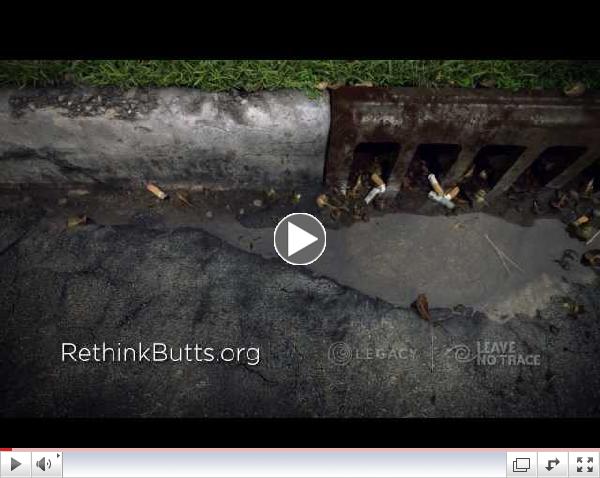
According to a new survey conducted by Legacy, while more than 88 percent of Americans think that cigarette butts are an environmental concern, more than 44 percent of those polled who had ever smoked admitted to having dropped a cigarette on the ground and nearly 32 percent had dropped a cigarette out of a car window. According to environmental clean-up reports, cigarette butts are the No. 1 littered item on U.S. roadways and the No. 1 item found discarded on beaches and waterways worldwide. Littered cigarette butts are more than just an eye sore - they're toxic tobacco trash. Made primarily of plastic that biodegrades only under extreme conditions, cigarette butts put wildlife in danger and wreak costly havoc on U.S. waterways, parks, beaches and roadways. Additionally, cigarette butts contain carcinogens that can leach into soil, and chemicals that are poisonous to wildlife, threatening to contaminate water sources.
This month in advance of Earth
 | |
Legacy employees collected more than 6 lbs - 11,050 pieces - of cigarette butts in Dupont Circle, Washington, D.C. |
Day on April 22, Legacy partnered with the Colorado-based Leave No Trace Center for Outdoor Ethics (Leave No Trace) on a public service campaign to raise awareness and mobilize action surrounding this toxic problem. A new set of radio and television Public Service Announcements (PSAs) - available in English and Spanish - urges the public to 'Rethink Butts' and take a new perspective on this environmental issue. The new set of bilingual PSAs is available online for download and distribution at Rethinkbutts.org.
Join more than a billion people in 180 countries around the world and commit to promoting environmental action this year, by starting the discussion about this form of toxic litter. Download a toolkit, share the PSAs and read more at RethinkButts.org.
|
|
|
______________________________________________________
|
| |
|
Legacy Joins Groups Petitioning FDA to Ban Menthol
A petition from Legacy and a large group of leading public health organizations urges the Food and Drug Administration (FDA) to regulate menthol flavoring in cigarettes, in the interest of young people and all smokers around the country - including African Americans, who have the highest rates of menthol use. The FDA did not include menthol in a 2009 ban -- which included candy flavors such as chocolate, vanilla and peach -- despite evidence suggesting high rates of menthol cigarette smoking among the youngest and newest smokers, and among African Americans and other minorities of all ages. The Tobacco Control Legal Consortium spearheaded the petition, which was also signed by: the American Cancer Society, American Heart Association, American Lung Association, American Academy of Pediatrics, African American Tobacco Control Leadership Council, the Campaign for Tobacco-Free Kids and more.
Read the full statement here.
|
|
|
______________________________________________________
|
| |
|
Smoking Scenes in Youth-Rated Movies Doubled Since 2010
A year after the U.S. Surgeon General announced that watching movies with characters who smoke causes kids to start smoking, new data show that smoking imagery has markedly increased in the movies that kids see most. Tobacco incidents in youth-rated films doubled between 2010 and 2012, returning to levels of a decade ago. Because tobacco remains the leading cause of preventable death in the United States and large-scale studies demonstrate that movies with smoking increases youth smoking, the rebound represents a set-back for national youth tobacco prevention goals. The latest estimates show about 800,000 youth ages 12-17 became current smokers as a result of the smoking they saw on-screen.
 | |
From the CDC Fact Sheet on Smoking in Movies |
According to the report funded by Legacy, half of 2012's youth-rated movies delivered an estimated 14.8 billion tobacco impressions to theater audiences. The impression numbers mark a whopping 169 percent increase from 2010. (Impressions are tobacco incidents multiplied by number of tickets sold per film.) The report was published by the University of California San Francisco and Thumbs Up! Thumbs Down!, a project of Breathe California of Sacramento-Emigrant Trails. The report forms the basis for the information the CDC reports in a new "fact sheet" on its website www.cdc.gov/tobacco/smoking-in-movies.
"Increases in smoking imagery in the movies are discouraging," said CDC Director Tom Frieden, MD, MPH. "Every day in the United States approximately 3,800 youth under 18 smoke their first cigarette, and approximately 1,000 become daily cigarette smokers. Reducing smoking and tobacco use in youth-oriented movies will help save lives, money, and years of suffering from completely preventable smoking-related chronic diseases."
Read the full release here. |
|
|
______________________________________________________
|
| |
|
Flavored Tobacco Still Luring Young Smokers
A new study from Legacy researchers published in the American Journal of Preventive Medicine reveals the effects of the tobacco industry's continued efforts to sell flavored tobacco products other than cigarettes, such as cigars and smokeless tobacco. The study is the first to examine the prevalence of flavored tobacco products in a nationally representative sample following the 2009 ban on flavored cigarettes, and shows that flavored tobacco products remain popular among U.S. young adults aged 18-34.
Past research has shown that the tobacco industry developed flavored cigarettes in large part to appeal to young people. According to the findings of Legacy's new study, 18.5 percent of young adult tobacco users in 2011 reported using flavored tobacco products, compared to 11.9 percent using flavored cigarettes in a 2005 study. The most common flavored products used by young adults in the U.S. include hookahs, pipes, and little cigars and cigarillos - all of which are increasingly growing in popularity among young adults.
Read more details of the research in the full press release
here. |
|
|
______________________________________________________
|
| |
|
Calling Future Tobacco Leaders of America

Legacy is currently looking for teams of youth and adult partners to participate in the 2013 Legacy Youth Leadership Institute (YLI) in Washington, D.C. The goal of YLI is to strengthen the efforts of community-based youth groups working on tobacco prevention and control issues. Participants will receive three full days of leadership training, network with young leaders from across the country and gain access to on-going technical support for their local tobacco control efforts for twelve months. In order to make this experience accessible to groups with limited resources, Legacy will cover the cost of travel, lodging and most meals for all participants of the Youth Leadership Institute.
Applications are accepted from teams of one adult and up to two youth who are actively working on tobacco prevention efforts in their local communities. Youth must be between the ages of 13-18 on or before July 1, 2013 and currently enrolled in school or a GED program to apply. Adults must be 21 years of age or older on or before July 1, 2013 and be a volunteer or paid staff member of the organization. To access the application, click
here or visit our website: www.legacyforhealth.org/ya.
Contact
yap@legacyforhealth.org or 202-454-5586 with questions or for more information. |
|
|
______________________________________________________
|
| |  |
Mother's Day is right around the corner, and what better way to honor her and create a new Legacy by donating to a mission that helps people live longer, healthier lives.
If we receive your request by May 6 we'll send your special someone a personalized letter telling her you made a gift in her honor for Mother's Day. Or, you might want to:
- Post a special message to honor her on MyLegacyStory.org, where you can make a donation as well.
- Buy her a great gift on GoodShop.com, which offers over 2,800 retailers, and a percentage of every purchase goes to Legacy (just indicate that your charity is American Legacy Foundation).
- Buy her tickets for a Broadway or off-Broadway show at Givenik.com, where 5% of every ticket purchased supports Legacy's lifesaving work. (Choose "American Legacy Foundation" under the "Health" section).
|
|
|
|
|
|
|
|
|
____________________
Find Out the Latest News
from Legacy! Follow us:
____________________
|
|
|


