Betty Robbins has taken care of Bruce, her brother with Down syndrome, for as long as 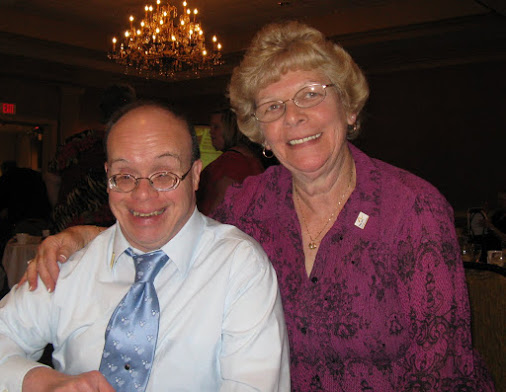 she can remember.
She was 16 when he was born, so from the start she was kind of a second mother. In 1992, after the death of their parents, he moved in with her and her husband in Westminster. Now Bruce is 54 and she's 70, with no end to her caregiving in sight.
A state program called Adult Foster Care pays her a modest stipend for her service. She's one of about 10,000 people across Massachusetts who are paid to care for adults who, like her brother, need round-the-clock care. The idea is to allow such clients to live with caregivers for a fraction of what residential care would cost the state.
Now, in a frenzy to make up a large budget gap, the Baker administration has trimmed the program by $1.8 million a year. As state budgets go, that is a small course correction; it doesn't even require legislative approval. But for Robbins and people like her, the effect is huge - making much-needed vacation days significantly harder for her to come by.
Until this spring, the program covered the cost of a second caregiver for 14 days a year. That meant that caregivers could take time off without the financial penalty of hiring someone to take their place. Some used it for a two-week vacation; others spread it out, a day at a time, over the year.
"It allows me to go out with the ladies once in a while without my 54-year-old brother," Robbins said.
But now, if she wants a day off, she must pay someone to care for Bruce.
"I certainly could never leave him for a whole evening and go out and eat," she said. "He certainly can't do any cooking for himself. He doesn't handle his own money. I do his laundry. I make his bed. He's a joy, I enjoy having him, but it's nice to have a little bit of a respite."
Gary Blumenthal, president of the Association of Developmental Disabilities Providers, said the cut came as a huge surprise, because he has generally admired Governor Charlie Baker's approach to human services.
"It just seems like such an inappropriate burden on these wonderful people who are taking people with disabilities and elders into their homes," Blumenthal said. "It's the wrong place to cut. I really want to give the governor the benefit of the doubt. Given the size of the bureaucracy, I don't know if he's aware of this. It seems completely out of character with how everything else has been going with his administration."
Rhonda Mann, spokeswoman for the Executive Office of Health and Human Services, said the state made the cut in an effort to avoid sacrificing basic services.
"Our primary commitment is to effectively serve Massachusetts' most vulnerable populations and, in this case, those with disabilities in need of long-term support," she said in a statement. "The administration made the decisions necessary to balance our budget without eliminating services to MassHealth members."
No one questions that the administration has been faced with tough choices, given an inherited deficit of $765 million in MassHealth. But the relative pittance saved here doesn't justify the hardship it creates to already hard-pressed families.
It's worth remembering that the adult foster care program saves the state millions of dollars, because the alternatives to it are much more expensive.
Affected families are flooding the state with letters of protest. They describe the hardships they are coping with, and the very small relief that the bureaucracy has now taken away. Their burden doesn't go away.
There's still the possibility that the Legislature can restore the program for the next fiscal year, and it should. The bureaucrats who think its loss is painless haven't talked to the people who depend on it.
Adrian Walker is a Globe columnist. He can be reached at adrian.walker@globe.com. Follow him on Twitter at adrian_walker.