Six Steps to Building the State Budget
One of the most difficult tasks faced by an Administration and the Legislature is building the State's Annual Budget.
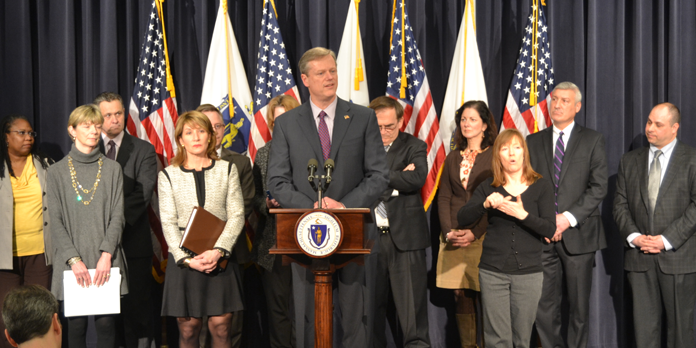
Governor Baker and his team worked around the clock balancing all state programs and needs producing their recommendation that:
- Totaled $38.1 Billion including needed increases for the Department of Children and Families; and special concentration on addressing homelessness
- Fully Funded Chapter 257 Adult Long Term Residential Rates for DDS Residential Programs
- increased spending on local aid, education and transportation
- seeks to control difficult to sustain growth in the State's Medicaid Budget
- Continued services for children with autism
- invested Capital Gains receipts into the General Fund
- Spared taxpayers another round of tax increases
|
Here's a step by Step Breakdown of the Budget Building Process:
Governor's Budget Begins the Process
|
 Governor  Charlie Baker's budget was assembled based reflecting the Governor's programmatic priorities and available fiscal resources. Before the release of House One, the Governor and Legislative Leadership agreed that the budget would be based upon a 4.8% growth in revenue. The Governor expressed concern that the budget needed to take into consideration a $1.8 Billion imbalance in the budget based upon prior use of one time revenues in preceding budgets. With respect to DDS, specific reductions occurred in: Charlie Baker's budget was assembled based reflecting the Governor's programmatic priorities and available fiscal resources. Before the release of House One, the Governor and Legislative Leadership agreed that the budget would be based upon a 4.8% growth in revenue. The Governor expressed concern that the budget needed to take into consideration a $1.8 Billion imbalance in the budget based upon prior use of one time revenues in preceding budgets. With respect to DDS, specific reductions occurred in:- Day and Employment, Line Item 5920-2025 reducing support for Day Habilitation Wrap Services that provide participants assistance with eating, toileting and behavioral supports.
- Respite and Family Supports, Line Item, 5920-3000, which continued the prior Governor's 9C cuts and underfunded existing needs. ADDP and The Arc of Massachusetts will be asking legislators to restore $15 million to this account.
- Community Based Day Employment, Line Item 5920-2026, allowing the full annualization and second year implementation of the Employment Blueprint allowing people with disabilities to get community jobs or move into community based supported programs.
|
|
House Ways & Means Will Build Its Own Budget Subject to Floor Amendment and Approval
|
Led by House Ways and Means Chair Brian Dempsey, in consultation with  Speaker of the House Robert DeLeo, Committee members will build their own budget recommendations, which may or may not, include the Governor's priorities. Prior to the release of the HWM budget, members  will meet with Chairman Dempsey and share their individual priorities that they wish to see included in the House Budget. After House Ways and Means releases its budget, approved by HWM members, the budget goes to the House floor where Members may offer amendments, subject to a full House vote. ADDP, in conjunction with The Arc will be working with House Members to review key line items and secure amendments to prevent service losses to key program areas. After passage in the House, the Budget next goes to the Senate.
|
|
Senate Members offer their own Budget Version
|
 Senate President Stan Rosenberg's choice for Senate Ways and Means Chair, Senator Karen Spilka will be putting together her first budget as Senate Budget Chief. The Senate Ways and Means Committee is not obligated to follow the lead of  the Governor or House and is free to build the Senate's own unique version of how tax dollars should be spent. As in the House, Senate Members will review the Senate Ways and Means adopted budget and offer amendments for consideration by the 40 member Senate.
|
|
House & Senate Form Conference Committee to Work Out Differences to Send Final Budget to Governor for Signature or Veto
|
 The House and Senate will form a six member  panel after both legislative houses have passed their budgets and try to reach a joint agreement on a final budget to be sent to the Governor. Conference Committee Members traditonally include the chairs of the House and Senate Ways & Means Committees, the Vice Chairs and the Ranking Minority Party Members from each chamber. Never a simple process, committee members meet often in closed session going over with staff, every line of the budget looking for differences by each respective body, seeking agreement each line item that will result in a single budget then agreed to by the House and Senate in one last vote by each body.
|
|
After House & Senate Acceptance, Budget Lands on Governor's Desk
|
 Once the budget lands on the Governor's desk, the Executive has a great  amount of power and choices available to him including: A. vetoeing specific line items. B. returning line items with recommended changes or amendments subject to a vote by the House and Senate C. sign and accept the budget.
|
 Final Round: Legislature Can Over-ride the Governor's Veto |
The final word on budget enactment goes back to theHouse and Senate where members have one final chance to override the Governor's Vetoes, if both chambers muster a 2/3rds override vote.
 With Democrats firmly in charge of the House and  Senate with sufficient membership to make a 2/3rd vote attainable, Governor Baker is expected to be judicious with his use of his veto pen. House Speaker Bob DeLeo and Senate President Stan Rosenberg have been holding cordial and collegial meetings with Governor Baker, thus the likelihood of disagreements may be addressed earlier rather than later in the budget process. When the process ends on or near the beginning of the next fiscal year,  July 1, 2015 (FY16), there are still opportunities to further amend the budget through Supplemental Budgets submitted throughout the fiscal year by the Governor and then subjected to the same legislative review process as above.
|