|
|
Specializing in Aviation and Marine Insurance
|
|
The Pegasus Navigator
|
July/ August 2012
|
|
|
|
|
Dear Valued Customer & Friends,
We would like to start off by saying we hope everyone has been doing good and your summer has been going great since the last time we sent you "The Navigator". Thank You to the many people who told us how much they enjoyed our May/June issue.
For this issue, we are honored to have great companies and people to write about. We are so fortunate to have so many great and unique people insured through our agency and we enjoy sharing their stories through "The Navigator".
Please make sure to read our column "Remembering 9/11" as our insured Captain Greg Freitas shared a very personal story that we want to share with our readers.
If you have an annoucement you want to make or a story you want to share please let us know and we would be happy to run it.
We hope you enjoy this issue and as always, we welcome your input.
The Staff at The Pegasus Group
|
|
|
|
|
|
|
|
Classic Yacht of the Month
M/V Analisa
London, England
The Pegasus Group staff has a fondness for these classic Hatteras as in last issue of "The Navigator" we also showcased a Hatteras. M/V Analisa is owned and operated by Peter Skully of London England. Peter uses Analisa has a term charter yacht in the Caribbean.

M/V Analisa
Analisa is a 1979 60' Hatteras. Analisa was recently refurbished and as a result you will not find find a Hatteras of this year in better condition. This classic is the definition of "Mint". Guests will be truly impressed with the condition of this classic and will be swept up by her beauty.

Analisa Salon

Aft Deck Dining

Master Stateroom

Analisa at Anchor
Guests on Analisa can expect fantastic dishes, all the water toys to make for a great day in the water and with the experience of this crew a safe vacation. So leave the stress filled days at home and come to paradise and treat your family to a life time memory on this beautiful classic.

Peter Skully is your captain. He will be pleased to spend his days pampering and entertaining you. Originally from England, Peter has spent most of his life on boats in different parts of the globe. He possesses a 100 ton US Coat Guard Captain's License and has been entertaing guests for the last 10 years. With extensive knowledge of the Mediterranean, Bahamas , Florida,and the Caribbean islands, Peter has chosen the Virgin Islands as his favourite cruising area. "Cocktails on the aft deck ,watching sunsets, gently swaying palm trees, stingrays swimming by and turtles coming to call. Wonderful snorkelling in each bay, tropical bars on white sandy beaches." Each day this area fufills every person's fantasy of what the Caribbean should be. "Peter enjoys snorkelling, diving and waterskiing.
 Ruth is your chef. Also hailing from Europe ,she spent fifteen years living in Italy and working in the hospitality industry, working in hotel kitchens. She speaks fluent italian, french and spanish and combines all mediterranean influences in her menus.Her aim is to provide you with exactly what you like best to eat. No effort or expense will be spared in providing the freshest local foods for you and the choice is yours! Ruth has qualified from the Yacht Chef course of the Culinary Institute of Fort Lauderdale, and has spent ten years living and cooking aboard. Ruth is your chef. Also hailing from Europe ,she spent fifteen years living in Italy and working in the hospitality industry, working in hotel kitchens. She speaks fluent italian, french and spanish and combines all mediterranean influences in her menus.Her aim is to provide you with exactly what you like best to eat. No effort or expense will be spared in providing the freshest local foods for you and the choice is yours! Ruth has qualified from the Yacht Chef course of the Culinary Institute of Fort Lauderdale, and has spent ten years living and cooking aboard.
In addition to her talents in the galley , Ruth is also a trained life guard, a certified diver, and an avid snorkeler.
To get a better perspective of M/V Analisa please view the below video.
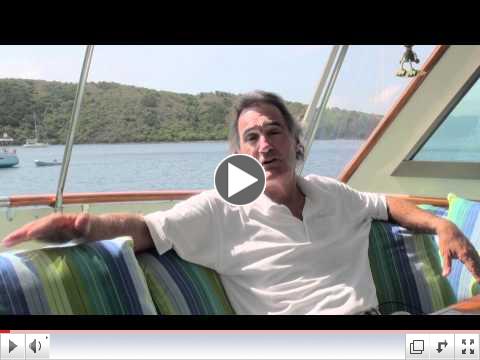 | | Yacht Charters in the Caribbean with Motor Yacht Analisa |
The Pegasus Group takes great pride in insuring M/V Analisa
|
Term Charter Company of the Month
Libert'e Yacht Charters
Tortola, BVI
S/V Libert'e
For over 25 years Libert'e yacht charters as been chartering guests from all around the world through out the Caribbean. With Libert'e charters the entire Caribbean is there play ground.

S/V Libert'e at sail
S/V Libert'e is a 1989 72' Formosa that was fully refurbished in 2010. Libert'e has 4 comfortable
double guest staterooms, each thus ideal for up to 4 couples or for family groups.
2 queen, 2 double berths: Superb accommodation and splendid cuisine are just part of the overall holiday experience.
Within each of the four guest cabins, the feeling is one of luxurious comfort, your home away from home. Fully equipped, comfortable, relaxing accommodations. The large lounging deck has a shaded cockpit. At 72' Guests will enjoy the freedom of so much space.
 
Libert'e Salon Libert'e Nav Station
Libert'e Crew

Your skipper Gordon Monson started sailing at the age of 12 in an old wooden sloop which he bought for ten dollars in Cape Town, South Africa.
He has represented South Africa in world competitions in Hawaii, France, the USA and at home, and raced the 1993 Cape-to-Rio Trans Atlantic. He was a qualified Marine surveyor for Lloyds of London and specialized in Marine Losses.
Gordon has sailed in excess of 100,000 nautical miles, has completed 8 major ocean crossings and has worked, chartered and sailed the Islands of the Caribbean for 10 years, from Trinidad in the South to the British Virgin Islands in the North.
Hobbies and interests are, predictably, sailing and meeting interesting people, water-sports and reading. Gordon is a qualified skipper and has obtained his Yacht Master certifications.

James Jarredt McFarlane was born in Gauteng, South Africa. While he was still young, his family relocated to Cape Town, where he immediately gravitated towards the water. He started off sailing as an eight year old, through the Sea Scout chapter of the International Boy Scout Association. It was there his love of sailing developed and he decided on it as a future career. Immediately after finishing his formal schooling, James got busy completing the numerous safety and sailing courses required to start him on his career. At the tender age of 18, he completed his first delivery on a four man catamaran from Cape Town to Fort Lauderdale, USA.
Today, as crew on Liberté, James constantly appreciates the privilege of working on such a beautiful yacht in a beautiful part of the world. He relishes his daily tasks, and plans on building on his qualifications until he has a captain's license of his own. This past year Jason redesigned the Libert'e web site to bring it up to date and give future guests an idea on what to expect on when sailing on Libert'e.

Wendy Ketcham is a London Cordon Bleu Trained Chef. She lives in Tortola, BVI and has had a lot of experience on Yachts and in Villa`s and is an adaptable, fun, and experienced Chef. Wendy`s food is well prepared, very tasty, and she goes to great lengths to prepare all her meals from the very freshest of local and imported ingredients. Guests will enjoy Wendy's delightful personality that will keep a smile on everyones face.

Libert'e Yacht Charters puts out an excellent monthly newsletter and you can contact them at their web site to get on their mailing list.
To find out more about Libert'e Yacht Charters please visit their web site at
http://www.crewedcaribbeancharters.com/about/
The Pegasus Group is honored to be insuring Libert'e Yacht Charters
|
|
News
 / /
Bob Marley Gets Bloodsucking Fish Parasite Named after Him
 What do President Barack Obama, Elvis Presley, Bill Gates, and now Bob Marley have in common? Each one of them has a biological species named after him. In Bob Marley's case, it's a small crustacean. What do President Barack Obama, Elvis Presley, Bill Gates, and now Bob Marley have in common? Each one of them has a biological species named after him. In Bob Marley's case, it's a small crustacean.
Marine biologist Paul Sikkel of Arkansas State University discovered a new parasitic crustacean and named it after the late Jamaican reggae star Bob Marley. Gnathia marleyi, a small crustacean that infests and eats the blood of certain fish in the coral reefs of the shallow eastern Caribbean, is a new species in the gnathiid family of crustaceans, says the National Science Foundation (NSF). It is also the first new species to be discovered in the Caribbean in more than twenty years.
"I named this species, which is truly a natural wonder, after Marley because of my respect and admiration for Marley's music," explained Sikkel. "Plus this species is as uniquely Caribbean as was Marley."
Because Marley died of cancer in 1981, at the age of 36, we will never find out his reaction to having a bloodsucking fish parasite named after him.
Marine Television Antennas May Interfere With Navigation Systems
KODIAK, Alaska --The U.S. Coast Guard warns all mariners that certain marine television antennas may interfere with the performance of Global Positioning System receivers. The interference can result in inaccurate position information or a complete loss of GPS signals.
This is a potential hazard to navigation, for both the operator of the vessel with the television antenna and for nearby boaters as the interference is not limited to the GPS equipment onboard the vessel with the antenna. In some cases, vessels up to 2000 feet away from an active antenna have reported interference.
The Federal Communications Commission identified the following models of antennas as having potential problems during investigations of GPS interference:
- TDP (Tandy Distribution Products) Electronics - MINI STATE Electronic Amplified UHF/VHF TV Antenna - Models 5MS740, 5MS750, 5MS921
- Radio Shack Corporation - Long Range Amplified Omni Directional TV Antenna - Model 15-1624
- Shakespeare Corporation - SeaWatch - Models 2040 (Code date 02A00), 2050 (Code date 03A00)
If mariners experience outages or degradation of their GPS receiver operation, they should perform an on-off test of their marine TV antenna. If turning off the power to the antenna results in improvement in the GPS receiver performance, the antenna may be the source of interference. In that case, the mariner should contact the manufacturer of the antenna and identify the symptoms.
It is stressed that the GPS interference problem may not be limited to the models listed above. If mariners identify another model with a GPS interference problem, or if turning off the antenna does not improve the GPS receiver performance, the Coast Guard requests they contact the 24-hour Navigation Information Service at nisws@navcen.uscg.mil or (703) 313-5900.
GPS is a satellite-based radio navigation system that permits land, sea and airborne users to determine their three-dimensional position, velocity and time, 24 hours a day in all weather, anywhere in the world.
Camper and Nicholsons' Cockleshell Bay Marina in St Kitts scheduled for completion in Autumn 2013
Situated on the fabulous southeast peninsula of St Kitts in the Caribbean, the new Camper & Nicholsons Cockleshell Bay Marina is an ideal place for both resident as well as visiting yachts. Due to be completed in Autumn 2013, this superyacht marina will provide five star fully services berths to 160 yachts measuring up to 60 meters in length.

With fantastic views across to sister island Nevis, the St Kitts' marina faces the Caribbean Sea just as it breaks from the Atlantic Ocean. The 9-mile distant St Kitts airport is connected to North America as well as Europe by regular direct flights and also accommodates private jets.
Cockleshell Bay Marina will truly be the yachting destination of the Caribbean. With complimentary sister isles of St. Kitts and Nevis, the marina location nestled between them offers two islands in one combined paradise.
An ideal location for those sailing throughout the Caribbean islands, Yachts and Superyachts alike will find the berthing facilities exceptional. The finest luxury facilities in this deep water marina are unrivalled throughout the Caribbean, and make it a "must-see".
|
|
Charter Broker of the Month

Amantha Yachts Sales
St. Thomas US Virgin Islands
Weather you are planning on a yacht purchase or would simply like to have your Yacht managed in beautiful Sapphire Beach Marina of St Thomas US Virgin Islands, Amantha Yacht Sales & Management will endeavor to take the time to help you find the right boat and best service in the Caribbean. Our yacht sales & management company will guide you through the entire purchasing process from making an offer, to sea trial and surf.
AYS maintains great relationships with all the best suppliers & yacht facilities in the Caribbean so repairs and maintenance will not be an issue.
Sapphire Beach Marina
Amantha Yachts Sales is owned and operated by Niles Pearsall and Ania Wilson. Their office is located at Sapphire Beach Marina. Together these two form a winning team and they make it their priority to make sure all of the yachts under their management are maintained in the pristine condition that an owner wants and expects.
If your wanting to buy, lease or sell a slip AYS can help assist in getting you in Sapphire Beach Marina. This is one of the nicest little marinas in the Caribbean.

Ania Wilson
Ania is originally from Moscow Russia. In a addition to being from Russia, Ania also spent several years living in the Mediterranean. The shining stars in her life are her three children. In her free time she enjoys painting and making exotic jewelry. Ania loves living in the Caribbean and looks forward to the new relationships she will be building through Amantha Yachts Sales.

Niles Pearsall
Niles is originally from Newport Beach Rhode Island. He has spent the last 22 years living in St. Thomas. He has 25 years of Yacht management & Yacht sales experience that be brings to AYS. In his spare time Niles enjoys sailing on his 80 year old classic Sail boat.
A few years ago it won "Best in Show" at the Antigua yacht show. Because of its kept mint condition they use it to show potential customers on what they can expect on how their yachts will be kept when under AYS management.

Ania & Niles will have a nice display for AYS at the up coming Newport Beach Rhode Island Yacht show. If you are going to be there they ask that you stop in and visit with them.
To learn more about how Amantha Yachts Sales can help you out please visit their web site at www.amanthayachtsales.com
|
|
Knowing your Islands
Montserrat


Montserrat is an island that is a British overseas territory located in the Leeward Islands, part of the chain of islands called the Lesser Antilles in the West Indies. The island of Montserrat measures approximately 16 km (9.9 mi) long and 11 km (6.8 mi) wide, with approximately 40 kilometres (25 mi) of coastline.[2] Montserrat is nicknamed the Emerald Isle of the Caribbean both for its resemblance to coastalIreland and for the Irish ancestry of some of its inhabitants.
On July 18 1995, the previously dormant Soufrière Hills volcano became active. Eruptions destroyed Montserrat's Georgian era capital city of Plymouth and two-thirds of the island's population was forced to flee.[3]The volcanic activity continues to the present, the affected areas currently being mostly in the vicinity of Plymouth, including its docking facilities, and also on the eastern side of the island in the area around the former W. H. Bramble Airport, the remnants of which were buried by flows from volcanic activity on February 11, 2010.
An "exclusion zone" extending from the south coast of the island north to parts of the Belham Valley has been imposed because of the size of the existing volcanic dome and the resulting potential for pyroclastic activity. Presently visitors are not permitted entry into the exclusion zone, but an impressive view of the destruction of Plymouth can be seen from the top of Garibaldi Hill in Isles Bay. Relatively quiet since early 2010, the volcano continues to be closely monitored by the Montserrat Volcano Observatory.
A new town and port is being developed at Little Bay in the northwest of the island. While construction proceeds, the centre of government rests at Brades.

Map 0f Montserrat
Fast Facts about Montserrat
- Location: Eastern Caribbean, 16° 45 minutes North latitude and 62° 12 minutes West longitude
- Area: 100 sq. km. Coastline: 40 km.
- Climate: tropical
- Population: 13,000
- Life expectancy: 78 years
- Ethnic groups: black, white
- Religions: Anglican, Methodist, Roman Catholic, other Christian denominations
- Language: English
- Literacy: 97 percent
-
Dependency status: overseas territory of the United Kingdom
- Capital: Plymouth
-
Flag: blue, with flag of UK in one corner and Montserrat's coat of arms
- National flower: lobster claw (heliconia, banana-like plant with showy bracts)
- National bird: Montserrat oriole (black and yellow, native to Montserrat's mountains)
- Economy: unstable because of volcanic activity
- Industries: tourism, rum, textiles, electronic appliances
- Agriculture: cabbages, carrots, cucumbers, tomatoes, onions, hot peppers, livestock products, limes
- Currency: 2.7 East Caribbean dollars equal 1.0 U.S. dollar
- Transportation system: Montserrat is a relatively poor economy so everyone does not have a car. Most public transportation originates from Plymouth City. This consists of a fleet of 8 forty-passenger buses. Each bus can hold approximately 30-40 passengers. The main road that circle Montserrat is Windy Hill Road. It is a 2 lanes paved road.
|
|
Remembering 9/11

Next month is the 11th anniversary of 9/11. One of insureds Captain Greg Freitas of S/V "Spitfire" was kind enough to share his story with his personal involvement of that historic day.
Captain Greg was in New York in September of 2001 running the Schooner Adirondack out of Chelsea Piers of the Hudson. On September 11, 2011 he was assigned the duties of Captain on the Chelsea Screamer.
After the Jets hit the towers hundreds of thousands of people ran South only to run to the waters edge and founds themselves trapped with no way to get off of Manhatten. That is when Captain Greg and so many other Captains stepped up and started moving people off Manhatten by boat.
That day over 500,000 people were moved off of Manhatten by boat.
Greg spent the next 7 or 8 days on-sight doing a 12-hour watch on the John J Harvey, digging on the pile and then establishing and running "The General Store", which supplied the firemen and policemen with all the donated goods. He managed to work a 62 hour shift straight, fell asleep standing up for three hours and then put in another 55 hour shift. When Greg left Ground Zero, he was the highest ranking volunteer on site and was given the highest access by the Mayor's Office of Emergency Management.
In addition Greg received both the Department of Transportation and US Coast Guard 9/11 medals for his efforts that day.
September 11, 2001 will go down as the greatest single tragedy in American history
but it will also go down as the day the USA sent the rest of the world the message. "We are the United Sates of America, we stand as one and we may be knocked down but we will get up and we will catch the people who did this to us and they will be held accountable."

Captain Greg Freitas sailing on the Hudson
The below video is a must see to clearly put into perspective how boats played a major role in 9/11.
We thank Captain Greg Frietas for sharing this story with us and we also thank him for stepping up on 9/11 and the following days afterward and showing what a true american is all about.
 | | BOATLIFT, An Untold Tale of 9/11 Resilience |
|
|
Grab Bag

HEARTBREAKING ANIMAL MOURNING RITUALS
Dolphin's Heartbreaking Mourning Ritual Over Baby Captured On Film
- Tourists on a dolphin-watching boat witnessed a rare and tragic exhibition of animal emotion. According to the Daily Mail U.K., passengers on small tour boat in China's Guangxi Zhuang region saw a dolphin carrying her deceased young out to sea.
 
This mourning ritual is rarely seen and hardly ever captured on film. Onlookers said that the dolphin repeatedly lifted its head, carrying the child above the water as if to help the baby breathe. The mammal was also seen continually moving out to deeper water. After examining photos taken by the tourists, researchers spotted a gash on the infant's belly, leading them to believe the newborn died due to an injury from a boat propeller. Scientists say that this is not the first time they have seen a dolphin exhibit mourning behavior. On several other occasions the animal has been spotted showing distress over the death of a newborn, even staying with the baby for several days. While experts can't speak conclusively, they believe that this ritual shows that dolphins have some understanding of mortality and may even contemplate their own death. Dolphins are already known as highly intelligent animals. Researchers have documented dolphins using language, tools, teamwork and exhibiting a social culture. This sad display is just further evidence for experts that dolphins are smarter and deeper animals than we may have expected.

PRIMATE POUTING
Chimpanzees' close genetic makeup to humans means they get some of our faults as well. The primates are known to become distressed when they lose close members of their groups. The animals will often cry, refuse food, mope and separate themselves during grieving periods. One poignant example of chimpanzee mourning was the case of Dorothy. When the older chimpanzee died and was taken away from her rescue center, all the other chimps gathered seemingly to say their goodbyes and to watch the body leave

ELEPHANT EMPATHY
Elephants are extremely emotional animals, easily bonding with other elephants or the humans who care for them. These deep attachments can lead to terrible grief when a loved one dies. Elephants are known to shed tears, bury their dead, go into depression and starve themselves in reaction to a loss. One elephant at an Indian zoo was so distraught over the death of her friend that she refused to eat or drink, leading to her own death.
Photographer Captures Tender Moment Between Man And His Sick Dog In Lake Superior

They say a dog is a man's best friend, but to John Unger, a Wisconsin resident, his dog, Schoep, means everything.
Unger adopted Schoep, named after the famous Wisconsin ice cream, when he was just a puppy, and the two have been together ever since. Now, at 19 years old, Schoep has arthritis and has trouble sleeping, the Pioneer Press reports. Unger found that water is therapeutic for his pained buddy, so he takes Schoep into Lake Superior and lulls him to sleep.
Photographer Hannah Stonehouse Hudson, owner of Stonehouse Photography and a friend of Unger's, decided to capture the relationship between the man and his dog down by the water.
"This photo was from a last minute session," the Bayfield, Wis., photographer told The Huffington Post in an email. "We had been trying to get together for weeks, but it kept not happening because of my travel schedule for Stonehouse. We finally got together last Tuesday (the 31st). I had about 5 minutes to shoot and this is what I caught -- a man and his dog. John loving his Schoep, and Schoep trusting John so much he falls asleep in the buoyancy of the water. This is in no way posed. I hate posed photos. They never, ever capture the true essence of anything."
"Shep falls asleep every night when he is carried into the lake. The buoyancy of the water soothes his arthritic bones. Lake Superior is very warm right now, so the temp of the water is perfect. I was so happy I got to capture this moment for John. By the way, John rescued Shep as an 8 month old puppy, and he's been by his side through many adventures," she continued.
UPDATE: John Lundy of the Duluth News Tribune interviewed John Unger, who described how Schoep saved his life. After breaking up with his former fiancee, Unger had been having suicidal thoughts. "To be honest with you, I don't think I'd be here if I didn't have Schoep with me (that night)," Unger told Lundy. "He just snapped me out of it. I don't know how to explain it. He just snapped me out of it. ... I just want to do whatever I can for this dog because he basically saved my ass." Minnesota Public Radio reports that the popularity of the photo has spurred an outpouring of support in the form of donations to help pay for laser treatment for Schoep's arthritis.
 
Before & After

"Being the richest man in the cemetery doesn't matter to me ... Going to bed at night saying we've done something wonderful... that's what matters to me." Steve Jobs [The Wall Street Journal, May 25, 1993]
 A couple of pretty cool clips worth viewing A couple of pretty cool clips worth viewing
 | | Seinfeld - Marine Biologist |
 | | The one that got away! / shark bait |
 | | Humpback Whale Shows AMAZING Appreciation After Being Freed From Nets |
 | | Jeb Corliss " Grinding The Crack" |
|
|
Schools In

Insurance is a must for boat owners and equally important is knowing how it works. In this section we try and give you a better understanding of how your marine insurance policy works.
Tender & Dinghy Coverage

Question: How am I covered if my tender is damaged or stolen?
Answer: We get quite a few tender thefts every year. The Caribbean is nortiourus for tender thefts. Tenders are covered for theft, however in order for coverage to pay off the tender must be locked by chain or stored in a locked in a secure area. THEY MUST BE CHAINED OR LOCKED IN A SECURE AREA FOR THEFT TO BE COVERED.
Tenders are also covered for damage they can sustain. However the policy does not provide for damage or if they disappear when they are being towed.
WHEN THEY ARE BEING TOWED THERE IS NO COVERAGE IN FORCE.
If you ever have any questions or not sure how your coverage works you should contact your agent to get clarification from them or you can contact The Pegasus Group and we would be happy to assist you in anyway we can.
|
|
Safety Net

In each issue we have a Column dedicated to the issue of safety. Accidents are going to happen that is just a fact of life. Being in our position, we get to see a lot of accidents and why they occur. It is our belief that a majority of accidents can be prevented. Lack of planning, complacency and lack of experience are the leading causes of accidents. If you have a safety tip or an experience that you would like to be published we would love to have you send it to us. This is certainly an area where sharing will be beneficial to all who read our newsletter.
Why boats sink at the dock
When a boat sinks at the dock, the question most likely to be asked is: "What happened to the bilge pump?" That's the wrong question, however. By dutifully emptying the bilge periodically, a bilge pump can actually hide a problem--until the pump clogs or the battery goes dead. Water, not bilge pumps, sinks boats. The correct question should be: Where did the water come from?
- In 50% of dockside sinkings, water found its way into the bilge through leaks at underwater fittings. The majority of the leaks are at stuffing boxes, followed by outdrive or shift bellows, failed hoses or hose clamps, sea strainers, and drain plugs.
- There were sinkings from air conditioning fittings, gate valves, transducers, mounting bolts, and mufflers. Boats went to the bottom as a result of a leaking speedometer impeller. It is certainly possible that more than one fitting had been leaking.
- It is also interesting to note that the finger was pointed at fittings above the waterline in 9% of the sinking claims. (Question: How can a fitting that
is above the waterline sink a boat? Answer: Fittings that are above the waterline aren't always above the waterline.) More on this later.
| |
- Water from the sky,
either rain or snow/sleet, accounts for 32% of
sinking claims. Everybody has seen a rowboat or
two awash, so this shouldn't be a surprise. What may be startling is that all of the claims involved boats with self-bailing cockpits that
should have shed the
water overboard. - Boats that sank after getting caught under a dock or banging against a piling accounted for 8% of sinkings. This number does not include boats that sank during hurricanes, or the number would have been much higher.
|
The First Line of Defense Against a Dockside Sinking
If you need a reason to visit your boat more often, consider that the cost of repairing a boat that has been underwater, even briefly, is usually about 40% of its value. Besides having to pay the deductible, the skipper typically loses the use of the boat for several weeks while it is being repaired.
At least twice a season, inspect any fittings above or below the waterline that could be letting water into the boat. All too often, skippers rely on bilge pumps to bail them out when they can't visit their boats. The pump fails and the boat sinks. If you can't visit your boat regularly, consider using a buddy system with other boat owners to watch each other's boats. Another alternative is to ask your marina manager to keep an eye on the boat. Many marinas offer routine inspections, but usually at an extra cost.
-
 Damaged Outdrive Boots - Boats frequently sink because the rubber boots on the outdrive deteriorated. According to experts, outdrive boots should be examined two or three times a year. Rubber that looks dried out and cracked (cracks Damaged Outdrive Boots - Boats frequently sink because the rubber boots on the outdrive deteriorated. According to experts, outdrive boots should be examined two or three times a year. Rubber that looks dried out and cracked (cracks
are most likely to appear in the creases) needs replacing.If possible, store the outdrive down, which eliminates most creases and prolongs the life of the rubber. Finally, for whatever reason, muskrats and other water-swimming vermin like to chew on outdrive boots. "RO-PEL" a malodorous commercial product, is an effective deterrent
(One source: http://www.pestproducts.com) - Damaged Mufflers - Backfiring can blow a hole in
a plastic muffler. Corrosion can eat a hole in an metal muffler. Both the muffler and the exhaust hose should be inspected carefully. - Dockside Freshwater Hookups - Many boats sink because of problems in the boats' dockside freshwater systems. Water may enter through a broken fitting in the boat's hot water heater. Many sink after a hose burst (the freshwater system hadn't been properly winterized). The first line of defense against this sort of sinking is to turn off the water at the dock whenever you'll be away from the boat for more than a few hours.
(There are also devices available at hardware stores that can be preset to shut off the water supply automatically.) Hoses and clamps throughout the system should be inspected periodically. While you're checking, make sure there's a pressure-reducer valve and only reinforced hose (look for the criss-cross pattern if the hose is made of clear PVC) is used, which accommodates the greatly increased pressure of a city water system. - Through-hull Fittings - As a general rule, a boat whose gunwale is close to the water (low freeboard) has a greater chance of sinking accidentally. A ski boat, for example, is more likely to be overcome by rainwater, a slow leak, or a following sea than a cruiser whose impressive hull towers far above the water.
But a boat is often much "closer" to the water than its freeboard would indicate. A cracked thru-hull at the boot stripe or a cutout at the transom for an outboard motor well that isn't protected by a splash guard means that, as a practical matter, the boat has to sink only an inch or two before it floods and heads to the bottom. Inspect fittings and hoses above the waterline with the same critical eye that you used on fittings down in the bilge. Double-clamp the thru-hulls and consider adding an anti-siphon loop or check valve to any that are within 8" to 12" of the waterline. - Scuppers and drains - Even aboard boats with cabins and self-draining cockpits, it isn't unusual
to have a leak or two at hatches, ports, chain plates, etc. Caulking these leaks keeps water out of the bilge and also may prevent costly structural repairs later. Open boats and boats with especially low freeboard should be hauled for the winter in colder climates, as they are prone to being shoved underwater by snow and ice.
When scuppers are clogged with leaves or debris, water backs up and has a tendency to find a way into the bilge. Two other sinkings occurred because scuppers were cracked or broken scuppers and water leaked into the bilge.
| |
- Seacocks & Valves - According to voluntary industry standards, seacocks or gate valves,
which can be closed in an emergency or when the skipper is away from the boat for extended periods, must be used at all thru-hulls below the heeled waterline. The valves and fittings must be made of bronze or Marelon®, which are not likely to break when struck accidentally with a foot or anchor. (RC Marine's Marelon® seacocks are the only plastic seacocks that meet the requirements of Underwriters Laboratories.)
Seacocks are widely regarded as being more reliable than gate valves. In an emergency, a quick glance at a seacock will tell you whether it is open or closed. With a gate valve, you can't tell. Gate vales also have a reputation for failing internally because the different metals-steel inside, bronze outside-aren't compatible. Look for a pinkish color on the bronze, which indicates corrosion.
Other thru-hulls that need inspecting periodically are transducers and raw-water intake strainers. Ice can bend a strainer that isn't winterized properly. You should either drain the bowl or fill it with antifreeze. Even if the seacock has been closed for the winter, water can enter the boat when the seacock is opened in the spring.
Removable transducers and impellers must be locked in place securely or they can work loose and sink the boat.
Boats sink when hoses slip off the seacocks' nipples. Hoses connected to the fittings must be double-clamped with stainless steel clamps. Rusted clamps should be replaced.
Boats sink because a hose split. Hoses at thru-hulls should be the reinforced type, which is usually a heavy black hose. Lighter, unreinforced PVC hoses can (and do) rupture and crack. Check the entire length of the hose, as excessive heat from the engine or chemicals (bilge cleaners, battery acid, etc.) can cause isolated failures. Replace any hoses that are suspect. - Keep the boat away from the dock - Boats sink because they either get caught under the dock or bang against the dock. Bow, stern, and spring lines should be arranged to keep the boat in the center of its slip.
Fenders and fenderboards can be used to cushion minor bumps but they will not overcome a poor docking arrangement. Double up on lines and use chafe guards if the boat is in an exposed location.
Plastic thru-hulls turn brittle and eventually crack form ultraviolet (UV) sunlight. Failures usually occur inside the thru-hull opening. If the thru-hull is only an inch or two above the waterline, rainwater or snow accumulations can force it underwater and sink the boat.
A plastic thru-hull that was an inch or two above
the waterline cracked and the weight of the snow lowered the damaged fitting to just below the surface. The boat gradually filled with water and sank.
This shift bellows cable was not found until after the boat had sunk.
| |
|
|
The Pegasus Group

The Pegasus Group is a privately owned company that specializes in writing aviation and marine insurance on a worldwide basis. Our primary goals are to provide our customers with the best possible service and to tailor their coverage to meet their individual needs. It is our priority that we place your insurance with companies that will provide prompt and professional claim service, while also offering attractive rates. We have built lasting relationships of reliability and trust with our customers and will continue to maintain the highest level of personalized service that our clients have come to depend on. We welcome the opportunity of handling your aviation or marine insurance needs.
Each of us who work at The Pegasus Group owe our lively hood to the customers who support us and buy our products and that is something we never forget.
The Pegasus Group
1822-O Sunset Point Rd.
Clearwater, Florida 33765
336-280-4312/ 336-233-4300

Unitl our next issue
Smooth Sailing
|
|
|
|
|
|



