Greetings!
The bittersweet end of summer is here. It's been a busy summer with the launch of the CAFS (Certified Applied Functional Science) curriculum. If you haven't seen the new video overview, check it out here. What's coming up? FSTT Hip/Lumbar class in Hermosa Beach is scheduled for October 11 and 12. We would love to see you! Our 2014 schedule/plans will be ready by late November/early December, as we are awaiting private and conference date confirmations. If you would like to host an FSTT course at your facility, please contact Keith Bozyk KBozyk@grayinstitute.com. This month we have a quick video sharing self-FSTT. An important component of your work in the clinic is the "patient/client home work" that compliments your work. In addition, we all need to know how to mobilize our own soft tissues! Please check out the clinical application section. If you have any questions or just want to share ideas for an upcoming newsletter topic, please email Lenny at lparracino@gmail.com. Thank you! In Health, Lenny & Vince |
|
Clinical Application
How do we overcome that nasty anterior hip impingement? An impingement, by definition, is an advance over an area belonging to something else, or simply stated, soft tissue bunching where it should not. Anyway you look at it, it's not healthy when one squats down to feel a pinch anteriorly - especially if artificially loaded! When we squat freely, the body will often (not always) compensate, but when one is training/conditioning with heavier loads, the reaction often changes as the body seeks a greater level of stability (equals less mobility to compensate) to elicit the needed force production. If one has an asymmetry, it can often lead to the dreaded impingement. The following video will give you a practical strategy of MELT-MOLD-MOVE to assist your thinking on how to overcome an impingement.
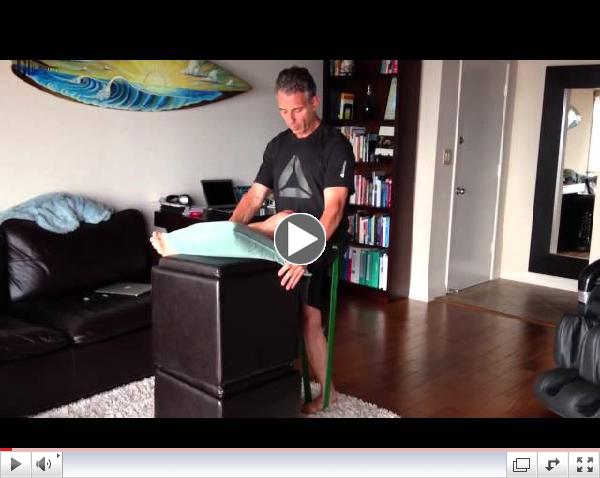 | | Anterior Hip Impingement |
|
Questions/Research/Information
How long does it take to heal?
You must admit this is a common question. The unfortunate truth is the answer lies within the person as opposed to a technique or series of techniques. Too often healing time is given without careful consideration of ALL the individual variables. It's often used in marketing a product and/or protocol. Even if you're a clinician with a lot of experience working with many different clients, healing time is relative to each person and their genetics/lifestyle - it varies widely depending on countless variables... think physical factors, biological factors and behavioral factors (optimistic, pessimistic, etc.). The bottom line is that it isn't actually possible to know if any application helped heal the person faster, because we can never know how long it would have taken without it (something to think about)! So how do we answer? Test the person's current functional threshold, address their function relative to your observation, strive for greater efficiency in function (as opposed to how they feel), monitor each and every session, search for patterns using a functional mindset and answer accordingly to that unique individual - that's the answer in truth. Simply put, it depends :)
|
Something to ponder...
"Life in its fullest is NATURE obeyed".
- Dr. Westin A. Price
Thank you for being a part of our FSTT community!
|