Greetings!
Hello fellow practitioners... Happy Spring! Vince and Lenny have been busy, to say the least. As many of you know, the Gray Institute has launched the Certification of Applied Functional Science (CAFS), which is a great compliment to all other products they offer - especially FSTT. In addition, we have been working hard to create an even better FSTT class. We hope to see you this summer! The 2013 schedule is posted at the Gray Institute website OR if you want to host an FSTT course at your facility, please contact Keith Bozyk KBozyk@grayinstitute.com. If you have ever attended one of our courses, you probably remember us talking about not "over-icing"... Good News... in this newsletter, we have attached a brief summary of why NOT to over-ice. Our staff at AIM Sports Medicine uses this as a client/patient handout to help the public understand why we are recommending this paradigm shift. We hope you enjoy the practical tips in this newsletter! If you have any questions, or just want to share ideas for an upcoming newsletter topic, please email Lenny at lparracino@gmail.com. Thank you! In Health, Lenny & Vince |
|
Clinical Application
As manual-movement therapists, we have all encountered a "stubborn" region that just won't regionally improve and, therefore, functionally improve. The following video clip is a practical example of the range of tissue tension/compression we speak about in class. We believe there is NO such thing as a good/bad technique, only wrongly recommended! Therefore, knowing that there are grades of force to apply becomes paramount in a practitioner's success to improved functional outcome. The following video demonstrates an advanced progression with respect to grades of force for the stubborn plantar region.
Facts to consider...
1.Compression / tension co-exist at 90 degree angles. When applied as shown in the video, you are creating a draining and re-filling of blood, which creates tissue nourishment.
2. The phenomenon we call "stretch" (scientists call creep or hysteresis) is a function not of the collagen fibers lengthening, but fibers sliding along each other on the glue of the hydrated GAGS (glycoaminoglycans) - take the water OUT of the GAGS, and the result is tissue that is doesn't stretch or recoil very well! (for more, a great easy resource is the book Deep Nutrition by Dr. Cate Shanahan pg. 204 - glycation-the reason sugar is bad for you (and your tissues) and chapter 11 - to learn about foods link to connective tissue injury/health).
3. Most injuries occur when connective tissue is stretched faster than it can respond. The LESS hydrated, the less elastic response it has in it - the WHY to plantar fasciitis. We must ask - does the therapy hydrate the tissue or simply mask the pain?
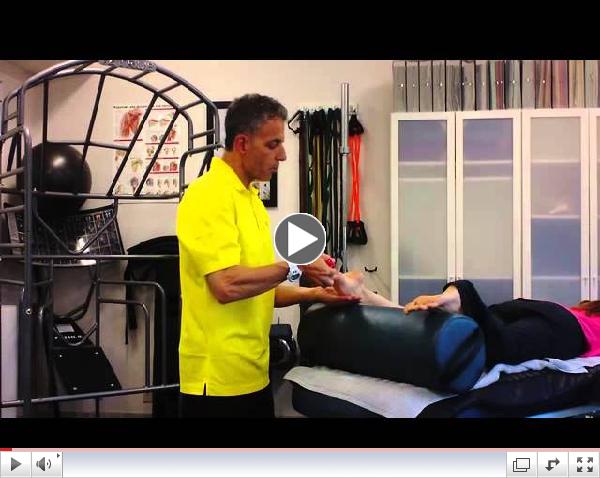 | | Plantar Region |
|
|
Questions/Research/Information
Attached is an information article titled Putting Ice on Injures Could Slow Healing. We use this document as a patient handout at our clinic to help people realize the progression in science. We hope you find this interesting and useful as we have.
|
Something to ponder...
"Anyone who has never made a mistake has never tried anything new."
-Albert Einstein
Thank you for being a part of our FSTT community!
|