Life on the Creek!
Do you know where the egrets sleep? Fall is the season to locate post-breeding roosts of Great Egrets and other colonial waterbirds. After the breeding season, egrets form nighttime roosts in consistent locations year after year. One characteristic common to roosts is islands of trees surrounded by marsh or open water. As in the breeding season, they often share their roosts with other species such as Double-crested Cormorants, Snowy Egrets, and Black-crowned Night-Herons. These roosts are impressive to watch. Some egrets go to bed early, perhaps after successful fishing, but most arrive at the roosts in small groups starting around 10 minutes before sunset and continue until it is just about too dark to see about 30 minutes after sunset. They depart in the morning about 20 minutes before sunrise and often almost all at once. Most of what we know about these "autumnal roosts" comes from work done by the Canadian Wildlife Service. In Ontario, roosts can be as large as 400+ egrets and peak in size around early to mid-September before tapering off to zero by late October or early November. So there is still time to find roosts even though the official 'roost blitz' is over. These roosts are an important part of the egrets' life cycle as they spend considerable time in them. So identifying, studying, and protecting these areas is important to conserving egret communities. (Courtesy of NJ Audobon, 2012) Come on out to Ayers Creek and get a close up look at a Great Egret. 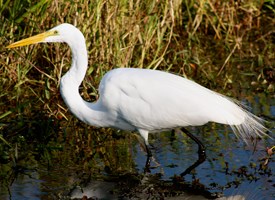 | 


 The competition for the 'Pretty in Pink' contest really heated up this year with many creative and fun costumes. After the paddle we enjoyed fun and games, great music by Troy Mawyer, and fantastic food from Baked and J&J.




