Contact Us
| |
Locations and Hospital Affiliation
We have 3 office locations to accommodate our patients in the Mercer and Bucks County areas:
123 Franklin Corner Rd.
Suite 214
Lawrenceville, NJ 08648
Click for directions
1401 Whitehorse-Mercerville Road
Suite 216
Hamilton, NJ 08619
Click for directions
909 Floral Vale Boulevard
Yardley, PA 19067
Click for directions
Our physicians and midwives deliver at
Capital Health System's Hopewell Campus
in Pennington, NJ
|
Do You Suffer from
Painful Periods?
|
Many women have painful periods. Sometimes, the pain makes it difficult to perform normal household, job, or school-related activities for a few days during each menstrual cycle. While you may have assumed this is just a normal part of life, it shouldn't be, which is why we want to help you to feel your best.
Women suffering from pelvic pain, cramping, heavy periods and endometriosis may be eligible to participate in a clinical research trial going on in our office. Please contact Marianne at 609-803-2378, or via email: miavecchia@lawrenceobgyn.
comcastbiz.net.
|
|
The Best Apps for Keeping Your New Year's Resolutions

|
You've survived the holiday season and celebrated the New Year with Auld Lang Syne, champagne, and the company of good friends and family. Now that the dust has settled and your feet are planted firmly in 2013, have you considered what you'd like to achieve within the next 12 months?
For many the end of year is a checkpoint for assessing goals and creating active plans to reach them. The most popular resolutions require several changes in lifestyle but with perseverance, discipline and positive support they aren't farfetched. If you're looking for help with that first step, a smartphone loaded with the right apps is a resourceful companion. They can track everything from how many steps you take and how much your exercise, to whether you're keeping to your diet and properly breastfeeding your newborn. Here are a few apps to help you stay on track with your 2013's resolutions:
Pageonce is a free app that keeps track of all your bills for free and lets you know how much your saving. Get real-time reminders about upcoming bills, see detailed transactions, and even pay your bills from this app while you're on the go. Access your account from anywhere.
Astrid Tasks is a free app that helps organize your life. Speak into this app to list your tasks. Fun reminders make it easy to never miss a task. Collaborate with your friends, partner or mate to complete a task and be notified when that task is complete.
Nursing Log is a free app for iPad that helps new mom's breastfeed. Breastfeeding helps both mothers and babies stay healthy. The U.S. Surgeon General suggests that babies be fed only breast milk for the first 6 months. This app monitors when your newborn is hungry, how long he or she has nursed and which breast was most recently used. (The iPhone version is $1.99)
Pedometer is a free app that measures steps, distance, work-out time, calories burned, speed, and pace. Includes a GPS so you can't get lost on your long walks. You can even create music playlists from inside this app.
Lose It! is a dietary and exercise tracker app that takes information from your day to day life (calories consumed and burned through various activities) and translates it to digestible numbers. Anyone serious about shedding the pounds or maintaining a current healthy weight should make this their first stop.
|
|
Can Too Much Exercise Cause Infertility?

|
While everyone knows that exercise is good for you, there can be too much of a good thing. When exercise is pushed to the point where the female reproductive cycle stops, or amenorrhoea, it is difficult --- if not impossible --- to conceive a child. Long-term dieting or exercise that lowers hormonal levels may decrease fertility in men and women. Consult your physician before beginning any diet or exercise program.
Amenorrhoea
Amenorrhea is when a women of normal reproductive age does not experience a menstrual cycle for three months or more. This occurs in athletes and those that indulge in excessive exercise, largely because the caloric intake is insufficient to support your activity level. Long-term excessive exercise combined with not enough food is a common cause of amenorrhea. If you cannot reduce your training volume, you need to increase your caloric intake if you wish to conceive.
General Effects of Exercise on Hormones
Excessive exercise can deplete many hormones, and raise others. Long-term intense exercise raises adrenaline levels while depressing leptin levels. Adrenaline will eat away at stored sugar, or glycogen, as well as fat stores. While normally this is a good thing for those exercising, if your body fat gets too low, your menstrual cycle will cease. When your leptin levels decrease, your appetite may decrease as well, which can result in disordered eating or simply not eating enough to support your reproductive cycle.
Diet
Diet plays a role in fertility in both sexes, and many of the hormones that are responsible for reproductive health are based on your intake of dietary sterols. This is particularly true of men. A long-term, low-fat diet will depress testosterone levels and many other hormones. These hormones are not generated exclusively within the body, they are converted from forms of cholesterol. A diet of at least 20 percent fat if not closer to 35 percent may be optimal for those wishing to conceive. This will also help offset the caloric demands of exercise.
Source: Livestrong
|
|

Join us on Facebook!

Follow us on Twitter!
|
|
If you received our e-newsletter from a friend and would like to continue receiving it, please join our mailing list!
 |
|
|
|
January 2013
| |
|
Happy New Year, Healthy New Year!
|

|
|
Greetings!
 Now that the New Year has come in, this is always a good time to just start over, wipe the slate clean and not look back. "Cheers to a new year and another chance for us to get it right," Oprah once toasted. Her words ring true in 2013: This year is another opportunity for us to "get it right." This is our chance to start fresh -- with a positive attitude -- and open our arms and hearts to the possibilities of new beginnings. Now that the New Year has come in, this is always a good time to just start over, wipe the slate clean and not look back. "Cheers to a new year and another chance for us to get it right," Oprah once toasted. Her words ring true in 2013: This year is another opportunity for us to "get it right." This is our chance to start fresh -- with a positive attitude -- and open our arms and hearts to the possibilities of new beginnings.
It's a good time to get a few things in order that will help you have a better outlook on life and could even add some healthy benefits as well. So, to help you get started, here are 5 resolutions you can scratch off your "to-do" list.
Resolution #1: Schedule your annual check-up.
Making a point to be up-to-date on health screenings may not sound important, but the tests could help you live longer and healthier. There's no better time than to start today, especially since January is Cervical Health Awareness Month. We want you to know that there's a lot you can do to prevent cervical cancer. About 20 million Americans currently have HPV (human papillomavirus), the most common sexually transmitted disease. HPV is a major cause of cervical cancer.
The good news? HPV can be prevented by the HPV vaccine, and cervical cancer can often be prevented with regular screening tests (called Pap tests) and follow-up care. In honor of National Cervical Health Awareness Month, we encourage women to: start getting regular Pap tests at age 21; women to get the HPV vaccine before age 27; parents to make sure their pre-teens get the HPV vaccine at age 11 or 12.
Thanks to the health care reform law, you and your family members may be able to get these services at no cost to you. Check with your insurance company. This one small step can help keep you safe and healthy for 2013 -- and beyond.
Resolution #2: Exercise more.
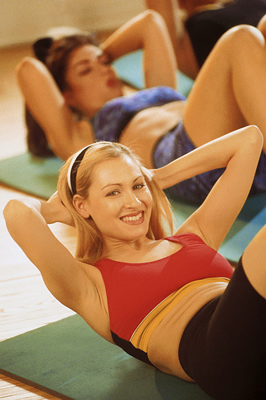 This is always the hardest one to keep, isn't it? Well, technology has come to the rescue! We've got a list of the Best Phone Apps For Keeping Your New Year's Resolutions. This is always the hardest one to keep, isn't it? Well, technology has come to the rescue! We've got a list of the Best Phone Apps For Keeping Your New Year's Resolutions.
If you're looking to improve your health and fertility, you may assume that adding in exercise is one of the best actions to take. And while that is partially true, it's not the entire story. Even with exercise, too much of a good thing can be bad. Some studies have shown that "too much" exercise may impede fertility. So, how much exercise is too much? And how might too much exercise lead to infertility? To get more details on the connection between exercise and fertility, read, Can Too Much Exercise Cause Infertility?
Resolution #3: Take better care of yourself.
This time of year, it seems like everyone is sick with either a cold, stomach flu, sore throat, you name it. So, other than quarantining yourself, what's a woman have to do to stay healthy? You can start arming yourself against cold and flu season by ramping up your immune system. The immune system is like a protector that stops invaders from causing long-term destruction. You can nurture your immune system with a healthy diet that incorporates nutrient-rich foods. Here's how you can Boost Your Immunity with Food.
Resolution #4: Eat right.
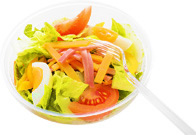 If that makes you cringe just reading it, fear not! Here are some great recipes that will help you keep the pounds off without having to sacrifice your favorite comfort foods: Healthy Meal Makeovers. If that makes you cringe just reading it, fear not! Here are some great recipes that will help you keep the pounds off without having to sacrifice your favorite comfort foods: Healthy Meal Makeovers.
Resolution #5: Keep your New Year's resolutions...even if you have setbacks.
According to Forbes.com, only 7% of Americans will keep their New Year's resolutions. That's an impressive failure rate of 93%. Why so high? More often than not, the resolutions themselves are the problem. Plus, by the end of January many of us have abandoned our resolve and settled back into our old patterns. Want to be part of the exclusive 7%? Read 5 Steps for Successful Resolutions.
Wishing you good health and happiness for 2013!
The Practitioners and Staff of |
How to Boost Your Immunity With Food
|
 All healthy and unprocessed foods support your immune system by providing your body with the building blocks it uses to replenish your tissues with healthy and well-formed cells and molecules. Some foods, however, are standouts for their particular immune-boosting benefits. By starting with a varied diet consisting of plenty of fruits, vegetables and whole grains and including immune-building foods, you can promote a highly resilient immune system. All healthy and unprocessed foods support your immune system by providing your body with the building blocks it uses to replenish your tissues with healthy and well-formed cells and molecules. Some foods, however, are standouts for their particular immune-boosting benefits. By starting with a varied diet consisting of plenty of fruits, vegetables and whole grains and including immune-building foods, you can promote a highly resilient immune system.
Here are 4 steps to get you started:
Step 1
Include lots of fresh fruit in your diet. Eat fruits that are either yellow or orange since these fruits support your immune system, keep your heart healthy, enhance your eyesight and protect you against certain types of cancer. Popular choices are apricots, cantaloupe, grapefruit, oranges, peaches and pineapples. Start your morning with a glass of orange juice for your daily requirement of vitamin C.
Step 2
Eat a variety of vegetables every day. According to MyPyramid.gov, when you increase your consumption of vegetables you reduce your chances of developing certain diseases. Eat a rainbow of colored vegetables to be sure you are taking in important vitamins and minerals. Focus on yellow and orange vegetables for immune system health. Select vegetables such as butternut squash, carrots, corn and sweet potatoes. Also choose vegetables such as potatoes, white beans and beet greens for a high amount of potassium, and choose canned pumpkin, spinach, collard greens and kale for vitamin A. For vitamin C, eat sweet red and green peppers.
Step 3
Put beans in your diet for some fiber, folate and flavonoids. According to the North Carolina Department of Environment and Natural Resources, fiber, folate and flavonoids are significant for health. Mix garbanzo beans in with your green salads, or eat red kidney beans with rice. Eat lima beans with a little margarine. Other beans to choose from include black beans, navy beans, black-eyed beans, pinto beans and great northern beans.
Step 4
Have milk or yogurt every day for calcium. Other foods to eat to strengthen your immune system include whole grains such as brown rice and oatmeal. Make popcorn a snack. Also consume antioxidant foods such as wheat germ, soy, green tea and olive oil. According to Linda Page, author of "Linda Page's Healthy Healing," the antioxidants in these foods may help protect you against cancer.
|
Healthy Meal Makeovers for 2013
|
Think you can't stick to your New Year's diet without giving up all your favorite comfort foods? Think again. Courtesy of the Food Network, these delicious made-over versions of your all-time favorite dishes, from Fried Chicken to Fettuccine Alfredo, make it easy to eat healthy without sacrificing flavor.
 | | All you'll gain is flavor with these healthy meal makeovers! |
Crispy Baked Fried Chicken
Bathing chicken pieces in buttermilk ensures that the meat stays moist, coating it in crushed corn flakes ensures that the skin is crispy, and baking the chicken instead of frying it keeps the fat and calories down.
Low-Fat Fettuccine Alfredo
Low-fat cream cheese is the perfect substitute for cream in this lighter Alfredo; it creates a thick, luxurious texture without extra calories.
Hearty Chicken and Dumplings Lightened-up
Ground oats are the secret to the hearty-yet-light dumplings that float among flavorful chicken and vegetables in this warm-you-up soup.
Three-Cheese Macaroni
For this flavor-packed mac and cheese, Food Network Kitchens used Muenster, sharp cheddar and Parmesan and mixed in pureed cauliflower for extra creaminess.
Chicken Parmesan
This chicken Parmesan is all about moderation: Saute the chicken in a little oil to get that characteristic crunch, then top with just enough cheese and lots of sauce.
Want to see more mouth-watering and healthy recipes? Visit Food Network.com.
|
5 Steps for Successful Resolutions
| |

The start of a New Year is the perfect time to turn a new page, which is probably why so many people create New Year's Resolutions. A new year often feels like a fresh start, a great opportunity to eliminate bad habits and establish new routines that will help you grow psychologically, emotionally, socially, physically or intellectually.
Setting resolutions at the start of a new year can be effective if you create goals that are realistic and you make them fun in some way. You might brainstorm different ways to accomplish the goal or recruit a friend to help you do it. For example, to lose 10 pounds, consider how to exercise daily, take up a new dance or a martial arts class, and ask a good friend to be your workout buddy to keep you motivated.
The idea is to maintain a healthy sense of humor: The more rigid or extreme the goal is, the less likely it will be attractive or attainable. Allow yourself to make mistakes and enjoy the process as much as reaching -- or even surpassing -- your new goals.
Step #1: Hit the List
List all the projects and goals you would like to complete during the New Year. Don't hold back: This is more of a brainstorming session to get all the ideas out onto paper for you to see them. Try not to sensor yourself by limitations of time or budget -- simply list the goals.
Step #2: Group 'em
Cluster similar goals together to organize this large "wish list." You might group all exercise- and nutrition-oriented goals together. For example, list these similar projects together: joining a running group, doing at least 30 minutes of cardio a day, eating fish once a week and cutting back on coffee. By doing this step, the goals become more defined and clear-cut -- and less overwhelming.
Step #3: Prioritize
Trim your goals to the top five most important -- or desirable -- goals. Think of working on these goals for the first six months of the new year, say, from January to June. If you had 15 to 20 goals on your "master list," by tackling a few at a time and prioritizing them, it will be more likely that you accomplish these goals.
Step #4: Consider Timing
Create a specific time frame and action plan for each goal. For example, if you want to run with a group after work, check a calendar and determine which days of the week you are most likely to have time to run with them. It might be two days a week, like Tuesdays and Saturdays. The time frame might be three months to see if you like the group and feel if it is working for you. The action plan would be to join the group and see how your workouts go for a month.
Step #5: Re-evaluate after a month. After 30 days, if you find you no longer have a burning desire to learn how to play guitar, drop that item from your goals list. Replace it with another goal or simply use that surplus time for your other goals. Keep your sense of humor. If your workout buddy bails on you, replace him or her or decide to use your workouts as "moving meditations." If you need the motivation of someone else to exercise, book a trainer for a few sessions or go buy a new workout DVD that you can do at home.
|
Our Pledge to You...
|
Our vision is to provide the highest level of care to women through all phases of their lives while helping them to understand how and why their bodies function as they do.
We consider patient education to be one of our most important responsibilities. By educating women and empowering them to take a more active role in their own health care, they are able to make better decisions that will enable them to adopt a healthy lifestyle.
Please know that we value and respect our patient's privacy. Your name will never be shared or sold and you can unsubscribe from our list by clicking the icon at the bottom.
The highest compliment you can give us is to refer our practice to others. We value your trust and thank you in advance.
|
|
|
|
|