Young athletes need better movement skills.
by Mike Mejia CSCS
You see it all the time. A gifted young athlete who dominates his, or her chosen sport. They fly all over the field, or court, seemingly scoring at will; making other kids look decidedly ordinary by comparison. To speak with their parents and coaches, you'd think they were a shoe in for a division one scholarship, or lucrative pro contract. Until you dig a little bit deeper, that is.
Ironically, all of the years these kids have spent specializing in attempts to become the best athlete they could be, have often only served to hinder their athletic development! Because they've devoted so much time to mastering the movement patterns of a particular sport (i.e. swinging a baseball bat, or tennis racket, or countless strokes in the pool, etc.) many have lost the fundamental capacity to move efficiently. Or, perhaps more accurately, never even had it in the first pace.
Due to the rampant early sports specialization that's become so prevalent in our society, although a child may become very proficient in a given sport, they often fail (usually through no fault of their own, by the way) to capitalize on what are known as "sensitive periods" in their development.
These are times when certain bio-motor abilities like balance, coordination and spatial awareness are best developed. Skipping over these sensitive periods, in lieu of repeatedly practicing specific sports skills, is kind of like building a house with a shoddy foundation- sure, the end result may look pretty good, but you just know that you're going to pay a price for it somewhere down the road.
That price often comes in the form of strength, postural and/ or flexibility imbalances that can serve as precursors to injury. Imbalances that are only magnified as children start to physically mature and become bigger and stronger. All of the sudden, things they could get away with when they were younger- such as not getting into the proper position to decelerate and change direction, or faulty landing mechanics from a jump- turn into major problems.
I encounter this sort of thing all the time with many of the "elite" level young athletes that work with. When I first evaluate them, many lack the ability to execute basic athletic skills such as skipping, balancing and squatting. Call me crazy, but when a young athlete can't perform a simple body weight squat without 3 or 4 things breaking down throughout the kinetic chain, I consider that a cause for concern!
Especially when that same athlete is routinely sprinting, making rapid direction changes and executing loads of other explosive movements during practice and competition. Not to mention, likely loading some of these faulty movement patterns with excessive weight when he, or she hits the gym.
So, what's the answer here? Unfortunately, it's not an easy fix. For starters, younger kids need to play as many sports as possible, for as long as possible and not simply be steered towards the first one they're good at.
By playing multiple sports and adhering to a long-term conditioning model, which will allow them to take advantage of the aforementioned sensitive periods, they'll be setting themselves up well in terms of both physical performance and injury prevention for years to come.
Trouble is, these days the ridiculous schedules many kids are forced to maintain make it nearly impossible to play more than one sport at a time- let alone properly condition for it.
Older kids also need to spend less time practicing and competing in their primary sport, and more time doing "corrective" stretching and strengthening drills that are designed to address some of the imbalances caused by years of specialization. While they can't totally make up for skipping over those sensitive periods, they can at least undo some of the damage brought about by so much repetitive motion.
The video below will show you some of my favorite movement drills for young athletes. Use them as part of your warm-up, or you can even incorporate them right into your practice sessions. Either way, you'll have peace of mind knowing that you'll be promoting better body awareness and helping improve range of motion- two things most young athletes desperately need.
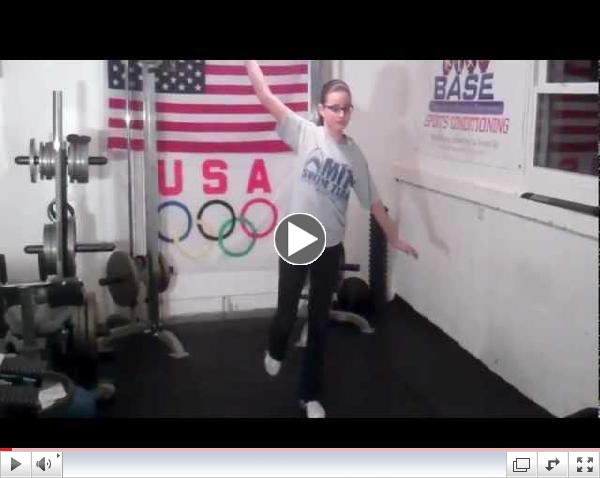 |
| Movement Training for young athletes |