| International Peace & Security Institute |
|
PEACE & SECURITY REPORT
IPSI's Peace & Security Report (PSR) is a concise weekly e-publication intended to brief busy students, academics, advocates, and practitioners in the conflict management community on pertinent global news, events, and trends. Meticulously researched and written by IPSI, the PSR empowers us all to take a step back from our immediate deadlines each Friday and gain a greater understanding of the week's global events.
|
|
| Featured Article
The Global Gender Gap Report 2012
World Economic Forum
The Global Gender Gap Index introduced by the World Economic Forum in 2006, is a framework for capturing the magnitude and scope of gender-based disparities and tracking their progress. The Index benchmarks national gender gaps on economic, political, education- and health-based criteria, and provides country rankings that allow for effective comparisons across regions and income groups, and over time. The rankings are designed to create greater awareness among a global audience of the challenges posed by gender gaps and the opportunities created by reducing them. The methodology and quantitative analysis behind the rankings are intended to serve as a basis for designing effective measures for reducing gender gaps.
|
East & South Africa
SOMALIA: Journalist killed in Somaliland
Journalist Ahmed Farah Ilyas was killed by unknown gunmen on his way home in the city of Las Anod on Tuesday night, making him the sixteenth journalist to be killed in Somalia this year. Ilyas was covering a story on a landmine explosion which authorities claim Al Shabaab orchestrated. Sool, the region where Ilyas worked, is the source of some contention for the Somali government, as the self-proclaimed autonomous region of Somaliland has also claimed Sool as part of its territory. Comment: It is currently unknown who killed Ilyas or why, but given that Somalia is widely recognized as one of the most dangerous locations for journalists, there could be any number of reasons. The unrest caused by the disagreement between Somaliland and the Somali government has instigated violence towards journalists in the past, as has negative media coverage of Al Shabaab. The National Union of Somali Journalists has demanded government authorities increase protection for journalists. (Africa Review, All Africa, BBC)
SUDAN: Fire and explosions at arms factory near Khartoum
On Tuesday, the Yarmouk arms and ammunition factory located south of Khartoum was the site of explosions and fires, which spread to nearby buildings, causing two reported deaths and many hospitalizations. Fire fighting forces were quick to respond, and members of the Sudanese Armed Forces also arrived to block off the roads leading to the factory and mollify the shaken residents nearby. Comment: While the cause is not known, representatives of the Sudanese Armed Forces contend that the explosion likely occurred during a routine maintenance procedure in the main building. Although Khartoum State Governor Abdel Rahman Al-Khidir discounts the involvement of a foreign source as the cause for the fire, many members of the Sudanese government claim that Israel was behind the incident. In response, Sudan's Information Minister Ahmed Belal Osman stated that the interests of Israel are "a legal target from now on... They killed our people." This is not the first time Sudan has accused Israel of strikes upon its territory; Israel and the international community assert that Sudan is providing weapons for Hamas. (Sudan Tribune, Reuters, BBC, Al Jazeera)
TANZANIA: Zanzibar separatists arraigned for inciting violence
Seven leaders of the Islamic group Uamsho were charged with inciting violence on Monday after the latest of their anti-government protests resulted in the death of a police officer. Tanzania is traditionally a secular country, and Uamsho is pushing for the predominantly Muslim island of Zanzibar to regain its autonomy. Abdulrahim Salim, the chairman of Uamsho's board of trustees, asserts that the organization does not want Zanzibar to be an Islamic state. Comment: Since its inception in 2001 as an Islamic NGO, Uamsho's rapid growth is due in large part to citizen disappointment with the government on issues such as youth unemployment. Analysts say that Tanzania's regional reputation of stability is at risk if it fails to deal with this issue, and that a successful secession could have repercussions in neighboring states. Abdullahi Halakhe of the International Crisis Group says "The threat of Zanzibar leaving the union will have huge implications that will transcend Tanzania. Secessionist movements like the MRC [Mombasa Republican Council] will obviously be emboldened." (The Citizen, All Africa, Reuters)
Researched/Written by Sean Barrett
|
West & Central Africa
BENIN: Three charged in coup plot
On October 21, authorities arrested Beninese President Thomas Boni Yayi's doctor, niece and a former minister over an alleged plot to poison the leader. The three have been charged with conspiracy and attempted murder and remain in custody. The instigator of the plot is alleged to be Benin businessman Patrice Talon, a former ally of the president's. Authorities said they also intend to issue an arrest warrant for Talon, who is out the country. Comment: President Yayi, was first elected in 2006 and re-elected last year; he is currently chair of the African Union. In 2007, he survived an ambush by gunmen who attacked his convoy during an election campaign tour. (France 24, Al Jazeera, BBC)
GUINEA-BISSAU: Government thwarts coup
On Sunday, gunmen attacked the Bissalanca air force base located near Guinea-Bissau's capital, Bissau, killing seven people. Captain Pansau N'Tchama, a former associate of the government overthrown earlier this year, led the attempted coup. The April 12 coup toppled the government of Carlos Gomes Junior, interrupting a presidential election between the first and second rounds. Guinea-Bissau has accused Portugal, the Community of Portuguese Language Countries (CPLP) and deposed prime minister of backing the coup to bring Junior back to power. Comment: Following the April coup, the ruling junta handed power to a transitional government; however, coup leaders remain influential, having selected Manuel Serifo Nhamadjo for the role of interim president. The country's instability has enabled drug traffickers operating between South America and Europe to make it a hub for their activities. (France 24, Al Jazeera, Deutsche Welle)
NIGERIA: Group leader arrested
On Thursday, police arrested Shuaibu Mohammed Bama, a high-profile member of Islamist militant group Boko Haram. Bama was apprehended at the home of Senator Khlaifa Ahmed Zanna in Maiduguri. Zanna said the home belongs to the former governor of Borno State and not himself. He acknowledged the suspect is his nephew and alleged that the former governor is colluding with security operatives in order to claim his seat in the senate. There have been allegations of links between elements of Boko Haram and local politicians in the past. Comment: In January, President Goodluck Jonathan said Boko Haram had infiltrated all levels of government, without giving details. Boko Haram is fighting to create an Islamic state in Nigeria, and its fighters have killed hundreds since launching an uprising in 2009. (Al Jazeera, AllAfrica, AFP)
|
Americas
MEXICO: Labor reform bill stalls in congress
Proposed labor reforms stalled on Tuesday after Mexican President Nieto's PRI party attempted to remove sections of the bill that promote union transparency. The bill makes it easier for employers to hire and fire workers and simplifies the process for labor disputes. It also contains two controversial clauses, which mandate free and transparent elections for labor union leaders and require union bosses to account for spending of membership dues. The PRI receives significant political support from unions, which likely prompted their attempt to remove theses clauses. If passed, the bill is projected to create 150,000 jobs per year. Comment: Each year, bosses of large unions spend and manage tens of millions of dollars without any accountability or transparency. Mexico's big union bosses are infamous for lavish lifestyles, while many Mexican workers earn as little as five USD per day. As a result, Mexican activists consider union democracy and transparency as a vital step to creating a healthy Mexican economy. (AP, Reuters, The News).
UNITED STATES/CUBA: Guantanamo detainee protests use of chains
On Wednesday, the Guantanamo Bay prisoner, Abd al-Rahim al-Nashiri, announced he may boycott future sessions of his war tribunal in protest of poor treatment and painful belly chains. Al-Nashiri is charged with planning the attack on the USS Cole. His lawyers claim al-Nashiri is suffering from post-traumatic stress disorder as a result of torture by CIA officers during the four years following his arrest, and prior to being brought to Guantanamo. The judge warned al-Nashiri that his absence in court would not be grounds for appeal. Comment: Al-Nashiri is suspected of being a former al-Qaeda operative and is accused of orchestrating the bombing of the USS Cole in Yemen in October 2000. The attacks killed 17 crewmembers and injured 37. Nashiri is facing murder and attempted murder charges; if convicted, he may receive the death sentence. (AP, BBC, Reuters)
REGIONAL: UN expresses concern about excessive force by U.S. border patrols
Last Thursday, a UN official spoke out against the excessive use of force by U.S. border guards enforcing drug trafficking and immigration laws. The statement follows the recent killing of 16 year-old Jose Rodriguez who was shot in the back seven times by a U.S. patrol guard on the Mexico side of the border, just south of Nogales, Arizona. Some sources claim the officer shot Rodriguez for throwing rocks across the border, while other sources claim the officer shot him during a drug smuggling incident. Following the incident, the Mexican government expressed concern that the U.S. may be using excessive force along the border. The UN supported Mexico's statement, citing an excessive number of teenage deaths in border killings. The UN urged the U.S. and Mexico to thoroughly investigate these incidents. Comment: Rodriguez's mom organized a protest along the border demanding a reduction in border violence and a release of information regarding her son's death. The U.S. Attorney's office refuses to release information about the incident. (Nogales International, The News, AP)
|
East Asia
JAPAN: Justice Minister resigns
On October 23, Japan's Justice Minister Keishu Tanaka resigned after a magazine reported that he acted as a matchmaker at the wedding of a gang member and attended a party hosted by a crime boss around 30 years ago. Tanaka was also accused of accepting political donations from a foreign resident in Japan. Former Justice Minister Makoto Taki was reinstated to his old position on Wednesday. Comment: Tanaka said in a statement that he was resigning due to "health reasons." The resignation may weaken support for Prime Minister Yoshihiko Noda. Tanaka had been appointed to his post three weeks ago. (Japan Times, Xinhua, BBC, Reuters)
MYANMAR: Three killed in Muslim-Buddhist clashes
On Sunday, at least three people were killed and more than 1,000 houses were burned down during clashes in western Myanmar between Rohingya Muslims and Rakhine Buddhists. Tensions have been high between the two sides since June when fighting left more than 90 dead and 3,000 homes destroyed. Many Burmese view the stateless Rohingya as illegal immigrants who steal land from locals. The U.N. estimates that there are 800,000 Rohingya in Myanmar. Comment: Fighting continued through Wednesday and government efforts to investigate the violence have reportedly been blocked by local leaders from both sides. The government does not count the Rohingya as one of the state's 135 ethnic groups and denies them citizenship. (Al Jazeera, Bangkok Post, Mizzima, AP)
SOUTH KOREA: Officials visit disputed Islands
On October 23, 15 South Korean officials from the National Defense Committee visited a group of islands claimed by Japan but controlled by South Korea. Known as Dokdo in South Korea and Takeshima in Japan, the small and historically contentious islands lie in fishing grounds and could contain gas deposits. Japan had demanded the officials cancel the trip. Comment: The visit to the islands lasted about 30 minutes. In August, Japan recalled its ambassador when South Korean President Lee Myung-Bak visited the islands. North Korea also claims the islands. (Yomiuri, Xinhua, BBC)
|
Europe & Central Asia
KOSOVO: Protesters clash with police
On Monday, police clashed with activists from the Self Determination Party protesting talks between Kosovo and Serbia. Kosovo Prime Minister Hashim Thaci met with Serbia's Ivica Dacic last week in Brussels to discuss improved relations between the countries in the first meeting since Kosovo declared independence in 2008. Protestors opposed to any communication with Serbia shouted "Shame" and "No bargain with Serbia" as they tried to blockade the Prime Minister's office. Police fought back with tear gas and pepper spray, arresting 60 people; 18 officers were injured in the incident. Comment: Serbia was nominated as a candidate for membership to the EU in March, but relations with Kosovo must improve as a condition for acceptance. Serbia has stated that it will never accept Kosovo, a nation of 1.7 million people, as sovereign; however, 90 countries recognize Kosovo's sovereignty, including 22 of the 27 EU members. (Al Jazeera, BBC, Reuters)
RUSSIA: Russian opposition figure kidnapped from Ukraine
Last week, Leonid Razvozzhayev was kidnapped in broad daylight from a street in Kiev, Ukraine, allegedly by Russian agents. The human rights defender left the United Nations High Commission for Refugees where he was seeking refugee assistance, but failed to return after lunch to collect his possessions. On Monday, it became clear that Razvozzhayev had been arrested and was in a Russian jail. Investigators announced that Razvozzhayev accepted responsibility for arranging riots and disorder in Russia; a confession Razvozzhayev argues was coerced by psychological torture. Comment: Human rights activists have shown concern for the illegal abduction of a national on foreign soil. Russian experts have also expressed fear over the lack of restraint displayed during recent months in the arrests of anti-Kremlin opposition. In August, known Putin opposition Taisiya Osipova was given an enlarged prison sentence for cocaine possession, which she alleged was planted by police. In September, members of Pussy Riot were arrested and imprisoned for their politically aimed music, classified as religious hatred by Russian courts. (Christian Science Monitor, Kyiv Post, Moscow Times)
RUSSIA: Islamic militants killed by security forces
On Wednesday, Russian security forces surrounded an apartment complex in Kazan to arrest Islamic militants held up inside. The soldiers stormed the building after gunmen detonated an explosive device at the entrance to prevent detention. Officials report that three gunmen were killed in the clash, with one of the deceased found wearing a suicide vest. According to reports, the militants had been planning an attack on the Islamic Kurban Bayram holiday, celebrated this Thursday and Friday. Comment: It is rare for operations against Islamic militants to occur in Kazan, located in the central Tatarstan region of Russia. Frequently, clashes with insurgents are reported in the volatile North Caucasus region due to a movement for a separate Islamic state. (BBC, Moscow Times, Reuters)
Researched/Written by A. Max Jones
|
Middle East & North Africa
LEBANON: Car bomb kills 8 and wounds 96, sparking political upheaval
On October 19, a car bomb killed eight, including the Internal Security Forces (ISF) intelligence chief Wissam al-Hassan, and wounded 96 others in the Ashrafiyeh district of Beirut. Al-Hassan, supporter of the Lebanese opposition March 14 Alliance and opposition in Syria, directed a bomb plot investigation that led to the arrest of Michel Samaha, a Lebanese politician with close ties to President Assad. March 14 Alliance Leader Saad al-Hariri accuses Damascus of plotting the assassination. Amidst fears of renewed sectarian tensions, multiple clashes have occurred since Friday's attack in the northern city of Tripoli between Assad supporters and opponents resulting in 11 deaths. Al-Hassan's Sunday funeral also turned into a violent political rally against the current government and the spread of the Syrian conflict into Lebanon. Comment: Friday's blast caused the Lebanese opposition to call for the government to resign, instigating fears from the international community that the war in Syria may destabilize Lebanon. President Michel Suleiman is engaged in discussions with political parties about the possibility of forming a new, effective government. PM Mikati indicated he would step down, but later said he would stay on if Suleiman decided it was in the nation's best interests. (Al Jazeera, BBC,Al Jazeera, Daily Star, Al Jazeera)
SYRIA: Syrian Army agrees to ceasefire during Eid al-Adha
On Wednesday, UN peace envoy Lakhdar Brahimi announced the Syrian government and many of the rebel leaders agreed to a ceasefire during the Eid al-Adha holiday. On Thursday, the Syrian army officially announced the suspension of military operations for the Friday to Monday holiday, but reserves the right to respond to rebel attacks. At least one rebel group, the militant al-Nusra Front, says it will refuse to observe the ceasefire. According to the Observatory for Human Rights, the probability for an armistice looks bleak as widespread violence continues throughout the country, resulting in a daily death toll exceeding 100. 112 people were killed across Syria on Tuesday, including ten who died from a government aerial bombardment that struck a bakery in Aleppo. Comment: According to Brahimi, "If we succeed with this modest initiative, a longer ceasefire can be built on it, and the launch of a political process." (BBC, Al Jazeera, Daily Star, Al Jazeera)
YEMEN: Al-Qaeda attack on military base kills 16 and wounds 29 soldiers
Early on October 19, members of al-Qaeda (AQ) attacked an army base in the southern Abyan province, during which they detonated an explosive laden vehicle, killing 15 and wounding 29 soldiers. Yemen forces killed eight AQ members during the clash. The attack was in retaliation to a U.S. drone strike the previous day in the southern city of Jaar that killed eight suspected AQ members, including a regional leader. Comment: Violence has increased in the past few weeks as the U.S. intensified drone strikes within the region, while militants retaliate with attacks on state and military targets. Many Yemenis say U.S. drone strikes violate the country's sovereignty and complain that the campaign against militants distracts officials from other important issues, such as unemployment, corruption, water depletion, and a stagnate economy. (Al Jazeera, Reuters, Saba News)
|
South Asia
AFGHANISTAN: High-level Taliban commander captured
It was confirmed on Tuesday that Mullah Abdul Rahman, a high-level Taliban commander in northern Afghanistan, was arrested in a joint operation of elite Afghan police units and the German military on October 19. Rahman and another Taliban commander were seized near the village of Ghunday Kalay in Kunduz Province. German media said the country's elite KSK force was involved in the operation to capture Rahman, who is suspected of having previously orchestrated deadly attacks on German soldiers. NATO described Rahman as a Taliban financier in the North. Comment: "Rahman was involved in heightening insecurity in Kunduz, Takhar and Badakhshan provinces," said Kunduz province police spokesman Sayed Sarwar Husseini. Increasing violence in Afghanistan has led to concerns about the Afghan Security Forces' ability to deal with militant threats following the planned withdrawal of coalition troops in 2014. (Reuters, RFERL, Daily Mail)
INDIA: Gunmen attack military convoy in Kashmir
On October 19, one person was killed and two injured when gunmen attacked a military convoy and a hotel in the outskirts of Srinagar in Indian-administered Kashmir. The three victims are hotel employees. A police official said the suspected fighters open fired on the convoy in the outskirts of Srinigar on Friday and then entered the grounds of the Silver Star hotel where they continued the attack. Several rebel groups are fighting Indian rule, although none have issued statements about the incident. Comment: Kashmir is divided between India and Pakistan and claimed by both. Since 1989, a separatist insurgency and subsequent crackdown by Indian forces have killed an estimated 68,000 people. (Al Jazeera, AP, BBC)
NEPAL: Minister resigns after corruption accusations
Last week, Prime Minister Baburam Bhattarai requested the resignation of Labor and Employment Minister, Kumar Belbase, for allegedly seeking bribes in registering private companies offering jobs abroad. Prime Minister Bhattarai, asked for the resignation after television news showed clips of one of his aides asking job agencies' representatives for more than 250,000 rupees (3,000 USD) each to register their business. Belbase submitted his resignation on Saturday, Oct 20, which was accepted. Comment: In a region reputed for its corruption problems, the Nepali Prime Minister will likely be lauded for targeting such a high profile government official. (AP, The Australian, Times Online)
Researched/Written by Maanasa Reddy
|
|
|
|
|
IPSI News

IPSI Faculty and ICC Prosecutor Fatou Bensouda declares the "ICC Trial for Kenya to Proceed Despite Election."
Read Article >>
___________________ |
IPSI News

IPSI Advisor and President of Search For Common Ground John Marks talks about using Soap Operas to promote peace.
Read Article >>
___________________ |
IPSI News
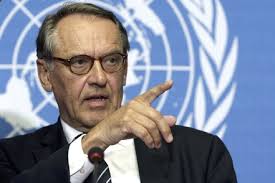
IPSI Advisor and UN Deputy Secretary General Jan Eliasson urges Syrian rebels, Assad regime to observe cease-fire.
Read Article >>
___________________ |
IPSI News

IPSI Faculty and UN Special Rapporteur on torture Juan Mendez reports that countries around the world are increasingly viewing capital punishment as a form of torture.
Read Article >>
___________________ |
IPSI Leadership
Cameron M. Chisholm Dr. I. William Zartman
Dr. P. Terrence Hopmann
George Foote Alexander Little
Kevin Melton William Stuebner
Pamela Aall
Ahmedou Ould-Abdallah
Betty Bigombe Dr. Francis Deng
Jan Eliasson
Gareth Evans
Dr. Ted Robert Gurr
Amb. Jacques Paul Klein
Peter Kyle
Dr. Jean Paul Lederach
Jeffrey Mapendere
John Marks
Susan Collin Marks
Dr. Joyce Neu John Prendergast Dr. Valerie Rosoux
Dr. Ruth Wedgwood Dr. Craig Zelizer About Us >> ___________________ |
|