| International Peace & Security Institute |
|
PEACE & SECURITY REPORT
IPSI's Peace & Security Report (PSR) is a concise weekly e-publication intended to brief busy students, academics, advocates, and practitioners in the conflict management community on pertinent global news, events, and trends. Meticulously researched and written by IPSI, the PSR empowers us all to take a step back from our immediate deadlines each Friday and gain a greater understanding of the week's global events.
|
|
| Featured Article
Tell Me How This Ends: Be the President. Make the decision on Iran.
Truman National Security Project
After closely watching the public discussion about military action against Iran, many in the world are worried - no one seems to be honest about the cost. So to help people understand the costs and consequences of war with Iran, the Truman National Security Project developed a free web-based Iran war game, which was released today.
|
East & South Africa
KENYA: Kenyan official killed due to secessionist violence
Salim Changu, a local Kenyan official, was hacked to death in a retaliatory attack Monday morning in the coastal town of Kwale following the arrest by Kenyan police of Omar Mwamnuadzi, a leader of the secessionist group Mombasa Republican Council (MRC). The MRC is described by Kenyan officials as a "criminal gang." Comment: The MRC claims the central government has marginalized the people of the coastal region, and that Mombasa and the surrounding coastal area is not part of Kenya. The secessionist mentality of the region tends to intensify as elections approach, and the general election is scheduled for March of 2013. (The Daily Nation, Nigerian Tribune, BBC)
TANZANIA: Church attacks lead to arrests
Five churches were vandalized and torched in Dar es Salaam last Friday by Muslim youths protesting the desecration of a Koran. Allegedly, a 14-year-old Christian boy was told by his Muslim friend that urinating on the Koran would turn him into a snake, so the young Christian tested the theory. Word of this spread, and the resulting riots led to 126 arrests. Tanzania President Jakaya Kikwete visited the vandalized churches and pleaded for Christians not to retaliate. Islamic leaders in the area also condemned the attacks, urging people to remember that the "actions of one Christian do not represent the ideals of all Christians." Comment: Historically, Tanzania has been commended in the international community for its religious tolerance. In fact, earlier this year President Kikwete spoke with U.S. officials about Tanzania's "rich heritage of respect for religious freedom and tolerance." Plans are now underway to promote more dialogue between the two faiths. (Africa Review, Afrique en Ligine, BBC)
REGIONAL: No winner for Mo Ibrahim prize
The Mo Ibrahim prize is an annual USD 5 million award given to democratically-elected African leaders who governed well and voluntarily stepped down within the last three years. This year, like 2009 and 2010, the panel felt that no candidate met the criteria. The former leaders of Senegal, Somalia, and Zambia traveled to London for the award ceremony, and expressed disappointment upon hearing the news on Monday. The 2011 winner was former President of Cape Verde Pedro Verona Pires. Comment: The former Presidents of Botswana and Mozambique won in the past, and Nelson Mandela was named the honorary inaugural laureate in 2006. Former African leaders have expressed disappointment that no prize was awarded, but as founder Mo Ibrahim says "We are not just in the business of positive messages." He stated that the panel refuses to compromise on the criteria for the award for exceptional leadership. (Business Day, Al Jazeera, BBC, NY Times)
Researched/Written by Sean Barrett
|
West & Central Africa
MALI: Intervention in northern region
On Tuesday, French Defense Minister Jean-Yves Le Drian announced that African military action to remove Islamist militants from northern Mali will launch within weeks. Previously, on October 12, the UN Security Council called for an intervention plan to be drawn up within 45 days to revive attempts to end the crisis. Al-Qaeda linked fighters in Mali have threatened to "open the doors of hell" for French citizens if France continues pushing for armed intervention to retake the rebel-held area. Comment: On Monday, European Union foreign ministers agreed to a possible military mission to train the Malian Army. After details for military intervention are submitted, the Security Council is required to pass a second resolution granting approval for deployment. (Al Jazeera, AFP, AllAfrica, AFP)
MAURITANIA: President wounded in shooting
On October 13, Mauritanian President Mohamed Ould Abdel Aziz was "accidentally" shot and wounded when soldiers fired on his convoy near the nation's capital, Nouakchott. Government officials said soldiers mistakenly opened fire on the president after failing to recognize his car. Aziz arrived at a military hospital outside Paris on Sunday for treatment. Some observers believe that the president was directly targeted, without giving any indications as to the identity of the attackers or motive. Comment: Mauritania has suffered chronic unrest in recent years. Aziz came to power in a coup in 2008, and he has received death threats from al-Qaeda's North Africa branch, which he has vowed to eradicate. (France 24, AFP, AllAfrica)
NIGER: Aid workers kidnapped
On Sunday, unidentified gunmen kidnapped five Nigerien aid workers and a Chadian driver in Dakoro, a village in southeastern Niger. The kidnapped Nigerians are employed by Nigerien medical charity Befen, and the Chadian works for Alerte Sante. The abductors are believed to have spoken Arabic, Tamasheq (the language of the Tuareg tribes) and Hausa, a regional language. Comment: Dakoro is situated in the region around Maradi, the economic capital of Niger, and is the main town. The area is close to the border with Nigeria, where the Islamist group Boko Haram operates. In September 2010, al-Qaeda in the Islamic Maghreb kidnapped seven people in the Agadez region, considered the birthplace of the Tuareg revolts; four French hostages are still held. (Reuters, AFP, BBC, AFP)
SIERRA LEONE: SCSL sentences former government officials
On October 11, the Special Court for Sierra Leone (SCSL) sentenced three senior members of the country's former Armed Forces Revolutionary Council to jail terms for contempt in tampering with a former prosecution witness. Santigie Borbor Kanu and Ibrahim Bazzy Kamara are already serving long prison sentences for war crimes and crimes against humanity committed in the Sierra Leonean Civil War from 1991- 2002. Hassan Papa Bangura was sentenced to two 18-month prison terms after being convicted on similar charges. Comment: Based in Freetown, the SCSL was established in 2002 to try those most responsible for serious violations of international humanitarian law in the civil wars that plagued the country, starting in 1996. In April, ex-Liberian President Charles Taylor became the first former head of state since World War II to be convicted by an international war crimes court. (AllAfrica, UN News Centre, AFP)
|
Americas
COLOMBIA: Peace talks ready to begin in Oslo
On Wednesday, representatives from the Columbian government and the FARC rebel group arrived in Oslo to begin peace talks. The talks were pushed back several times due to issues including the weather in Columbia, delays in the suspension of arrest warrants for FARC members, and disagreements over the members of the FARC delegation. The talks will last for several months and will be held in relative secrecy with no regular press updates. Comment: Negotiators are cautiously optimistic about the negotiations and plan to discuss several issues, including what to do about combatants on both sides who have committed war crimes. (BBC, Reuters, AP)
CUBA: Castro eases travel restrictions for citizens
On Tuesday, the Cuban government lifted travel restrictions, allowing citizens to travel abroad for up to 24 months and renew visas for an additional 24 months. Under the previous restrictions, citizens could only travel abroad for 11 months and were required to possess hard-to-obtain exit visas, which could be denied for arbitrary reasons. Travel limitations still exist for skilled professionals including doctors and scientists. The government can also deny exit visas for arbitrary "reasons of public interest defined by authorities." Comment: An easing of travel restrictions is the most recent development of Castro's liberalization initiative, which consists of primarily economic reforms. He recently legalized the sale of personal homes and cars, but remains unwilling to implement political reforms. (BBC, Reuters, AP)
GUATEMALA: Nine military personnel arrested for killing protesters
Eight army soldiers and one colonel were arrested last Thursday for the killing of six demonstrators who were blocking a highway during a protest in Totonicapan. President Otto Perez Molina initially denied military involvement in the shootings and claimed that the police and troops at the scene of the protest were unarmed. He later amended his statement after investigators found over 100 shells at the scene of a type of ammunition used solely by the military. The suspects are being held in jail and are scheduled to appear in court today. Comment: The demonstrators were protesting upcoming educational reforms and caps on electricity prices. The reforms require teachers to obtain a five-year bachelors degree instead of a three-year vocational degree. Protesters worry the new teacher qualifications will reduce access to education in Totonicapan and other low-income rural areas. Protesters also feel the proposed caps on energy prices are too high and will cause a spike in energy prices. (AP, BBC, Human Rights Watch)
MEXICO: Police raid colleges after students seize campuses
Police raided three college campuses on Monday in Michoacan in response to student protesters. upset by curriculum reforms, seizing campuses and hijacking incoming buses and delivery trucks. The demonstrations began after the announcement of plans to require English and computer science courses for teachers in training. The students argue that teachers need more practical courses so they can provide students in rural areas with useful knowledge. After a week of protests and hijackings, police entered the campus and clashed with protesters who fought back with fireworks and rocks. Ten officers were wounded and 176 students were arrested. Comment: Frequent campus seizures are one of many problems with Mexico's higher education system. In addition, unemployment among college graduates is higher than high school dropouts. (AP, BBC, Reuters)
|
East Asia
INDONESIA: Police Officers Killed
On Tuesday, two Indonesian policemen were found dead in the mountains of Central Sulawesi's Poso district. The officers were investigating a suspected militant training camp linked to radical Islamic group Jemaah Anshorut Tauhid (JAT). The policemen had been missing since October 8 and appear to have been tortured before being stabbed to death. Comment: JAT was founded in 2008 and seeks to establish an Islamic caliphate in Indonesia. The group has been responsible for numerous attacks and was designated a terrorist organization by the United States in February. (Jakarta Globe, Jakarta Post, AP)
JAPAN: Japanese Politician Visits Yasukuni Shrine
On October 17, Japan's Liberal Democratic Party leader and former Prime Minister Shinzo Abe visited the controversial Yasukuni Shrine. The shrine is dedicated to Japan's war dead but has drawn criticism for honoring war criminals. Many in the region view the site as a divisive symbol that represents Japan's military past. Comment: The provocative visit comes at a time of strained relations and territorial disputes between China and Japan over islands in the East China Sea. Chinese Foreign Ministry spokesman Hong Lei called for Japan to handle historical issues in a responsible way. Abe is strongly positioned to replace Japan's current Prime Minister in upcoming elections. (Xinhua, BBC, NY Times, Reuters, Xinhua)
MONGOLIA: Lenin Statue Taken Down
Ulan Bator, the capital of Mongolia, removed its last statue of Vladimir Lenin on Sunday. Mayor Bat-Uul Erdene, a founding member of Mongolia's Democratic Party, gave a 10-minute speech denouncing Lenin to a crowd of around 300 people. Mongolia was effectively a Soviet satellite state during the Cold War. Comment: For decades, Lenin was venerated and called "Teacher Lenin" by Mongolian schoolchildren. The statue had survived for 58 years because some admire Lenin for his support of Mongolia's fight for independence from China in 1921. The four meter high bronze statue will be auctioned off with a starting price of approximately USD 280. (Bangkok Post, BBC, National Post, The National)
SOUTH KOREA: Chinese Fisherman Shot Dead
On Tuesday, a Chinese fisherman was killed after being struck by a rubber bullet during a South Korean Coast Guard raid targeting illegal fishing in the Yellow Sea. The fishermen resisted arrest with makeshift weapons before being subdued. South Korean officials seized two fishing boats and detained 23 Chinese fishermen. Comment: The Chinese government expressed dissatisfaction and asked South Korea to "make sure this kind of incident never happens again." Analysts speculate that the incident may accentuate existing territorial tensions between the two states. More than 300 Chinese boats have been caught illegally fishing this year. (Korea Herald, Korea Times, Xinhua, AFP)
|
Europe & Central Asia
SERBIA: Karadzic begins defense at ICTY
On Tuesday, Radovan Karadzic, who is charged with 10 counts of genocide and crimes against humanity, began his defense at the International Criminal Tribunal for the former Yugoslavia (ICTY) in The Hague. Karadzic, arrested in 2008 after 13 years of hiding, is accused of participating in the Srebrenica massacre and the siege of Sarajevo when he was a Bosnian Serb politician. Karadzic began his defense by stating he was a "tolerant man" who should be rewarded for "reducing suffering" of those involved in the conflict. Comment: In 1992, Bosnia and Herzegovina declared independence from Yugoslavia, a move supported by Europe, but boycotted by Bosnian Serbs. The Bosnian War soon followed with Bosnian Muslims and Croats fighting against Bosnian Serbs. During the war, Sarajevo was sieged by the Bosnian Serb Army for 44 months, killing over 12,000 civilians. The genocide, known as the Srebrenica massacre, involved the killing of almost 8,000 Bosnian Muslim men and boys by forces loyal to Karadzic. (Al Jazeera, BBC, Reuters)
TURKEY: Syria and Turkey prohibit civilian airspace access
On Sunday, Turkish Foreign Minister Ahmet Davutoglu announced that Syrian civilian flights were no longer permitted to fly over Turkey. The announcement was in retaliation to Saturday's declaration by Syria that Turkish civilian planes were no longer authorized in Syrian airspace. Tensions surrounding airspace arose after Turkey grounded a flight from Russia to Syria last week. Turkey has since stated that Russian-made munitions destined for the Syrian Army were found on board; however, Syria has claimed the plane only contained radar equipment conforming to international law regulations. Comment: Stray cross-border fire and Turkish support for Syrian rebel forces has created tension between the two states, culminating in recent artillery fire on Syria by Turkey. Aided by diplomats from Russia, Syria says it is ready to create a Syrian-Turkish security committee to prevent misunderstanding andestablish a "mechanism for surveillance of the border while respecting national sovereignty." (Al Jazeera, BBC, Reuters)
REGIONAL: EU sanctions target Iranian banks, oil and gas companies
On Monday, the EU imposed tough sanctions on Iran, focusing on banks and the natural resource industry. More than 30 entities believed to give financial support to the Iranian government had assets frozen and were issued with travel bans. The National Iranian Oil Company and The National Iranian Tanker Company, critical to the Iranian oil industry, were hit with sanctions due to the large source of revenue provided to the government. Comment: The EU has stepped up measures to reduce Iran's access to finances due to fears that the government is enriching uranium as part of a covert nuclear weapons program. In response to sanctions, Ramin Mehmanparast, the foreign ministry spokesman, said that "instead of taking the wrong approach and being stubborn and using pressure... with a logical approach they can return to discussions." (Al Jazeera, BBC, Reuters)
Researched/Written by A. Max Jones
|
Middle East & North Africa
EGYPT: Supporters and opponents of President Morsi clash, 147 wounded
On October 12, violent clashes between supporters and opponents of President Morsi occurred during rival rallies in Tahrir Square in Cairo, injuring at least 147 people. Liberal and leftist demonstrators accuse Brotherhood supporters of attacking them to disrupt their protests against President Morsi's performance and the Islamist control of drafting the new constitution. Supporters of the Muslim Brotherhood and Morsi were demonstrating against the acquittal of former officials charged with ordering a 'camel-and-horseback' attack on protestors in last year's uprising. Comment: Tensions flared between President Morsi and the judiciary when he tried to remove Public Prosecutor Abdel Maguid Mahmoud from his post last week in response to the acquittal of those accused of ordering the 'camel-and-horseback' attacks. In response, judges have accused Morsi of overstepping his bounds. Friday's clashes include some of the worst violence concerning actions by the country's new leader. (Al Jazeera, Reuters, Egypt Independent, Reuters)
ISRAEL/PALESTINIAN TERRITORIES: Two Palestinians killed in round of cross-border violence
An Israeli airstrike late on Saturday killed two Palestinian Salafist members of the Mujahedeen Shura Council as they rode on a motorbike in the Gaza town of Jabaliya. Two bystanders near the motorbike, including a 12-year-old boy, were wounded. Israel claims it targeted "terror operatives of the Shura Council of the Mujahedeen," which Israel believes is affiliated with the Global Jihad organization. Earlier on Saturday, the Israeli air force bombed three targets in Gaza, including the training camp of Ezzedine al-Qassam and the Nusseirat and Al-Bureij refugee camps, in response to a rocket fired from the territory on Friday night, which exploded near a house in the southern Israeli town of Netivot. The Mujahedeen Shura Council claimed responsibility for the rocket attack. Comment: Hamas, the militant group that controls the Gaza Strip, is reportedly attempting to rein in extremist Islamist groups such as the Mujahedeen Shura Council. (Al Jazeera, NY Times, BBC)
SYRIA: Human Rights Watch accuses government of using cluster bombs against civilian areas
According to a Human Rights Watch (HRW) group report released on Sunday, Syrian government forces dropped Russian-made cluster 'anti-personnel' bombs over civilian areas last week in multiple towns along the main highway between Damascus and Aleppo. Initial reports came from videos posted online by opposition activists, but HRW says it confirmed the reports after interviewing residents in two targeted areas. The Syrian army denies the HRW report, claiming it does not have any cluster bombs in its arsenal. Comment: HRW previously accused the Syrian government of using these weapons in July and August, and maintains that the use of cluster bombs in civilian-populated areas is a war crime. HRW arms director, Steve Goose, said, "Syria's disregard for its civilian population is all too evident in its air campaign, which now apparently includes dropping these deadly cluster bombs into populated areas." According to the Syrian Observatory for Human Rights, 130 people were killed nationwide on Monday; 78 were civilians. (Al Jazeera, Al Arabiya, UPI)
|
South Asia
AFGHANISTAN: 45 Afghan soldiers killed in a suicide car bombing
On Wednesday, a suicide car bomb attack on a joint NATO-Afghan army base in eastern Afghanistan wounded at least 45 Afghan soldiers; the Taliban claimed responsibility. With the 2014 deadline for the removal of most foreign combat troops approaching, violence has dramatically increased. The withdrawal will leave behind a 350,000 strong Afghan security force. NATO's International Security Assistance Force (ISAF) reports that 243 Afghan soldiers and 292 policemen were killed or wounded on average each month this year. Comment: These numbers have raised concerns that the Afghan forces ability to tackle fighters may be diminishing. "The Afghan army and police are overwhelmed and under-prepared for the transition," said Candace Rondeaux from the International Crisis Group. (Al Jazeera, AFP, Times of India)
SRI LANKA: Tamil Tiger leader a "free man"
As of October 17, the last leader of Sri Lanka's Tamil Tigers, who is on Interpol's "wanted" list, is free from military custody. Salvarasa Pathmanathan, the chief international arms buyer for the Tigers, was appointed the head of the Liberation Tigers of Tamil Eelam (LTTE) by its elusive leader Velupillai Prabhakaran just before he was killed by Sri Lankan troops in 2009. Pathmanathan is currently sought by India on charges of terrorism and is a key suspect in the May 1991 assassination of Rajiv Gandhi. There is currently no case against him in Sri Lankan courts. Comment: The head of the defense ministry's media center said, "he is running a non-government organization and doing work for the benefit of the people... and he is free to do his work." (BBC, AFP, Al Jazeera)
TIBET: U.S. Ambassador meets with Tibetan Leaders
On Tuesday, the U.S. State Department confirmed that U.S. Ambassador to China, Gary Locke, visited Ngaba in western Tibet in late September while in the region. Ngaba is the site of at least 55 self-immolations since 2009 by Tibetans protesting Chinese rule. The Ambassador visited villages and two monasteries not involved in the immolations "to learn more about how the Tibetan people live and work, and to have a chance to talk to them." Comment: The publicity around the event may prompt China to label the visit interference by foreigners in what it sees as a domestic matter. Tibet is a particularly sensitive topic between the U.S. and China, and China has admonished American presidents for meeting with the Dalai Lama. (NYTimes, The Tibet Post, AP)
Researched/Written by Maanasa Reddy
|
|
|
|
|
IPSI News
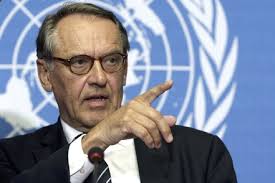
IPSI Advisor and UN Deputy Secretary General Jan Eliasson thinks "that the world needs to do a better job in addressing interrelated social, economic and environmental problems."
Read Article >>
___________________ |
IPSI News

IPSI Advisor John Prendergast uncovers video evidence of abuses and torture in the Nuba Mountains of Sudan.
Watch Video >>
___________________ |
IPSI News

IPSI President Cameron M. Chisholm writes jacket blurb for new book: Social Entrepreneurship in the Age of Atrocities.
Learn More >>
___________________ |
IPSI Leadership
Cameron M. Chisholm Dr. I. William Zartman
Dr. P. Terrence Hopmann
George Foote Alexander Little
Kevin Melton William Stuebner
Pamela Aall
Ahmedou Ould-Abdallah
Betty Bigombe Dr. Francis Deng
Jan Eliasson
Gareth Evans
Dr. Ted Robert Gurr
Amb. Jacques Paul Klein
Peter Kyle
Dr. Jean Paul Lederach
Jeffrey Mapendere
John Marks
Susan Collin Marks
Dr. Joyce Neu John Prendergast Dr. Valerie Rosoux
Dr. Ruth Wedgwood Dr. Craig Zelizer About Us >> ___________________ |
|