|
FUN FOOD FACTS
Eating about 20 tart cherries per day can reduce inflammatory and headache pains.
There are about 7,000 cherries on an average tart cherry tree.
It takes 24 to 26 hours for a hen to produce an egg.
About 240 million laying hens produce about 5.5 billion dozen eggs per year in the USA.
Each man, woman and child in America eats an average of 46 slices (23 lbs.) of pizza per year. Approximately 3 billion pizzas are sold in the US each year. Pepperoni is America's favorite topping found on 36% of all pizzas sold.
from the Ag Council of America
|
|
CONSUMERS CLAMOR FOR "LOCAL" FOODS
Optional Link
Much has been made in the mainstream press about growing consumer interest in food and beverage products and restaurant menu items featuring local ingredients. Mintel International conducted a survey of 2,000 adults in 2012 and found that 52% of US consumers say buying local produce eclipses purchasing organic in importance. Mintel noted in this survey that most produce travels some 1,500 miles from where it is grown to where it is consumed.
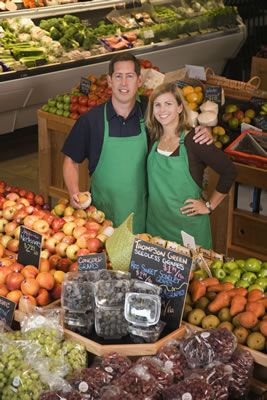
While the definition of what is considered local is rather loose, this trend poses a challenge for large food and beverage manufacturers as well as restaurant chains who rely on vast global supply chains. Chipotle Mexican Grill and Wal-Mart Stores Inc. are establishing business models that allow them to succeed in the local niche.
Chipotle plans to serve more than 15 million pounds of locally grown produce in 2013 and defines local produce as growing 350 miles or nearer to the restaurants where it is served.
Wal-Mart is incorporating regional brands into their stores and is working with local produce growers to streamline its supply chain and ensure the products on its shelves are fresh. Wal-Mart buyers and sourcing agents are in the field working closely with local farmers and buying directly from them. Wal-Mart is also training its employees to recognize a fresh product versus one that may be beyond its shelf life.
While some large companies may not be able to market and sell local products, they may be able to redefine local as "fresh", in much the same way Wal-Mart is focusing on fresh produce. If you don't do local, it does not mean you can't do fresh. There are opportunities for larger processors and chains in this area.
from FOOD BUSINESS NEWS - JULY 16, 2013 - Keith Nunes
|
|
 |
|
|
TOP FOOD TRENDS AND DRIVERS FOR 2013
PART 1
The food industry has always been dynamic and fluid but recent years have seen some dramatic changes in the areas of weather influences, the economy and consumer demographics and preferences.
Early in 2012, many industry sources were talking about how the weather and the economy would impact food production and prices. Little did they know just how big that impact would be! 2012 brought the worst drought that the country has seen in 50 years and created havoc on over 60% of all of the farmland in the United States.
The USDA has predicted that food prices will continue to rise for many years to come. Even modest food price increases will affect many. Almost one-third of Millennial (50+ million people born between 1978 and 1994) have difficulty affording their weekly groceries. Food prices will also have a huge impact on America's "middle class" (households with incomes from $38,000 to $110,000 per year) which has seen their net worth plummet almost 40% from 2007 to 2010. As of August 2012, over 45 million Americans were enrolled in the USDA's SNAP (Supplemental Nutrition Assistance Program) and received monthly benefits.
All is not doom and gloom, however. There are definite, sustained trends that continue to drive the food industry to higher levels of efficiency and profitability.
#1 WE STOP WASTING FOOD! The National Resource Defense Council (NRDC) estimates that about 40% of all food in the United States goes uneaten. That is about 20 lbs. of food wasted per person per month. It is time to educate and empower supermarkets, food companies and consumers to think about this problem and to change our behaviors.
#2 SNACKING TAKES THE SPOTLIGHT. Researchers at Auburn University and Beijing University published a study in February 2012 in the Journal of the Academy of Nutrition and Dietetics that reported "A key finding is that people who eat snacks have healthier diets". Snacking has gotten a bad rap and that is about to change. This study was the first to look at how snacking contributes to the overall quality of individual's diets. In this study, snacking was not associated with poorer overall diet quality and did contribute to a more nutrient-dense diet. In 2013, a smaller bites/ more frequent eating pattern that reduces overall portion sizes and increases variety is emerging. Currently, just over half of Americans snack 2 to 3 times per day. As work schedules become more hectic and more flexible, these mini-meals will increase across all generations.
#3 BOOMER FOCUS ON HEALTH & WELLNESS CONTINUES. The Boomer population will control just over 50% of the dollars spent on grocery foods in 2015. The food industry will need to take new approaches to target these consumers who seek quality products, are brand loyal and not particularly price-sensitive and want to stay healthy longer. NPD Group has conducted research in Canada and the United States which shows that nutrition and healthy eating habits are top priorities for the Boomers. In the United States, seven out of 10 Boomers seek more fiber, 60% try to consume less fat and cholesterol, and 40% aim to eat fewer fried foods. The Centers for Disease Control and Prevention estimate that a staggering 79 million Americans over the age of 20 have prediabetes and that an American will have a coronary event every 25 seconds. The American Heart Association projects that by the year 2030, the costs associated with cardiac disease will rise to $389 billion per year. The CDC also found that one-third of adults have high blood pressure. All of these risks can be greatly reduced by taking steps to control diet and exercise. As a result, we can look for heart healthy, antioxidant rich foods including tomatoes, oily fish, green tea, certain vegetables, cocoa, seeds, berries, apples and whole grains to take over the supermarket shelves along with sodium-reduced foods.
from "Facts, Figures & The Future", December 2012 - Phil Lempert
For more information, check out the following links:
|
|
Should You Shut Down Your Computer?
How often have you wondered if you should turn off your computer nightly or weekly or just leave it running 24/7? That question has made the rounds with PC experts since computers came into our homes, schools and offices. With the early versions, there was a definite trade-off between power consumption and stress on components. Turning the computer on or off is the most physically stressful thing you do to it all day so most experts have come to agree that it is better to leave the system on. Today's computers consume power that, at worst, is comparable to leaving a light bulb on, especially with modern Energy Star components, disks that spin down, monitors that shut themselves off and operating systems that know how to manage power.

There are some other issues that should be considered or discarded. First, there has been some talk about exposing your PC to more attacks if you leave it on during periods of disuse. However, if your PC is vulnerable to attack, the answer isn't to stay offline more; you should plug the hole by increasing and improving your security. If it is insecure, it will be insecure while you are using it and that will be plenty of time for someone to compromise it. You should have personal firewall software which is offered by all kinds of reputable security technology companies - McAfee, Microsoft, Norton, Symantec, AVG and others. If you use the Internet, you will be attacked. If you are attacked, then you need to have protection. Windows XP and Windows Server 2003 come with a rudimentary firewall called Internet Connection Firewall which is soon to be upgraded in an upcoming Windows XP Service Pack 2. It won't have all of the features of a third-party personal firewall but it will offer much more control over the security of your system than exists today in Windows out of the box.
Some PC's are loud and you might not want that ambient noise in the background all of the time. Also, PC's can generate heat, although a modern desktop PC, if not actually doing anything, should manage its own power well enough not to heat the room. The Windows operating system, for example, does an efficient job of managing power.
There is also the question of longevity versus the stress of powering computers on and off. Per Nick Stam, technical advisor for PC Magazine and Extreme Tech, there is no hard quantitative data readily available on this but he feels that the stress of startup and shutdown is more of a real-world risk than long life. The part that is seen to fail most often in PC's is the power supply, the part that gets stressed the most at power-up and power-down and also the one with the most mechanical stress on it.
For the latest security news, views and analysis, check out
eWEEk.com's Security Center at http://security.eweek.com
from eWeek - Larry Seltzer
|
DAWSON SALES SPONSORS STUDENT SCHOLARSHIPS
Dawson Sales was a proud sponsor of the IFT Fun Run, held on Monday morning July 15th, during the IFT Annual Meeting and Food Expo in Chicago. This is a 5K/ 3.1 mile run/ walk that starts in Grant Park and is coordinated by the efforts of the IFT Student Association and Feeding Tomorrow. This year's event was a huge success with over 600 runners participating. The Fun Run and Walk raised over $100,000 - a new record for this event!
Dawson Sales Company
2015 Spring Road - Suite 275
Oak Brook, IL 60523
p: (630) 203-8174 f: (630) 203-8171
Articles compiled and edited by Lynne Noren
|
|
|