NACD Newsletter - Volume 7, Issue 6 - December 2014
In this issue:- Getting Things Done: A Tale of Two Employees
- NACD's Preliminary Trial of the inTime Program
- NACD Cognition Coach - Toddlers to Age 3 Now Available!
- Upcoming Evaluation Dates
|
|
Getting Things Done: A Tale of Two Employees by Sara Erling (with Lori Riggs)
|

I am often asked by fellow NACD moms, "How do you do it?" "How do you get it all done?" "Why do you have your kids involved in so many activities?" The easy answer is to say that I am a little crazy. (But I'm really not.) I think it comes down to our different, unique personalities, and how that impacts our approach to life and schedules. I have always been passionate about human behavior, even to the point of getting a degree in psychology. Recently as I have been thinking and reading more and more about different personalities and personality traits, I had an "aha" moment. I have always known that I am more of an extrovert. I am loud and get excited easily. I have a lot of energy (just not past 9 pm, when I turn into a pumpkin). My intensity level is generally always at a "10." But you don't have to be an extrovert to "get it all done." Introverts have their own unique gifts and can often be even more productive. Where I am going with all this is that if we as moms and dads can identify how our personalities work, and then from there develop a plan for what we need in order to be more productive with our kids, ultimately we can be more effective parents. In this article I hope to provide you with some input on how to do just that.
Carl Jung, who popularized the terms "extroverts" and "introverts," believed that we each have some characteristics of both, just that one is generally more dominant. Extroverts, in general, have an intense need for stimulation. (I can enjoy a weekend in Las Vegas.) Extroverts tend to be more outgoing, like a high level of activity, are perhaps more aggressive, and generally are able to make quick decisions. Introverts, on the other hand, function better with less external stimulation, tend to be more contemplative, perhaps reserved, and may have more of a careful balancing of considerations before reaching decisions. Susan Cain, author of Quiet, researched introversion as a personality trait and discovered that while some see it as a weakness, it is actually a strength. In a NY Times interview in 2012, she said, "There are many different definitions that psychologists use [in defining introversion]. One that many would agree with - and that I like - is 'people who prefer quieter, more minimally stimulating environments.' The key is about stimulation: Extroverts feel at their best with and crave a high degree of stimulation. For introverts the optimal zone is much lower."
So here is my life as an extrovert: I have three kids. I have worked for NACD for over 16 years, starting before I was a mother. When kids came along I was neither able nor willing to completely give up my career. My husband and I rely on my income, and I love working for such an amazing organization. Fortunately, I work for a company who believes that mothers and fathers should play an active role in their child's development. Over the past 11.5 years, Bob has let me change roles, stop traveling, or increase my traveling, take my babies with me to different locations while I was still nursing them, etc. In turn, my babies have been videotaped many times, (three of my babies are who you see in the program videos), they have been guinea pigs, and they have each been on program since they were born. They still do program. I am able leave at 3:00 every day in order to be at home with my kids. (For those of you who work and are also trying to fit things in, I encourage you to talk to your boss. Is it possible to come in later in order to work with your child and then stay later, or vice versa? Is it possible to telecommute or do some work from home? More often, employers are letting moms and dads have a bit more flexibility, which in turn creates happier employees. Happy employees can also be more productive employees.)
Jump ahead 11 years, and here I am... a full-time working mom to three kids: Michael is 11, Marc is 9 (almost 10), and Elle is 5. I travel for work most months, and my husband also travels with his job as a golf coach for Weber State University.
Click here to read the rest of this article |
 |
NACD's Preliminary Trial of the inTime Program
by Lori Riggs, M.A., CCC/SLP
|
Introduction
 The National Association of Child Development (NACD) has many years of experience of using and developing sound-based programs with clients for the remediation of auditory-related issues. From Tomatis to Berard, Joudry, Samonas, and The Listening Program® (TLP), we have gathered observations and information about our clients' responses to auditory programs for a period spanning many programs and more than 30 years. Always seeking more effective ways to benefit our clients, we have investigated new programs as they became available over the years of evolution of this field of sound therapy. The National Association of Child Development (NACD) has many years of experience of using and developing sound-based programs with clients for the remediation of auditory-related issues. From Tomatis to Berard, Joudry, Samonas, and The Listening Program® (TLP), we have gathered observations and information about our clients' responses to auditory programs for a period spanning many programs and more than 30 years. Always seeking more effective ways to benefit our clients, we have investigated new programs as they became available over the years of evolution of this field of sound therapy.
With NACD having put together the development team for the creation of the original TLP, we have been using ABT's TLP (Classic, then Level One) with great results since its release in 1999. Literally hundreds of individuals have shown improvements in auditory processing and related areas with our use of the program.
Based on our vast experience with sound therapy in general, but specifically TLP, we were interested in the release of ABT's newest program, inTime, for two primary reasons: 1) It targets specific frequency ranges as TLP does. However, instead of employing low-pass and high-pass filters to achieve this, target frequencies are achieved by the choice of instrumentation. Only instruments whose resonant characteristics include a fundamental frequency that falls into the target range are used. 2) It incorporates rhythm (primarily through percussion instruments) as its primary sound bed. There is currently a quickly growing body of research that underlines the significance, importance, and effect of rhythm on function-motor skills, attention, cognition, speech and language. The work of Nina Kraus at Northwestern University, researching the effects of music and music training on language development, has especially been of interest to NACD, as we continue to use and develop auditory therapies.
NACD had a group of our clients use ABT's trial version of the inTime program to gather information regarding their opinions of the program and their perception of its effectiveness for their children. We were also interested in comparing this to what our observations have been with the use of TLP. It was understood that this was an informal study for the purpose of gathering anecdotal information.
Method
37 NACD clients agreed to participate in the inTime trial. Criteria for inclusion were: 1) currently on a home program through NACD 2) previous use of TLP 3) had the recommended headphones for the program. Before starting the program, parents had an initial phone consult to discuss their goals for the program and the correct implementation. They were instructed to have their child listen via headphones to two 9-minute sessions daily, 5 days per week. The 8-week trial version of inTime contained 50% of the content of the full inTime program.
Listeners could sit and listen quietly or could move along with the music as desired. A follow-up call was conducted after 4 weeks to see if the participants wanted to continue for another 4 weeks. (100% of those asked did want to continue.) At the conclusion of the trial, listeners' parents answered questions regarding how they liked the program, what they liked and disliked about it, what changes, if any, they observed, and how they felt it compared to their experience with TLP.
Results
Of the 37 who agreed to participate in the trial, 27 are known to have completed it. Therefore the group discussed in the remainder of this paper will refer to these 27 individuals. Of the remaining 10, three are still in the process of completing the program at the time of this writing, two have not responded to inquiries regarding their status, one was unable to complete it due to technical problems, one never started the program, two children refused to cooperate for listening, and one completed the program but was not included because their implementation was not consistent with the rest of the group.
Participants ranged in age from 3 to adult, with the majority falling into the 7-11 range. All had completed TLP previously. Diagnoses of participants included: developmental delay, Down syndrome, apraxia/dyspraxia, autism, agenesis of the corpus callosum, and neurotypical. It was felt that the group was representative of the type of NACD clients who generally use TLP.
Click here to read the rest of this article |
|
NACD Cognition Coach - Toddler to Age 3
by Laird Doman
|
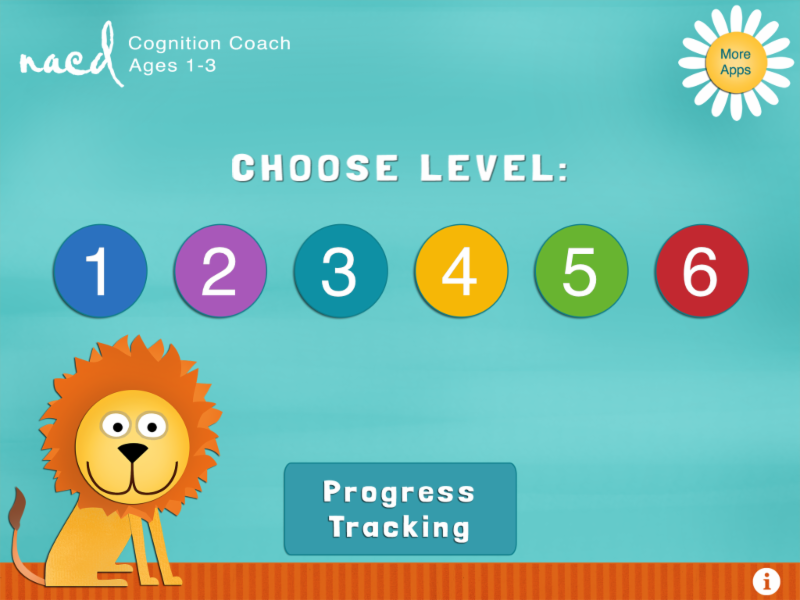
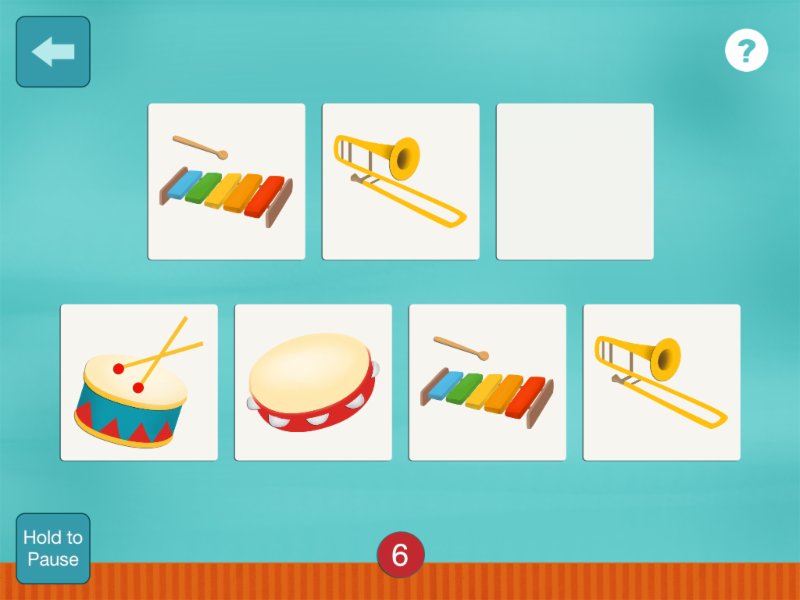
We have been receiving some great feedback from families using our new cognition/processing app. Families are reporting that the children are really enjoying the app and progressing very well through the six levels.
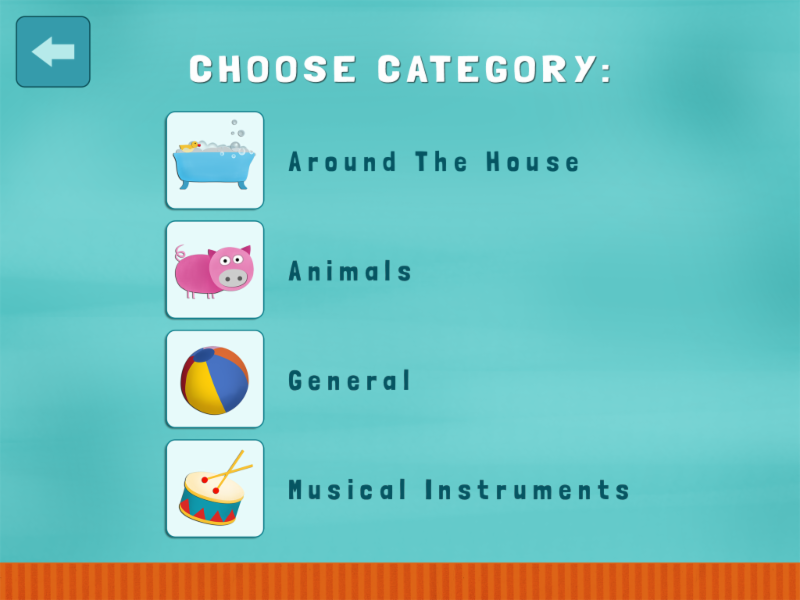
This app teaches children how to identify pictures and how to pick a picture given a verbal cue, and then progresses to teaching them how to make a choice given two options, then two from a field of three, and three from a field of four. As all of our NACD families know, processing is the foundation of receptive and expressive language and all cognitive abilities. Processing, short-term memory, working memory, executive function and long-term memory--all of the pieces that permit us to function and achieve our innate potential--are our keys to success.
Watch for our Simply Smarter Preschool and Elementary apps to be released soon!
To see the Simply Smarter Toddler app in the iTunes store, click here:

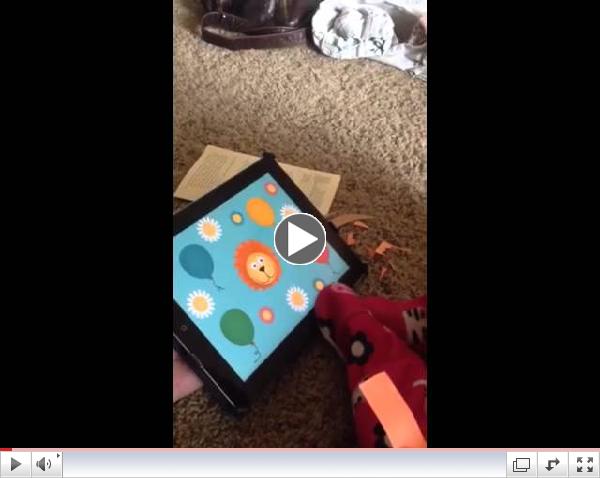 | |
This video was sent to us by our first fan of the Cognition Coach Toddler app--cute little Siena!
|
|
|
|
|
|
UPCOMING EVALUATIONS
January 2015
Los Angeles, CA
St Louis, MO(Skype)
Cincinnati, OH (Skype)
Phoenix, AZ (Skype)
Dallas, TX
Ogden, UT
February 2015
International (Skype)
London, UK (Skype)
Romania (Skype)
Pennsylvania, PA
New Jersey
Charlottesville, VA
Seattle, WA
Bay Area, CA
Ogden, UT
Dallas, TX
March 2015
Orlando, FL
Atlanta, GA
Ogden , UT
St. George, UT
Chicago, IL
Minneapolis, MN
Canada (Skype)
Dallas, TX
Little Rock, AR (Skype)
For more upcoming evaluation dates, please check our website.
|
NACD - The National Association for Child Development
549 25th Street - Ogden, UT 84401
801-621-8606
|
|
|
|
|
|