|
On Mastery
Interesting Nugget
Our society doesn't promote mastery- it's about immediate gratification, constant climaxes of experience with the good life as exciting, happy moments we can post on Facebook. But the path to mastery isn't usually Facebook-worthy. It's long hours of deliberate practice that often doesn't reward with any high moments of ecstacy. It's staying the path day-in, day-out.
From the book, Mastery: The Keys To Success and Long-Term Fulfillment, George Leonard talks about three different paths people often take instead of mastery.
The Dabbler- approaches each work opportunity, activity or relationship with lots of enthusiasm, enjoying the initial rush of newness, but once there is a plateau, is often onto the next thing.
The Obsessive-is a competitive, goal-oriented person who wants to get it right the very first time trying it. They want success each time, with no patience for the inevitable plateau and tries to power through it, not seeing the value of needing times of both growth and recovery. They often quit from burnout.
The Hacker-looks to get some initial competence, but then is happy to hang out in that space with others who are also hackers. There is little discipline toward long-term improvement, because it's just too much work.
Contrast this with the Master. There is a lot out there on what cultivates mastery, and much of it boils down to two factors: passion and time. You need to put in a lot of hours on the plateau where you can't see visible improvement (some say 10,000 hours), and you likely just won't put the hours in if you don't love it. I like the simplicity of this approach, but simple doesn't mean it's easy, and getting yourself to the mat to practice is what makes the most significant difference.
|
Reflection Exercise
Moving from Theory to Action
To support you on your path to mastery:
1. Where have I attained mastery (or on the path to mastery)?
2. Which alternate path to mastery (dabbler, obsessive, hacker) is most like me?
3. Does my approach differ in different domains (i.e: obsessive at work, but hacker in love relationships)?
4. Where would I like to gain more mastery? (This is not a simple question- this is about passion and purpose!)
5. What action would I like to take based on this exercise?
|
Book Review
Mastery: The Keys To Success and Long-Term Fulfillment
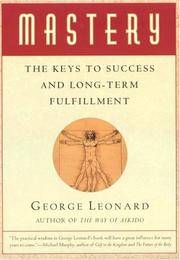
This gem of a book has been around since 1991 and was one of the first books I read as I began my journey of personal development and coaching. It illuminates the path of the master, the five keys of mastery, and tools for mastery. What I appreciate about it is its elegance and simplicity. One could say it's masterfully written- just the essentials with the right number of examples to make it come alive, without a lot of extra words and repetition. It's an inspirational little book that I've read several times. I encourage you to get it for yourself, too.
|
 Kerry Secrest is a leadership coach for individuals and organizations who inspires the best in individual and organizational performance. Kerry Secrest is a leadership coach for individuals and organizations who inspires the best in individual and organizational performance.
For more about Kerry, click here:
Please feel free to contact me with comments, questions or to find out how I can support you or your organization!
Watershed Coaching, LLC
904 Upper Dummerston Rd.
Brattleboro, VT 05301 · 802-451-0842
|
|