Quarterly Quote:
"You are a product of your environment. So choose the environment that will best develop you toward your objective. Analyze your life in terms of its environment. Are the things around you helping you toward success -- or are they holding you back?"
|
Join Me for a Workshop:
Take Your Gloves Off and Get Your Head Out of the Sand: Finding a Better Way to Deal with Conflict!
Wednesday, February 13th 7:30-9:30am
Society for Human Resource Management
Keene, NH
|
Reviews
"Sending you an enthusiastic thank you for a great presentation; as an immediate result of the time you spent with us I now feel better able to handle interpersonal relationships at my site and I feel as though I have a new set of tools at my disposal."
-Participant
Navigating Difficult Conversations workshop
|
Great Link!
Here's a short clip from Brian Wansick's research on how our environment impacts our eating choices more than we think: (5:43)
|
 | | Mindless Eating and Environment |
| |
|
|
New Group Begins Bennington County Fall, 2013!
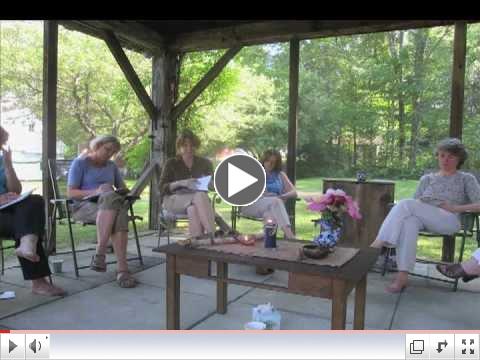 | |
The Women's Leadership Circle of Vermont
|
Run time: 4:48 min
|
Your Thoughts?
Engaging in dialogue
I'd love to hear your reactions and thoughts to this newsletter. To drop a note: click here:
|
Receive the Newsletter:
If this was forwarded to you and you'd like to receive it in the future, please click below:

|
|
|
Greetings!

Happy New Year! For many of us, January is New Year's Resolution time, and by now, after about a month, we often begin to see enthusiasm wane, and our good intentions fade away, and we become disappointed at ourselves yet again. You might be blaming yourself for your lack of willpower, and indeed, research shows that willpower gets depleted throughout the day. Therefore, I am interested in this year looking at how I can shift my environment so that I get better results, without having to use as much effort. Sound too good to be true? Let's check it out!
Warmly,
Kerry
|
|
|
Using Your Environment to Support Goals vs Willpower
A Distinction
Brian Wansick at Cornell University studied 168 moviegoers who ate either fresh or stale popcorn from different size containers. What he found is that people ate 45 percent more fresh popcorn from extra-large containers than large ones, and the people who were eating stale popcorn ate 34 percent more from the extra-large buckets than people eating fresh popcorn from large buckets. The lesson? The size of your bowl, plate and glass all matter in determining how much you'll eat. In fact, according to Wansink's research, we eat 92% of what's on our plate regardless of the size.
So what does this mean for our New Year's resolutions? Well, a lot actually. We tend to put a lot of pressure on "willing" ourselves into new behavior, but we don't often look at our environment to see what shifts we can make to passively encourage new choices. As an example, in my commitment to wanting to be more focused on my girls in the evenings, I realized that the temptation of checking emails was high, so I created a practice of shutting down my computer at night and leaving it upstairs in my office. I found I hate waiting for the computer to turn on and sneaking upstairs for a quick look wasn't easy, so I stopped. For the most part, my evenings are technology-free now. The general mantra is to keep good things close and convenient and bad things distant and difficult.
So that's why they say to get dressed as if you were going to work when you're looking for a job, because clothing actually creates a micro-environment and you are likely to be more productive and in a different mental state than if you are in your PJs. Cut up credit cards and use cash if you're working on reducing spending. Reserve a few non-refundable hotels for weekends away with your partner if you want to spend more quality time together. Move your alarm clock to the other side of the room if you want to get up right when it goes off. What might be helpful to you?
|
Reflection Exercise
Moving from Theory to Action
To support you in identifying environmental cues to support your commitments, please consider journaling on the following questions. These prompts are adapted from Change Anything (see book review).
1. Build fences- What rules can I create to help me? (eg., close your office door for one hour a day when you do your deepest mental work).
2. Manage distance- What can I do to keep good things close to me and bad things difficult? (eg., get rid of junk food in the house and buy your favorite fruit and keep it where you'll see it).
3. Use reminders- Are there cues that can help you remember your commitment? (eg., actually put in your workouts into your work calendar so that you can see when you're going to go to the gym).
4. Engage your autopilot- Are there standing commitments you can set up once that can then become automatic? (eg., weekly project meetings Tuesday at 10am for the next six weeks to make sure you stay on task).
5. Use tools- While technology tools can often be a distraction, can you use your phone, computer, and other objects to support your commitments? (eg., change your email settings so you only get it once an hour or get a dog to help you get more exercise).
|
Book Review
Change Anything: The New Science of Personal Success Power
Kerry Patterson, Joseph Grenny, David Maxfield, Ron McMillan, and Al Switzler 
This award-winning team of writers does it again. What I like about Change Anything is that it breaks down how we make change happen from six main sources: 1. Love what you hate- learn to like the changes you make; 2. Do what you can't- learn the skills through deliberate practice in order to make the changes you want; 3&4. Turn accomplices into friends- we all have people in our lives who sabatoge our best efforts- turn them into supporters. 5. Invert the economy- by bribing yourself and raising the cost of bad behavior you can actually get yourself to act in ways you want 6. Control your space- use the environment to become an ally for the change you want rather than a barrier.
It's an engaging book, with good examples and really breaks down the change process which will increase your likelihood of success! (Their book Influencer does the same thing in an organizational context).
|
 Kerry Secrest is a leadership coach for individuals and organizations who inspires the best in individual and organizational performance. Kerry Secrest is a leadership coach for individuals and organizations who inspires the best in individual and organizational performance.
For more about Kerry, click here:
Please feel free to contact me with comments, questions or to find out how I can help you or your organization!
Watershed Coaching, LLC
904 Upper Dummerston Rd.
Brattleboro, VT 05301 · 802-451-0842
| |
|
|
|
|
|
|

