|
School Social Work NOW!
Supporting Innovative Practice,
Effective Leadership, and Applied Research
Vol 5, Issue 24
|
|
Abstract: Classrooms are not culturally neutral terrains, but rather are constructed around sets of norms, values, and expected behaviors that are culturally bound. Low tolerance levels and expectations are an indication of the incongruence between the education strategies utilized by teachers and the cultural and linguistic differences of students that are served in an educational system in which they are required to perform based on standards that are not similar to their own. Combining Positive Behavior Intervention Supports (PBIS) with cultural and linguistic variables will help to enhance positive behavior of culturally and linguistically diverse (CLD) students. This paper describes Culturally Responsive Positive Behavior Intervention Supports (CRPBIS) as a system that specifically acknowledges the presence of CLD students and the need for them to find relevant connections among themselves and with the behavioral goals and objectives that schools ask them to perform. Suggestions are offered that support the infusion of culturally responsive practices throughout the implementation of PBIS. Access article.
This white paper addresses the integration of two common approaches to improving school climate and school connectedness: bullying prevention (BP) and restorative practices (RP). Specifically, the paper focuses on the compatibility of the Olweus Bullying Prevention Program (OBPP) and common approaches to RP in schools. OBPP was selected as the focus of this paper because it is one of the most researched and widely implemented BP programs in the United States. In addition, the principles and key components of the OBPP are reflected in many federal guidance documents on bullying prevention in schools.
...[it] was written to provide guidance to educators and policymakers who are interested in linking evidence-based bullying prevention strategies and restorative practices in schools. Access white paper.
... Psychologists use the term "cognitive distortions" to describe irrational, inflated thoughts or beliefs that distort a person's perception of reality, usually in a negative way. Cognitive distortions are common but can be hard to recognize if you don't know what to look for. Many occur as automatic thoughts. They are so habitual that the thinker often doesn't realize he or she has the power to change them. Many grow to believe that's just the way things are.Cognitive distortions can take a serious toll on one's mental health, leading to increased stress, depression, and anxiety. If left unchecked, these automatic thought patterns can become entrenched and may negatively influence the rational, logical way you make decisions. Read more.
|
|
|
 |
|
...[Y] ou can learn the essential skills you need to be an exceptional leader, a valued team member, and an outstanding contributor in the workplace. But, with hundreds of skills available, which ones will make the biggest difference for you? Find out with this five-minute quiz!
It is inevitable that social workers will be pressed into leadership roles. They get appointed to positions of responsibility. They initiate community projects. They coordinate teams of stakeholders on behalf of clients.
Leadership is not usually an explicit part of the social work curriculum, but many of the skills transfer aptly to leadership roles. A basic understanding of the nature of leadership can provide the presence of mind to bring these skills into play.
... There are many misconceptions about what is essential to effective leadership. Most misperceptions derive from observing the "trappings" of leadership. Continue. |
Abstract: The overwhelming majority of published scholarship on urban high schools in the United States focuses on problems of inadequacy, instability,under performance, and violence. Similarly, across all schooling contexts, most of what has been written about young men of color continually reinforces deficit narratives about their educational possibility. Taken together, images of Black and Latino male students in inner-city schools often manufacture dark, hopeless visualizations of imperiled youth and educational environments. Using photographic data from a study of 325 college-bound juniors and seniors attending 40 public New York City high schools, this article counterbalances one-sided mischaracterizations of young men of color and the urban schools that educate them. Specifically, visual sociology and critical race methodologies are used to construct antideficit
|
|
Recommended Read for April
|
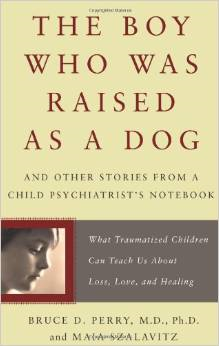
recommended by reader Mallory Knipe, SSW, Black River Falls, WI
The Boy Who Was Raised as a Dog and Other Stories from a Child Psychiatrist's Notebook: What Traumatized Children Can Teach Us About Loss, Love, and Healing
By Bruce Perry, Maia Szalavitz
What happens when a young brain is traumatized? How does terror, abuse, or disaster affect a child's mind--and how can that mind recover? Child psychiatrist Bruce Perry has helped children faced with unimaginable horror: genocide survivors, murder witnesses, kidnapped teenagers, and victims of family violence. In The Boy Who Was Raised as a Dog, he tells their stories of trauma and transformation through the lens of science, revealing the brain's astonishing capacity for healing. Deftly combining unforgettable case histories with his own compassionate, insightful strategies for rehabilitation, Perry explains what exactly happens to the brain when a child is exposed to extreme stress-and reveals the unexpected measures that can be taken to ease a child's pain and help him grow into a healthy adult. Through the stories of children who recover-physically, mentally, and emotionally-from the most devastating circumstances, Perry shows how simple things like surroundings, affection, language, and touch can deeply impact the developing brain, for better or for worse. In this deeply informed and moving book, Bruce Perry dramatically demonstrates that only when we understand the science of the mind can we hope to heal the spirit of even the most wounded child.
|
|
Suspended for WHAT?
Millions of students across the country are being suspended, expelled and arrested in school for minor infractions, like being late or violating a dress code. Schools are enforcing excessive and harsh discipline practices that push students out of the school system completely, and disproportionately affect students of color, LGBTQ students, and students with disabilities. DoSomething.org, the nation's largest organization for young people and social change, has teamed up with the Dignity in Schools campaign to create Suspended for WHAT? During the Week of Action (April 27 - May 1) thousands of young people will be creating an artistic expression of their own experiences, amplifying the stories of others who have been directly impacted, and advocating for change in their own community by speaking with their school's administration. Learn more.
...confusion is especially understandable given that research in both fields suggests some similar outcomes for students: increased academic achievement and well-being, less risky behavior, and better relationships with peers and teachers. SEL and mindfulness, in fact, are two separate areas -- that work great when taught and learned together. Thus, choosing one over the other may not actually be the best choice...
But how can they be integrated? The answer is that one works from the outside-in--and the other works from the inside-out. When the two come together in the mind of a student, the effect can be powerful. Read more.
|
ACSSW is very pleased to offer an opportunity for any school social worker to earn 1.5 FREE CEUs due to ACSSW's sponsorship of an excellent program:
Plan, Prepare, Prevent: The SOS Online
Gatekeeper Training Module
The SOS Signs of Suicide® Prevention Program is an award winning, nationally recognized program designed for middle and high school-age students. The program teaches students how to identify the symptoms of depression and suicidality in themselves or their friends, and encourages help-seeking through the use of the ACT® technique (Acknowledge, Care, Tell). This course is available free to school social workers. With sponsorship from ACSSW, all learners will receive 1.5 contact hours upon completion. Click to Learn More. Or to register call 781-239-0071 or email SOS Registration and mention that you'd like to register.
Columbia University Teachers College Press published 4 guides geared to support teachers, administrators, student personnel staff, and parents. For a limited period, and as supplies last, TCP has agreed to provide FREE copies of the guides to social workers and educators working with military kids in schools including: teachers, school administrators, PPS workers, and military parents. School social workers should be aware of this wonderful, time-limited, FREE offer from TCP. Many school social workers will benefit from these guides.
The process is simple. Each individual desiring a free book would need to click on the link, select the type of book s/he desires, and fill out name, mailing address, etc. on the Qualtrix form after selecting the book desired. The book will be mailed in a few weeks.
|
|
School Social Work Positions
|
Continued - listed by state abbreviation
|
Bethel, AK
Nome, AK
Tucson, AZ
Connecticut (various)
Boise, ID pool
|
Barrington, IL Summer
Chicago, IL
Tinley Park, IL soc/emot coord
DeSoto, KS
Topeka, KS
Wichita, KS
|
Las Vegas, NV
Clark, NJ
|
|
Death and grief will affect the lives of almost all children at some point, often leading to struggles with academic performance, social relationships, and behavior. The death of a loved one is immensely challenging for anyone, but children and teens can find it particularly difficult. Scholastic.com, through the generosity of the New York Life Foundation, hosted a live, interactive webcast on the subject of Children and Grief. Using actual scenarios from children and parents, childhood grief expert, pediatrician, and author Dr. David Schonfeld, MD, and Chris Park, president of the New York Life Foundation, talked about misconceptions, and imparted valuable advice on how educators and all other caring adults can best support grieving children-whether it's right after the loss or years later. Download webcast.
Archived by SAMHSA & KSOC-TV
Various Archived Webinars from the Center for School Mental Health, University of Maryland
|
SchoolGrants
SchoolGrants was created in 1999 as a way to share grant information with PK-12 educators. Grant writing can be intimidating to those who are new at it. SchoolGrants helps ease those fears by providing online tips to those who need them. Finding suitable grant opportunities requires a great deal of time and research - SchoolGrants reduces the effort by listing a variety of opportunities available to public and private nonprofit elementary and secondary schools and districts across the United States. Sample grants are available as well as the opportunity to sign up for a listserv and newsletter. More info.
(for students affected by MS)
Deadline: April 30, 2015
2nd Quarter Deadline: June 30, 2015
Grants of up to $1000 are available for "innovative programs, events, or projects" from the Meemic Foundation for Michigan, Wisconsin or Illinois. Apply online using their easy application that takes less than 30 minutes to complete. These grants are open to any employee of a K-12 public or private school. Universities and colleges may also apply. Fill-in-the-blank application.
Grants are accepted year round, but the second quarter cycle ends June 30th. Grants are up to $1000. Recipients will be notified by August 15th.
The foundation says it supports "basically anything that supports teachers and enhances the student's educational experience" - from field trips to books to behavior modification programs; science, music, or art equipment to professional development.
|
|
|
|