|
School Social Work Now!
Supporting Innovative Practice, Effective
Leadership & Applied Research
November 2012 - Vol 3, Issue 11 |
|
|
|
|
|
| Greetings! | |
The holiday season is officially upon us. Now that we're satiated with turkey and stuffing, it is time to think about sugar plum fairies. Some see the weeks ahead as holiday time, some see it as religious holy day(s). Unfortunately, some see it as a time of extreme loneliness and isolation.
During the coming weeks, as you travel through your days, please take note of these folks, help when you can. But also be sure to take care of yourself and your family. Sometimes we are so focused on helping others that we forget that we, too, need replenishing. Be kind to yourself. Don't overstress. The kids don't really need that extra game. They need you.
Newsblast! Persons who attended the ACSSW 2012 Summit or the Midwest School Social Work Conference in Wisconsin in November can join or renew membership with ACSSW between now and January 31, 2013 at a special rate of $75, a savings of $35!! Students and retirees still enjoy a low $60 rate. AND names will be put into a drawing 5 times for a Color Nook, a retail value of $139. Who can't use such a useful prize? Don't delay. Take advantage of this great offer now!
New and renewed members also will receive a membership packet that includes a professional book by Dr. Cynthia Franklin, a 2013 School Social Work Week poster, a list of resources, and other goodies. So what are you waiting for? Join online (scroll to bottom of page) or download the online brochure now and mail or fax it to ACSSW today!
ACSSW is making some changes. This newsletter is a member benefit which has been sent to non-members for limited periods of time in order to show non-members some of the benefits of membership. It is now time to ask non-members to make a decision to join if they want to continue receiving the newsletter. Doesn't it make sense to act now?
*******
Lastly, please like us on Facebook and tweet us on Twitter! Join our group on Linkedin. Help to "spread the word" and get the name of ACSSW out there! Links are below.
Judith Kullas Shine
President |
|
ACSSW Conference in New Orleans
February 18-19 | |

SAVE THE DATES!!
ACSSW -- Louisiana Conference
The Science & Art
of School Social Work
February 18-19, 2013
Tulane University, Lavin-Bernick Center, New Orleans
Holiday Inn Superdome Accommodations
Refer to American Council for SSW for the special rate of $109, single through quad. Reserve early. Deadline is January 25, 2013. Rooms are limited due to other conferences in the city. Reserved rooms may be cancelled up to 3 days prior to arrival without penalty. Call 1-800-535-7830 and mention the American Council for School Social Work (group code: ACS). Online reservations.
2013 NOLA Conference Brochure
Team discounts are available for groups of 3 or more from the same district. |
|
Recommended Read for November | |

Hot Off the Press!!
Supporting and Educating Traumatized Students
A Guide for School-Based Professionals
eds. Eric Rossen & Robert Hull
Combining knowledge of the cognitive and behavioral effects of trauma, evidence-based interventions, educational best practices, and the experiences of veteran educators, Supporting and Educating Traumatized Students: A Guide for School-Based Professionals presents a new framework for assisting students with a history of trauma. Designed specifically for busy educators who work with traumatized students daily, this volume brings together practitioners, researchers, and other experts with backgrounds in education,school psychology, school nursing, school social work, school counseling, school administration, clinical psychology, resilience, and trauma studies to examine the impacts of numerous traumatic experiences on school-aged children and youth. The book provides practical, effective, and implementable strategies and resources for adapting and differentiating instruction, modifying the classroom and school environments, and building competency for students affected by trauma.
|
|
Come on . . . Follow Us!! |
|
|
|
|
|
Practice Points | |

Proposed Changes in DSM-V: Interview with Micki Washburn, LPC-S and Danielle Parrish, Ph.D.
There's an old saying, "What's the fastest way to cure mental illness in an entire group of people? Get rid of the diagnosis." The proposed changes to DSM-5 get rid of some diagnoses and add others. But that's not all. If you're like me, you have lots of questions about changes to DSM-5. Read the podcast transcript or scroll down to the MP-3 link (about 20 minutes) in the transcript text.
Anticipating Challenges: School-based Social Work Intervention Research
Authors: Mishna, F., Muskat, B., & Cook, C.
Journal: Children and Schools
Year: 2012
Abstract: Intervention research is vital for social work, as it aims to develop practice/program approaches and provide evidence to understand which interventions are effective and for whom. Despite growing attention, little social work research exists that evaluates interventions. Among the reasons for the dearth of intervention research within social work are the challenges associated with the longitudinal, large-scale, and rigorous nature of intervention research. Further challenges face social work researchers carrying out intervention research in schools. This article reviews challenges to conducting intervention research, including building community partnerships while managing differing procedures and philosophies, and obtaining support at multiple levels; recruiting and retaining sites and participants; attaining sufficient physical space and time; providing staff training; involving staff at all levels of the research; and disseminating jargon-free results. This article includes a case study involving a research project that evaluated a school-based intervention designed to improve the self-advocacy of middle school students with learning disabilities. Using the case study, the authors discuss challenges, which were addressed both in anticipation of the specific difficulty and as they appeared. The main factors that allowed the project to continue despite barriers were the strong and enduring relationships among the partners and their commitment to the project goals. (No active link to full article available.)
Mindfulness, Self-Awareness and Self-Care for Social Workers
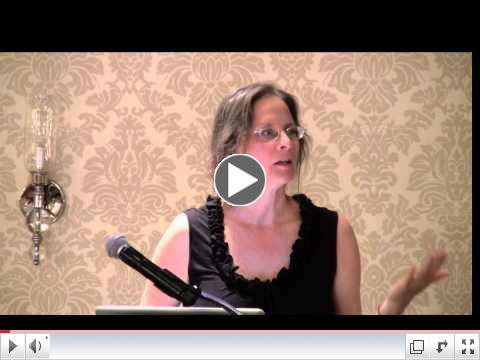
This is Part 3 of 3 from the UW School of Social Work-2012 Agency Supervisors Workshop which was held in Madison, WI, on September 12, 2012.
Measuring Violence-Related Attitudes, Behaviors and Influences Among Youths: A Compendium of Assessment Tools
This compendium provides researchers and prevention specialists with a set of tools to assess
violence-related beliefs, behaviors, and influences, as well as to evaluate programs to prevent youth
violence. If you are new to the field of youth violence prevention and unfamiliar with available
measures, you may find this compendium to be particularly useful. If you are an experienced researcher, this compendium may serve as a resource to identify additional measures to assess the
factors associated with violence among youths.
Although this compendium contains more than 170 measures, it is not an exhaustive listing of
available measures. A few of the more widely used measures to assess aggression in children, for
example, are copyrighted and could not be included here. Other measures being used in the field, but not known to the authors, are also not included. Download this free 372 page resource here.
School Discipline and Social Work Practice: Application of Research and Theory to Intervention
. . . School disciplinary practices have received little attention from social work researchers (key exceptions are Dupper, 1994 and Dupper & Meyer-Adams, 2002). Some school social workers and agency or private practice social workers working with children and adolescents may be unfamiliar with extant research on discipline and not know that although discipline may be doled as a remedy of school problems, it may actually harm children. This knowledge gap may limit social workers' understanding of their young clients and their effectiveness with them. Not being able to consider how school- based factors contribute to young clients' functioning, practitioners may develop overly narrow intervention plans that may help these clients but miss opportunities for greater and larger systems change efforts.
The literature provides three pathways for understanding the iatrogenic effect of school discipline on school children: (1) research and theory pertaining to student misbehavior and other symptoms as psychological sequelae of harmful school discipline, (2) operant conditioning and social learning theories on the ways students may learn misbehaviors as an unintended product of school discipline, and (3) social and political theories that focus on the problematic nature of students'relationship with school in the wake of exposure to discipline. The research and theory provide fertile ground for recommendations to social workers practicing with school children on how they might differentially assess the multiple ways that school experiences may be contributing to the problems that have brought their young clients in for assistance and design appropriate interventions shaped by these determinations. Complete article. |
|
Leadership News | |

Powerplay: Women, Leadership and the Getting of Power
Power is an intriguing, multifaceted concept. The reality is that when we effect change, compete for resources, forge consensus, utilise relationships, strengthen positions, further our team's reputation, or ask for support we are engaging in acts of power and influence.
"Power-over" is implicit in making "power-to" work. Those who take up a leadership role develop some kind of power through which to attain influence over others. Power-over is the capacity to get people to do what they don't want to do due to resources, status, expertise, reward or punishment. Power-to is the ability or potential to bring about change. Empowerment has an assumed good. Power-to recognizes that power is relational and reciprocal. Anyone at any level can exercise power and also resistance. Full article.
Leadership Characteristics That Facilitate School Change
Unfortunately, accompanying the calls for reform in school systems is an underlying assumption that the leadership needed to execute these changes will somehow emerge. As the reforms are implemented, the leadership skills of school administrators guiding these changes have received attention from researchers. Consensus exists on the critical role leaders play. What types of individuals are these leaders who initiate and maintain successful educational changes? Do leaders of educational change share similar characteristics? Which characteristics are unique to specific roles? . . .
The paper begins with a brief review of some key leadership concepts. Next, there is a discussion of the characteristics found to be unique or common in effective educational leaders. Finally, this synthesis concludes with a discussion of the implications of leaders' characteristics on implementing or initiating change within an educational system. More. |
|
Research Highlights | |

Researching the Referral Stage of Youth Mentoring in Six Juvenile Justice Settings: An Exploratory Analysis
As a low-cost delinquency prevention and intervention option that capitalizes on the resources of loca communities and caring individuals, mentoring has emerged as a promising delinquency reduction strategy for at-risk or high-risk youth. In general,
the terms at-risk and high-risk refer to any youth who has a higher-than-normal probability of becoming involved in the juvenile or adult criminal justice system. . . Mentoring programs are suitable for service delivery in multiple forms ranging from popular one-to-one and group/team approaches to peer-to-peer, cross-age and e-mentoring orientations and thus can be customized to a wide range of needs and situations. Full study.
Early Intervention for Autism Effective
A recent study demonstrated that a new early intervention therapy, the Early Start Denver Model, was effective in boosting language skills, cognitive thinking, and social skills in children with Autism as young as 18 months. Read article.
Study: Inclusion May Not Be Best After All
Inclusion is often believed to be the best option for students with disabilities, but a new study calls into question whether or not the practice truly leads to better outcomes long term.
Researchers found that students with autism who spent 75 to 100 percent of their time in general education classrooms were no more likely to complete high school, go to college or see improvements in cognitive functioning than those who spent more time in segregated environments.
The results published . . . in a special supplement to the journal Pediatrics come from a study of nearly 500 young adults with autism who received special education services at public schools nationwide. Read more. Access study. |
|
Survey Completion Request |
You are invited to participate in a brief 20 minute anonymous survey. The Center for School Mental Health at the University of Maryland School of Medicine is conducting this survey (a) to understand the barriers to engaging caregivers in school-based mental health treatment, and (b) to develop best practices for engaging caregivers in school-based mental health treatment. Mental health professionals who provide school-based mental health services are invited to complete this survey. Participation involves completing a 20 minute online survey of mental health professionals' experiences with engaging caregivers in school-based mental health treatment. Your participation in this survey is completely voluntary. In addition, your responses are completely anonymous and confidential. If you decide to participate, you may discontinue participation at any time, or if you feel uncomfortable answering any questions, you may choose "skip" as the answer or you may leave the text box blank. By completing the survey, you are providing consent to participate in this evaluation. Please contact Dr. Nicole Evangelista Brandt at nbrandt@psych.umaryland.edu or 410-706-0980 with questions. Thank you in advance! Go to School-Based Mental Health Survey. |
|
In the News | |
Student Accused of Threatening School Social Worker with Bat & Knife
A New Holland teenager is facing charges after he allegedly threatened a school social worker with a baseball bat and a knife Thursday morning. According to a criminal complaint, the incident unfolded after 19-year-old Jackie [XXX] refused to go to school. Police said he attends the Lancaster County Career and Technology Center.
The social worker, employed by Lancaster County IU-13, came to [XXX's] home after being contacted by his parents, according to the complaint. Police charged [XXX] with aggravated assault and terroristic threats. He was arraigned by District Judge Rodney H. Hartman and committed to Lancaster County Prison in lieu of $50,000 bail. Read more. Be sure to scroll down and read some of the comments!
Teach for America Launches Veterans Recruitment for High Needs Classrooms
"You Served For America, Now Teach For America" aims to bring top military professionals into the country's highest-need classrooms by partnering with branches of the military and veterans' organizations. The initiative will be led by Shaun Murphy, a former U.S. Army staff sergeant and 2009 Teach For America alumnus.
"Joining Teach For America is an opportunity for veterans to put their leadership and skills to work in America's highest-need communities while meeting their desire to continue to serve our nation," Murphy said. Click to continue.
From the Learning First Alliance ... Sequestration
The election may be over, but the fiscal cliff and consequences of sequestration loom large. It may mean up to an ~8% cut in federal funding across the board for our nation's schools. From the perspective of educational leaders, who already struggling to provide more with less, the potential impact is almost unimaginable. As Congress and the Obama Administration continue their talks in efforts to avoid going over the cliff, states and organizations are bracing for the possibility of devastating cuts. Advocacy teams at a number of LFA member organizations have put together toolkits to raise awareness about the issue and to empower their constituents to speak up on behalf of public education.
Check out resources from: American Association of School Administrators (AASA), National Education Association (NEA), National Association of Elementary School Principals (NAESP),National Association of Secondary School Principals (NASSP), National PTA, andthe National School Boards Association (NSBA). |
|
Webinars |
ARCHIVED & AVAILABLE
Young families who are homeless often have unique needs based on both the challenges of trauma and homelessness and their developmental stage. A developmental perspective is essential to tailoring services to meet the needs of this population. During the first session of this course, we will provide an overview of development from birth through young adulthood; child and adult brain development; expected behaviors and responses at each stage; and the impact of trauma on development. Register to access.
Understanding the Impact of Trauma in the Lives of Displaced Children and Families
The prevalence of traumatic stress in the lives of displaced children and families is extraordinarily high. Experiences of trauma can have a significant impact on how families interact with each other and with service providers. In this webinar, participants will learn about the connection between traumatic stress, displacement, and homelessness; the mind-body response to stress and trauma; factors that influence our responses to trauma, particularly cultural factors; and the impact of chronic trauma on all areas of functioning. Register here to access.
Rural and LGBTQ Youth Suicide
The Children's Safety Network released an archived webinar on: Youth Suicide Prevention Community of Practice, Special Populations in Youth Suicide Prevention, and Rural and LGBTQ Youth. Presenters addressed two populations at increased risk for youth suicide and shared strategies to reduce these risks. Speakers also discussed obstacles and barriers unique to rural populations. To download the archived webinar click here.
This Teen Screen Webinar has been archived and is now available for your viewing. Listen to a discussion on the signs and symptoms of eating disorders, the latest treatment strategies, and co-managing these disorders with the clinical team to avoid relapse and achieve a successful outcome. Access archive.
The U.S. Department of Education's Office of Safe and Healthy Students Readiness and Emergency Management for Schools Technical Assistance Center is pleased to announce that the course, Large Events Emergency Management at Schools (K-12 population) is now being offered to provide emergency management training for schools. This course focuses on enhancing emergency management planning efforts throughout districts and schools by providing guidelines, checklists, and specific action items for school officials to consider. For more information and to access this course series, click here. |
|
SSW Job Links | |
New this week: Flint, MI Gages Lake, IL (sub) Linwood, NJ (PT)
North Chicago, IL (sub) Pasadena, CA
Continued this week: Central Falls, RI Cleveland, OH Detroit, MI Elgin, IL
Hartford, CT 13-14 sy New Lenox, IL (Mat Lv) Newark, NJ (HS)
Newark, NJ (MS) Norridge, IL (Mat Lv) West Newton, MA (PT)
Connecticut (Various Locations)
Louisiana (Various Locations)
Dean, LSU, College of Human Sciences & Education |
|
Calls for Proposals |
Request for Abstracts for the Special Issue of Advances in School Mental Health Promotion Journal
Deadline: December 14, 2012
Advances in School Mental Health Promotion (ASMHP) will publish a special issue on evaluating the impact of mental health and other supportive school-based programs (e.g., family support services, mentorship programs, homelessness support) on students' academic and educational outcomes. The aim of this special issue is to present research and theory that examines proximal and distal academic and educational outcomes of School-Based Mental Health and other supportive school-based programs. We are seeking a limited number of empirical studies, theory-driven articles, and/or review papers that address this topic. We expect manuscripts to highlight science-based practice recommendations of relevance to mental health practitioners, school administrators, and/or education policy makers.
If you are interested in contributing to this special issue, we request that you send a detailed abstract (1000 words) by Friday, December 14th, 2012 for initial review. If your abstract is selected, manuscripts will be due March 1, 2013. Papers that are invited but not selected for inclusion in the special issue may be rerouted (with the authors' knowledge and consent) for consideration for publication in ASMHP as regular papers. For more information click here.
To submit an abstract or for additional information, please contact Michael Pullmann with the subject line "ASMHP Call for Abstracts". The deadline for abstracts is Friday, December 14th.
Dissertation Research for the 25th National Symposium on Doctoral Research in Social Work
Deadline: December 31, 2012
The College of Social Work and the Doctoral Student Organization (DSO) at The Ohio State University invites recent Ph.D. and D.S.W. recipients in social work to submit abstracts describing their dissertation research for the 25th National Symposium on Doctoral Research in Social Work held March 28, 2013, in the Ohio Union on the Ohio State University campus.
As part of the College's year long focus, the theme for this year's symposium keynote address will be "Be the Change." Dissertations completed between May 2011 and December 2012 are eligible for consideration. The authors of the selected abstracts will be invited to present their research at the Symposium, where a renowned researcher and scholar will deliver the keynote address. More info and submission guidelines.
Special Issue on School Social Work and Military-connected Schools: New Directions in Practice, Research, Policy and National Leadership
Deadline: February 28, 2013
Guest Editors: Ron Avi Astor, University of Southern California Schools of Social Work and Education & Rami Benbenishty, Bar Ilan University, Ramat Gan, Israel
Children & Schools will publish a special issue on the needs of public schools serving military-connected students. These students experience multiple deployments, family separations, and other stressful life events that their non-military-connected peers do not undergo. Recent studies have shown that supportive schools can shield students from intense depression, conduct problems, feelings of alienation, anxiety, and school failure; however, for schools to serve as protective settings for military-connected students, school personnel need to be aware of both this population's presence and its particular needs. . .
School social workers can take a national leadership role developing and implementing practices and policies that address the needs of military-connected students. . .
The overarching goal of this special issue will be to present articles that describe the current state of school social work knowledge and best practices in military-connected schools and provide insights and implications that will help teachers, principals, school social workers, and other staff better serve military-connected students in the future. Manuscripts examining the perspectives of school staff, students, and parents in military-connected schools and outlining best practices for such schools are encouraged. More information and to submit. |
|
Grants & Funding | |
Free to Tweet Campaign
During a 15-day online celebration of First Amendment rights, high school and college students can win one of five $5,000 scholarships. Beginning at midnight, Dec. 1-Dec. 15, students can tweet their support for the First Amendment with the hashtag #freetotweet, which will enter them into the scholarship competition. Learn more.
Search Tool Helps Users Find Grants to Fund Youth Programs
The Interagency Working Group on Youth Programs has created an online Web Tool that allows users to search for federal grant opportunities by youth topic or federal agency. The tool uses a filter to search for grants that are likely to fund youth programs. To learn more and determine if you are eligible, click here.
Nestle Very Best in Youth Program Grants
The biennial Nestlé Very Best in Youth program was created to spotlight the best in youth leadership by identifying and honoring teenagers in the United States whose community service efforts are making a profound difference in the lives of others. Nestlé seeks to help young people who want to make a difference realize their dreams by donating $1,000 in the name of each winner to the charity of his or her choice. Nestlé also awards the winner a trip to Los Angeles, California, for the Very Best in Youth awards ceremony. More.
NEA Foundation-Nickelodean Big Help Grant
Sponsored by Nickelodeon and the NEA Foundation, NEA Foundation-Nickelodeon Big Help Grants provide up to $5,000 to K-8 public school educators in the United States. The Big Help Grants program is dedicated to the development and implementation of ideas, techniques, and approaches to addressing four key concerns - environmental awareness, health and wellness, students' right to a quality public education, and active community involvement. The grants target these four concerns as areas of great promise in helping students in the twenty-first century develop a global awareness that encourages and enables them to make a difference in their world. Applicants must be practicing U.S public school teachers or public school education support professional. The application process is the same as for the NEA Foundation's Student Achievement grants. Applicants should specify that their request is for the Big Help Grants program in their application. Application deadlines are February 1, 2013 and June 1, 2013. Link to RFP. |
|
ACSSW Activities | |
ACSSW's present activities include:
- increasing research projects and their application within the school environment;
- developing a national school social work role framework paper;
- establishing a National Center for School Social Work Practice, Leadership and Research, a long-term goal,
- hosting the 2nd Louisiana State-wide School Social Work Conference, February 18-19, 2013, in New Orleans, LA, at the Tulane University Lavin-Bernick Center.
- presenting the 4th National School Social Work Research Summit. Watch for details to come.
If you have interest in participating in any of these activities, contact Judie Shine. ACSSW strives to be inclusive and transparent in all of its activities and welcomes, whether lengthy or short, the participation of its members. |
|
|
|
|
|
|







