|
Join Our List
 |
|
FROM THE DOC
|  |
A Quiet Revolution:
I am very conservative when it comes to adopting new treatment protocols in medication. I'm what the drug companies like to term a 'late adopter'. Novel medications are introduced with a great deal of fanfare and splashy advertising, and I tend to turn the other way, because I learned long ago during my training at Hopkins that data is important, but it cannot trump experience.
An example of this can be seen in the new blood thinners that are being advertised now to replace Coumadin (Warfarin), the standard anticoagulant for three generations of patients. These new medication are called DOACS (or NOACS)...which stands for Direct Oral Anti-Coagulants and they are becoming commonplace in TV advertising. You might know their names: Eliquis, Xarelto, and Pradaxa. These medications appear to be superior to Coumadin, based on some large and well-designed scientific studies. More and more data is coming out in support of their use, based on the presumption and early experience and data that suggest they are safer and more effective than Coumadin, and as time goes on, we will have a stronger and more accurate sense if this will be the case. But this entire process takes times, and with time, experience to gain comfort with the use of these medications and their idiosyncrasies, as well as identifying the particular patients that will benefit most from the newer and more novel treatment.
The data is growing, it is encouraging, and if you are using one of these new medications for preventing stroke or blood clots, there is no reason to worry or question their use. I think these medication are likely to replace Coumadin over the long-term, but it's still to be seen whether they provide all the benefits claimed, and I will keep a skeptical eye on the data, making sure that those who begin these medications gain the benefits expected. As well, I don't want our long-time Coumadin patients to 'miss out' on potential benefits of this new treatment strategy.
When I did my surgery rotation long ago in medical school, we were taught never to forget "Perfection is the enemy of the good." If it's good enough, let it be; trying to make it perfect is likely to mess things up. These remain good words to live by.
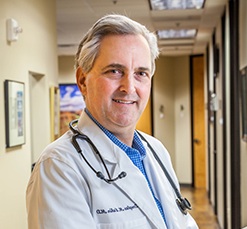
- Yours in good health, Dr. Lakin
|
|
|
| VOL 12 / Issue: #3 | Summer/ 2016 |
|
Would You Rather - Think About Vacation Or a New Smartphone?
|
 Before the latest video game or smartphone goes on sale, people line up for days (hello, iPhone 6!), anticipating its arrival. Often that leads to pushing, shoving, and sometimes punching - even when there is enough supply to go around. Before the latest video game or smartphone goes on sale, people line up for days (hello, iPhone 6!), anticipating its arrival. Often that leads to pushing, shoving, and sometimes punching - even when there is enough supply to go around. Wait. Owning lots of cool stuff, especially the latest gadget, is supposed to make us happy. So why do we throw out so much negative energy when we're anticipating a purchase? We're impatient and often behave badly when we anticipate buying stuff, more than when we anticipate purchasing an experience like a vacation, according to a report from Cornell University released this week. In other words, money spent on doing makes us happier than money spent on having, the researchers found. That may seem obvious to some and counter-intuitive to others (retail therapy lovers, for example), but the new research is a reminder how experiences connect us to others and help make us who we are, the researchers say. That's why spending money on an event or activity- a concert, skiing or going to an amusement park -leaves us feeling better than thinking about buying a tangible item.
"In thinking about how something is building your autobiography, that can be exciting in a way that thinking about a ... material good can't match," says Thomas Gilovich, the Irene Blecker Rosenfeld Professor of Psychology at Cornell.
Gilovich and colleagues conducted four studies. In one, they asked 97 college students to think about spending on an experience or a thing. The subjects ranked whether they felt impatient or excited. While people felt good about spending on both, regardless of cost, those who considered purchasing an experience felt more excitement and less impatience.
The researchers also looked at anticipation in real life by randomly contacting 2,266 adults about future purchases. About 19 percent of the time they were considering a purchase; those thinking about splurging on an experience felt better than those thinking about a tangible item.
While he didn't look at why anticipating purchasing an experience feels better, but he suspects the reasons are the same as why we enjoy experiences more.
So if you've got post-vacation blues, you'll be happier planning your next trip than buying something.
"More experiential spending [can] improve our well-being," says Gilovich.
- Meghan Holohan, TODAY contributor
|
|
Smell You Later! The Surprising Reason We Shake Hands. . . . .
|  You consciously do the grip and grin. But you may unconsciously perform the shake and sniff. You consciously do the grip and grin. But you may unconsciously perform the shake and sniff.
After pumping a person's hand during a greeting, some people take that moment of body-language reading to a deeper level, absentmindedly trying to detect traces of information from the scents left on their palms, new science suggests.
Israeli researchers watched as people used the first moments after a handshake to get a good whiff of the person they just met, lifting their right hands to their noses multiple times, according to the study published in the journal eLife. After a handshake, "people had their hands at their noses 22 percent of the time," said coauthor Noam Sobel, a professor and chair of the department of neurobiology at the Weizmann Institute of Science in Rehovot, Israel. "That is crazy!" Sobel added. "You look at the videos of people and wonder: how did we not notice this before?"
Sobel and colleagues first checked to see if a handshake could actually transfer the kinds of specialized chemicals that are known to spark a response in the nose. Experimenters with latex gloves shook hands with study volunteers and, sure enough, when the gloves were examined, they had easily detectible amounts of the chemicals.
In another experiment, 153 volunteers-unaware researchers had them on hidden camera-were greeted as they sat waiting for the study to begin. Half got a handshake, the rest did not. The researchers secretly filmed the volunteers before, during and after the greeting. After that hello shake, there was a lot of hand sniffing, or at least a lot of hands being raised to the nose.
To verify that people were actually smelling their hands, the researchers fitted another 33 volunteers with nasal catheters to measure breathing. To disguise the purpose of that experiment, the volunteers also were equipped with electrodes from an EEG device. The nasal catheters told the whole story: when a hand was close to the nose, airflow through the nostrils doubled.
The behavior is such an unconscious act that even when the researchers revealed the purpose of the study, many volunteers denied they were sniffing their hands. "Everyone was blown away when we showed them their own videos," Sobel said. "It was universal. Nobody was aware of this behavior." Sobel suspects that over time hand sniffing evolved as a surreptitious and socially acceptable way to evaluate others. In the animal world, overt sniffing is a way of scoping out newbies. Humanity, on the other hand, has evolved to find ways to cover up our scents.
"The bottom line," Sobel said, "is that like all mammals, we communicate using chemosignals. Other mammals-rats, mice, dogs and cats-very overtly sniff each other. That's not acceptable with strangers in our culture. So we've evolved a mechanism to obtain the information in an acceptable way." The new research is "very creative and very, very interesting," said Helen Fisher, a senior research fellow at the Kinsey Institute. "This article is really showing that a lot of olfactory signals are still being sent and people are, in spite of themselves, picking up on them and responding."
Thus sniffing remained important since humans evolved: figuring out whether the person in front of you is friend or foe, Fisher said. "You learn a lot from touching a hand," she added. "Is it clammy? Maybe it's not a real solid handshake. We instantly notice those things because we're trying to size this person up. We feel someone is rude if they don't stick out their hands and shake ours. Maybe that's not just about social disinterest, but also that they are not allowing us to collect data on who they are and what their intensions are." While it's not clear yet what kind of information people are extracting from smelling hands post-greeting, there's no question we are constantly processing smells, said Pamela Dalton, an olfactory researcher at the Monell Chemical Senses Center.
Studies at Monell have shown that people can actually "smell" stress. Researchers there introduced volunteers to a cleaned up version of sweat that came from someone who was stressed. "It affected how they felt and how they made judgments about other people," Dalton said. "It had no smell and they weren't aware they were smelling anything."
- Linda Carroll, TODAY
|
Why We Fake Laughter - And How To Tell The Difference. . .
| 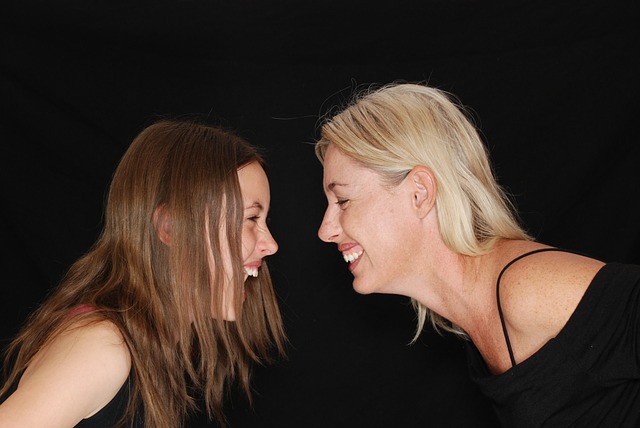 You know how, when the neighbors' child does that thing where he smacks his hand into your head over and over and the neighbors get hysterical and, to be nice, you laugh, too, though you don't think the kid is the next incarnation of Jim Carrey? You know how, when the neighbors' child does that thing where he smacks his hand into your head over and over and the neighbors get hysterical and, to be nice, you laugh, too, though you don't think the kid is the next incarnation of Jim Carrey?
They probably know you're faking it, according to an increasing body of research on the joyful and complicated form of human behavior. While laughter may seem to be about fun and jokes, it's really about "communicating affiliation and trust," Greg Bryant, UCLA associate professor of communication studies, writes in the Washington Post. Laughter is an important social signal, Bryant told TODAY last year when his research was first published in the journal Evolution and Human Behavior. It can tip off others that we want to cooperate, we want to be friends, we're not threatening. That's why primates, like humans, as well as many other animals, like dogs and even rats, laugh. So we need to be able to distinguish types of laughter. To test how well we do that, Bryant and colleagues recorded undergraduates laughing spontaneously with roommates, and undergrads laughing when told to laugh by an investigator.
The team then played the recordings to 63 male and female undergrads. The students picked out spontaneous, or "genuine" laughter, about three-quarters of the time and the laugh-on-command, or "fake" laughs, about two-thirds of the time.
In two more experiments, the recorded laughter was slowed down and sped up. Other study participants identified the slowed genuine laughter as being human at no better than chance rates, but they did much better at identifying the faked laughter as human.
At faster-than-normal speeds, they could tell genuine laughter at about the same rate as at normal speeds, but they mistook the faked laughs for genuine much more often.
That's because our ability to detect real from fake laughter is rooted in the breathy sounds woven in with the "haha." Two different vocal systems make the laughs - an emotional system (genuine), and a speech system (fake). Emotional laughter has a bigger proportion of the breathy sounds.
"Fake" laughter isn't always bad or unappreciated, Bryant said. It can communicate a willingness to cooperate and openness to bonding. He also pointed out that most children can detect deception at about age 5 or 6 and can probably detect faked laughter by then, too.
Which means the neighbor kid is doing that head slapping thing just to annoy you. - Brian Alexander, TODAY
Back To Top
|
 Dental Tips From Dr. Marie. . . . |
 |
| | Dr. Marie Jacobs
|
Maintaining good oral health is important for all ages; however, it gains increasing importance as we age. Research results have demonstrated the significant impact the status of oral health has on one's general health and well being.
Recently reported in Cancer Epidemiology, Biomarkers and Prevention: Postmenopausal women with periodontal disease have an increased risk of developing breast cancer than those who do not have periodontal disease.
The American Association for Cancer Research reported that the researchers monitored nearly 74,000 postmenopausal women for 6.7 years and the risk of breast cancer was 14% higher in women with periodontal disease.
While the precise mode of action between gum disease and breast cancer is not fully defined, the likely possibility is that "the chronic inflammatory response caused by gum disease could provide the link." Gum disease bacteria and the inflammatory products enter the blood stream, circulate systemically - ultimately affecting the breast tissue. It has been well-known that repeated exposure to a trauma or agents producing an inflammatory response are related to cancer.
In addition, research also indicates that an increase risk for stroke and heart disease is correlated with periodontal disease; likely due to the inflammatory effect.
The very good news is that appropriate dental treatment can improve oral health and enhance over-all general health as well.
The recommendation is to follow-up with your oral health care provider at least every six months and change your toothbrush every three months, or sooner if bristles show signs of fraying.
Here's to your good health!
Marie C. Jacobs, D.D.S.,
Professor Emerita Loyola University Chicago
|
|
NEW VIDEO: Taking Control, By Linda Stehling MD & Douglas M. Lakin MD
| 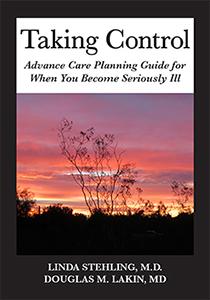 "Advance care Planning Guide for When You Become Seriously Ill
|
How Much Do You Really Know About SPF?
|
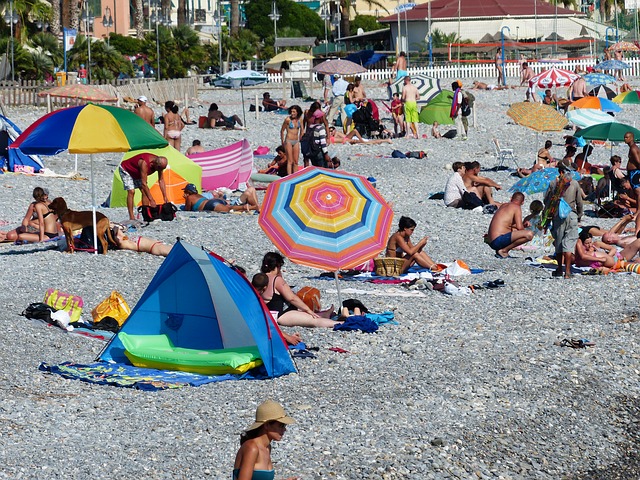 Buying sunscreen can feel overwhelming - there are so many options, it's often hard to discern which product is the best buy. Consider the crisis averted: TODAY spoke with board-certified dermatologist Dr. Cybele Fishman and Dr. Cameron Rokhsar, an associate clinical professor of dermatology at Mount Sinai Hospital, to find out how to keep skin safe all summer long. Here are few SPF myths not to buy into, and some facts you may not have realized were true.
1. Any SPF over 30 is an exaggeration.
Fact. A recent investigation by Consumer Reports found that out of 60 suntan lotions tested, 28 didn't meet their SPF claims. "My impression is that it's a numbers game that companies play - and people are under the misconception that if you buy a lotion that advertises 100 SPF, it's three times better than a 30 SPF. That's just not true," Rokhsar said. "I tell patients to buy a SPF 30 with broad-spectrum coverage."
"I personally think a product containing zinc that is SPF 50 is a whole lot better than a SPF 85 that has no zinc," said Fishman.
2. There are certain SPFs that you need to apply only once a day.
Myth. Rokhsar was quick to dismiss this myth as "hyped up marketing," with absolutely no element of truth. He advises patients to apply sunscreen every two to three hours, no matter what brand or type they are using.
3. Drinkable SPFs are just as effective as sunscreen.
Myth. Products like Osmosis Harmonized H20 UV Neturalizer (that allow you to drink your SPF protection) have been making headlines, but dermatologists like Rokhsar remain skeptical.
"I can't believe there is scientific support for that," he said.
4. SPF clothing is better than wearing a cotton T-shirt.
Fact. "SPF clothing is 100-percent effective. The sun shouldn't penetrate through to your skin at all," said Rokhsar.
5. You can get burnt through a window.
Fact. "Though you can't get as badly burnt as you would in the direct sunlight, you can still get some level of UVA rays and should still wear sunscreen if you'll be in the car on a sunny day," said Rokhsar.
"Car windows only filter (out) UVB rays," Fishman stressed. "You can burn from the UVA rays, and those rays are associated with melanoma."
6. If there's hair on your head, you don't need to protect your scalp.
Myth. "The scalp is the most common place for skin cancer in men. When men have a receding hairline, they don't think about applying sunscreen to their head, but they need to," explained Rokhsar.
Men and women alike should always protect their heads by either wearing a hat or applying sunscreen. People with thinning hair need to be particularly careful about exposed areas of their scalp.
7. Waterproof sunscreen doesn't need to be reapplied after you're in the water.
Myth. "It is illegal to call a sunscreen waterproof under the new FDA regulations because it implies that no matter how long you're in the water, you're protected, which isn't true," Fishman said. "The new labeling states something is water-resistant and will list the time in the water you'll be protected for (usually 40 or 80 minutes)."
"Waterproof sunscreens are better if you're planning on going in the water because they're oil based," Rokhsar said. "But you should always reapply."
8. If you wear sunscreen and reapply regularly, you can stay in the sun all day.
Myth. "If you want to protect yourself from the sun, you need to reduce your time in the sun," Fishman said. "If you burn in five minutes without sunscreen, even with a good sunscreen with a high SPF (and reapplication), if you spend eight hours in the sun, you will burn."
9. If you're not burnt, your skin is OK.
Myth. If your skin changes color at all, you're experiencing sun damage. Sure, a burn is worse for your skin, but both doctors agree that chronic sun damage (through a tan), can also have lasting results.
10. I have a darker complexion so my skin is more protected.
Fact. "Yes, people with darker skin tones have SPF built into their skin and are better protected, but it's still necessary to protect your skin from the sun," Rokhsar explained.
11. Natural sunscreens are better for your skin.
"Natural sunscreens is a marketing term, so buyer beware. Look for sunscreens that list zinc or titanium on the ingredients," said Fishman.
- Gabrielle Frank, TODAY
|
|
Pat's Book Review. . . .
|
 Books by S.Quinn read for this review: Books by S.Quinn read for this review:
- Dog On It
- Scents and Sensibility
- Thereby Hangs a Tail
- The Dog Who Knew Too Much
Other titles available include a new direction for the author,,,, a children's book titled "WOOF"
...well-received and promising a new audience hours of enjoyable reading!
The lengthy list of successful books written by Spencer Quinn is inspiring. This review is a review of only four of those titles. All of the author's books are listed on Quinn's website....or is it Chet, the Dog Detective's website?! Both are noteworthy.
Merely thinking of "Chet the Dog Detective" brings a smile of fond appreciation for time well-spent reading Quinn's books!
Spencer Quinn, author of the Chet and Bernie mysteries, maintains a consistency in his quality of writing a continuous and attention- holding "story-telling" as a source for the reader wanting more (much more!) of same.
Quinn has provided the reader a series of entertaining intrigues, including disappearances, thefts, homicides. family upheavals and more! Whatever you want from a well written novel, can be found in Quinn's writing/story-telling.
But - who's the hero? Bernie, the likable detective or Chet, the Dog Detective?.....probably both merit the honor! For this, the reader is grateful and appreciative (not to mention inspired) to seek more of the crime-solving duo. Humor prevails as well as intrigue and mystery to be resolved by this crime-solving team.
Bernie drives his Porsche in "wild" pursuit while Chet rides "shotgun". The reader enjoys it all, laughs and holds on for an entertaining wild and humorous ride (and is left hoping for more to come). You won't be disappointed!
Author Spencer Quinn, a prolific writer, has not failed us! His successes continue with additional titles. Check his website...correction, check out "Chet the Dog Detective" website for entertaining and informative comments on this fabulous team!
Bottom line: the series is an absolute joy to read! An author's promise to satisfy. entertain and inspire is fulfilled. An excellent read for summer....or ANYTIME!
Write on! Mr. Quinn!
|
| | Pat
|
Back To Top
|
|
Insights By Steve: Check it Out!
|
|
| | Insight By Steve (Author)
|
Think About It!
"You've seen all of the containers stating that the contents can kill 99.99% of germs. Isn't it scary to know that nothing can kill that .01% of germs?"
|
Question On Your Lab Results?
Check out:
DoctorDoug's Academy 
| 
Dr. Lakin's guide videos on how to better understand your lab work results.....
Check the first edition here: | | DoctorDoug's Academy: Lesson #1 CBC |
|
|
Safe Travel in Troubled Times. . . .
|
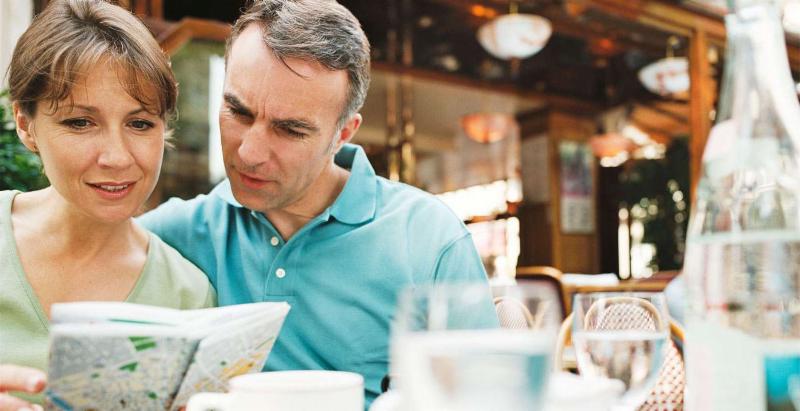 With all-too-frequent headlines detailing random horrors in places as diverse as a fashionable shopping street in Istanbul and the London Underground, it's no wonder that some Americans are thinking twice about traveling abroad. But experts say you shouldn't let fear cloud rational thinking. "You're more likely to be struck by lightning standing in line at the Louvre than you are to be killed by terrorists," says Bruce McIndoe, CEO of the risk management firm iJet International. "The perception is much worse than the reality."
Here's how to make good decisions about venturing beyond borders.
Seek out the best information. Consult U.S. Department of State advisories (travel.state.gov) before you book. There are two types of notices.
- Travel warnings are issued in the event of extreme civil unrest, terrorist activity and other dangerous conditions. The State Department recommends postponing travel.
- Travel alerts address more short-term situations that could pose a risk or disrupt travel plans. They're meant to quickly disseminate news about unrest, crime, health and weather events.
Check health advisories (cdc.gov) to determine if immunizations or prophylactic medications are necessary.
For a broader take, look at other governments' advisories. Great Britain's (gov.uk/foreign-travel-advice) and Australia's (smartraveller.gov.au) sites offer up-to-date travel info for numerous countries around the globe.
Make your plans known
You should be sure that you have a way to get in contact with U.S. embassies abroad.
Sign up for the Smart Traveler Enrollment Program. Go to step.state.gov and follow the instructions. Once you're signed up, any local U.S. embassy or consulate can contact you in the event of an emergency.
- Carry contact information for all those local offices (travel.state.gov). They maintain 24/7 emergency hotlines.
- Another handy contact: The Office of Overseas Citizens Services (888-407-4747 toll-free) can relay urgent messages from family members.
Consider buying travel insurance
Most comprehensive travel insurance policies will reimburse you for nonrefundable travel expenses if you cancel or postpone a trip after a terrorist incident at a destination on your itinerary. But read the fine print first: How policies define a terrorist act may differ. - Time frames vary, but typically, the act would have to have occurred within seven to 30 days of your scheduled arrival.
- If you're truly risk-averse, consider a cancel-for-any-reason policy. They typically allow cancellation up to two days before departure and cover 75 percent of prepaid or nonrefundable expenses. The downside: They're costly.
Most travel insurance policies include some travel assistance, such as a 24/7 hotline for rebooking and help with arranging an evacuation.
Two good sources of information: the U.S. Travel Insurance Association (ustia.org) and the aggregator site InsureMyTrip.com.
Always be vigilant
Don't get so concerned with unseen threats that you ignore obvious ones. Exercise the same commonsense measures you do at home. Keep your money and valuables secure. Be aware of your surroundings, particularly in crowded public places, at large events and when using public transportation.
Look at the pros
Visiting a destination after a tragedy such as the Paris attacks can harbor both tangible and intangible benefits. When demand drops for hotel rooms, so do rates. The same goes for cruise ship cabins and tour bus seats. When Ball and Marshall went to Paris in November, popular tourist haunts, such as the Musée d'Orsay, were blissfully free of lines.
Even more rewarding, though, were the interactions they had with locals who were delighted to welcome visitors. "We had chosen to be in Paris, and people were really grateful," Ball says. "The hotel clerk thanked us when we checked in because so many people had canceled. "There was a human connection that made us feel like much more than tourists."
And isn't that the best part of travel?
|
|
We Need Your Help!
|  Keeping you on your correct medication is as important to us as it is to you. With your help, we can be more efficient and be sure you are getting your refill requests on time and to your correct pharmacy. Keeping you on your correct medication is as important to us as it is to you. With your help, we can be more efficient and be sure you are getting your refill requests on time and to your correct pharmacy.
Tips:
1. If you need a refill, be sure to call your pharmacy FIRST, not our office. They will know if you have more refills, and if not, they will call/fax/electronically message us with your request. Then we will contact you if there is a question or concern.
2. Remember to call your pharmacy in plenty of time so you do not run out of your medications. Sometimes we need up to 48 hours to complete a request and we do not want this to be a hardship for you.
3. Register and use our SECURE PATIENT PORTAL for refill requests. We monitor this continually and again will contact you if there is a problem.
4. Remember we do not refill pain or routine medications on Fridays or weekends and all pain medications must be picked up at our office. We cannot mail or any medications outside our office. Please plan ahead and make arrangements!
We are always here to help you and appreciate the opportunity to care for your healthcare needs!
Yours in good health,
Dr. Lakin & Staff
|
Have You Scheduled Your Summer Physical Yet?
|
|
| | Dr. Lakin |
As you all know, Dr Lakin is a strong supporter of annual physicals, and Spring is a time we can visit and explore any unresolved medical problems and any new health issues that need to be addressed. Annual physicals are one of the best ways to safeguard your health. The American Medical Association recommends that if you are between the ages of 40 - 49 years, physicals should be done every two years. If you are 50 years plus, it is recommend you have yearly exams, especially if you have any chronic medical conditions that need to be monitored. Call to schedule your well care visit today!
Back To Top
|
Are You Registered For Dr. Lakin's Secure Patient Portal?
| 
Now is the time!
For help on how to register and FAQ, check our these videos:
It's as easy as that!
Back To Top
|
AT THE MOVIES WITH BARB A.
|
|
| | Barb A.
| |
GREAT + + + +
ENTERTAINING + + +
RENT THE MOVIE + +
FORGET IT! +
**EMAIL ME! ???
+ + + +
I ALWAYS SAID I WOULD NEVER SEE A MOVIE WITH SUSAN SARANDON . HER PRIVATE LIFE HAS ALWAYS ANNOYED ME. BUT LET ME TELL YOU......SHE WAS TERRIFIC IN THIS MOVIE. MARNIE (SUSAN SARANDON) MOVES FROM NEW YORK TO LOS ANGELES TO BE NEAR HER DAUGHTER. HER HUSBAND HAS DIED AND SHE AND HER DAUGHTER ARE DEALING WITH HIS DEATH. MARNIE MEDDLES IN HER DAUGHTERS LIFE AND AFTER HER DAUGHTER LEAVES THE CITY FOR AN OUT OF TOWN ASSIGNMENT, MARNIE MEDDLES IN THE LIFE OF EVERYONE AROUND HER , IT IS A VERY DELICATE FILM AND IS A LESSON TO US TO TAKE ONE STEP AT A TIME. THE ADDITION OF A LOVE LIFE WITH AN EX POLICEMAN IS GREAT. SEE THIS ONE.
+ + +
MONEY MADNESS
THIS FILM GOES BACK AND FORTH BETWEEN A MEDIA SATIRE AND A THRILLER. CLOONEY AND JULIE ROBERTS ARE OF COURSE GREAT. THE VILLAN KYLE (JACK O'CONNELL) IS ALSO A GREAT NEWCOMER TO THE MOVIE WORLD. HE HAS LOST HIS SAVINGS FOLLOWING A TIP FROM LEE GATES (CLOONEY) AND IS ON A RAMPAGE. IT WAS A LITTLE DISAPPOINTING FOR ME BUT WORTH THE PRICE JUST TO SEE THESE FINE ACTORS. I JUST EXPECTED MORE
That's it for now... See you a the movies!
|
|
Slow-Cooker Brisket Sandwiches with Quick Pickles. . . . .
|
 Make your BBQ or cookout easy with this slow-cooker beef brisket recipe. Rauchbier, a smoky German beer, gives this fork-tender brisket real pit-barbecue flavor, but you can use any beer that suits your taste, or even substitute beef broth, to achieve mouthwatering results. While the brisket is cooking, whip up the quick pickle recipe and stir together a garlic mayo to top off the sandwiches.
Ingredients Brisket
- 2 tablespoons smoked paprika
- 2 teaspoons kosher salt
- 1 teaspoon garlic powder
- 1 teaspoon onion powder
- 1 teaspoon coarsely ground pepper
- 3 1/4 pounds brisket (see Tip), trimmed
- 1 tablespoon extra-virgin olive oil
- 1 16-ounce bottle rauchbier (smoked beer) or 2 cups reduced-sodium beef broth
Quick Pickles
- 1/2 cup white vinegar
- 1/2 cup cider vinegar
- 2 tablespoons light brown sugar
- 1 teaspoon pickling spice
- 1 teaspoon kosher salt
- 2 pickling or mini cucumbers, sliced
- 1 medium sweet onion, thinly sliced into rings
Garlic Mayo
- 2 cloves garlic, chopped
- 1/2 teaspoon kosher salt
- 1/2 cup low-fat mayonnaise
Steps - To prepare brisket: Combine paprika, salt, garlic powder, onion powder and pepper in a small bowl. Rub all over brisket. Heat oil in a large, heavy skillet over medium heat. Add the brisket and brown on both sides, 3 to 5 minutes per side. Transfer to a 6-quart slow cooker.
- Add beer (or broth) to the pan along with any remaining spice blend from your cutting board; increase heat to high. Cook for 5 minutes, scraping up browned bits with a wooden spoon. Pour over the brisket. Cover and cook on High for 6 hours or Low for 9 hours.
- To prepare pickles: Meanwhile, combine white vinegar, cider vinegar and brown sugar in a small saucepan; bring to a boil over high heat and cook for 1 minute. Add pickling spice and 1 teaspoon salt. Pour into a large, heatproof glass bowl and add cucumbers and onion. Refrigerate, stirring occasionally, for at least 1 hour or until ready to serve.
- To prepare garlic mayo: Mash garlic and 1/2 teaspoon salt into a paste in a mortar and pestle or with the back of a spoon on a cutting board. Combine the garlic mixture with mayonnaise in a small bowl. Cover and refrigerate until ready to serve.
- When the brisket is done, transfer to a clean cutting board and let rest for 10 minutes.
- Pull the brisket apart into shreds with 2 forks and then coarsely chop the shredded meat. Combine the chopped brisket with the liquid in the slow cooker.
- To serve, drain the pickled vegetables. Spread each bun with 1 tablespoon garlic mayo and top with about 3/4 cup brisket and 1/2 cup pickles.
To Make Ahead
Cover and refrigerate the pickles (Step 3) and garlic mayo (Step 4) for up to 2 days.
Tips We like to use "flat, first-cut brisket" because it's leaner than the fattier "point cut" brisket. If the briskets aren't labeled that way, ask the butcher to help you select the right cut. For these brisket sandwiches you'll need about 3 pounds after trimming.
Nutrition Facts Nutrients per serving (recipe makes 8 servings) | Calories | 401 |
|---|
| Total Fat | 13g |
|---|
| Saturated Fat | 3g |
|---|
| Monounsaturated Fat | 5g |
|---|
| Cholesterol | 91mg |
|---|
| Sodium | 768mg |
|---|
| Carbohydrates | 34g |
|---|
| Dietary Fiber | 5g |
|---|
| Total Sugars | 7g |
|---|
| Added Sugars | 4g |
|---|
| Protein | 34g |
|---|
| Potassium | 513mg |
|---|
Diabetic Exchanges 1 1/2 starch, 1 vegetable, 4 lean meat, 1 fat
- AARP, Month Recipe
|
A Video For Everyone. . . . .
| |
|
|
|
Have a safe and healthy Summer!
Dr. Douglas Lakin & Staff
Paradise Valley Medical Clinic PC
|
|
|