|
Greetings!
We're frequently asked why a scorpion can be found from time to time in or around a home soon after our service tech has performed monthly maintenance. Great question, but before I answer let me give you some brief information on how a scorpion is put together so my response will make more sense.
The Anatomy Of A Scorpion: Scorpion's have a protective external casing called an exoskeleton, which literally means outside skeleton. It's a hard outer shell coated with a waxy substance that covers the creature's soft tissues and provides a rigid structure to which the muscles attach. As well as supporting and protecting the scorpion the exoskeleton creates a watertight barrier that prevents it from dehydrating.
How Our Process Works: When a scorpion crawls over an area that your service tech treated our unique product attaches to the critter's body. The hard protective shell prevents the product from entering the scorpion's body immediately but eventually penetration is made through its joints. Once inside of the body the product attacks the nervous system and causes death in 10 - 15 days, depending on the rascal's resiliency.
If you encounter a scorpion inside of your home an easy way to determine whether the product is working is simply observe how the critter is acting. If it's lethargic death is near so accelerate it with the sole of your shoe. If the scorpion curls its tail and runs for the hills the product has either not penetrated the exoskeleton or the critter did not come in contact with the treated area.
Good Old Self Help: Take it from your ole bug guy, killing a scorpion with the sole of your shoe or other instrument of choice is faster and more effective than waiting for any product to do the job. I'm not suggesting that you go on a scorpion hunt, but just preparing you for an unlikely encounter. Regardless however, please be assured that our products are the finest and most advanced available... and do the job.
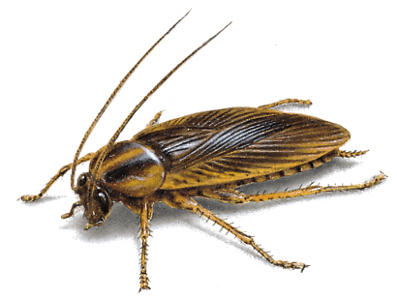 German Roaches: German Roaches: The combination of heavy rains, humidity, and high temperatures creates the perfect environment for German Roaches, pictured on the left. Based on the calls we're receiving it's likely you've seen these small -1/2-3/4 inch - persistent critters in your home. Unfortunately they prefer being indoors and seek areas with warmth and humidity, typically the kitchen, and bathroom, but are not shy about exploring the inside of an electrical appliance. Getting rid of them is a formidable challenge because they breed incessantly; each female can have thousands of babies, and your home can become rapidly infested.
Entering Your Home: These roaches typically gain entrance to a structure on clothing and when bottled drink containers, potatoes, onions, dried pet foods, grocery sacks, and corrugated containers are brought into the home. German roaches are scavengers and once inside will feed on any food source available including tiny crumbs, dirty dishes, toothpaste, soap, leather, wallpaper paste and book bindings. Since their diet is unconventional typical house cleaning and sanitation methods will not prevent or reduce the time of their stay in your home.
To err on the side of safety, for starters I recommend replacing cardboard and corrugated containers with plastic storage units.
As always, call us with any pest concerns and we will meet the challenge.
|