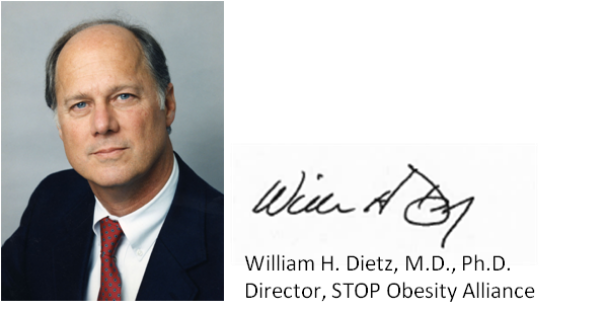
The annual ObesityWeek meeting, the largest conference of the world's leading obesity specialists and researchers, offers an opportunity to share innovation and knowledge concerning the basic science, clinical application, surgical intervention, and prevention of obesity. This year's meeting in Los Angeles was no different. While there were a variety of engaging and enlightening sessions, one presentation in particular warranted mention in our STOP E-newsletter.
The session, "Childhood Obesity Treatment and Reimbursement," was led by Dr. Sarah Barlow from the Center for Childhood Obesity at Texas Children's Hospital and consisted of three presenters, including myself. The topic of our discussion was a report from a conference organized by Dr. Denise Wilfley from Washington University in St. Louis and funded by the Agency for Healthcare Research and Quality. The conference was held at the American Academy of Pediatrics. Participants included The Obesity Society, several state Medicaid directors, a representative from Centers for Medicare & Medicaid Services, several health plans, pediatricians, family practitioners, and other stakeholders. The report reflects a consensus established at the meeting concerning the components of effective pediatric obesity treatment:
- Family-based with parental involvement
- Individualized, unique to each family
- Flexibile and adjustable based on family needs
- Team-based
- Reinforced with comprehensive training for staff
Lack of insurance coverage, cost of care, and training were perceived by these stakeholders to be the greatest barriers to obtaining the effective care described above. These three concerns drove the remaining discussion at the ObesityWeek session, as we considered models of the delivery and payment systems that might better align value-driven, coordinated care with comprehensive care payment.
As a part of this discussion, Dr. Steve Cook from the University of Rochester Medical Center suggested applying a bundled payment model to childhood obesity services. Bundled payments are becoming increasingly common in acute care settings and allow payers to reimburse a group of providers for a particular episode of care (i.e. a knee replacement) in one lump sum. Dr. Cook made the argument that if this model were expanded to chronic conditions requiring continuous - rather than episodic - treatment, providers might have a greater incentive to provide the comprehensive, flexible, and team-based care discussed in the AAP/TOS report. As the discussion moved away from payment reform and toward delivery systems, I introduced the original Chronic Care Model, an organizing framework for chronic disease management developed in 1998. With a focus on the organization of the health care system, this model lacked a clear application of community engagement and the role of population health in managing chronic disease. A new iteration of the Chronic Care Model, recently published in Health Affairs, more appropriately reflects a delivery system centered on patient and family engagement, provider sensitivity, and complementary community systems working in tandem with clinical efforts. These community systems include services, resources, supportive environments, and social norms found outside of the clinical care system. The proposed framework requires improved training for providers to work within medical systems and to integrate their clinical interventions with supportive community systems. A recent collaboration among sixteen diverse organizations and the Institute of Medicine's Integrated Health Innovation Collaborative has begun to identify a series of common competencies that improved training should encompass. My candidates include the following:
- Use of appropriate terms for obesity
- Sensitivity to bias and stigma
- Behavior change strategies
- Ability to work with and within teams
- Use of information technology
- Ability to work across sectors
- Align clinical services with severity
At first glance, these delivery and payment reforms might appear to occur in a purely clinical setting, but upon closer look, the need to involve community and population health professionals is strikingly clear. The Affordable Care Act and the Center for Medicare and Medicaid Innovation require that all new delivery models have a statewide plan for addressing population health with a focus on diabetes, tobacco, and obesity. Community organizations like the YMCA have programs designed to improve the connection between health and the community. As meetings like ObesityWeek display, innovations in delivery and payment are emerging across the country.
Sincerely,
|
Alliance & Member News
| |
|  |
|
Scott Kahan Named Chair of Clinical Committee for Obesity Society
STOP Medical Director, Scott Kahan, MD, MPH, who also serves as the director of the National Center for Weight and Wellness, was recently named chair of the Obesity Society's Clinical Committee.
OMA to Host Obesity Medication Education Programs in 2016
Obesity Medicine Association (OMA) will host two major educational forums in 2016 - Obesity Medicine 2016 in April and Overcoming Obesity 2016 in Sept. In addition, OMA will host Obesity Medicine Basics, a one-day introductory course for physicians and health care professionals, throughout the year at locations across the country. Click here to learn more about OMA's upcoming events.
World Obesity Federation and CON to Host International Congress on Obesity
World Obesity Federation and the Canadian Obesity Network (CON) will host the 13th International Congress on Obesity (ICO) May 1-4, 2016 in Vancouver, Canada. ICO will focus on major scientific, clinical and public health challenges that affect the work of scientists, health care professionals and policymakers involved in obesity. Click here to register.
IOM Roundtable on Obesity Solutions Releases Summary of Physical Activity Workshop
The IOM Roundtable on Obesity Solutions released a summary of its "Physical Activity: Moving Toward Obesity Solutions" workshop that took place during the IOM's Roundtable on Obesity Solutions in April 2015. The workshop offered an expert summary of the state of the science regarding the impact of physical activity in the prevention and treatment of overweight and obesity and highlighted innovative strategies for promoting physical activity. Click here to read the workshop summary.
|
News Round-Up
|
|
|
 |
Obesity Groups Say States Denying Bariatric Surgery Violate ACA
November 12, 2015
The New York Times
By Sabrina Tavernise
A new National Health and Nutrition Examination Survey found that nearly 38 percent of American adults had obesity in 2013 and 2014, a 3 percent increase from 2011 and 2012. According to the article, researchers say the increase is not statistically significant, but some in the public health community reported surprise that the numbers have not decreased given the recent focus on efforts to reduce obesity.
November 8, 2015
USA TODAY
By Kim Painter
USA Today highlighted a survey presented at ObesityWeek by STOP member, Ted Kyle. According to the article, Kyle's survey of more than 9,000 consumers found that 84 percent of consumers surveyed did not have coverage for obesity drugs, and 77 percent did not have coverage for weight management programs supervised by medical professionals. The survey found that insurance coverage for obesity treatment was somewhat more common among the 16 percent of those surveyed that reported that their employers sponsored wellness programs with incentives based on weight or body mass index.
November 3, 2015
Philly.com
By Gina Ragusa
An article published on Philly.com reports on the news that, according to the World Health Organization, processed meats are carcinogenic, saying that the news adds to the evidence that a poor diet and a sedentary lifestyle can affect people both physically and financially. The article goes on to mention the results of a 2010 STOP study, " A Heavy Burden: The Individual Costs of Being Overweight and Obese in the United States," that found that the annual costs of being obese are around $4,800 for a woman and $2,600 for a man. STOP's Medical Director, Scott Kahan, MD, MPH, says the report remains relevant five years later in terms of cost analysis. Kahan notes, "Medical expenses, such as costs of treating the many health effects of obesity are by far the largest contributor to costs. This is partly because the medical expenses are so large, but probably also relevant is that they are easiest to measure, so it's possible and probable that the non-medical costs are larger than we can show and may approach the medical cost burden."
|
|