|
Bi-Lateral Trade between Ireland and India - Celebratory Breakfast on the eve of India's 68th Independence Day

On Thursday, August 14th , the Ireland India Business Association (IIBA) gathered together with the members of the Irish Exporters Association's Asia Trade Forum (ATF) to celebrate India's Independence Day in the offices of the Dublin Chamber of Commerce. The room was jam packed with attendees eager to hear about India. The crowds are testimony to the recent surge of interest in bi-lateral trade between Ireland and India.
Sumit Mullick, Chairman of the IIBA was the first speaker. He said the population of India at the time of independence was circa 350 million while after 67 years its 1.2 billion, of which almost 200 million are middle class. After the general elections this year, which saw a mind boggling 800 million electorate vote and which swept Mr. Modi into power, there is a new wave of euphoria and confidence sweeping India. The new government has already cleared the FDIs in Defence and Railways, Insurance is under way.
"Our vision for Ireland is to emerge as one of India's preferred trading partners for EU trade", said John Nevin, Chairman, ATF. "The IEA believes that exports have a critical role to play in Ireland's economy and, in particular, exports to the emerging and fast growing markets in Asia, which we aim to grow from 4% to 10%.The statistics speak for themselves and emphasize why looking east for export growth is an imperative for Irish companies."
Ireland exports 85% of its entire output, so we recognise too the need to be competitive and customer focussed in Ireland. Already in 2014, to date Ireland has exported €100m worth to India and imported almost double that amount. This high level of companies' engagement has resulted in a doubling of our indigenous exports to India over the last 3 years. This growth clearly demonstrates that Ireland and Irish companies have both the capabilities and innovative products and services to build a successful and fast-expanding trading relationship with what is one of the world's largest markets.
The breakfast talked openly about the pros and cons of doing business in India. A lot of patience is needed to operate in India and you must plan ahead. Ravi Chandar, the First Secretary, Bilateral Political, Commercial & Consular at the Embassy of India in Ireland reminded us of the similarities between the two countries like English being the language for business and historically Ireland has cultural ties with India since the days of the Irish missionaries that set up schools and convents.
Richard Breen, a partner in William Fry who spent 3 months in India this year, emphasised that who you partner your business which is most important. And most businesses in India are family run so relationships are key.
Another key objective of this event was to recruit companies for the business mission being organised in September by Asia Trade Forum in association with William Fry and IIBA. Several Irish businesses and individuals might be travelling to India around the same time but the added benefit of traveling on a delegation is access to high level executive contacts and availability of group discounts. George Kiely of Enterprise Ireland echoed that the experience on these types of trade missions tend to refine an Irish company's ideas of doing business globally.
Unfortunately due to low numbers this mission has been postponed till next year.
|
|
INNO INDIGO is a horizontal ERA-Net with India and is the successor project of New INDIGO (2009-2013), which successfully implemented schemes for EU-India transnational calls for proposals (New INDIGO Partnership Programme)
The calls have developed from simple networking and mobility funding towards the funding of research projects open for Small and Middle size enterprises (SME) involvement. Through these activities the EU-India STI cooperation has already been put on a smooth basis by the regular publication of joint transnational calls. The applied call mechanisms proved to be applicable even with changing funding partners, thematic scopes, funding amounts and funding instruments.
INNO INDIGO is a horizontal ERA-Net with India and is the successor project of New INDIGO (2009-2013), which successfully implemented schemes for EU-India transnational calls for proposals (New INDIGO Partnership Programme). The calls have developed from simple networking and mobility funding towards the funding of research projects open for Small and Middle size enterprises (SME) involvement. Through these activities the EU-India STI cooperation has already been put on a smooth basis by the regular publication of joint transnational calls. The applied call mechanisms proved to be applicable even with changing funding partners, thematic scopes, funding amounts and funding instruments.
Within the lifetime of INNO INDIGO the implementation of three calls for proposals is foreseen. Beyond the preparation and implementation of joint calls one central aim is to optimize the outreach of INNO INDIGO and facilitate the networking of funding organizations in Europe and India. INNO INDIGO will offer opportunities for interested funding organizations to participate in all steps taken towards the implementation and management of EU-India transnational calls. The experiences from the past five years will be used in order to further enhance EU-India cooperation, as well as in order to support and further develop bilateral as well as multilateral activities. There are various new elements addressed in the INNO INDIGO ERA-Net as e.g. how to bring ideas to market, how to support young researchers, how to develop new forms of collaboration etc. INNO INDIGO will also consider input from other relevant sources like the Indian government, the European Commission or the EU-MS/AS (also in the context of the GSO).
Discover the EU-India network formed as a result of the new INDIGO Partnership Programme @ http://indigoprojects.eu/.
Visit http://bit.ly/1z6BgGZ to help us design future calls for proposals between Europe and India to best fit SME's needs. |

ETIHAD AIRWAYS TO EXPAND GLOBAL REACH WITH SIX NEW DESTINATIONS IN THE FIRST HALF OF 2015
· Network grows to 107 passenger and cargo destinations
· New services will increase coverage in Europe, Asia and Africa
· First non-stop flight launched between Abu Dhabi and Brisbane
· First Class cabin to be added on Singapore, Brisbane and Moscow routes

Etihad Airways, the national airline of the United Arab Emirates, will launch six new routes in the first half of 2015, offering even more choice and improved connections to travellers worldwide.
Daily flights will commence to the European capitals of Madrid (Spain) and Edinburgh (Scotland) next year, together with the historic state capital of Kolkata (India) and one of the most important business and government centres in East Africa, Entebbe (Uganda).
The airline will also operate four flights a week to the world-class tourism and economic hub, Hong Kong, and three flights a week to Algeria's vibrant capital and largest city, Algiers.
In addition, Etihad Airways' existing daily flights to Brisbane (Australia), currently operated via Singapore, will become a direct service from June 2015, offering the first non-stop connection between the city and Abu Dhabi. The route will be operated using a three-class Boeing 787-9 Dreamliner with the airline's brand new First Suite, Business Studio and Economy Smart Seat.
Further service upgrades in June 2015 include the introduction of a three-class Airbus A330-300 aircraft on daily flights to Singapore, and a three-class Boeing 787-9 Dreamliner on daytime flights to Moscow, marking the debut of First Class cabins on both of the existing routes.
James Hogan, President and Chief Executive Officer of Etihad Airways, said: "Our global network development in the first half of 2015 supports a long-term vision to provide travellers with an extensive range of destinations and connections over Etihad Airways' Abu Dhabi hub. These new destinations have been selected to expand our coverage and strengthen our customer proposition in the strategically important markets of Europe, Asia and Africa.
"The expansion will also create new opportunities to enhance our codeshare agreements and align operations with key airline partners, such as Virgin Australia, Jet Airways, Air Seychelles, Air Europa and Kenya Airways. Between Abu Dhabi and Hong Kong, for instance, our four weekly flights will combine with Air Seychelles' three weekly flights to provide a daily frequency."
Etihad Airways' global passenger and cargo network will increase to 107 destinations following the route expansion in the first half of 2015. The total includes five new routes already launched this year to Medina, Jaipur, Zurich, Los Angeles and Yerevan, together with four upcoming services to Perth, Rome, Phuket andDallas, which commence over the remainder of 2014.
The airline will also continue to increase frequencies on existing services in H1 2015, providing travellers with even more comprehensive travel choices. Network depth will be added to important markets across the North America, Middle East and Indian subcontinent regions.
As part of the Etihad Airways' ongoing fleet development, nine aircraft are scheduled for delivery in the first half of next year, comprising three Airbus A380s, three Boeing 787-9 Dreamliners and three A320 family aircraft. The airline currently has 102 aircraft in its fleet, with over 210 additional aircraft on firm order, plus options and purchase rights for 81 further aircraft.
|
Destination
|
Launch Date
|
Frequency
| |
Kolkata
|
15 February 2015
|
Daily
| |
Madrid
|
29 March 2015
|
Daily
| |
Entebbe
|
1 May 2015
|
Daily
| |
Edinburgh
|
8 June 2015
|
Daily
| |
Hong Kong
|
15 June 2015
|
4 per Week
| |
Algiers
|
17 June 2015
|
3 per Week
|
|
|
Schools, snakebites and solidarity
Irish and Indian teachers relax after a long day on the Global Schoolroom programme
By: Carmel Hughes
2014 Global Schoolroom Volunteer
The days my children were born were the most exciting of my life. The week I climbed Kilimanjaro was the most exhilarating of my life. But the month I spent with Global Schoolroom in India has been the most amazing month of my life!
Global Schoolroom brings teachers together to share educational experience, expertise and good practice, and to build sustainable frameworks for high standards of teacher education worldwide, and have been working in the remote states of Northeast India since 2006.
So on Saturday, the 5th of July, twenty-six volunteers, all of whom were or still are teachers from Ireland, made their way to three of the seven states of Northeast India - Assam, Meghalaya and Tripura. This wonderful and mysterious corner of India is home to thirty four million people, comprising three hundred and fifty tribes, speaking about two hundred different languages.
Global Schoolroom is dedicated to sharing educational experience between communities worldwide to help eradicate poverty, promote economic development and build sustainable communities. Since 2006, Global Schoolroom has brought almost 180 teachers (serving and retired) from Ireland together with over 800 of their colleagues in India. The Irish teachers have worked as volunteer tutors during their summer holidays and mid-term breaks on a University College Dublin (UCD) accredited programme for unqualified Indian teachers. In November 2013, this programme was officially recognised by Assam Don Bosco University (ADBU), Guwahati, India, as an established teacher education programme fulfilling the demands of teacher training under the Right to Education Act, India 2009. Throughout this time, the Irish teachers have contributed hugely to their own personal and professional development through this engagement with their Indian colleagues and as more and more Indian teachers qualify on the programme they too have the opportunity to become mentors and tutors, thus contributing to the program's sustainability.
It costs an average of €26,000 per year to run ten training centres in India. The programmes operate on a cost-neutral basis for local participants and the costs of travel, accommodation and food for the local teachers are covered by Global Schoolroom funding.
On 6th July, my team mate Ruth, and I, arrived in St. Andre's English Medium School in Bodhjungnagar, in the state of Tripura. A local management committee, to respond to the need for local education, opened the school in 1986. In 1991, it was handed over to the Fathers of the Holy Cross. It caters for 1184 boys and girls from the age of 4-19. Nineteen tribes (and their various languages!) are represented. There are 42 teachers and half of these attended our training programme.
We spent the first two weeks sharing our combined classroom experiences with these wonderfully receptive teachers. They are naturally reserved people but gradually they interacted with us and participated wholeheartedly in all our activities. They nodded at our anecdotes and humored us by joining in our dancing attempts... a hybrid of Fallai Luimni (Ruth's home town) and Ionsai Na hInse, if you must know!!
During the next fortnight we carried out Teaching Practice with our student teachers with Ruth and I observing their classes. It was an eye-opener to see how the teachers rose to the challenge of incorporating so many new ideas into their teaching. They achieved this in the most basic of classrooms, with little or no resources and with forty or fifty students before them.
Our two hosts, Fr. Jilson and Fr. Michael, are busy missionaries: gracious, entertaining company; well read and always open to lively debate on the most controversial of topics. The dynamic Fr. Jilson, himself an alumni of the Global Schoolroom programme, would run a Youth Programme in the Parish in the morning, fix a generator in the afternoon and cure snake bites on any given evening.
Those afflicted with poisonous snakebites were brought to the dispensary, where a cut was made to the bite area and a special black stone fixed to the spot. When the poison was drawn out, the stone fell off. The stone was then placed in milk, which retained the poison and the stone could be re-used. Nobody died after this treatment, but perhaps the anti-venom injection helped!
Fr. Michael, on the other hand, is a keen soccer player. Our visit coincided with the World Cup so a friendly was organised with a local Holy Cross College, who wore the white of Germany, while 'our boys', with Fr. Michael as Captain, wore the blue and white of Argentina. 'Germany' won, a forecast of the result in the World Cup Final later that night.
We were brought to jungle villages; shopping trips to Agartala (our nearest city - population four and a half million!); visits to family homes; a rubber plantation; a tea garden; other religious communities and the colorful changing of the guard at the Bangladeshi border. What an amazing month!!
I was able to travel to India with Global Schoolroom because of the generosity of my family, friends, neighbors and businesses in Celbridge, where I live. With support from the IIBA, the great work of Global Schoolroom can continue.
Global Schoolroom are currently recruiting for summer 2015. Check-out www.globalschoolroom.net or email info@globalschoolroom.net
Global Schoolroom has been selected as the Ireland India Business Association's Charity Partner of the year.
To learn a little more about Global Schoolroom please click on the link below:
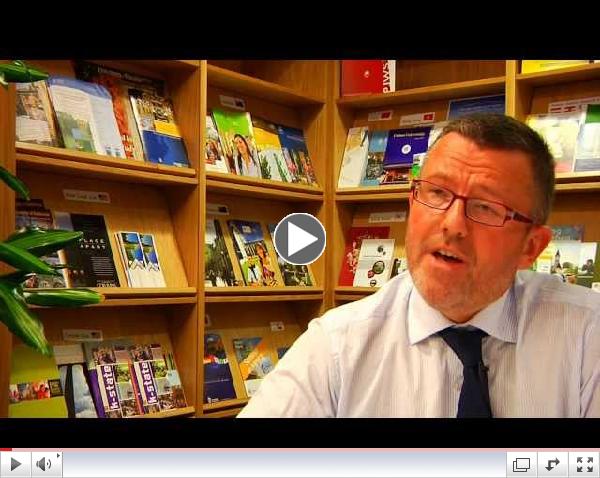 | | Global Schoolroom interview with CEO Dr. Garret Campbell and Professor Bairbre Redmond |
|
|
|
|
|
|
|
|
Now Is The Time To Do Business in India

NilaKanthi Ford, Vice Chairperson
of the IIBA, and Director of KFVC
is an international professional
advising on innovation, business development and effective leadership including differences between global business
cultures and organisational Cultural Change. Working in international business for 20 years plus in more
than 30 different countries,
NilaKanthi will be one of the international speakers at September's Global Economic
Summit in Mumbai.
NilaKanthi's advice for those considering bilateral trade with India is twofold:
* Plan, prepare and choose your business partner wisely as relationships are very important.
* Think outside the box. Grow to understand the size of India and explore all the opportunities that lie outside of the main cities.
There has never been a better
time to consider India now that
Mr. Modi has become the Prime
Minister. Stating that the
government was committed to a
"stable taxation regime," Indian
Finance Minister Arun Jaitley
presented a budget that sought to
live up to expectations set by the
party, which won a record election
victory in June on the back of a
pro-business, pro-reform
campaign platform. FDI norms in
the real estate sector were also
relaxed to encourage development
of 100 new "smart cities. This
presents excellent opportunities to
Irish ICT and software companies
looking to expand globally.
|

UPCOMING CALENDAR
OF EVENTS

October 2014
Business Opportunities in India - Cleantech sector
Date: Friday 10th October
Time: 12,30 pm
Venue: "European House" Room, 18 Dawson Street, Dublin 2
Event in association with Dublin Chamber and EBTC will focus on the cleantech sector in the areas of biotech, energy, environment and transport.
Launch of 2nd India Ireland in Focus newsletter
November 2014
IIBA Annual Lunch & launch of Aviation paper
Time: 12 Noon
Venue: TBC
(Details to follow)
CORK Christmas Dinner and Drinks.
(Details to follow)
For further details visit:
|
Project Opportunities in India
Discover projects and opportunities!
Explore opportunities
For European organisations
Opportunities in India are just one click away.
If you are interested in an opportunity,
email projects@ebtc.eu
quoting the project reference for more information, and further action
|
|
5th Indian Film Festival of Ireland - IFFI 2014
'A Cinema Window
with an Incredible
Creative View of India'
One of the main purposes of the film festival is to market Ireland as a film location for the Indian Film Industry; IFFI has achieved this end by already attracting a major Indian studio film.
The Indian Film Industry is rapidly changing with the advent of technology and the increasingly globally shrinking nature of this industry. All major Hollywood studios in Mumbai are operating successfully. However, to counter the balance the Indian film makers are still struggling to operate globally, and international co-productions are still few and far between.
 | | NAA BANGAARU TALLI TRAILER |
For further information visit:
A Gala Charity Dinner is being held in aid of SUAS in the elegant surroundings of Trinity College, which includes a 5 course meal on Saturday 20th September. For table bookings please contact Siraj Szaidi on 087 2832259.
|
|
Limerick to be seen by 10m on Indian television
LIMERICK will be seen by 10m Indian television viewers as part of a tourism initiative, which will see the city broadcast on an Indian travel channel.

TV presenter Olivia Cox (right) during filming in Limerick for an Indian travel TV channel.
The Indian television channel travelxp HD, visited Limerick and Ireland last week as guests of Tourism Ireland and recorded some of the unique experiences holidaymakers can enjoy here.
Jim Paul, Tourism Ireland's head of Australia and developing markets said that as a developing nation India has a rapidly growing tourism sector.
"Travel programmes such as this are an excellent way for Tourism Ireland to get positive exposure for Limerick in India. This programme will be seen by more than 10m potential holidaymakers - encouraging them to come and experience Ireland for themselves," said Mr Paul.
The Indian travel channel captured footage of King John's Castle and the Artist's Eye exhibition at Hunt Museum, during their time in Limerick.
Initiatives as part of Limerick City of Culture were also captured by the crew, including many of the contemporary urban art exhibitions taking place around the city.
The programme will air this autumn on the Indian television channel travelxp HD.
Tourism Ireland has recognised that India is one of the fastest-growing tourist-generating countries in the world, India is expected to reach 50m outbound travellers by 2020.
Currently it is estimated that 21,000 Indian tourists visit Ireland year; this is expected to grow in the coming years.
Article courtesy of Limerick Leader
|

India Budget Analysis
A change in Direction

The new Indian Government has unveiled the Union Budget 2014-15 with a pragmatic recognition of macro-economic woes and a thrust towards structural reforms. The Finance Minister in his budget speech has
laid out his vision aimed at reinforcing confidence through a slow but steady rebuilding of the economy. His acknowledgment that the prevailing economic situation posed a challenge, provides an opportunity to introspect.
The Economic Survey revealed that considerable work is required
to bring the economy back on track. Growth had stabilized to a consistent sub 5% over the past few years. Sticky inflation, populist subsidy measures, oil price shocks and a devaluating currency has left the economy in want of a much needed boost. Implementation of various reforms is necessary if the Indian economy wants to fulfill
its potential. While there was no expectation of big bang measures, the Finance Minister's speech was keenly watched to understand his chosen path to recovery and direction of things to come.
|
|
Indian giant Tata Group to sell Irish degrees worldwide

Tata is part-owned by Pallonji Mistry,the richest Irish citizen alive, and run by his son, Cyrus. The biggest company in the group, Tata
Consultancy Services (TCS), employs 140 here.
Senior executives from TCS, which
took in revenues of $13bn last year, will meet Irish government officials and university bosses on a visit to Ireland this month to advance its new plans.
They centre around MOOCs -
Massive Open Online Courses -
which are degrees and study
programmes delivered online and
accredited by universities.
Many education experts hail MOOCs as the future of education.
TrinityCollege Dublin will debut its first in September, available for free.
Article courtesy of the Irish Independent
|
|


