|
HOW THE FUTURE WORKS: School Transformation and Public Engagement, Featuring Clark Magnet School, La Crescenta, CA, 1/24/23.
|
|
Table of Contents
|
|
San Antonio Cyber Update - 4 Local High Schools Advance to Cyber Patriot FInal Rounds
| |
Texas Cyber Security Education, Workforce, and Economic Development on the Move
| |
National Career Pathway Network Hosted in the Alamo City, October 13-15, 2013
| |
NCPN Connections, The Voice of Career Education Innovation
| |
The Mathematical Sciences in 2025...Committee on the Mathematical Sciences in 2025
| |
International Society for Technology in Education...in San Antonio, TX, 2013...Announcing ISTE 2013
| |
Cyber: The Next Wave of High School Competitions, 1000 Schools Compete in 2012
| |
FEATURE, Innovation Education: The emergence of the classical contemporary school, Clark Magnet School for for STEM+ARTS
| |
Listen to Robot World Keynote tfor Texas Workforce Commission
| |
San Antonio, birth place of the PC, LAN, Heart Stent, Lasik Eye Surgery, Aerobics, and Picante
| |
San Antonio Hosts ISTE and Showcases the Number One Cyber Ready Community in the Nation
| |
New Workshop for 3rd Grade to 12th Grade Girls - Cyber Girls: The Story of the First Women Computers
|
San Antonio Cyber Update - 4 Local High Schools Advance to Cyber Patriot FInal Rounds
| |
San Antonio, Cyber Since 1948. Learn more about San Antonio's CyberPatriot Center of Excellence.
Of 11 Cyber Patriot Teams in the Semi-Finals, 4 Advance to Final Rounds (bold):
East Central High School 2
East Central Army JROTC
ITSA New Braunfels
ITSA New Braunfels 2
John Jay High School
John Jay High School Air Force JROTC
Medina Valley High School Air Force JROTC
Oliver Wendell Holmes High School
Oliver Wendell Holmes Business Careers High School
Southwest High School 1
Southwest High School 3
Local Event: SA Mayor's Cyber Cup
Feb. 9, 2013, Valero Venues, 1 Valero Way, Building D, 2nd Floor Ballroom
College Fair beginning at 10AM
Awards Luncheon beginning promptly at 11:30AM
Register for next years Cyber Patriot VI
Information Technology and Security Academy - 2012 Cyber Patriot National Champions - Open Division
|
Texas Cyber Security Education, Workforce, and Economic Development the Move
| |
Building a More Secure and Prosperous Texas - A Report from the Texas Cybersecurity, Education and Economic Development Council.
Key components of the recommended framework include: creation of a state-level coordinator for cybersecurity efforts, establishment of a formal partnership between public and private sector leaders and cybersecurity practitioners, creation of a State program to foster improvement of cyber resiliency in both private and public infrastructure by establishing a baseline for cyberoperations, and the development of a cybersecurity education pipeline to introduce cybersecurity initiatives from K- PhD.
Through its implementation, the framework is intended to provide a mechanism for the production of action plans that are timely and relevant to meet specific State needs. A critical factor for success, the recommended framework integrates participation from a wide-range of organization types throughout the State, including: state agencies, critical infrastructure industries, profit, non-profit and faith based organizations and public school districts providing diverse perspectives in the areas of infrastructure, economic development and education.
It is the Council's belief that the establishment of this framework is the most appropriate means for the State to effectively address cybersecurity concerns, both in the immediate timeframe and for the future.
|
National Career Pathway Network Hosted in the Alamo City, October 13-15, 2013
| |
 | | Official Web Site |
It is my pleasure to serve on the 2013 NCPN conference planning committee. I I hope that you are making plans to attend the 2013 National Career Pathways Network (NCPN) conference October 13-15 at the Grand Hyatt on the Riverwalk in San Antonio. NCPN is a membership organization for educators and employers involved in the advancement of Career Pathways, CTE, and related education reform initiatives. The presenter proposal form for this Career and Technical Education and Career Pathways Conference is now available online. If you would like to submit a proposal, please do so by Friday, March 29. This is a great way to share your innovative programs and practices with a national audience. San Antonio provides a beautiful and exciting setting for the annual conference uniting those parties interested in connecting education, workforce, and economic development through the sustainability of career pathways. San Antonio has a rich technology heritage including being the birth place of the first personal computer, the Local Area Network, intrusion detection for networks, Lasik eye surgery, the Palmaz heart stent, reverse thrusters for jets, and Picante sauce. Learn more about San Antonio's technology heritage at my blog San Antonio Heart of Innovation. Best wishes for a happy and prosperous knew year! Jim Brazell Volunteer, NCPN 2013 Planning Committee NCPN Details Originally formed in 1991 as the National Tech Prep Network (NTPN), NCPN continues NTPN's legacy of providing information, support, and resources on topics including Career Pathways, Adult Career Pathways, Career Clusters, Career and Technical Education and Programs of Study. NCPN assists its more than 1,000 members in planning, implementing, evaluating, and improving secondary and postsecondary transition programs by facilitating the exchange of best practices among the country's leading practitioners. Hotel and Travel Registration Please email Sheila Wilson,
NCPN Conference Manager, at swilson@cord.org if you have any ideas about how to make the conference a hit or if you need some answers to make sure this is the right conference for you.
|
|
NCPN Connections, The Voice of Career Education Innovation
| Connections is distributed to members of the National Career Pathways Network (NCPN) as a benefit of membership. For information on NCPN's annual conference in San Antonio, TX visit NCPN San Antonio 2013 and for information on becoming an NCPN member, visit NCPN Online.
Each year, the National Career Pathways Network participates in disseminating information about the National Science Foundation's Advanced Technological Education (NSF ATE) program. This is done through ATE presentations and exhibits at the annual NCPN conference and by publishing articles in the NCPN newsletter-like this one. (Read more)
The High Impact Technology Exchange Conference (HI-TEC) is produced by a consortium of NSF-funded Advanced Technological Education centers and projects as an annual event where secondary and postsecondary educators, counselors, industry professionals, trade organizations, and technicians can update their knowledge and skills. (Read more)
"Industry Days" across the state include tours for students to high-tech manufacturing facilities as well as school-site presentations about the advanced manufacturing industry, and large Expo-style events. These outreach events play an important role in FLATE's own 2012 "Year of Manufacturing Awareness" initiatives and are helping make the advanced manufacturing career and college connection for Florida high school students. (Read more)
According to former Secretary of Education Richard Riley, our challenge is "preparing students for jobs that don't yet exist, using technologies that haven't been invented, in order to solve problems that we don't even know are problems." The high-performance workforce must be able to learn and adapt, and adapt quickly. Problem-based learning (PBL) is a teaching methodology that provides opportunities for students to develop personal attributes that are of greatest value to employers such as critical thinking skills, problem-solving skills, teamwork, and effective communications while learning and applying technical and scientific content knowledge. (Read more)
Whether talking to prospective students, industry partners, school administrators, or colleagues, many of us in the education and nonprofit sectors spend a large percentage of our time doing outreach. However, finding ways to do effective outreach with limited time and resources can be a challenge. To address this need for outreach support, ATE Central, an NSF-funded project based at the University of Wisconsin-Madison's Internet Scout Research Group, created a free online Outreach Kit. While the kit, created in conjunction with WGBH-Boston, was designed to support National Science Foundation Advanced Technological Education (ATE) grantees, it is broadly useful to other nonprofit and education groups that want to build outreach plans or enhance their outreach approaches. (Read more)
NCPN is an organization of CORD (cord.org), ©2013 CORD. Connections is published by the National Career Pathways Network, an organization of educators and employers dedicated to the advancement of Career Pathways, Tech Prep, and other CTE initiatives. NCPN assists its members in planning, implementing, evaluating, and improving workforce education programs. NCPN was founded by CORD, a national nonprofit organization that has been leading change in education for over thirty years.
Questions?
Mark Whitney
254-772-8756 ext. 315
mwhitney@cord.org
Visit NCPN on the web atwww.ncpn.info. |
The Mathematical Sciences in 2025
|
Committee on the Mathematical Sciences in 2025; Board on Mathematical Sciences and Their Applications; Division on Engineering and Physical Sciences; National Research Council.
In order to move in these directions, the following will need attention:
-
The culture within the mathematical sciences should evolve to encourage development of the characteristics listed in the Conclusion above.
-
The education of future generations of mathematical scientists, and of all who take mathematical sciences coursework as part of their preparation for science, engineering, and teaching careers, should be re-assessed in light of the emerging interplay between the mathematical sciences and many other disciplines.
-
Institutions-for example, funding mechanisms and reward systems-should be adjusted to enable cross-disciplinary careers when they are appropriate.
-
Expectations and reward systems in academic mathematics and statistics departments should be adjusted so as to encourage a broad view of the mathematical sciences and to reward high-quality work in any of its areas.
-
Mechanisms should be created that help connect researchers outside the mathematical sciences with mathematical scientists who could be appropriate collaborators. Funding agencies and academic departments in the mathematical sciences could play a role in lowering the barriers between researchers and brokering such connections. For academic departments, joint seminars, cross- listing of courses, cross-disciplinary postdoctoral positions, collaboration with other departments in planning courses, and courtesy appointments would be useful in moving this process forward.
-
Mathematical scientists should be included more often on the panels that design and award interdisciplinary grant programs. Because so much of today's science and engineering builds on advances in the mathematical sciences, the success and even the validity of many projects depends on the early involvement of mathematical scientists.
-
Funding for research in the mathematical sciences must keep pace with the opportunities.
|
International Society for Technology in Education in San Antonio, TX June 23-26, 2012
|
Elementary School, Middle School, High School, Community College, University
Make plans now to join us in San Antonio for the world's premier ed tech conference and exposition!
At ISTE 2013, you'll:
- Choose from hundreds of sessions, including BYOD and hands-on learning environments
- Try out emerging ed tech solutions in the expansive expo hall
- Attend powerful keynotes and panels
- Meet f2f with rock stars in the field
- Extend your personal learning networks for year-round growth
- Collaborate with like-minded educators passionate about using technology to engage students
Visit this section in the months to come for additional information, including the daily schedule, tips for newcomers, conference news and highlights, and more.
|
|
|
 | | Click Image to Visit ISTE |
|
|
|
|
HOW THE FUTURE WORKS - Introducing South Carolina STEM+ARTS Teacher Daniel Bryant
| |

Christina Elmore wrote about art teacher and cartoonist Daniel Bryant in "Boys of Valor," published in Your Lowcountry on March 19, 2012.
Read more about Cartoonist Daniel Bryant's transformative work in STEM+ARTS.
The Post and Courier
LinkedIN
Boys of Valor and Karate Dawgs
Karate Dawgs Video
TV Coverage
|
|
Are you a Cyber Ready School? The Next Wave of High School Competitions, 1000 Schools Compete 2012-2013 Cyber Patriot - Finals Underway Now!
|
 | | CyberPatriot: High School Cyber Defense Competition - Have YOU Got What It Takes? |
|
Innovation Education: The emergence of the classical contemporary school, Clark Magnet School for for STEM+ARTS, 1.24.23 by Jim Brazell | The Power of the Golden Rule
In the sleepy hills of Glendale, California, near the Los Angeles Zoo, a pioneering high school founded in 1998 is challenging everything we know and accept about the American high school experience: Clark STEM Magnet High School, home of the Panthers. At Clark, students make movies, build robots, conduct chemistry experiments, and do all of the things anyone would expect in a STEM Magnet School-with one exception-the emphasis on STEM is met with balanced emphasis on arts, humanities, careers, health/physical education and an emphasis on character development.
Classical Contemporary Education at Clark balances civic leadership, academics, extracurricular activities, health, arts, and perhaps most important meaning and purpose are derived from the exercise of public engagement. Without this public engagement and dialog, Clark's entire culture and what has become practice collapse. Therefore, in education that balances science, arts, humanities, career and technology education, health, leadership, character development, the key ingredient is community engagement. The ultimate lesson at Clark Magnet is therefore -- to care for others in the same way that you wish to be cared for -- the Golden Rule.
Constructionist Learning and the Public Sphere
What distinguished Clark Magnet school's approach STEM education is the intersection of public works and STEM education that engage the whole school across all disciplines at all grade levels. At Clark meaning and purpose are derived from making a difference, by challenging students to lead through service, and to see STEM and the arts as well as all knowledge and disciplines as a way to transform existing situations into preferred situations. This, to me, is the distinguishing ch characteristic of STEM and education transformation in the 21st century. characteristic of STEM and education transformation in the 21st century.
The roots of this educational philosophy rest in Seymour papert's adaptatins of Piaget's constructivism. For Papert, "constructionist" learning evolved Piaget's transdisciplinary ideas to mean:
"Constructionism-the N word as opposed to the V word- shares contructivism's view of learning as "building knowledge structures"through progressive internalization of actions... It then adds the idea that this happens especially felicitously in a context where the learner is consciously engaged in constructing a public entity, whether it's a sand castle on the beach or a theory of the universe ( Papert, 1991, p.1 in Ackermann, n.d.) For the Clark community, answering the needs of public life with designs to transform existing challenges and opportunities into preferred outcomes is the schools praxis. In the words of the late Gen. Robert F. McDermott, Clark teaches and lives by the golden rule--to care for each other the way we want to be cared for by others. This is the glue that defines not just STEM but the whole learning enterprise at Clark.
Without the public sphere and public discourse, learning is a closed garden where motivation, purpose, and engagement are abstract. The world in constructionist learning -- the public space -- is what gives Piaget's "V word" constructivism meaning. Seymour Papert's insight is beautiful: Piaget's transdisciplinary theory must be extended to include a dance, rhythm, and disco use with the public. Constructionist learning creates meaning through designs expressed in public spaces.
Clark's Classical Contemporary Education
The culture of innovation is a reflection of the school's participatory leadership style. At Clark, every stakeholder in the school is involved in the design, execution, and sustainability of the school, its story, and its future. Clark is about innovation at its core. Clark is recognized as a National Blue Ribbon School (2006), California Distinguished School (2005 and 2009), and has received a California Exemplary Career Technical Education Program Award (2005), and a California Title I Academic Achievement Award (2010, 2009, 2008). Clark serves an ethnically diverse population of students, offering programs at the same cost per pupil as other district schools, plus some additional funding from grants. About one-half of the school's students qualify for free or reduced lunch. Eighty-five percent of the school's population speaks a language other than English at home, primarily Armenian, Korean, or Spanish. An urgent statement for success was created and is sustained by Doug Dall's instructional leadership team in collaboration with the staff. Of celebrating achievement and areas of needs simultaneously Dall quips, "If you don't acknowledge what needs improvement, it's hard to fix. Dall always reminds me of the school's urgent statement: "Did you know? While Clark Magnet High School is a nationally recognized Blue Ribbon School, 14.3% of our students are not yet proficient in language arts and 46% are not yet proficient in math. Together we will meet this challenge and 'Make it Happen.'" The Public Dance: Redefining the Sphere and Culture of Science,Technology, Engineering, Mathematics Through Public Expression (The Arts)
A senior class project is required for every student and is a big part of the way Clark maintains a conversation with the community. If expensive tools are not available, the students will grab a card board box and cut it into a prototype. It's an "Apollo duct tape" culture that schools can learn from. Like the arts, innovation only requires an empty room, and able bodies and minds willing to go there. Clark FIRST Robot being the featured robot at the Endeavour Opening Week Space Fest at the LA Science Center in Exposition Park

The mission of Clark Magnet High School is to provide ethnically diverse students with the knowledge and skills necessary to succeed in a highly competitive technological world. Clark graduates will posses the knowledge and skills necessary to pursue their academic and career goals, to compete successfully in the world market, and to be creative, critical, analytical, lifelong learners.
Hot off the press - ³Riptides² are one of sixteen winning teams in the Air/Climate competition of the Lexus Eco Challenge.

Clark Environmental Sciences Teams won the Lexus Eco Challenge in
both the Land Water Division and the Air Climate Division - Learn more

Clark senior projects are a fundamental part of the schools culture and student motivation. The school is designed around principles of "particapatory design" giving rise to all voices on campus and in the community effectively unifyiing the school and broader community participation in school and vice a versa. Clark's culture and community participation and school leadership are fostered by shifting leadership for governance and setting guidelines for community principles, values and behaviors to the student body. This is effected by the Anderson W. Clark Magnet High School Student Body Constitution and student organized clubs. In other words, Clark is constituted from both the bottom up by students and the top down through mentorship from faculty, staff and community. The school is a model of participatory design and its role and value in creating cultures of transformation and innovation.
A Meaningful Student Voice
March, 2011 the Geopolitics Club had a teleconference with Sergei Khrushchev, son of the late Nikita Khrushchev, who led the Soviet Union from 1955 to 1964. Another teleconference is on its way and this time with retired Major General Paul D. Eaton. A chosen panelist from the Geopolitics club will have the opportunity to speak to a General who has served our country for thirty-eight years and has advised many presidents, secretaries of defense, and scores of defense officials.
Thirty-six students in Kelly Brinker's photography class attend the L.A. Auto Show where they learned about American-made products and had the chance to do some up close photography. Dec. 2012, Read More. Many people ask what is STEM+ARTS. The work of Clark former student Ruben Avoian illustrates the product of a truly integrated curricula. Schools that achieve the level of integration Clark has achieved across curricula and grades are best described as Classical Contemporary Education incorporating rigorous academics, arts, language, health, and career ad technology education with a leadership-based focus on character development through public activities, projects, and performances.
As an intern, Ruben designed game levels and vehicles, worked with animation sequences, and created logo intros for Morning Star (mobile game). Watch this trailer to get an idea of the work he contributed to at the studio as well as what STEM+ARTS skills look like in his documentary work and games:
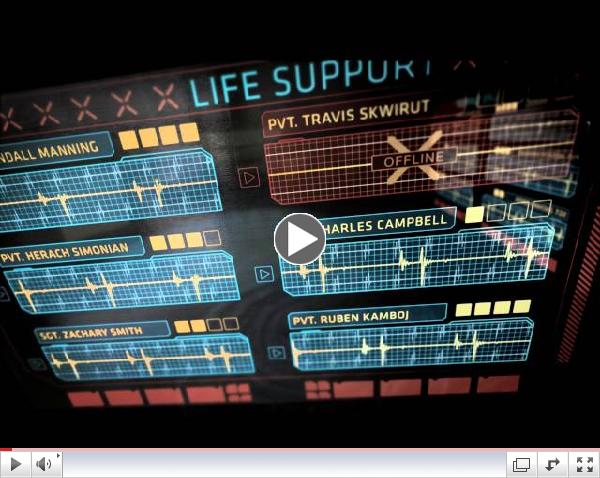 | | Morning Star Teaser Trailer (1080p) |
 | | Morning Star Documentary - Episode 1 |
![Muse - Unsustainable [Official Video]](https://thumbnail.constantcontact.com/remoting/v1/vthumb/YOUTUBE/433b1ef2cd234ce6a0107dc79063c5f5) | | Muse - Unsustainable [Official Video] |
Conclusion - What's Next? Clark's next goal is to be the first high school to launch a functioning satellite into orbit in the University Nano Sat Program affiliated with the U.S. Air Force Academy. Clark students and educational programs represent a qualitative transformation in what we consider a well-rounded student in the year 2013-a shift from intervention to innovation in school practice and culture. Jim Brazell and Doug Dall will tell Clark's story to an audience of the National School Board Association in San Diego, Sunday, April 14, 2013. The program title is: Mainstreaming STEM+ARTS - The STEAM Movement in U.S. Schools.
Nationally, thought leaders are suggesting a shift from STEM to STEAM (adding the Arts to the Science, Technology, Engineering, and Math focus). Hear from Jim Brazell, one of the leading proponents of this educational strategy and then get a deeper look at Clark Magnet School, a model STEM+ARTS high school. Learn about project-based STEM plus Arts instructional themes and improving achievement and access to the core curriculum for ALL students, especially second language and Title I students. Conference registrations are on track to attract more than 5,000 school board members and superintendents from around the country.
To learn more about Clark or to arrange a site visit, contact Principal Doug Dall, ddall@gusd.net. Clark Magnet High School,
Glendale Unified School District
4747 New York Ave.
La Crescenta, CA 91214
Phone: 818.248.tech (8324)
Jim's favorite Place to Eat When Visiting Clark - Burger Continental in Pasadena, CA.
|
|
Listen to Robot World Keynote by Jim Brazell
| Robot World: The Role of Cyber in US Education, Workforce, and Economic Development Competitiveness by Jim Brazell, Texas Workforce Commission Conference, Garland, TX, 11/29/2012.
Listen to Recording - Read Transcript - View Sides
 | | Image courtesy of NCPN and SparkFun.com |
Jim Brazell explores the role of cyber (networks, computers, software, and intelligent actuators) in U.S. education, workforce, and economic development. Topics include (1) defining science, technology, engineering, and mathematics; (2) the structure of technology in the 21st century; and (3) emerging P-20 education practice with an emphasis of Dr. George Kozmetsky's innovation and "transdiscipline". A speech 10 years in the making, illustrative of keen insight as a technology forecaster, Brazell delivers solid analysis about what is next in living, working, playing, and learning in Robot World. Annual Texas Workforce Conference, Co-hosted with the International Association of Workforce Professionals - Texas Chapter November 28-Dec 1, 2012 Gaylord Texan Hotel and Convention Center - Grapevine, Texas |
|
San Antonio, Birth place of the PC, LAN, Heart Stent, Lasik Eye Surgery, Aerobics, and Picante brands!
| Excerpt from San Antonio Heart of Innovation, Central Texas Technopolis by Jim Brazell, Dec. 28, 2012
Did you know? - The first US Astronaut to walk in space is from the Alamo city and one of the top ten patents of all time, the Palmaz-Schatz Heart Stent, flows from the city's biotech/health industry.
- San Antonio's metropolitan area is home to 14 colleges and universities and approximately 118,000 college students and a burgeoning youth population.
- San Antonio's Datapoint (CTC) Patent #224,415, filed November 27, 1970 is the world's first Personal Computer (PC). The company is also responsible for key technology underlying network computer configurations at the heart of the Internet and even industrial infrastructure such as water and electricity networks.
- In 1948, one year after the formation of the US Air Force, Harry Armstrong organized a panel in the city to explore the aeromedical implications of space flight and the city became home to communications electronics security--today cyber security.
- At age 37, Julián Castro is the youngest mayor of the country's 50 most populous cities.
- For over 11,000 years Native American hunter-gatherers utilized the lush and varied ecosystems of San Antonio's Olmos Creek basin, the fresh water springs, and rivers leaving evidence of tools and technology here for millennia
Fort Sam Houston is the birthplace of military aviation (1910) and home to the US Army Medical Department and San Antonio's new San Antonio Military Medical Center. Lackland Air Force Base is the home of Security Hill and Air Force cyber. Randolph AFB is home to US pilot instructor training and combat systems officer training. Camp Bullis, in the hill country, is where mission support and training readiness begin for medics in the field. The Alamo city is a nexus for first responders--medical, cyber, biological and air transport. The city's history of military medicine, space, aviation, cyber and scientific research and development, create a mature foundation for both capital- and knowledge-based economic growth in commercial and government sectors.
Global financial capital is present in the form of Fortune 500 companies; human and intellectual capital are present in the city's R&D apparatus across commercial, military, non-profit and university sectors; Startech is organizing entrepreneurs, university IP and institutional investors; and Dr. Randy Goldsmith of Texas Technology Development Center and York Duncan from Texas Research Park are organizing private and institutional investors. San Antonio has all of the ingredients of a global technopolis--a high technology regional economy.
In 2012, people, capital and information flow among the Central Texas Technopolis within easy driving distance by automobile (~3.0 hours). It was in the 1980's and it is today an interaction in the greater San Antonio-College Station-Austin-Copperas Cove-Waco research triangle that gives rise to the innovation economy of Central Texas. Today, the Central Texas Research Triangle is once again on the move. This time, the focus is broader than computer hardware and software and includes regional innovation focused on the intersection of nano technology, bio technology, cyber and copy-right-based digital arts.
Central Texas Research Triangle, Unpublished work from Digital Convergence Initiative (Brazell, 2005)
 | | Central TX Research Triangle |
San Antonio's early start in computers dates to the establishment of the Air Force Security Service (1948) and Harry Armstrong's "Aeromedical implications of space flight" organized in the city the same year and ultimately Kennedy's "tossing the cap over the wall of space" in 1963. Flowing from three space age entrepreneurs, Datapoint in San Antonio, Texas would become a Shakespearean tragedy for San Antonio's high tech entrepreneurial aspirations; however, Datapoint would ultimately define the methods, processes and languages of the software at the heart of personal computing, the Internet and critical infrastructure in the 21st century.
Datapoint (Computer Terminal Corporation) in the late 1960's, 70's and 80's was the nexus of the computer industry in Central Texas. Datapoint was founded by three members of the space program: Gus Roche, Phil Ray and Jack Frassanito as well as Jim Evert. Datapoint would grow to become a Fortune 500 company with approximately 9,000 employees and offices in 27 countries. At its height, Datapoint would house 1 million square feet of office, R&D and factory space.
Datapoint balanced industrial design, computer usability (ease of use) and commercial business applications to invent the first "personal computer." Pictured Left to Right - Phil Ray, Vic Poor, Jim Evert, and Gus Roche.

Excerpt from: San Antonio Heart of Innovation, Central Texas Technopolis. Read more.
|
|
Announcing ISTE SIGCT Forum: Computational Thinking, Cybersecurity, Scratch, Robotics, San Antonio, Texas, 2013
| |
Computational Thinking, Cybersecurity Education, Cyber Citizenship, Scratch, Programming Robots - infusing the nine core competencies rooted in computer science work in the classroom.
The SIGCT Forum will feature Michael Tempel of the Logo Foundation, and also educators, students and industry volunteers from San Antonio's Cyber City USA team highlighting the sequence of formal and information cyber security education programs developed to feed talent into San Antonio's robust cyber security cluster.
Presenters will show how to infuse the core competencies rooted in computer science work into K-12 education, and how to build community collaborations that engage parents, students and educators and align K-12, community college and university coursework. The essential competencies highlighted include (1) Data Collection, (2) Data Analysis, (3) Data Representation, (4) Problem Decomposition, (5) Abstraction, (6) Algorithms & Procedures, (7) Automation, (8) Parallelization and, (9) Simulation.
The Logo Foundation will present K-8 Computer Science examples including, creating a video game in Scratch, programming a robot to follow a line on the floor or to avoid falling off a table, all exercising students' computational thinking skills.
The San Antonio Cyber City USA team will deliver multiple, parallel, "station-based" presentations on topics related to cyber security education pedagogy, program organization, and educational pathway development. Topics will include:
Understanding the Cyber Security Threat
The Importance of Early Engagement
Engagement through Competition
Collaboration: Secondary, Higher Ed, Industry, and Coordinated Collective
Impact - Sneak Peeks at SIGCT Playground Student Presentations
Cyber City USA presentations will highlight multiple programs and initiatives including: (1) CyberStar: Early (middle school) engagement in computation thinking and competition; (2) The Cyber Patriot Cyber Defense Competition and representatives from the 2012 National Championship team from ITSA; (3) The award-winning Information Technology and Security Academy (ITSA), a multi-ISD and multi-institution, region-wide model for dual credit cyber security education; (4) The Cyber Innovation and Research Consortium (CIRC), including all 2- and 4-year high education institutions in the region; (5) The NSF-funded Cyber First Responder Program (6) The University of Texas at San Antonio (UTSA) Center for Infrastructure Assurance and Security (CIAS), an NSA- and DHS-certified Center of Academic Excellence in Cyber Security Education.All examples will be analyzed for their computational thinking content and for opportunities to extend computational thinking through teachers' interventions.
Supporting Research
A. Conklin, "Cyber defense competitions and information security education: An active learning solution for a capstone course," in Proc. 39th Hawaii Int. Conf. Syst. Sci., HI, 2006, vol. 9, p. 220b.
Committee on Prospering in the Global Economy of the 21st Century (US), Committee on Science, & Public Policy (US). (2007).
Rising above the gathering storm: Energizing and employing America for a brighter economic future. National Academy Press.
Cooke, P., & Memedovic, O. (2003). Strategies for regional innovation systems: Learning transfer and applications. Vienna:United Nations Industrial Development Organization.
Currid, E., & Stolarick, K. (2010). The Occupation-industry mismatch: New trajectories for regional cluster analysis and economic development. Urban Studies, 47(2), 337-362.
Dillow, J., Fletcher, C., Flowers, R., & Robbins, N., & Zintgraff, C. (2012). Three pillars for excellence in middle school teacher professional development.
In Zornes, K., Holden, O., Leyden, T., & Zintgraff, C. (Eds.), Spotlight on the Middle 2015. Austin, TX: Texas Business and Education Coalition.
Evans, K. (2010). A human capital crisis in cybersecurity. Washington, DC:Center for Strategic and International Studies.
Hagen, D. (2007). UCSD launches education initiative to keep middle school girls interested in engineering and technology careers. Retrieved on 1/14/2013 from http://ucsdnews.ucsd.edu/newsrel/science/tiesgrant07.asp.
Jonassen, D. H. (1994). Thinking technology: Towards a constructivist design model. Educational Technology, 34(4), 34-37.
Lee, E. A. (2006) Cyber-Physical Systems - Are computing foundations adequate? NSF workshop on cyber-physical Systems: Research motivation, techniques and roadmap, October 16-17, Austin, TX. Retrieved on October 14, 2012 at http://ptolemy.eecs.berkeley.edu/publications/papers/06/CPSPositionPaper /Lee_CPS_PositionPaper.pdf
NYU Steinhardt School of Culture, Education and Human Development Games for Learning Institute. Educational technology. Retrieved on 1/14/2013 from http://steinhardt.nyu.edu/alt/ect/research.
OVAE (2010). Career and Technical Programs of Study: A Design Framework. Retrieved on October 14, 2012 at http://cte.ed.gov/file/POS_Framework_Unpacking_1-20-10.pdf.
(1980). Mindstorms: Children, computers, and powerful ideas. New York:Basic Books. Papert, S.
Papert, S. and Harel, I. (1991). Situating Constructionism. Retrieved on July 28, 2011 at http://www.papert.org/articles/SituatingConstructionism.html.
Zintgraff, C. & Green, C. W. (in press). A regional and transdisciplinary approach to educating secondary and college students in cyber-physical systems. In Carbone, J., Tanik, M., & Sang, S. (Eds.), Cyber-Physical Systems. Society for Design and Process Science.
Contact
Joseph Kmoch
1035 E Colfax Pl Whitefish Bay
WI 53217 Milwaukee WI
United States
joe@jkmoch.com
|
|
ANNOUNCING SAN ANTONIO MAKERSPACE BY SASTEMIC
|
Our goal is to spark students' interests in Science, Technology, Engineering and Math through creative expression. With our programs, students will be given the opportunity to learn new skills by using tools and equipment with guidance from teachers and mentors.
 | | San Antonio Maker Space |
The San Antonio Makerspace is a K-12 educational facility that will provide a safe environment for students to design, build and create new and exciting things.
A Makerspace is a high-tech shop class for the 21st Century. Inside a Makerspace you will find 3D printers, laser cutters, robotics and electronics along with traditional tools like saws and drills. The San Antonio Makerspace will cater to schools and other educational programs to reach underserved populations.
The San Antonio Makerspace will be operated through a local 501(c)(3) non-profit organization called SASTEMIC. Their mission is to create a collective impact for STEM education in San Antonio by working with industry, workforce and education partners.
Makerspace Director Mark Barnett markbarnett@gmail.com (830)480-4978
24870 Blanco Rd. Suite 103 San Antonio, TX 78260 (201)701-1371 www.sastemic.org
@sastemic
facebook.com/sastemic
|
|
|
|
Announcing HOW THE FUTURE WORKS by Jim Brazell and ventureramp.com. Written for education, industry, workforce, and economic development professionals, HOW THE FUTURE WORKS is a a monthly blog delivered by email about what's next in education - public performance, discourse, and projects - classical contemporary education (Boston Latin). Learn more about the author Jim Brazell and his partnership with IDEAS and the Thornburg for Center for Professional Development working in the trenches of school transformation and public engagement. |
|
|