|
History: When technological change strikes industry, the cry is for a new kind of "industrial intelligence"--a kind of movement beyond labor to the unification of the intellectual and physical capabilities of the worker.
| |
In 1879, Calvin M. Woodward opened the Manual Training School for boys in St. Louis. His curriculum included science, mathematics, language, literature, history, drawing and shop work. Shop was included to keep instruction more interesting, to provide learning in the use of basic tools common to a variety of jobs and to increase general education. Source
Above the entry door to his new school affiliated with Washington University, Woodward had inscribed:
"Hail the skillful cunning hand!
Hail to the cultural mind!
Contending for the world's command,
Here let them be combined."
Source: Barlow, 2001 Years of Education 1776-1976, Feb. 1976
Efforts to introduce the practical and manual arts into the traditional humanist curriculum in the United States goes back at least as far as the late 18th century with the establishment of colleges devoted to mechanics and agriculture. Source
|
|
STEM + ARTS at MIT
| |
The Innovation Institute: From Creative Inquiry Through Real-World Impact at MIT
by Joost Paul Bonsen,
S.B., Electrical Engineering & Computer Science, MIT, 1990
Submitted to the MIT Sloan School of Management in Partial Fulfillment of the Requirements for the Degree of Master of Science inthe Management of Technology
at the Massachusetts Institute of Technology
"Polarized Around Science, Engineering, and the Arts -- MIT President James Killian lead the Institute in the vital post-WWII era when Federal financing of research became dominant, the newest MIT Schools of Management (Sloan) and Humanities, Arts, and Social Sciences (SHASS) were formalized, and MIT experienced its greatest growth ever in both absolute and percentage terms.36
Killian characterized MIT as "a university polarized around science, engineering, and the arts" which embraced the humanities while keeping a distinctive MIT approach to those vital disciplines.37 The "T" in MIT is thus Technology in its broadest possible sense, one embedded in the root etymology of the term "tekhnologi, the systematic treatment of an art or craft."38
While the dominant visible thrust of research and activity at the Institute could be characterized as classic hard-core science and engineering, the humanities, arts, and
basic through applied social sciences are fully one third of total faculty headcount, research volume, and represent three of five Schools. The essential fact that President Killian captured in his turn of phrase is that all disciplines are pursued in an essentially- MIT way, with rigor, methodological sophistication, and using (often inventing) the latest
tools and techniques." Source
|
|
Quote: Beyond Tinkering, A Report from the Ohio Grant Makers Forum, January 2009
| |
"A bold plan for accelerating the pace of innovation-for restructuring the traditional, industrial model of teaching and learning and for addressing the lowest- achieving schools in our state-is needed to keep pace with the demands of the 21st century where jobs, careers and workplaces are learning- intensive, and where people often have many jobs and careers over the course of their lifetimes." (Source)
|
FREE STEM Webinar:
Adult Education: Career Pathways,
11-30-2012
| |
Date: Friday, November 30 at 1:00 p.m. Eastern Time
Presenters: Hope Cotner, Vice President of Community College Initiatives at CORD and
Bob LePage, Vice President of Foundation and Workforce Training at Springfield Technical
Community College
Length: 90 minutes
Description: Significant efforts are underway across the country to assist adults in acquiring the skills they need to earn post-secondary credentials and secure family sustaining jobs. Adult Career Pathways (ACP) programs are providing effective solutions to help communities accomplish this challenging task. This webinar will focus on two ingredients vital to the success of any ACP program strong employer partnerships and contextualized instruction. A variety of resources will be provided and models examined, from both community college and adult education perspectives.
Register Now!
Past Webinar Recordings:
Did you happen to miss a NetWorks webinar?
Search NetWorks Digital Library , Keyword Search: "Webinar" for past webinars to listen, watch, and learn.
For more details about this and other upcoming webinars, visit the NetWorks Webinar Calendar.
Sign up to receive future announcements directly.
For specific information, contact:
NetWorks Admin
480-731-8050
www.matecnetworks.org
|
|
|
Cyber News, San Antonio, TX - Holmes teacher develops computer wizards. By Roy Bragg, Updated 9:46 a.m., Sunday, November 25, 2012
| San Antonio Express News
For years, teenagers and computers have gone together like Matthew Broderick and Joshua in the 1983 film "WarGames."
John Carrera, a technology teacher at Holmes High School, has shattered that myth and, in the process, is putting bright kids to work doing good work. Oh yeah. His kids are also making buckets of money once they graduate.
This is a shock to those of us who get our news from the multiplex. For years, the teen-computer thing was pretty simple, as laid out in "WarGames."
Broderick was the brilliant-but-bored, All-American hacker. Joshua, a super-smart Defense Departmentcomputer, was his hacking target. In the very realistic premise of the film, Broderick was, with a 300 baud dial-up modem, able to penetrate layers of online security to hack Joshua. Then unable to drive a car legally, he had to evade a multi-state FBI manhunt and infiltrate a top secret military installation built into a mountain. He takes the world to the brink of nuclear war, then plays chess with Joshua and saves the world. The most unbelievable part? When he gets the unnaturally attractive girl, who just happened to tag along with him during the whole ordeal. She kisses him while they're on a beach. Yes, there's a beach in there.
San Antonio's Cyber Patriots - Image Source San Antonio Express News

|
|
New - Cyber Girls: The Story of the First Women Computers
(Copyright 2012, VentureRAMP, Inc.)
| Jim Brazell and Lisa Cervantes developed and delivered a new STEM workshop for 50, 8-11 year old girls, on November 19, 2012. The program focuses on STEM and the arts in the context of career exploration and developing skills related to design, transformation, and computational thinking.

To learn more, contact Lisa Cervantes at 210-381-2835 or view the web page for Cyber Girls.
The first computers were women who wrote computer languages and mathematical calculations by hand. The first computer algorithm (or "program") was written by Ada Lovelace in 1843. During the 1890 Census, women computers processed the equivalent in punch cards stacked to the height of the Empire State building daily. In 1945, the women computers of the war effort were recruited to become the programmers of the first supercomputer. 1/5 the size of a football field, the lights of West Philadelphia would dim when the machine was turned on. A modern wonder, the ENIAC was a 1,000 fold faster than the mechanical calculators it replaced. Learn more with the 2010 documentary: Top Secret Rosie's.
Video: Cyber Girls Workshop for Girls, Inc.
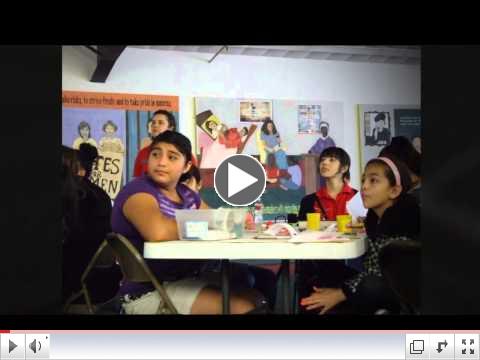 | |
Photos Copyright Girls, Inc., San Antonio, TX, 2012
|
|
|
Upcoming Speech - Texas Workforce Commission
| 
Annual Texas Workforce Conference, Co-hosted with the International Association
of Workforce Professionals - Texas Chapter
November 28-Dec 1, 2012
Gaylord Texan Hotel and Convention Center - Grapevine, Texas
November 29, 2012 featuring Jim Brazell's speech:
SUPER SYSTEMS - The Role of Education, Workforce and Economic Development Collaboration in U.S. Competitiveness - America's competitiveness depends on innovation and collaboration. "Super Systems" is designed to move communities from why they need to change to how they can achieve innovation through collaboration. Explore emerging technologies, jobs, and education strategies in the context if economic development. |
|
TeacherStudio.com by IDEAS Orlando
| 
|
|
Upcoming Speech - PA Manufacturing and Technology Expo
| December 17-18, 2012, TechLINK and the PA Office of Secondary Partnerships hosts the Manufacturing Technology and Expo designed for educators and business leaders.
Featuring Jim Brazell's speech: INNOVATION NATION: What's next in Schools, Tech and Manufacturing

The expo will feature presenters from various manufacturing and technology industries. The areas of focus will be Computer Systems Networking and Telecommunications, Machine Tool Technology, Welding, Electrical/Electronics and Communication and Logistics. We will provide a forum for educators from around Pennsylvania to interact with experts from the manufacturing and technology fields and thus begin forging relationships. Invitations are being sent to the educators at both career and technology centers as well as colleges and universities in Pennsylvania are invited. This will be wonderful opportunity for educators and business leaders to learn what is happening at the federal level.
Contact: Mary Grist, Perkins POS Outreach Manager at 717-221-1300 ext.1212 or megrist@hacc.educ
Registration site online
|
|
Grants - NSF INSPIRE
| Integrated NSF Support Promoting Interdisciplinary Research and Education (INSPIRE) to support bold interdisciplinary projects in all NSF-supported areas of science, engineering, and education research
PROGRAM SOLICITATION
NSF 13-518
The INSPIRE awards program was established to address some of the most complicated and pressing scientific problems that lie at the intersection of traditional disciplines. It is intended to encourage investigators to submit bold, exceptional proposals that some may consider to be at a disadvantage in a standard NSF review process; it is not intended for proposals that are more appropriate for existing award mechanisms. INSPIRE is open to interdisciplinary proposals on any NSF-supported topic, submitted by invitation onlyafter a preliminary inquiry process initiated by submission of a required Letter of Intent. In fiscal year 2013, INSPIRE provides support through the following three pilot grant mechanisms: - INSPIRE Track 1. This is essentially a continuation of the pilot CREATIV mechanism from FY 2012, which was detailed for 2012 in Dear Colleague Letter NSF 12-011.
- INSPIRE Track 2. These are "mid-scale" research awards at a larger scale than Track 1, allowing for requests of up to $3,000,000 over a duration of up to five years. Expectations for cross-cutting advances and for broader impacts are greater than in Track 1, and the review process includes external review.
- Director's INSPIRE Awards. These are prestigious individual awards to single-investigator proposals that present ideas for interdisciplinary advances with unusually strong, exciting transformative potential.
All NSF directorates and programmatic offices participated in INSPIRE in FY 2012 and are continuing their participation in FY 2013.
Cognizant Program Officer(s): Please note that the following information is current at the time of publishing. See program website for any updates to the points of contact. -
Thomas F. Russell, Office of Integrative Activities, telephone: (703) 292-4863, email:trussell@nsf.gov
Learn more online.
|
|
Feature Speaker: Bob Allen, Chief Storyteller|Apprentice Zen Teacher, IDEAS Orlando
| |
A Disney brat since 1975, Bob became Vice President of Disney Production Services, Inc. in 1991. Bob was responsible for all facilities and services at the Disney-MGM Studios as well as the operation of Disney IDEAS (Innovation, Design, Entertainment, Art and Storytelling), a full service Integrated Creative Content Studio.
In 2008, Bob spun IDEAS out of Disney as a private company now in downtown Orlando. A nationally recognized speaker, Bob has presented to the National School Board Association Technology and Learning conference, the Florida Educational Technology Conference, National Career Pathway Network/National Association Tech Prep Leadership, U.S. Air Force, Association of Travel Marketing Executives, Allied Travel Organization, National Telecommunications Conference and many more across industries. Bob's creative approach to group transformation is rooted in something we all do well-telling stories. He is a master at taping every groups inner creativity to chart a course into the future with hope and determinism.
i.d.e.a.s. was created in June 2001 through a management buy-out of a unit of the Walt Disney Company. The i.d.e.a.s. team has played key roles in creating video, film, multi-media, online interactive, and immersive experiences for Disney as well as a long list of national clients. In fact, the i.d.e.a.s. staff aggregates over 300 years of Disney and entertainment industry experience. We have brought our central premise that powerful stories create powerful experiences to a diverse collection of clients and audiences via almost every delivery platform imaginable - from print to broadcast television, from multi-screen surround theaters to new immersion-based destination experiences.
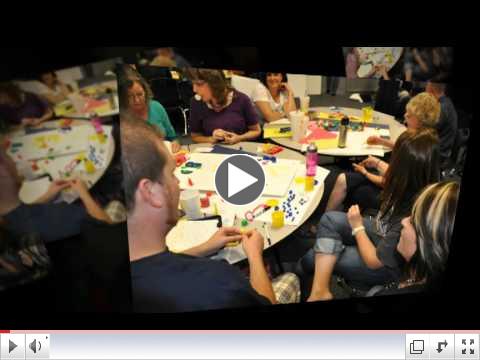 | | Frenship ISD Playshop |
Contact Bob Allen <ballen@ideasorlando.com>
|
|
|
|
Announcing "HOW THE FUTURE WORKS by Jim Brazell and ventureramp.com. Written for education, industry, workforce, and economic development professionals, HOW THE FUTURE WORKS is a monthly blog delivered by email about what's next in innovation. Learn more about the author Jim Brazell and his partnership with IDEAS and the Thornburg for Center for Professional Development working in the trenches of teacher professional development. |
|
|