|
|
-
 FEED ON A REGULAR BASIS - FEED AT LEAST TWO TIMES PER DAY.
- KEEP FRESH WATER AND SALT ALWAYS AVAILABLE.
- NEVER FEED MOLDY OR DUSTY HAY OR FEED.
- AVOID SUDDEN CHANGES IN RATIONS:
- ALLOW HORSES ONE HOUR TO DIGEST MEAL BEFORE EXERCISE.
- NEVER GIVE GRAIN OR WATER TO A HOT HORSE.
- ENCOURAGE AGGRESSIVE HORSES TO EAT SLOWLY.
- FEED BY WEIGHT RATHER THAN BY VOLUME:
Table 1. Example of the horse owner's 3 lb coffee can
|
Feed Ingredient
|
Weight of 3 lb coffee can
| |
32 lb/bu oats
|
2.5 lbs
| |
38 lb/bu oats
|
4.0 lbs
| |
Corn or Pellets
|
5.0 lbs
|
Concentrates do not weigh the same. Average flakes of hay weigh between 4-6 lbs. However, a flake of grass hay may appear twice as large as a flake of alfalfa hay, but the grass hay may weigh the same or even less. Learn the approximate weights of what you are feeding. Mark cans to standardize amounts of feed being fed or use for grain a scoop from a farm supplier.
-
 CHECK HORSE'S TEETH AND DEWORM REGULARLY. CHECK HORSE'S TEETH AND DEWORM REGULARLY. - EXERCISE HORSES DAILY, TURN-OUT OR LEAVE OUTSIDE.
- AVOID OVERFEEDING HORSES.
- FEED ADEQUATE LONG-STEMMED ROUGHAGE
- DON'T SUPPLEMENT BALANCED RATIONS OR DILUTE BALANCED RATIONS: Many commercial feeds are formulated to meet the requirements of specific classes of horses. Many horse owners top dress their feed with vitamins, minerals, etc or cut their commercial feed with corn or oats. This practice can cause serious nutrient imbalances and toxicity problems.
- FEED HORSES ACCORDING TO BODY WEIGHT: Table 2 shows recommended daily feed intakes by horses as a % of body weight. To use this table, the horse owner must know the class of horse being fed and the horse's body weight. Heart girth tapes are available from feed dealers, veterinarians and livestock supply companies.
Table 2. Recommended Daily Feed Intakes by Horses As Percent of Body Weight.
|
|
Forage
|
Concentrate
|
Total
| |
Horses Maintenance
|
1.5-2.0
|
0-0.5
|
1.5-2.0
| |
Mares, late gestation
|
1.0-1.5
|
0.5-1.0
|
1.5-2.0
| |
Mares, early lactation
|
1.0-2.0
|
1.0-2.0
|
2.0-3.0
| |
Mares, late lactation
|
1.0-2.0
|
0.5-1.5
|
2.0-2.5
| |
Horses Light work
|
1.0-2.0
|
0.5-1.0
|
1.5-2.5
| |
Moderate work
|
1.0-2.0
|
0.75-1.5
|
1.75-2.5
| |
Intense work
|
0.75-1.5
|
1.0-2.0
|
2.0-3.0
| |
Young Horses Nursing foal, 3 mo
|
0
|
1.0-2.0
|
2.5-3.5
| |
Weanling foal, 6 mo
|
0.5-1.0
|
1.5-3.0
|
2.0-3.5
| |
Yearling foal, 12 mo
|
1.0-1.5
|
1.0-2.0
|
2.0-3.0
| |
Long yearling, 18 mo
|
1.0-1.5
|
1.0-1.5
|
2.0-2.5
| |
Two year old
|
1.0-1.5
|
1.0-1.5
|
1.75-2.5
|
|
|
| |
Free online courses will focus on human resource, liability, and farm safety issues
EAST LANSING, Mich - Equine business professionals are invited to participate in a dynamic, online short course series where they will be connected with land grant universities, equine business experts, networking opportunities, and other invaluable resources. There are over 1 million horses and 162,000 horse farms in the North Central Region of the United States. It is estimated that 4.6 million Americans in the U.S. are involved in the horse industry as horseowners, service providers, employees and volunteers. The industry employs 701,946 people directly.
Five courses will be offered with a focus on contract/employee labor law, liability issues, working with youth and volunteers, immigration documentation, and farm safety practices. Each course will consist of a webinar, interactive quiz, a decision tool, and online resources. Live webinars will be held on Thursday evenings at 7:30 PM EST beginning on February 7, 2013 to coincide with the launch of each short course. All webinars will be recorded and available for viewing at anytime on the next day.Webcast speakers include experts from the Center for Agricultural Law and Taxation at Iowa State University and an expert on worker safety from Michigan State University. Upon completion of each course participants will receive a certificate of completion. These courses are offered free of charge.
For any questions, please contact us at517-353-3123 or info@myhorseuniversity.com. This project is funded by the North Central Risk Management Education Center
Contract/Employee Labor Law: When is a Worker a Horse Operation Employee?
February 7
Summary: Misclassifying workers can result in significant penalties from state and federal authorities. During this session, participants will learn about how to classify workers correctly as self-employed contractor or employee and various ways the distinction affects your operation and the worker.
_________________________________________________________________ Liability Issues of Horse Operations and Veterinary Practices
February 14
Summary: Business owners need to be aware of potential liabilities that may jeopardize their operation. Participants will learn about premises liability requirements, how to utilize statutory immunities, and ensuring standards for performance are met.
_________________________________________________________________ Youth and Volunteers: Enabling Experience without Jeopardizing Your Horse Operation
February 21
Summary: Youth and volunteers can gain valuable experience while also providing a reliable source of labor for your operation. In this session, participants will learn about restrictions for youth workers, use of release forms, ensuring statutory immunities for equine activities, and other common issues.
_________________________________________________________________ Ensuring Proper Documentation to Enable Employment on Horse Operations February 28 Summary: Hiring immigrant labor requires careful attention to federal requirements for documentation to ensure protection for your business and the employee. This session will discuss how to ensure you are hiring individuals legally able to work in the United States. We will discuss the different classifications of authorized aliens, different documents required and deadlines for acquiring proof of authorization, retention standards, general considerations, and more. _________________________________________________________________
Best Practices for a Safe and Efficient Facility March 7 Summary: Worker safety is a critical requirement of the successful equine facility. This webinar will review the likely activities that may result in accidents to horse or human, describe best practices, and will share existing curriculum to train workers on equine facilities. ________________________________________________________________ This project is funded by the North Central Risk Management Education Center. REGISTRATION |
|
| |
Mid- to Late- January, 2013 Hay Price Update
These are hay prices paid at auction in the recent past weeks. Much of the price 
information is obtained from USDA Hay Market News. Personal contacts of local. Iowa hay auctions secured price information for these market outlets. Auctions
were chosen to reflect prices across Iowa. Other nearby auctions may exist. No endorsement of the listed auctions is intended.
The USDA Market News group uses the following hay classification designations
in their market price reports. Of all hay sold, 1% or less would be designated in the 'Supreme' class. There is a general relationship between visual characteristics and forage analyses. If possible, the following Hay test analyses ranges (on dry matter basis) should be used to establish the appropriate quality designation. When feeding livestock, sample all forage lots and use forage analysis information
for balancing livestock rations. Read More
|
|
|
 | | Master Equine Manager I |
The Iowa State University Extension (ISUE) Master Equine Manager Program is designed to provide applicable information to the horse owner on horse care and management. The program consists of six 2-hour internet sessions which includes behavior, nutrition, pasture management, facilities, equipment, selection and evaluation, diseases, parasites and hoof care. A two-day hands-on skill development session coincides with the on-line program. The hand-on sessions covers forages, feeds, health care, hoof care, facilities, selection and behavior. For the total program you will receive 24 hours of equine science and management.
The on-line portion of the program will be held Thursday evenings from 6 to 8 pm starting October 4th. The two-day hands-on activities will be held May 3rd & 4th.
Benefits and Opportunities for the Certified Master Equine Manager
- Receive 24 hours quality instruction from ISU professors and instructors
- Promote quality horse care and responsible horse ownership.
- Conduct training clinics and workshops for youth and adults.
- Manage or assist with horse events, shows, trail rides or judging activities.
- Participate in horse organizations with public education programs.
- Develop new skills to enhance employment opportunities within the industry.
- Secure web access on Blackboard to numerous equine references pertaining to each subject matter.
- Receive instruction and certification from Iowa State University.
Permanent Master Equine Manager name badge
For more information go to http://www.extension.iastate.edu/masterequine
|
|
| Microloans up to $35,000 aim to assist small farmers, veterans, and disadvantaged producers.
WASHINGTON, Jan. 15, 2013 - Agriculture Secretary Tom Vilsack today announced a new microloan program from the U.S. Department of Agriculture (USDA) designed to help small and family operations, beginning and socially disadvantaged farmers secure loans under $35,000. The new microloan program is aimed at bolstering the progress of producers through their start-up years by providing needed resources and helping to increase equity so that farmers may eventually graduate to commercial credit and expand their operations. The microloan program will also provide a less burdensome, more simplified application process in comparison to traditional farm loans. Continue Reading
|
2013 Iowa Horse Judges Directory
| The 2013 Iowa Horse Judges Directory is available.
|
Teaching Guide Brings Animal Science to Students
|
| |
 The American Society of Animal Science has created a teaching guide as part of the new Jr. Animal Scientist program. The teaching guide helps educators share articles, activities and career information with students. The American Society of Animal Science has created a teaching guide as part of the new Jr. Animal Scientist program. The teaching guide helps educators share articles, activities and career information with students.
Read the teaching guide to see how you can use Jr. Animal Scientist magazine to create vocabulary lessons, group projects and and quizzes! The teaching guide can also be helpful for educators in 4-H, FFA and home-school programs. View teaching guide
|
|
|
| |
Horse owners, farm managers and veterinarians anticipate the arrival of foals every spring. While we all hope for healthy, happy foals that require little assistance, Mother Nature doesn't always comply. Basic knowledge of the foaling process and normal neonatal foal appearance and behavior is essential for initiating treatment to foals that may need additional help.
 | | Figure 1 |
The normal gestation length for mares averages 335-345 days from their last breeding date. Gestation length will vary between mares and even between years in the same mare. As the mare nears her foaling date, she should have mammary gland development and begin waxing (wax-like secretions on the teat from colostrum production) (Figure 1). Most mares will foal within 1-4 days of waxing. Mares that have mammary development earlier in pregnancy (more than a few weeks before the expected foaling date) should be evaluated by a veterinarian. Premature udder development is an indicator of placentitis (inflammation or infection of the placenta), which requires aggressive treatment and may result in loss of the pregnancy. A veterinarian should also evaluate mares that leak an excessive amount of milk, which can be an indicator of impending abortion. Mares that leak large volumes of milk may also have inadequate colostrum (antibody rich milk required for appropriate foal immunity) at the time of delivery, which will require additional care for the foal. Pregnant mares have specific vaccination requirements in order to best protect the foal. These requirements may vary based on geographical location, type of housing, etc. so should be determined on an individual basis with your veterinarian.
The labor process is divided into three distinct stages. Stage 1 labor begins with the onset of contractions and generally lasts one to two hours. Mares may act restless, sweat, paw, kick at their abdomen, lie down and get up, and urinate frequently. Similar signs may be seen with colic, so a veterinarian should examine the mare if these signs last more than two hours without signs of foaling. Stage 1 of labor moves the foal into position within the birth canal. The fetal membranes (chorioallantois) may become apparent at the mare's vulva. Stage 1 labor ends when the fetal membranes rupture, also referred to as "breaking water". A large rush of fluid will exit the mare at that time.
Stage 2 labor involves the actual delivery of the foal. This stage should progress quickly and result in delivery of the foal within 15-20 minutes. If the foal has not been delivered within 20-30 minutes, then intervention by a veterinarian or experienced foaling attendant may be required. The mare may lie down, stand or even roll during this stage of labor. The normal foal presentation is similar to a diving position: both front feet should come first, with one foot slightly in front of the other and the soles facing down. The nose should be on top of the front limbs and the neck, shoulders, abdomen and hindquarters should then follow. If the foal presents in any other fashion (no head, only one foot, soles facing upward or tail first), then a veterinarian should be called immediately. Improperly positioned foals are a true emergency and require immediate attention if the foal is to have a chance of survival.
 | | Figure 2 |
Stage 3 labor begins after delivery of the foal and consists of expulsion of the afterbirth (placenta). The placenta should be passed within 1-3 hours of foal delivery. If the placenta has not been passed within three hours, then a veterinarian should be contacted. A retained placenta can cause severe infection and laminitis in the mare, which can unfortunately be fatal in some cases. Aggressive treatment may be required in some mares. A veterinarian should examine the placenta once it has passed to ensure that it is complete and normal in appearance. Small portions of the placenta may sometimes remain inside the uterus, which can also lead to severe illness in the mare. An abnormal appearance (unusual color, thickness, etc.) to the placenta may indicate infection, which could have an effect on the foal's health and treatment (Figure 2).
The foal should be breathing and have a palpable heartbeat at the time of delivery. If the foal is breathing and moving its head and limbs, then the mare and foal should be left alone for several minutes. The foal may continue to receive blood from the mare through the umbilical cord at this time. Do NOT cut the umbilical cord. If it does not break on its own during the birthing process or as the mare and foal start to move around, then you may gently break the cord by hand. There is a narrow region in the umbilical cord approximately 1 inch from the umbilicus - this is the ideal place for breakage. Grasp the cord on either side of the narrowed region and gently twist and pull to encourage breakage. Cutting the cord (with scissors, etc.) causes more severe bleeding from the umbilicus than breaking or tearing the cord, which helps induce a blood clot at the end of the umbilicus. The umbilicus should be dipped in a dilute betadine or chlorhexadine solution twice a day for the first several days of life to help prevent infection.
 | | Figure 3 |
A normal foal should be able to sit sternal within 5 minutes of birth and stand by one hour of age. They should be able to nurse by two hours of age. A veterinarian should evaluate any foal that is unable to sit sternal, stand by 1-2 hours of age or nurse by three hours of age. The foal should be closely monitored for appropriate nursing during the first day of life (Figure 3). Foals are born without antibodies and receive their antibodies by ingesting colostrum during the first 18-24 hours of life. Colostrum is a special form of milk that is produced by the mare at the time of birth. It contains antibodies and other factors that are important for the foal's immune system development. Foals that don't receive an appropriate volume of good quality colostrum will have low antibody levels and are more prone to infection. A blood IgG level indicates if the foal received sufficient colostrum. If the IgG level is low, the foal may be tubed with more colostrum or receive plasma to help increase the antibody level.
The normal foal will urinate during the first 12 hours of life. If the foal has not urinated by that time or is posturing to urinate, but not passing urine, then a veterinarian should be contacted. Likewise, foals will pass meconium during the first 12 hours of life. Meconium is the "first feces" and is dark brown in color (Figure 4). It is usually in small, hard balls, which may require some effort to pass. A veterinarian should evaluate any foals that are straining to pass the meconium, or showing signs of abdominal pain (flagging tail, rolling, swollen abdomen, etc.). A soapy water enema may be required to facilitate passage of the meconium. Once the meconium has passed, normal foal feces will be yellow-brown in color and paste-like in consistency.
 | | Figure 4 |
All foals should have an examination by a veterinarian between 12-24 hours of age. The veterinarian will listen to the foal's heart and lungs, palpate for fractured ribs, check the eyes for ulcers and entropion (lower eyelid that rolls in toward the globe), and evaluate conformation. The veterinarian will also draw blood to check IgG levels. Additional blood work may be required if any abnormalities are found during the physical exam. The veterinarian will also check the mare for any bruising or tears that occurred during the foaling process. They will evaluate the placenta to ensure the entire placenta has passed from the mare. Depending on the examination, your veterinarian may recommend medications or other treatments for either the foal or mare
In conclusion, close monitoring of the mare and foal is essential for early recognition of abnormalities. All foals should have a veterinarian examination within the first 12-24 hours of life. Foals that fail to stand and nurse in a timely fashion require more immediate attention. Early recognition and treatment of abnormalities will help give foals the best chance for a long, healthy life. Reprinted with permission by Rood and Riddle.

|
2013 Animal Industry Report
| The 2013 Animal Industry Report is Available
January, 2013
We at Iowa State University are again pleased to bring you this annual report of research activities that impact animal agriculture industries in Iowa. This report combines research reports from faculty associated with various departments on campus. We have attempted to bring you all of the research as it relates to the Beef, Dairy, Equine, Poultry, Sheep, Swine and companion animal industries in the state of Iowa. This research is conducted to support the viability of each of these industries in Iowa. The research reported here is supported by the Iowa Agriculture and Home Economics Experiment Station.
There is a special thanks to the various funding agencies that support the research enterprise at Iowa State University. Without their support, we would not be able to conduct the amount and quality of research as reported. The research support comes from several sources, from federal research funds, commodity funds and industry research support.
As you read through the research reports you will find a variety of research as it relates to the animal agriculture industries in Iowa. Some research relates to improving production efficiencies while other research relates to improving environmental quality, animal product food safety and animal behavior and well-being. These all are important aspects of keeping animal agriculture strong and viable and contributing to the economy and quality of life in Iowa. I hope that you read the research reports and feel free to contact the authors of any report if you need further information.
Sincerely,
Maynard Hogberg
Professor and Chair
Department of Animal Science |
How Many Hours/Year Should You Work For A Horse Business?
by Peggy M. Auwerda
| |
The time & effort expended by horsemen varies from operation to operation. One person may work with horses full-time while others work with horses part-time. I work full-time and work at my barn part-time. I do most of the feeding, fix fence, clean stalls, etc. It is easy for me to defend my time & effort in the business. Some owners hire competent individuals to manage the business. The amount of time devoted to a horse business is a factor the IRS uses to determine if the operation is a business. Neither case above by itself has more or less impact in the determination of a profit motive. A taxpayer is materially active if they meet one of following:
- If the taxpayer spends >500 hours on the activity/yr. = substantial participation. 500 hrs. is equivalent to 9.6 hrs./wk.
- If the taxpayer spends less than 500 but greater than 100 hours may also = substantial participation provided certain "other circumstances" exist.
- Participates for more than 100 hours and participation is not less than the participation of any other individual
- Materially participated in the activity for any 5 years in the preceding 10 years
- Personal Service Activity and has materially participated for any 3 year period
 Hours spent by a husband and wife can be combined to accommodate these requirements. Activities of others (family members and employees) will not automatically be attributed to the horse owner. If the taxpayer spends less than 100 hours/yr. does not equal participation in the business. Hours spent by a husband and wife can be combined to accommodate these requirements. Activities of others (family members and employees) will not automatically be attributed to the horse owner. If the taxpayer spends less than 100 hours/yr. does not equal participation in the business.
The kind of activities that a taxpayer should be able to document during each year may include the following: consulting with advisers or other experts in the industry; speaking with vendors on the phone or in person; attending horse races, sales or shows; attending horse shows, horse sales, or races; meeting with a trainer and watching a horse being worked; implanting and revising business plans; keeping records or maintaining financial data; grooming horses; riding or driving horses; maintaining a property and performing the many additional tasks required for a horse business. It is imperative that records be kept to reflect the number of hours involved and the number must be 100 or more hours per year.
From the HorseBiz blog
|
|
Featured Video
Is it Coping or is it a Vice?
|
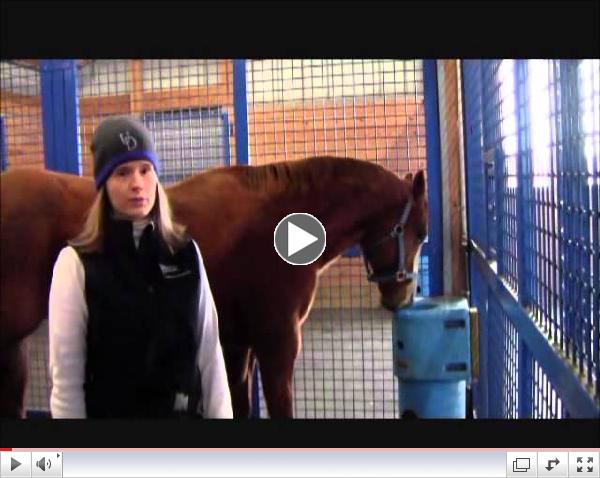 | | Is it Coping or is it a Vice? Cribbing, Weaving and Other Stereotypic Behaviors in Horses |
|
|
Are you Interested in Supporting the Equine Program?
| The Equine Program consists of teaching and extension and outreach at Iowa State University. Currently there are over 1,000 students in Animal Science with 25% having equine interests. Equine Extension consists of the adult and youth program. Would you be interested in donating funds to help the program? The funds will be used for maintaining Grazing News, supplies for extension programs including youth programs, maintaining the Equine Science website and Facebook and supplies for teaching. Read More
|
|
eXtension's HorseQuest Online Resources
| |
|
|






