|
| Guest Speaker Dr. Steve Ensley
How the Drought has Affected Livestock/Horse Health
9:30 Registration
10:45 Jill Paxton The Iowa Horse Industry
Peggy M. Auwerda Iowa State University Equine Program
Laurie Carnahan Trail Survey Update
11:30 Lunch
12:30 Dr. Steve Ensley
1:30 Iowa Horse Council Awards
2:00 Iowa Horse Council Grants
2:15 Scholarships
2:30 Iowa Horse Council Business Meeting
 Dr. Steve Ensley grew up in northeast Kansas where his father was a mixed animal veterinary practioner. He received his BS and DVM from Kansas State University. After graduation from Veterinary school he practiced in Nebraska then moved to Kansas to practice with his father for 12 years in a mixed practice. Following practice he completed a masters and a PhD degree in toxicology at Iowa State University. While completing his advanced degrees at Iowa State University he worked in the Veterinary Diagnostic Laboratory for 5 years. After completion of his PhD, he became the Director of the University of Nebraska's Veterinary Diagnostic Laboratory at North Platte, Nebraska. He left there to work for Bayer as a research toxicologist/pathologist at Bayer's research facility in Kansas City. Dr. Ensley then returned to a toxicology position at the Veterinary Diagnostic Laboratory at Iowa State University in May 2006. In his present position he is a clinical toxicologist in the diagnostic laboratory, teach and has research responsibilities. Dr. Steve Ensley grew up in northeast Kansas where his father was a mixed animal veterinary practioner. He received his BS and DVM from Kansas State University. After graduation from Veterinary school he practiced in Nebraska then moved to Kansas to practice with his father for 12 years in a mixed practice. Following practice he completed a masters and a PhD degree in toxicology at Iowa State University. While completing his advanced degrees at Iowa State University he worked in the Veterinary Diagnostic Laboratory for 5 years. After completion of his PhD, he became the Director of the University of Nebraska's Veterinary Diagnostic Laboratory at North Platte, Nebraska. He left there to work for Bayer as a research toxicologist/pathologist at Bayer's research facility in Kansas City. Dr. Ensley then returned to a toxicology position at the Veterinary Diagnostic Laboratory at Iowa State University in May 2006. In his present position he is a clinical toxicologist in the diagnostic laboratory, teach and has research responsibilities.
RSVP to Dr. Peggy M. Auwerda by January 13th
Registration Form
|
|
| Do you want to learn how the horse's anatomical systems function? Participate in a guided dissection of the anatomy of a horse. You will investigate the systems and regions of the body methodically to understand their natural form and function. These will include the musculoskeletal system, lungs and respiratory system, excretory system, nervous system, endocrine system, reproductive system and skin.
 Designed For: Designed For:
Anyone interested in dissecting a specimen, or watching the process.
Warning - this course is graphic in nature and may not be suitable for those sensitive to some sights and/or smells.
Learner Outcomes - Be familiar with equine anatomy and how the structure relates to function.
- Understand the structure and physiology of the equine musculoskeletal system and its adaptations to athletic activity.
- Understand where movement begins and what its premises are
- Be familiar with the cardiovascular, gastrointestinal and respiratory system
For More Information |
Water Your Horses in the Winter
by Peggy M. Auwerda
| |
 The horse drinks 10 to 12 gallons of water per day. A lactating mare or a horse that has sweated a lot will drink more. Lack of fresh, unfrozen water is the number one cause of colic during the winter. Unavailable water is typically the result of frozen water troughs. Even with heaters in water troughs always check to see if the horses are drinking the water. Personally I have had problems with horses stopping drinking even with heaters in troughs. I would place my hand in the water trough and they felt fine but the horses were not drinking. I then took water buckets out to the horses and they drank freely. Most likely the water heater released a small current that the horses felt but I did not with my hand. I replaced the heater and the horses started drinking again. Automatic waterers are more difficult to assess. Try to observe the horses drinking. Also, make sure every horse has access to the waterer, especially the horses on the bottom of the pecking order. Dehydration and a horse going off feed are signs of a horse not drinking enough. You could encourage the horse to drink by providing lukewarm water or water between 40oF and 75oF. The horse drinks 10 to 12 gallons of water per day. A lactating mare or a horse that has sweated a lot will drink more. Lack of fresh, unfrozen water is the number one cause of colic during the winter. Unavailable water is typically the result of frozen water troughs. Even with heaters in water troughs always check to see if the horses are drinking the water. Personally I have had problems with horses stopping drinking even with heaters in troughs. I would place my hand in the water trough and they felt fine but the horses were not drinking. I then took water buckets out to the horses and they drank freely. Most likely the water heater released a small current that the horses felt but I did not with my hand. I replaced the heater and the horses started drinking again. Automatic waterers are more difficult to assess. Try to observe the horses drinking. Also, make sure every horse has access to the waterer, especially the horses on the bottom of the pecking order. Dehydration and a horse going off feed are signs of a horse not drinking enough. You could encourage the horse to drink by providing lukewarm water or water between 40oF and 75oF.
|
|
| |
Free online courses will focus on human resource, liability, and farm safety issues
EAST LANSING, Mich - Equine business professionals are invited to participate in a dynamic, online short course series where they will be connected with land grant universities, equine business experts, networking opportunities, and other invaluable resources. There are over 1 million horses and 162,000 horse farms in the North Central Region of the United States. It is estimated that 4.6 million Americans in the U.S. are involved in the horse industry as horseowners, service providers, employees and volunteers. The industry employs 701,946 people directly.
Five courses will be offered with a focus on contract/employee labor law, liability issues, working with youth and volunteers, immigration documentation, and farm safety practices. Each course will consist of a webinar, interactive quiz, a decision tool, and online resources. Live webinars will be held on Thursday evenings at 7:30 PM EST beginning on February 7, 2013 to coincide with the launch of each short course. All webinars will be recorded and available for viewing at anytime on the next day.Webcast speakers include experts from the Center for Agricultural Law and Taxation at Iowa State University and an expert on worker safety from Michigan State University. Upon completion of each course participants will receive a certificate of completion. These courses are offered free of charge.
Contract/Employee Labor Law: When is a Worker a Horse Operation Employee?
February 7
Summary: Misclassifying workers can result in significant penalties from state and federal authorities. During this session, participants will learn about how to classify workers correctly as self-employed contractor or employee and various ways the distinction affects your operation and the worker.
_________________________________________________________________
Liability Issues of Horse Operations and Veterinary Practices
February 14
Summary: Business owners need to be aware of potential liabilities that may jeopardize their operation. Participants will learn about premises liability requirements, how to utilize statutory immunities, and ensuring standards for performance are met.
_________________________________________________________________
Youth and Volunteers: Enabling Experience without Jeopardizing Your Horse Operation
February 21
Summary: Youth and volunteers can gain valuable experience while also providing a reliable source of labor for your operation. In this session, participants will learn about restrictions for youth workers, use of release forms, ensuring statutory immunities for equine activities, and other common issues.
_________________________________________________________________
Ensuring Proper Documentation to Enable Employment on Horse Operations
February 28
Summary: Hiring immigrant labor requires careful attention to federal requirements for documentation to ensure protection for your business and the employee. This session will discuss how to ensure you are hiring individuals legally able to work in the United States. We will discuss the different classifications of authorized aliens, different documents required and deadlines for acquiring proof of authorization, retention standards, general considerations, and more.
_________________________________________________________________
Best Practices for a Safe and Efficient Facility
March 7
Summary: Worker safety is a critical requirement of the successful equine facility. This webinar will review the likely activities that may result in accidents to horse or human, describe best practices, and will share existing curriculum to train workers on equine facilities.
________________________________________________________________
This project is funded by the North Central Risk Management Education Center.
|
|
| These are hay prices paid at auction in the recent past weeks. Much of the price information is obtained from USDA Hay Market News. Personal contacts of local Iowa hay auctions secured price information for these market outlets. Auctions were chosen to reflect prices across Iowa. Other nearby auctions may exist. No endorsement of the listed auctions is intended.
The USDA Market News group uses the following hay classification designations in their market price reports. Of all hay sold, 1% or less would be designated in the supreme class. There is a general relationship between visual characteristics and forage analyses. If possible, the following Hay test analyses ranges (on dry matter basis) should be used to establish the appropriate quality designation.
When feeding livestock, sample all forage lots and use forage analysis information for balancing livestock rations. Continue Reading
|
|
| |
Introduction
 The face of animal welfare is being shaped by factors including the separation of production agriculture from consumers and the anthropomorphization of companion animals by the general population. These trends and the influence of animal rights ideology are creating real changes in the United States regarding industry practices for the traditional use of livestock. A new category of horses has emerged, the "Unwanted Horse," that is now the focus of much discussion; as their numbers surge in a time of economic hardship in this country, the need is great to educate the public in general, and horse owners specifically, about the issue from a factual and historical perspective. The AAEP (American Association of Equine Practitioners) defined unwanted horses as "horses which are no longer wanted by their current owner because they are old, injured, sick, unmanageable, fail to meet their owner's expectations (e.g., performance, color or breeding), or their owner can no longer afford them." The Animal Welfare Council developed this set of lesson plans to provide tools and resources to assist horse industry youth leaders and agriculture teachers to explain this trend and its impacts on horses and animal welfare. The face of animal welfare is being shaped by factors including the separation of production agriculture from consumers and the anthropomorphization of companion animals by the general population. These trends and the influence of animal rights ideology are creating real changes in the United States regarding industry practices for the traditional use of livestock. A new category of horses has emerged, the "Unwanted Horse," that is now the focus of much discussion; as their numbers surge in a time of economic hardship in this country, the need is great to educate the public in general, and horse owners specifically, about the issue from a factual and historical perspective. The AAEP (American Association of Equine Practitioners) defined unwanted horses as "horses which are no longer wanted by their current owner because they are old, injured, sick, unmanageable, fail to meet their owner's expectations (e.g., performance, color or breeding), or their owner can no longer afford them." The Animal Welfare Council developed this set of lesson plans to provide tools and resources to assist horse industry youth leaders and agriculture teachers to explain this trend and its impacts on horses and animal welfare.
animals in recreation, entertainment, industry and sports. The organization is dedicated to advancing the responsible and humane use of animals in these activities. This six-lesson program guides students through key elements contributing to the rise of unwanted horses in the United States, with the goal of stimulating understanding and potential solutions for the issue. Each lesson includes a teacher's guide with goals, background material, resources for further reading, presentation outline, hand-outs in reproducible format for the students, and a re-enforcing group or independent activity that can be completed either as part of the lesson or as a field exercise. The lessons may be presented in series, as might be used in traditional classrooms or home schooling programs, or independently in youth activity settings such as 4-H, Girl Scouts, or Boy Scouts. A bonus lesson has been included as an overall evaluation tool with questions that can be used in a Jeopardy- style quiz game. Continue to the Lessons |
Hawthorne: Seventh EHV-1 positive horse dies
| |
STICKNEY, Ill. - A seventh horse has died after contracting the equine herpesvirus that has been circulating on the Hawthorne backstretch since mid-October.
The horse, trained by Mike Stidham, died Monday, Dec. 24, Illinois state veterinarian Dr. Dawn Folker-Calderon confirmed Thursday. Its remains have been sent to the University of Illinois for a necropsy, but the EHV-1 virus is all but certain to be confirmed as the cause of death. The horse already had tested positive for the virus and since sometime last week had displayed the neurologic symptoms associated with the disease's most serious form. Continue Reading
|
|
| Are you looking for a specialist in Agriculture and Natural Resources?
ISU Extension and Outreach releases a resource directory to help you. The matrix shows the specialties of campus (state) and field (regional) ISU Extension & Outreach staff working in various areas of Agriculture and Natural Resources. Each ANR Team or group provides a page in this Directory to list staff and their areas of specialization. Please use this list to complement the staff directory information found on the ISUEO Home Page when you select from the top bar "Field Specialists" or "About Us"
http://www.extension.iastate.edu/
|
|
| |
From USDA Office of Communications
WASHINGTON, December 20, 2012-The U.S. Department of Agriculture (USDA) today announced a final rule establishing general regulations for improving the traceability of U.S. livestock moving interstate.
"With the final rule announced today, the United States now has a flexible, effective animal disease traceability system for livestock moving interstate, without undue burdens for ranchers and U.S. livestock businesses," said Agriculture Secretary Tom Vilsack. "The final rule meets the diverse needs of the countryside where states and tribes can develop systems for tracking animals that work best for them and their producers, while addressing any gaps in our overall disease response efforts. Over the past several years, USDA has listened carefully to America's farmers and ranchers, working collaboratively to establish a system of tools and safeguards that will help us target when and where animal diseases occur, and help us respond quickly."
Continue Reading
|
|
Featured Video
Horse Play and Behavior
|
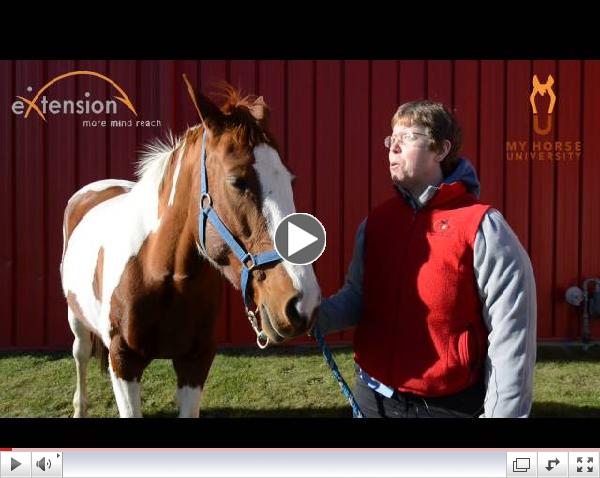 | | Horse Play and Behavior |
|
|
eXtension's HorseQuest Online Resources
| |
|
|






